Navigating the aftermath of a commercial truck collision requires specialized legal representation due to complex federal regulations, multiple liable parties, and aggressive corporate defense teams. Finding the right attorney in Birmingham involves evaluating trucking litigation experience, examining investigative resources, and understanding Alabama's specific contributory negligence laws.
Understanding the Complexity of Commercial Trucking Collisions
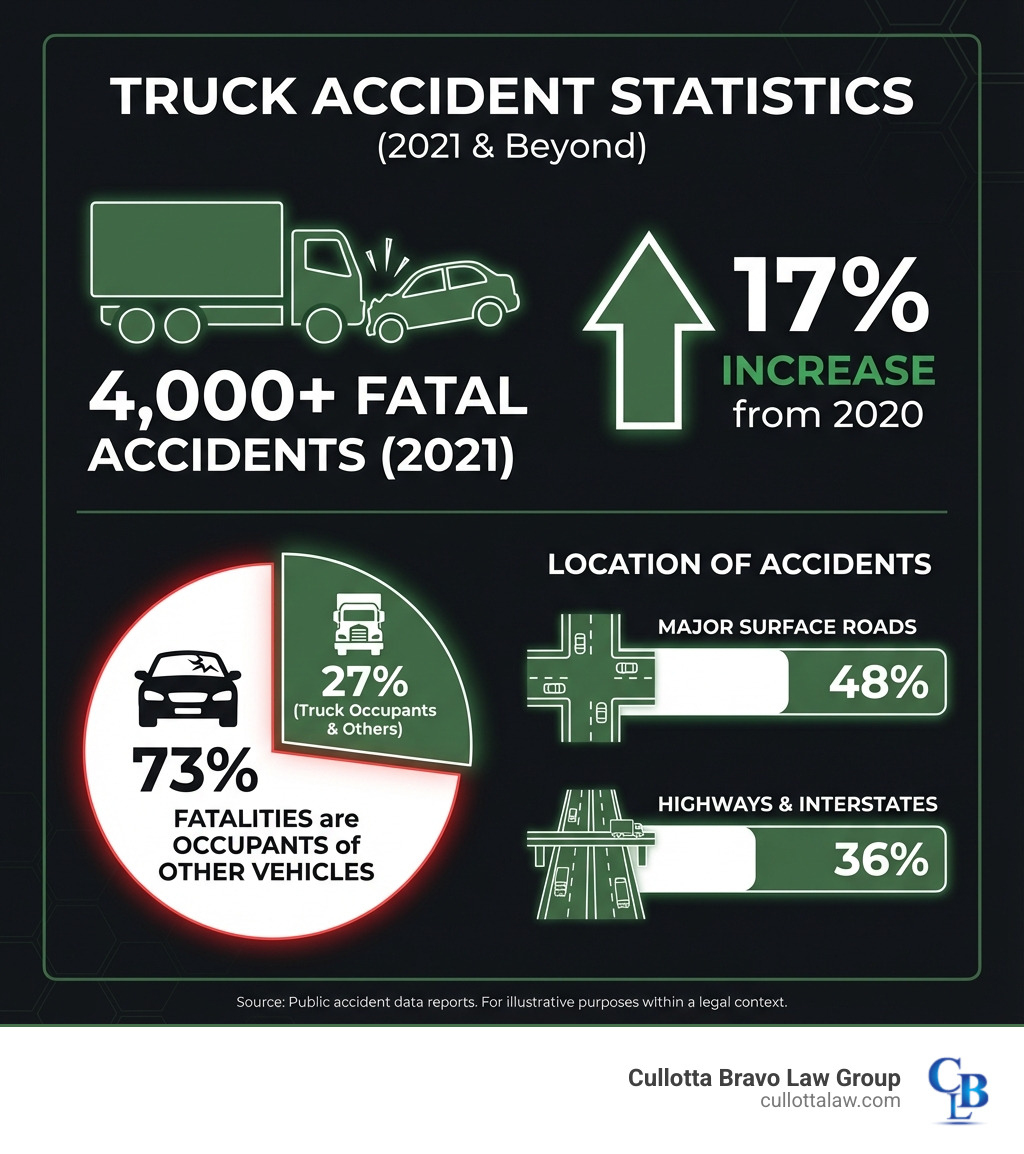
Collisions involving commercial motor vehicles—such as semi-trucks, tractor-trailers, 18-wheelers, and box trucks—differ fundamentally from standard passenger car wrecks. The sheer scale, weight, and operational dynamics of a loaded 18-wheeler, which can weigh up to 80,000 pounds under federal standards, mean that collisions frequently result in catastrophic injuries, permanent disabilities, or fatalities. When a passenger vehicle collides with a massive commercial truck, the physics involved often dictate severe outcomes for the occupants of the smaller vehicle.
Beyond the physical devastation, the legal and regulatory framework governing commercial trucking is extensive. Trucking companies and their drivers are bound by both state traffic laws and the rigorous safety regulations enforced by the Federal Motor Carrier Safety Administration (FMCSA). These regulations dictate everything from how many consecutive hours a driver can remain behind the wheel to mandatory maintenance schedules for air brakes, tires, and steering mechanisms.
When an accident occurs on major Birmingham thoroughfares—such as Interstate 65, Interstate 20, Interstate 59, or U.S. Highway 31—determining liability is rarely straightforward. Unlike a typical two-car accident where fault may lie solely with one driver, an 18-wheeler crash often involves multiple layers of potential responsibility.
Potential Liable Parties in Trucking Litigation
- The Truck Driver: May be liable for driver fatigue, distraction, speeding, driving under the influence, or operating outside of hours-of-service regulations.
- The Motor Carrier (Trucking Company): May be held directly liable for negligent hiring, improper training, pushing drivers to violate safety rules, or failing to maintain fleet vehicles.
- The Cargo Loader or Shipper: Third-party loading facilities can be held accountable if improperly secured, overloaded, or unevenly distributed cargo causes the truck to jackknife, spill, or roll over.
- Parts Manufacturers: Defective components, such as failing brake lines, blown trailer tires, or malfunctioning hitch assemblies, can introduce product liability claims into the lawsuit.
- Maintenance Contractors: Third-party repair shops that performed faulty or incomplete service work prior to the crash may also share blame.
Critical Steps Following an 18-Wheeler Accident in Birmingham
The moments, days, and weeks following a major truck collision are critical for protecting your health and preserving your legal rights. Insurance adjusters and corporate defense investigators often deploy to accident scenes within hours of a major crash to minimize their employer's liability. Knowing what actions to take can safeguard your ability to recover compensation.
Immediate Action Checklist
- Prioritize Emergency Medical Care: Call 911 immediately. Even if you feel fine, adrenaline can mask severe internal injuries, traumatic brain injuries (TBIs), and spinal trauma. Medical documentation created at the scene or immediately afterward is vital evidence.
- Contact Law Enforcement: Ensure that a formal accident report is filed by the Birmingham Police Department or the Alabama Law Enforcement Agency (ALEA). Request a copy of this report for your records.
- Document the Scene (If Able): Capture comprehensive photographs and video footage of all vehicles involved, skid marks, road debris, traffic signs, weather conditions, and visible injuries. Capture DOT numbers and company names painted on the side of the cab and trailer.
- Gather Witness Information: Obtain names, phone numbers, and statements from any independent eyewitnesses who saw how the crash unfolded.
- Decline Recorded Statements: Insurance adjusters representing the trucking company may contact you quickly, requesting a recorded statement. Politely decline and refer them to your legal counsel to avoid inadvertently harming your claim.
Key Factors to Evaluate When Hiring a Birmingham Truck Accident Attorney
Not all personal injury attorneys possess the specialized knowledge, financial resources, and trial experience required to litigate complex commercial trucking cases effectively. Large trucking corporations and their insurers invest heavily in legal defense teams designed to reduce payouts. Consequently, selecting an attorney requires careful scrutiny of specific professional qualifications.
Essential Qualifications to Look For
- Deep Knowledge of FMCSA Regulations: Your lawyer must thoroughly understand federal safety rules, electronic logging device (ELD) data, driver qualification files, and maintenance logs.
- Access to Industry Experts: Successful trucking litigation often relies on accident reconstructionists, trucking safety experts, mechanical engineers, and medical specialists who can articulate how and why the crash occurred.
- Litigation and Trial Readiness: Many insurance claims settle out of court, but an attorney with a proven track record inside the courtroom commands greater respect from opposing counsel and insurance carriers during negotiations.
- Investigative Speed and Resources: Preserving crucial evidence—such as black box data (Powertrain Control Module/Event Data Recorder), dashcam footage, and driver cell phone records—requires rapid legal intervention, often through emergency court orders known as spoliation letters.
| Evaluation Criteria | General Personal Injury Practice | Specialized 18-Wheeler Litigation Practice |
|---|---|---|
| Regulatory Knowledge | General state traffic laws | Extensive knowledge of FMCSA and state commercial codes |
| Evidence Gathering | Police reports and basic witness statements | Black box data, ELD logs, maintenance records, and corporate safety audits |
| Expert Network | General medical providers | Accident reconstructionists, trucking safety experts, and economists |
| Corporate Discovery | Standard insurance policy review | Deep corporate discovery into hiring practices, dispatch records, and safety histories |
Alabama Legal Principles Impacting Truck Accident Claims
Filing a personal injury or wrongful death lawsuit in Alabama involves adhering to specific state laws that directly influence the outcome of your case. Understanding these legal nuances highlights the necessity of retaining local counsel familiar with Alabama jurisprudence.
The Strict Rule of Contributory Negligence
Alabama is one of a very small number of jurisdictions that strictly adheres to the legal doctrine of contributory negligence. Under this rule, if an injured plaintiff is found to be even one percent (1%) at fault for the accident, they are completely barred from recovering any financial compensation from other at-fault parties.
Insurance companies and defense lawyers frequently exploit this rule by attempting to shift a fraction of the blame onto the passenger vehicle driver—claiming they were speeding, distracted, or in the truck's blind spot. An experienced Birmingham truck accident lawyer anticipates these defense strategies and gathers objective evidence, such as forensic analysis and electronic data, to refute allegations of shared fault.
Statutes of Limitations
Timing is critical when pursuing legal action in Alabama:
- Personal Injury Claims: Under Alabama Code § 6-2-38, individuals generally have two years from the date of the accident to file a personal injury lawsuit.
- Wrongful Death Claims: If a loved one lost their life in a commercial truck collision, Alabama law requires a wrongful death lawsuit to be filed within two years of the date of death. Notably, Alabama's wrongful death statute is unique because it focuses entirely on punishing the wrongdoer through punitive damages rather than compensating for economic losses.
Failing to file a lawsuit within these statutory windows permanently forfeits your right to seek justice and compensation through the courts.
Understanding Damages and Compensation Available
Victims of commercial truck accidents face staggering financial, physical, and emotional burdens. A comprehensive legal claim seeks to recover economic and non-economic damages to account for every facet of the loss.
Categories of Recoverable Damages
- Medical Expenses: Coverage for past, current, and future medical treatment, including emergency room care, surgeries, physical therapy, prescription medications, and assistive medical devices.
- Lost Wages and Earning Capacity: Compensation for income lost during recovery, as well as diminished future earning potential if permanent disabilities prevent the victim from returning to their previous profession.
- Property Damage: Repair or replacement costs for your vehicle and any personal property destroyed in the collision.
- Pain and Suffering: Compensation for physical pain, emotional distress, anxiety, depression, and a diminished quality of life.
- Punitive Damages: In cases involving gross negligence, wanton disregard for safety, or intentional misconduct by the trucking company or driver, Alabama courts may award punitive damages to punish the offender and deter similar conduct.
Frequently Asked Questions
What should I do if the trucking company's insurance adjuster offers me a quick settlement?
You should decline any early settlement offers until you have consulted with a qualified truck accident attorney. Initial offers from insurance adjusters are almost always designed to minimize payouts and are presented before the full scope of your medical needs and long-term expenses is known. Once you sign a release, you cannot seek additional compensation later.
How is evidence preserved after a commercial truck accident?
Your attorney will immediately send formal legal notifications, known as spoliation letters, to the trucking company and its insurers. These letters legally mandate the preservation of physical and digital evidence, including electronic logging device data, driver qualification files, maintenance logs, dispatch communications, and the truck's black box data, preventing them from being destroyed or altered.
Can I still recover damages if the truck driver was an independent contractor?
Yes. Determining whether a driver is classified as an employee or an independent contractor is a complex legal issue, but motor carriers can still be held liable under various legal theories. Additionally, federal regulations often hold interstate motor carriers responsible for the safety and operation of vehicles displaying their placards, regardless of specific contractor labels.
How much does it cost to hire an 18 wheeler accident lawyer in Birmingham?
Most reputable truck accident attorneys operate on a contingency fee basis. This means you pay nothing upfront out of pocket. The attorney's fees are collected as an agreed-upon percentage of the financial recovery they successfully secure for you through a settlement or court verdict. If they do not recover money for you, you owe no attorney fees.
Next Actions and Securing Professional Guidance
Navigating the aftermath of a severe trucking collision requires prompt, decisive action. Because critical evidence like black box data and surveillance footage can be overwritten or lost within days, reaching out to qualified legal counsel as soon as possible is essential. Seek an initial consultation with a Birmingham-based attorney who focuses on commercial vehicle litigation to review the specifics of your case, evaluate liability, and protect your rights under Alabama law.