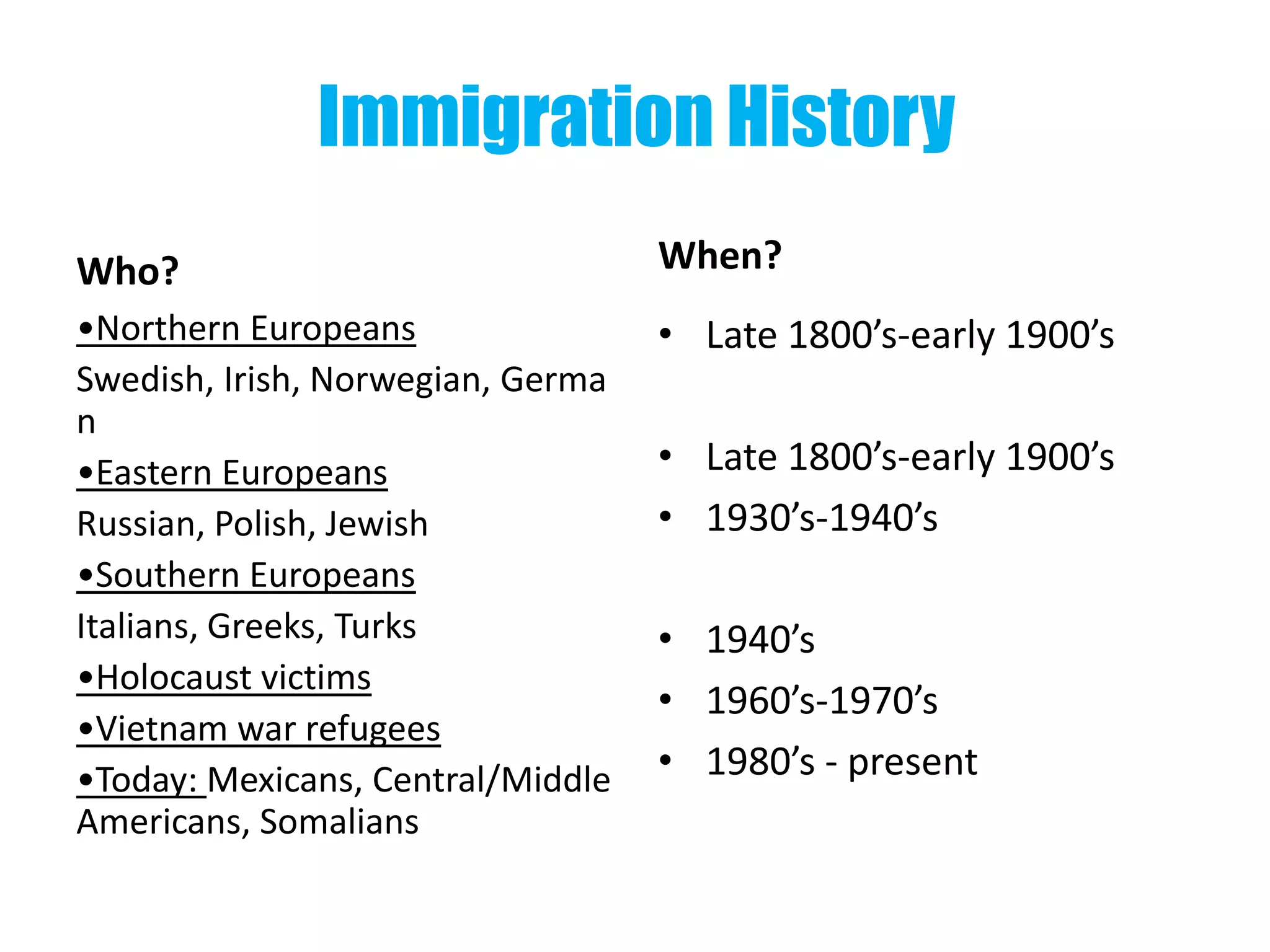
The 1920s marked a profound turning point in American history, transitioning the nation from an era of largely unrestricted borders to a strict quota-based system. Driven by post-World War I isolationism, economic anxieties, and rising xenophobia, the United States fundamentally reshaped its immigration policy through landmark legislation like the Emergency Quota Act of 1921 and the National Origins Act of 1924, dramatically curtailing arrivals from Southern and Eastern Europe while restricting Asian immigration entirely.
The Historical Context of Post-WWI America
To understand the trajectory of immigration to the United States during the 1920s, one must examine the geopolitical and domestic landscape immediately following the conclusion of the First World War in 1918. The preceding decades had witnessed the largest wave of immigration in American history, often referred to as the "New Immigration." Millions of people, predominantly from Southern and Eastern Europe—including Italians, Greeks, Poles, Hungarians, and Russian Jews—arrived at ports of entry like Ellis Island. They sought employment in America's rapidly expanding industrial economy, filling low-wage labor demands in coal mines, steel mills, and garment factories.
However, the conclusion of World War I brought severe economic readjustments, high inflation, and widespread labor strikes. Returning American soldiers faced scarce employment opportunities, which fueled public resentment toward foreign-born workers. This economic anxiety intersected with a resurgence of nativism—a sociopolitical belief system that favored established inhabitants over new immigrants. Nativists argued that the massive influx of culturally distinct populations threatened American identity, democratic institutions, and social stability.
Furthermore, the backdrop of the 1917 Bolshevik Revolution in Russia triggered the First Red Scare in the United States. Federal authorities and the general public grew increasingly paranoid that radical political ideologies, such as anarchism, socialism, and communism, were being imported by foreign-born agitators. This climate of fear and suspicion created overwhelming political momentum for legislative intervention to stem the tide of foreign arrivals.
The Legislative Turning Point: Quotas and Restrictions
Prior to the 1920s, federal immigration policy relied primarily on selective exclusion rather than numerical caps. Laws such as the Chinese Exclusion Act of 1882 and the creation of the Asiatic Barred Zone in 1917 targeted specific nationalities, but European immigration remained largely unrestricted, save for health inspections and literacy requirements introduced in 1917. The 1920s dismantled this open-door framework by establishing a mathematical formula designed to preserve the demographic dominance of Northern and Western Europeans.
The Emergency Quota Act of 1921
As an interim measure to manage an anticipated wave of post-war refugees fleeing war-torn Europe, Congress passed the Emergency Quota Act of 1921, also known as the Johnson Quota Act. This law established numerical limits on immigration for the first time in U.S. history.
- The Formula: The act capped total annual immigration from the Eastern Hemisphere at approximately 357,000 individuals.
- The Percentage Rule: It restricted immigration from any given country to 3 percent of the total number of foreign-born persons of that nationality living in the United States, as recorded by the 1910 federal census.
- The Bias: Because the 1910 census heavily reflected earlier waves of migration from Great Britain, Ireland, Germany, and Scandinavia, the 3 percent formula heavily favored Northern and Western Europeans while severely restricting Southern and Eastern Europeans.
- Exemptions: The law did not apply to countries in the Western Hemisphere (Canada and Latin American nations), largely due to the agricultural labor demands of southwestern growers and industrialists.
The National Origins Act of 1924 (Johnson-Reed Act)
Recognizing that the 1921 act was a temporary solution, Congress passed the more comprehensive National Origins Act of 1924, permanently cementing national-origins quotas into federal law.
| Legislative Act | Core Restriction Mechanism |
|---|---|
| Emergency Quota Act (1921) | 3% of foreign-born residents by 1910 census |
| National Origins Act (1924) | 2% of foreign-born residents by 1890 census |
| National Origins Formula | Total cap of 150,000 (effective July 1929) |
The 1924 act lowered the allowable percentage from 3 percent to 2 percent. Crucially, it shifted the baseline census year from 1910 back to 1890. By utilizing the 1890 census, legislators deliberately bypassed the peak decades of Southern and Eastern European immigration, capturing a demographic makeup that was overwhelmingly Anglo-Saxon and Nordic.
The 1924 legislation also included sweeping changes to enforcement and Asian exclusion:
- The Border Patrol: The act officially established the United States Border Patrol in May 1924 to secure the land borders between ports of entry.
- Consular Visa System: It mandated that immigrants obtain visas from American consulates abroad before boarding a ship to the United States, shifting the burden of screening overseas and reducing the number of rejections at ports of entry like Ellis Island.
- Total Asian Exclusion: Section 13(c) of the act barred entry to any individual "ineligible to citizenship," which effectively prohibited all immigration from Japan and other Asian nations, straining diplomatic relations with Tokyo.
Demographic Shifts and the Impact on Immigrant Communities
The implementation of the 1921 and 1924 quota laws triggered an immediate and dramatic drop in immigration numbers. Total annual immigration plummeted from over 800,000 in 1921 to fewer than 165,000 by 1924, and continued to decline thereafter. This abrupt closure of traditional European pathways forced fundamental changes within established immigrant communities across the United States.
The Rise of the "Second Generation"
With new arrivals restricted, immigrant enclaves—such as New York's Lower East Side or Chicago's Little Italies—turned inward. The focus shifted from assimilation and supporting newly arrived countrymen to fostering the growth of the second generation. Children of immigrants, born on American soil, navigated public education, entered the workforce in broader numbers, and began integrating into mainstream American culture, politics, and labor unions.
The Diversification of Western Hemisphere Labor
Because the quota laws exempted countries in the Western Hemisphere, employers facing labor shortages turned heavily toward Mexico and other Latin American nations. Mexican immigration to the United States grew significantly during the 1920s. Mexican laborers found employment primarily in agriculture, railroad maintenance, and construction throughout the American Southwest and Midwest. Despite this economic reliance, Mexican immigrants faced persistent social discrimination, local segregation, and fluctuating political pressure regarding deportation and border enforcement.
African American Migration
Simultaneously, the reduction of European labor prompted northern industrial employers to recruit aggressively within the American South. This accelerated the Great Migration—the mass movement of millions of African Americans from rural southern states to industrial centers like Chicago, Detroit, New York, and Philadelphia. While African Americans filled the labor vacuum left by curtailed European immigration, they encountered entrenched racial discrimination, housing covenants, and labor competition.
Enforcement Mechanisms and the Birth of Modern Border Control
The 1920s fundamentally transformed how the United States monitored and enforced its territorial boundaries. Prior to this decade, immigration control was largely centralized at maritime ports of entry, where officials inspected arrivals for physical illness, legal admissibility, and financial self-sufficiency.
The establishment of the U.S. Border Patrol in 1924 expanded federal jurisdiction across thousands of miles of land borders with Canada and Mexico. Operating under the Department of Labor (and later the Immigration and Naturalization Service), early Border Patrol agents focused primarily on intercepting unauthorized entries, bootlegging activities during Prohibition, and monitoring labor movements along the southern border.
Furthermore, the introduction of the consular visa system established a bureaucratic filter overseas. Prospective immigrants no longer arrived at Ellis Island hoping for admission; instead, they had to prove their eligibility, pass background checks, and secure a visa from a U.S. consul in their home country. This administrative shift drastically reduced the volume of detained and deported individuals at domestic ports, streamlining processing for those who held valid documentation.
Legacy and Long-Term Repercussions
The restrictive immigration regime established in the 1920s remained the cornerstone of American immigration policy for four decades. The national origins quota system persisted through the Great Depression and World War II, preventing the admission of hundreds of thousands of European refugees fleeing Nazi persecution in the 1930s and 1940s.
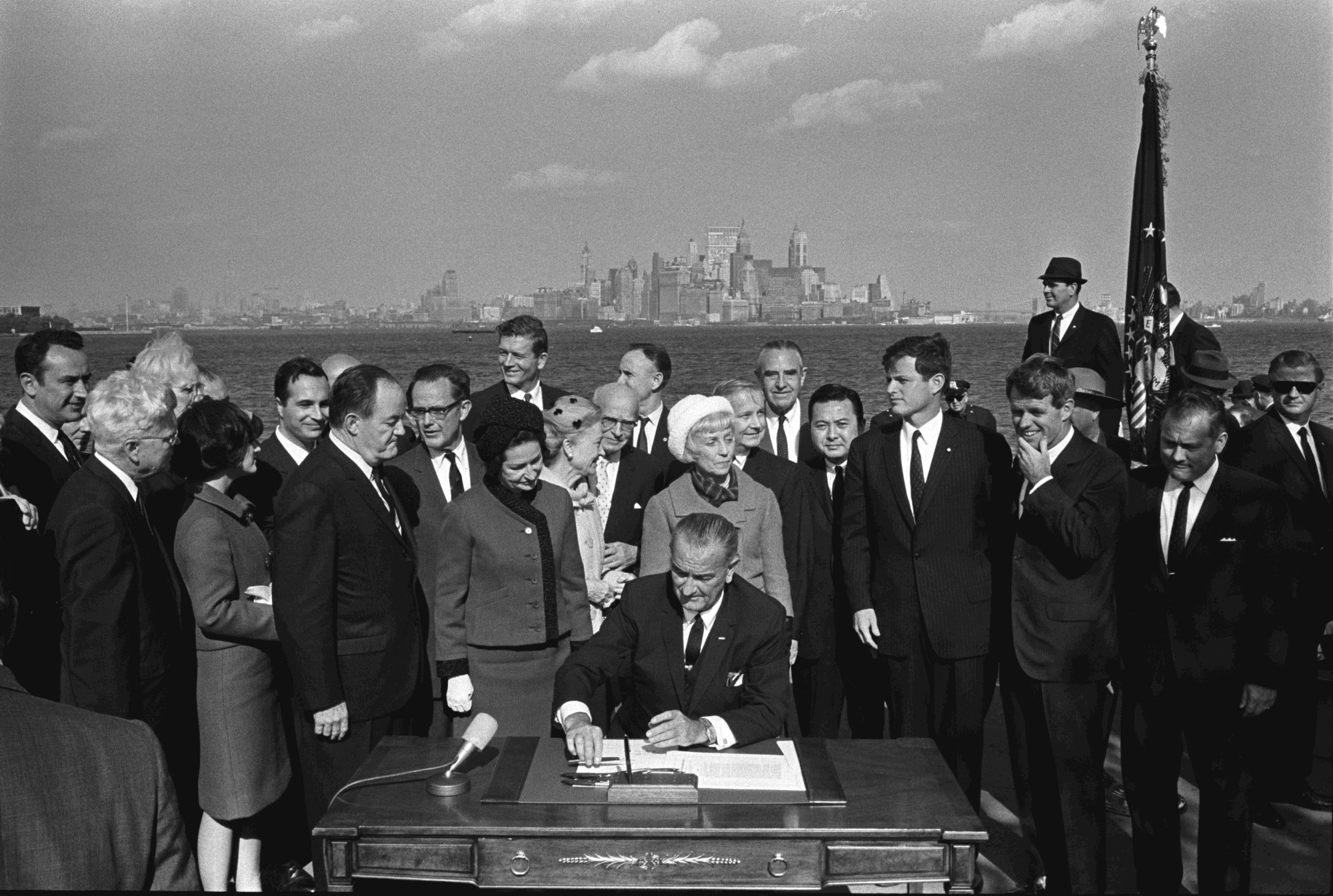
It was not until the passage of the Immigration and Nationality Act of 1965 (the Hart-Celler Act) that the national origins quota system was formally abolished. The 1965 act replaced national quotas with a preference system focused on family reunification and skilled labor, reshaping the modern demographic landscape of the United States. The legislative architecture of the 1920s stands as a powerful historical case study of how economic instability, social anxiety, and political nativism can dramatically redirect a nation's borders and identity.
Frequently Asked Questions
What caused the shift toward restrictive immigration policies in the 1920s?
The shift was driven by post-World War I economic anxiety, high inflation, a fear of radical political ideologies during the First Red Scare, and a resurgence of nativism. Many Americans believed that large-scale immigration from Southern and Eastern Europe threatened traditional cultural norms and job security.
How did the National Origins Act of 1924 affect Asian immigration?
The National Origins Act of 1924 completely banned immigration from Japan and other Asian nations by prohibiting the entry of any person "ineligible to citizenship." This provision formalized and expanded existing exclusions, such as the 1882 Chinese Exclusion Act, and caused severe diplomatic friction with Japan.
Were all countries subject to the quota limits established in the 1920s?
No. Nations in the Western Hemisphere, specifically Canada and independent Latin American countries, were exempt from the numerical quotas set by the Emergency Quota Act of 1921 and the National Origins Act of 1924, primarily due to the demand for agricultural and industrial labor in the United States.
What role did the 1890 census play in the 1924 Immigration Act?
The 1924 act based immigration quotas on 2 percent of the foreign-born population of each nationality living in the U.S. according to the 1890 census. Lawmakers chose 1890 because it predated the peak years of immigration from Southern and Eastern Europe, ensuring that quotas favored Northern and Western Europeans.
How did the 1920s immigration laws change the way immigrants entered the U.S.?
The 1924 act introduced the mandatory consular visa system, requiring immigrants to obtain a visa from an American consulate abroad before traveling to the United States. This shifted inspections overseas and led to the creation of the U.S. Border Patrol to police land boundaries between ports of entry.