When examining financial protection products, understanding the 1 key cost overview for a 30 year term life policy at Aflac requires looking closely at how age, health classification, coverage amounts, and underwriting guidelines interact to determine your monthly or annual premium. The single most important cost driver for any term life insurance policy of this length is your attained age at the time of application, which dictates the baseline mortality risk assumed by the insurer over the three-decade duration.
Navigating the financial landscape of long-term life insurance can be complex, particularly when evaluating major providers known primarily for supplemental health products. Aflac—historically recognized for workplace-sponsored accident, disability, and cancer policies—also offers individual life insurance solutions, including term life products designed to provide financial stability over extended periods. Evaluating these policies requires a clear breakdown of pricing mechanics, policy longevity, underwriting structures, and the broader context of personal financial planning. Because financial advisory needs vary by jurisdiction and individual circumstance, policyholders should treat rate charts as directional estimates and consult directly with licensed insurance professionals or official carrier representatives to verify precise quotes before submitting an application.
Understanding Term Life Insurance Fundamentals
Term life insurance is the most straightforward form of financial protection available. Unlike permanent life insurance policies—such as whole life or universal life—term policies do not build cash value or investment components. Instead, they provide a pure death benefit over a specified timeframe, known as the term.
A 30-year term life policy establishes a binding contract between the insured and the insurance carrier. For a period of 360 consecutive months, the policyholder pays a fixed or level premium. In exchange, the carrier promises to pay a predetermined tax-free lump sum to designated beneficiaries if the insured passes away while the policy is active. If the term expires and the insured is still living, the coverage terminates unless specific renewal or conversion provisions are exercised.
The appeal of a 30-year term lies in its duration. It is specifically engineered to bridge significant financial responsibilities that span decades. This includes covering a newly minted 30-year mortgage, funding children's education through their college years, and replacing income during the prime wealth-building decades of a career. By locking in a rate for 30 years, policyholders protect themselves against future health declines and the natural cost increases that come with aging.
The Primary Cost Driver: Age and Underwriting Mechanics
The foundational element determining the cost of an Aflac 30-year term life policy is the age of the applicant combined with their overall health profile. Life insurance pricing operates on actuarial science, where the probability of mortality dictates the cost of coverage.
Attained Age at Application
Every year you wait to purchase life insurance, the baseline cost of your policy increases. A 30-year term policy taken out at age 30 will carry a significantly lower monthly premium than the exact same coverage amount purchased at age 45, not merely because of the elapsed years, but because the risk profile of a 45-year-old body over a 30-year horizon extends deep into older age brackets where mortality rates rise more steeply.
Health Classification Tiers
Carriers utilize medical underwriting to assign applicants to specific pricing tiers. These classifications generally range from Preferred Plus (or Preferred Best) to Standard, with distinct sub-categories for tobacco users. The assessment typically involves:
- Reviewing personal medical history and prescription databases.
- Examining family medical history for hereditary conditions like heart disease or certain cancers.
- Evaluating lifestyle factors, including hazardous hobbies, driving records, and travel habits.
- In many cases, completing a paramedical exam that measures height, weight, blood pressure, cholesterol, and blood/urine chemistry.
Securing the lowest cost tier requires maintaining optimal physiological metrics. Even minor elevations in blood pressure or body mass index can push an applicant from a Preferred tier to a Standard tier, resulting in a noticeable increase in cumulative payments over a 30-year span.
Analyzing Structure and Fixed Premium Stability
One of the defining financial characteristics of a 30-year term policy is the level premium structure. When you secure a policy, the premium quoted is the premium you pay for the duration of the term, provided you maintain timely payments and do not alter the face value or riders.
This predictability is a powerful tool for household budgeting. While inflation and the general cost of living rise over three decades, your life insurance payment remains static. However, this stability requires careful planning at the outset. Because you are locking in a rate that averages your risk across 30 years, the initial years of the policy may see you paying slightly more than the pure actuarial risk for a one-year term, while the later years of the policy offer substantial value as your age-adjusted risk surpasses your flat premium rate.
Comparison of Term Durations
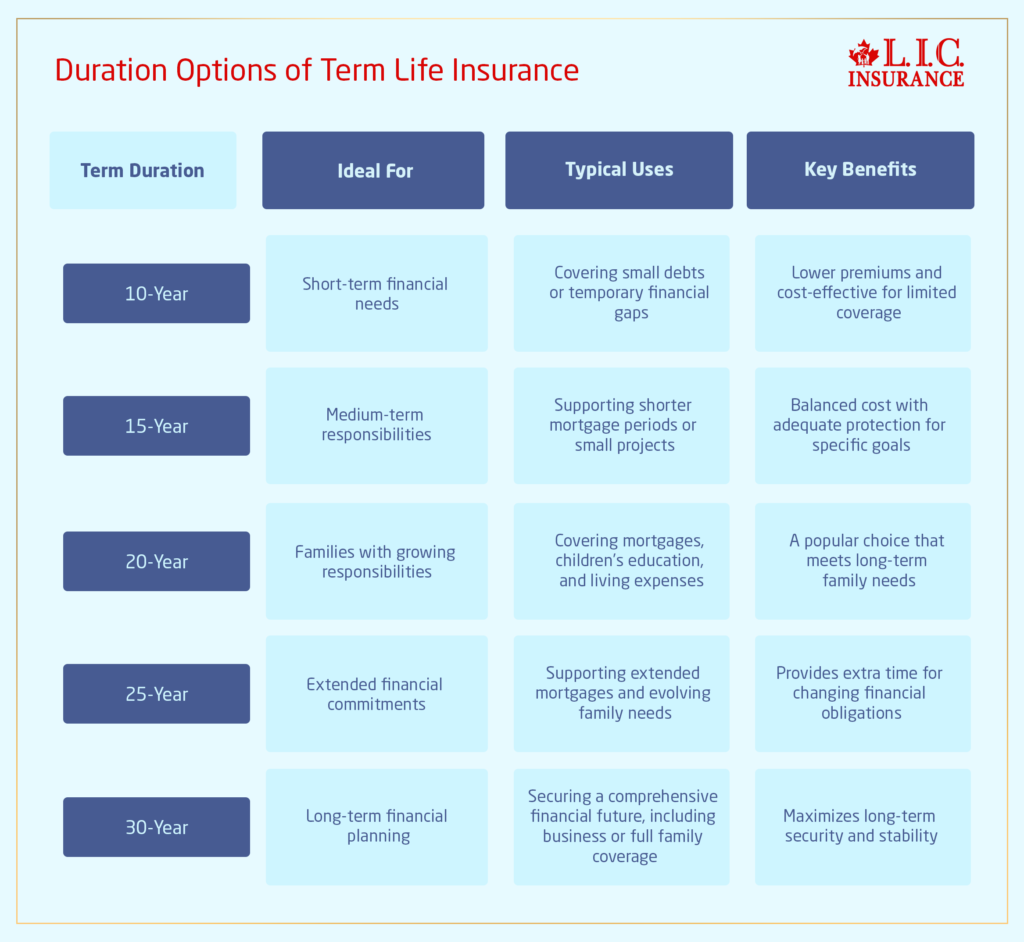
To understand why a 30-year term is priced the way it is, it helps to compare it against shorter alternatives like 10-year or 20-year terms.
| Term Length | Primary Financial Use Case | Initial Cost Relative to 30-Year | Rate Stability |
|---|---|---|---|
| 10-Year Term | Short-term debt, temporary income replacement | Lowest | Level for 10 years; sharp spike upon renewal |
| 20-Year Term | Raising children through adolescence, mid-term loans | Moderate | Level for 20 years; higher renewal risk |
| 30-Year Term | 30-year mortgages, long-term family protection | Highest initial baseline | Level for 30 years; maximum budget certainty |
Examining Aflac's Product Ecosystem and Distribution
Aflac operates distinctively within the insurance marketplace. While widely known for payroll-deduction supplemental products distributed through workplace benefits programs, individual life insurance lines—including term products—often involve distinct acquisition channels, independent agents, or digital platforms.
When evaluating an Aflac 30-year term policy, consumers should examine how the policy is serviced. Workplace-associated products often benefit from streamlined administrative processes, but individual term life insurance typically requires direct underwriting evaluation. It is essential to verify whether the policy is issued directly by American Family Life Assurance Company of Columbus (Aflac) or through an affiliated underwriting partner, as administrative procedures, customer service contacts, and claims processing pathways can vary based on the issuing entity.
Furthermore, buyers should investigate the conversion privileges associated with the policy. A conversion rider allows the policyholder to convert all or part of their term life insurance into a permanent life insurance policy—such as whole life—without undergoing a new medical exam. Given that health changes over 30 years are common, having a guaranteed conversion option provides a critical safety net for individuals who may need lifelong coverage once their term expires.
Financial Planning Integration: How Much Coverage Do You Need?
Determining the cost of a 30-year term policy cannot be done in isolation from determining the face value. A common mistake is selecting an arbitrary round number, such as $500,000 or $1,000,000, without conducting a thorough financial needs analysis.
Professionals often recommend utilizing frameworks such as the DIME method (Debt, Income, Mortgage, Education) to calculate the precise face value required:
- Debt: Total non-mortgage debt, including credit cards, auto loans, and student loans.
- Income: Annual income multiplied by the number of years your family would require replacement income. For a young family with a 30-year term horizon, this often aligns with the working years remaining until retirement.
- Mortgage: The total outstanding balance required to pay off the home loan entirely, ensuring surviving dependents retain housing security.
- Education: Estimated future tuition and living expenses for children's college education.
Balancing the face value against your monthly budget is critical. A policy with an exceptionally high face value may feature a monthly premium that strains household cash flow, increasing the risk of policy lapse. Conversely, underinsuring leaves dependents vulnerable to financial shortfall.
Common Misconceptions Regarding Term Life Costs
Several persistent myths surround the pricing and utility of long-term term life insurance policies. Clearing up these misconceptions helps consumers make realistic financial decisions.
Myth: Term Insurance Refunds Your Money Automatically
Some consumers confuse term life insurance with specialized return-of-premium (ROP) products. Standard term life insurance is pure indemnity protection; if you outlive the 30-year term, no benefits are paid out, and premiums are not refunded. While ROP term policies exist—where higher premiums are paid in exchange for a full refund of base premiums if the insured survives the term—standard 30-year policies do not operate this way.
Myth: Workplace Group Life Is Always Cheaper Than Individual Term
While employer-sponsored group life insurance is convenient and often provides a modest baseline of coverage (such as one or two times your salary) at low or no cost to the employee, it is rarely sufficient for comprehensive family protection. Furthermore, group life policies are typically unportable—if you leave the employer, the coverage does not go with you, or it converts to an individual rate that is significantly higher than a policy locked in at a younger age. Purchasing an individual 30-year term policy secures independent rate stability regardless of employment changes.
Myth: Health Conditions Automatically Disqualify You
Many individuals delay purchasing life insurance because they assume managed conditions like controlled hypertension or high cholesterol make coverage prohibitively expensive or impossible to obtain. While these conditions influence underwriting tiers, they rarely result in outright denial. Working with an experienced agent allows applicants to find carriers whose underwriting guidelines look favorably upon well-managed health profiles.
Practical Steps for Securing and Managing Your Policy
Securing an Aflac 30-year term life policy or any comparable long-term contract involves a structured sequence of actions designed to protect both the consumer and the insurer.
- Conduct a Needs Assessment: Calculate your exact financial exposure using the DIME formula or professional guidance to determine the appropriate face value (e.g., $250,000, $500,000, or $1,000,000).
- Review Personal Health and Lifestyle Factors: Gather documentation regarding your medical history, current prescriptions, and family medical background to anticipate your likely underwriting classification.
- Request Detailed Quotes: Obtain official quotes based on your exact age, desired term length, and face value. Ensure you review both level premium costs and any optional riders, such as waiver of premium or accelerated death benefits.
- Complete Underwriting and Paramedical Exam: If required, prepare for the medical examination by fasting if instructed, avoiding strenuous exercise or caffeine prior to the appointment, and ensuring accurate medical records are accessible.
- Review the Policy Document Upon Issuance: Examine the final contract for contestability periods, grace periods, premium payment modes (monthly, quarterly, or annual), and conversion options.
- Establish Automated Payments: Set up recurring electronic fund transfers (EFT) to prevent accidental policy lapse due to missed payments, ensuring uninterrupted protection over the 30-year span.
Frequently Asked Questions
What happens to my Aflac 30-year term life policy after the 30 years expire?
Once the 30-year term concludes, the coverage typically expires, and the policy terminates. Some policies feature an option to renew on a year-to-year basis, but renewal rates increase substantially each year based on your attained age at that time. Alternatively, if your policy includes a conversion rider, you can convert the policy to a permanent life insurance plan without taking a medical exam.
Can my Aflac term life insurance premiums increase during the 30-year term?
No. A defining feature of a level-premium term life insurance policy is that the insurance carrier cannot raise your premium payments during the specified 30-year period, provided you pay your premiums on time and do not modify the policy structure or face value.
Are the death benefits from a 30-year term life policy taxable?
In most standard situations, life insurance death benefits paid to named individual beneficiaries are received income tax-free under federal tax laws. However, estate tax implications can arise under specific high-net-worth circumstances or if the estate itself is named as the beneficiary instead of an individual. Consult a qualified tax professional regarding specific jurisdictional rules.
Can I change my coverage amount or cancel the policy later?
You can cancel a term life policy at any time without penalty simply by stopping premium payments, though you will lose all accumulated coverage and past payments. Decreasing the face value is usually permitted, but increasing the face value typically requires submitting a new application and undergoing additional underwriting.
How does underwriting evaluate tobacco use for a 30-year term policy?
Tobacco and nicotine usage—including cigarettes, cigars, pipes, chewing tobacco, and e-cigarettes or vaping products—is categorized strictly in life insurance underwriting. Because tobacco use correlates with significantly higher health risks, smokers are placed into distinct rate tiers that feature substantially higher premiums than non-smoker rates. Some carriers allow applicants to requalify for non-smoker rates after a verified, consecutive period (often 12 to 24 months) of complete cessation.
Conclusion and Next Actions
Evaluating the financial commitment of a 30-year term life policy requires balancing immediate budget constraints against long-term family security. Because the foundational cost is anchored firmly to your age and health profile at the time of application, taking action sooner rather than later preserves lower baseline rates. To proceed effectively, calculate your exact coverage requirements, review your health and lifestyle profile realistically, and connect directly with a licensed insurance representative to obtain verified, personalized quotes tailored to your unique financial planning goals.