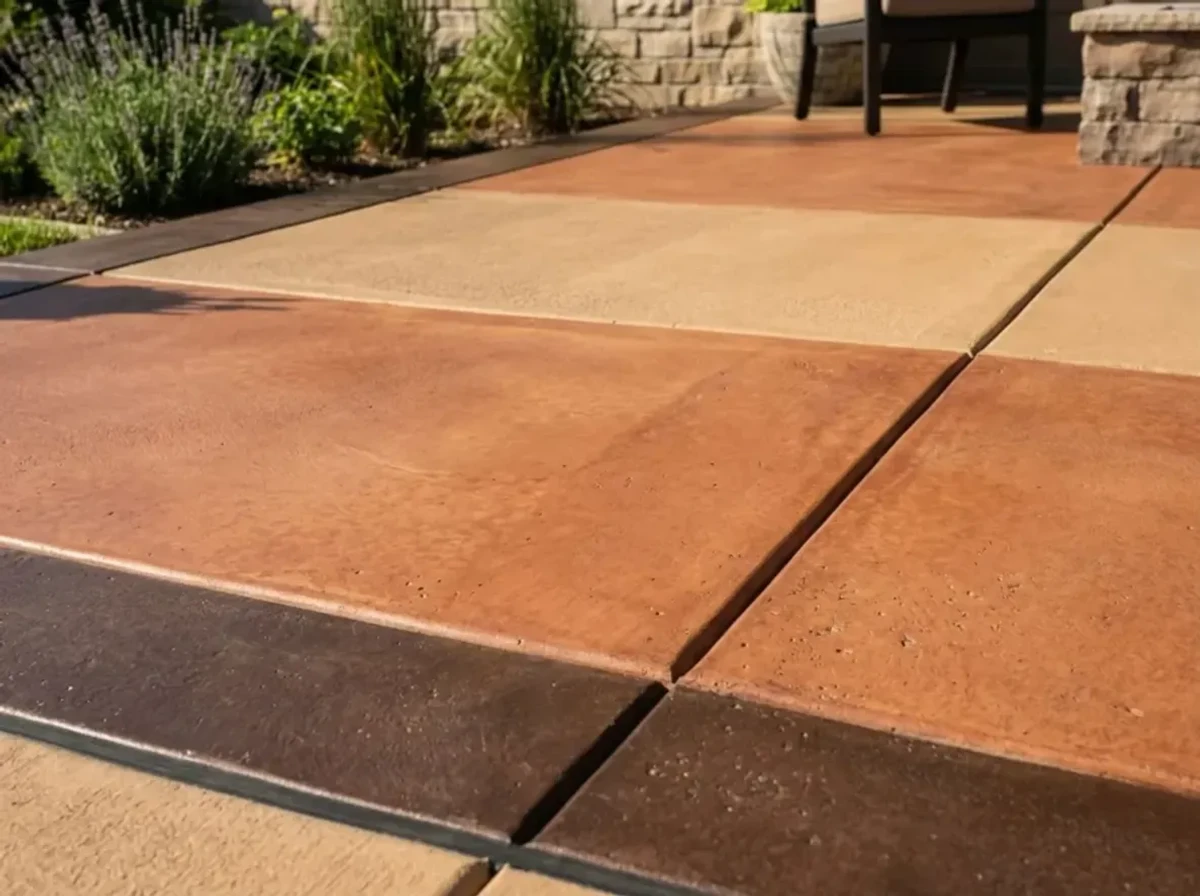
Decorative concrete is the practice of using concrete not just as a structural medium but as an aesthetic enhancement to a structure while still serving its functional purpose. By utilizing various materials and techniques applied during or after the pouring process, standard grey concrete is transformed into a wide range of colors, textures, and patterns that mimic high-end materials like stone, brick, wood, and marble.
In 2026, decorative concrete has evolved beyond simple aesthetics into a high-performance architectural element. Whether you are looking to revitalize a residential driveway, install a modern polished floor in a commercial space, or create a custom outdoor living area, understanding the full spectrum of decorative concrete options is essential for a successful project. This guide covers the primary types, installation prerequisites, cost considerations, and long-term maintenance required for all decorative concrete applications.
The Primary Categories of Decorative Concrete
To understand the breadth of "all decorative concrete," one must categorize the methods based on how the finish is achieved. These categories range from integral treatments to topical applications and mechanical refinements.
1. Stamped Concrete (Textured Concrete)
Stamped concrete, often called textured or imprinted concrete, is the most popular choice for outdoor surfaces like patios and pool decks. It involves pressing flexible polyurethane mats into freshly poured concrete to create a pattern.
- The Process: After the concrete is poured and leveled, a "release agent" is applied to prevent the stamps from sticking. Professional installers then walk across the stamps to imprint the texture.
- Mimicry: This technique can accurately replicate slate, flagstone, cobblestone, and even wood planks.
- Best Use Case: High-traffic outdoor areas where the look of natural stone is desired without the maintenance of individual pavers (which can shift or allow weed growth).
2. Stained and Colored Concrete
Coloring is perhaps the most versatile aspect of decorative concrete. In 2026, the technology behind UV-stable pigments and reactive stains has reached a peak in durability.
- Integral Color: The pigment is mixed directly into the concrete truck. This ensures the color is consistent throughout the entire slab, so if it chips, the grey core is not revealed.
- Acid Stains: These react chemically with the calcium hydroxide in the concrete to create variegated, translucent, and earth-toned marbled effects.
- Water-Based Dyes: These offer a much wider palette, including vibrant blues, reds, and yellows. They penetrate the pores of the concrete but do not rely on a chemical reaction, making the results more predictable.
3. Polished Concrete
Polished concrete is the standard for modern interior flooring in 2026. It is achieved through a mechanical process of grinding and honing the concrete surface with industrial diamonds.
- Grit Sequence: The process starts with coarse metal-bond diamonds to remove imperfections and moves toward fine resin-bond diamonds (up to 3000 grit) for a high-gloss finish.
- Densification: A chemical densifier (typically lithium silicate) is applied during the process to harden the surface, making it nearly impenetrable to dust and liquids.
- Sustainability: It is highly eco-friendly as it utilizes the existing slab, eliminating the need for additional flooring materials.
4. Decorative Overlays and Microtoppings
When an existing concrete slab is structurally sound but aesthetically displeasing, an overlay is the solution. These are polymer-modified cementitious coatings that can be applied as thin as a grain of sand or up to an inch thick.
- Self-Leveling Overlays: Used to create perfectly flat, smooth interior floors.
- Spray-Down Systems: Often used for "knockdown" finishes on pool decks to provide a slip-resistant, cool-to-the-touch surface.
- Microtoppings: Extremely thin layers used to create a minimalist, "raw" concrete look on floors and walls.
Technical Specifications and Installation Prerequisites
Achieving a professional-grade decorative finish requires more than just pouring concrete; it requires specific site conditions and material standards.
Subgrade Preparation
The longevity of decorative concrete is entirely dependent on what lies beneath it. The subgrade must be uniformly compacted and free of organic material. In 2026, many contractors utilize a geotextile fabric between the soil and the sub-base to prevent settling. A 4-inch layer of crushed stone or gravel is standard for drainage and load distribution.
Mix Design
Decorative concrete often requires a specific "mix design" different from standard footings.
- Strength: A minimum of 3,500 to 4,000 PSI (pounds per square inch) is recommended for most decorative applications to ensure durability.
- Air Entrainment: In climates prone to freeze-thaw cycles, 5% to 7% air entrainment is vital to prevent scaling and spalling.
- Fiber Reinforcement: The use of synthetic macro-fibers has become standard in 2026 to reduce plastic shrinkage cracking, often replacing or supplementing traditional steel rebar in light-traffic residential slabs.
Environmental Controls
Temperature and humidity play a massive role in the outcome. Ideally, decorative concrete should be poured when temperatures are between 50°F and 80°F. If it is too hot, the concrete sets too quickly for stamping; if it is too cold, the chemical reactions in stains may fail.
Comparative Analysis of Decorative Concrete Systems
The following table compares the most common decorative concrete systems based on typical 2026 performance metrics.
| Feature | Stamped Concrete | Polished Concrete | Decorative Overlay | Acid Stained |
|---|---|---|---|---|
| Primary Location | Outdoor (Patios/Drives) | Indoor (High Traffic) | Restoration / Interior | Indoor/Outdoor |
| Texture Depth | High (Deep Patterns) | Smooth (Mirror-like) | Variable (Flat to Textured) | No Change to Texture |
| Durability | High (Subject to UV) | Exceptional (Hardened) | Moderate to High | High (UV Resistant) |
| Maintenance | Reseal every 2-3 years | Dust mop & pH-neutral cleaner | Reseal as needed | Reseal every 3-5 years |
| Relative Cost | $$$ | $$ | $$ | $ |
2026 Cost Considerations and Budgeting
Pricing for decorative concrete varies significantly based on the complexity of the design, the size of the project, and the local labor market. As of 2026, the following price ranges are standard for professional installation.
- Basic (One color, simple finish): $8 to $12 per square foot. This usually covers basic staining or a simple broom finish with integral color.
- Intermediate (Two colors, standard patterns): $12 to $18 per square foot. This includes most stamped concrete projects with a base color and a secondary highlight (accent) color.
- Advanced (Multiple colors, hand-carved details, or high-grit polishing): $18 to $30+ per square foot. This category involves saw-cut patterns, faux-finish marbling, or extensive polishing with decorative aggregates.
Cost Drivers:
- Accessibility: If the area is hard to reach with a concrete truck, pumping fees will add to the cost.
- Surface Prep: For overlays and polishing, the cost of removing old carpet, tile, or epoxy can be significant.
- Reinforcement: The addition of rebar or high-performance fiber mesh.
Maintenance and Preservation Strategies
The "forever" nature of concrete is a myth without proper maintenance. Decorative concrete requires specific care to maintain its luster and structural integrity.
Sealing: The Essential Shield
Sealing is the most important maintenance task for all decorative concrete (except polished concrete, which uses densifiers).
- Acrylic Sealers: Popular for stamped concrete because they enhance color and provide a "wet look." They should be reapplied every 2 to 3 years.
- Penetrating Sealers (Silanes/Siloxanes): These do not change the look of the concrete but provide a hydrophobic barrier that prevents water and salt penetration. These are ideal for driveways in snowy climates.
- Polyurethane or Epoxy: Used primarily for high-traffic interior floors to provide a thick, scratch-resistant wear layer.
Cleaning Protocols
Avoid using harsh chemicals or acidic cleaners (like vinegar) on decorative concrete, as they can etch the surface or strip the sealer.
- Interior: Use a microfiber dust mop daily and a pH-neutral cleaner for weekly mopping.
- Exterior: Power wash on a low setting (under 2,000 PSI) once a year to remove built-up dirt and organic growth.
Troubleshooting Common Issues
- Efflorescence: A white, powdery salt deposit that rises to the surface. It can usually be scrubbed off with water and a stiff brush but indicates moisture migration issues.
- Crazing: Very fine surface cracks that look like a spiderweb. These are usually aesthetic and do not indicate structural failure, often caused by the surface drying too quickly during installation.
- Delamination: Primarily an issue with overlays where the new layer separates from the old. This is almost always due to poor surface preparation or moisture vapor transmission from the subgrade.
Frequently Asked Questions
Does decorative concrete crack more than regular concrete?
No, decorative concrete is structurally the same as standard concrete. However, because the surface is intended to be a finished floor, cracks are more noticeable. Proper joint placement (control joints) is essential to "encourage" the concrete to crack in straight lines hidden within the pattern.
Can I do decorative concrete myself?
While simple staining is accessible for advanced DIYers, stamping and polishing require specialized tools and a large crew. Concrete has a "window of workability" that is often less than an hour; if you make a mistake, it is permanent and expensive to grind off or replace.
Is stamped concrete slippery when wet?
It can be, especially if a high-gloss sealer is used. In 2026, it is standard practice for contractors to mix a "slip-resistant additive" (a fine transparent grit) into the final coat of sealer to provide traction for pool decks and walkways.
How long does the installation take?
A typical residential project takes 3 to 5 days. This includes one day for prep, one day for the pour and stamping, and 1-2 days for cleaning and sealing once the concrete has cured sufficiently.
Can decorative concrete be used for countertops?
Yes, glass-fiber reinforced concrete (GFRC) is the industry standard in 2026 for decorative concrete countertops. It allows for thinner, lighter, and stronger slabs that can be cast into almost any shape or color.
Next Steps for Your Project
To ensure a successful decorative concrete installation, your first action should be a site assessment. Determine if your existing slab is a candidate for an overlay or if a full "pour and replace" is necessary.
When hiring a contractor, ask for a portfolio of projects that are at least five years old. This allows you to see how their work stands up to weathering and traffic over time. Always insist on a written contract that specifies the PSI of the mix, the type of reinforcement used, and the specific brand of sealer to be applied. By following these technical guidelines, you can ensure your decorative concrete remains a durable and beautiful asset to your property well beyond 2026.