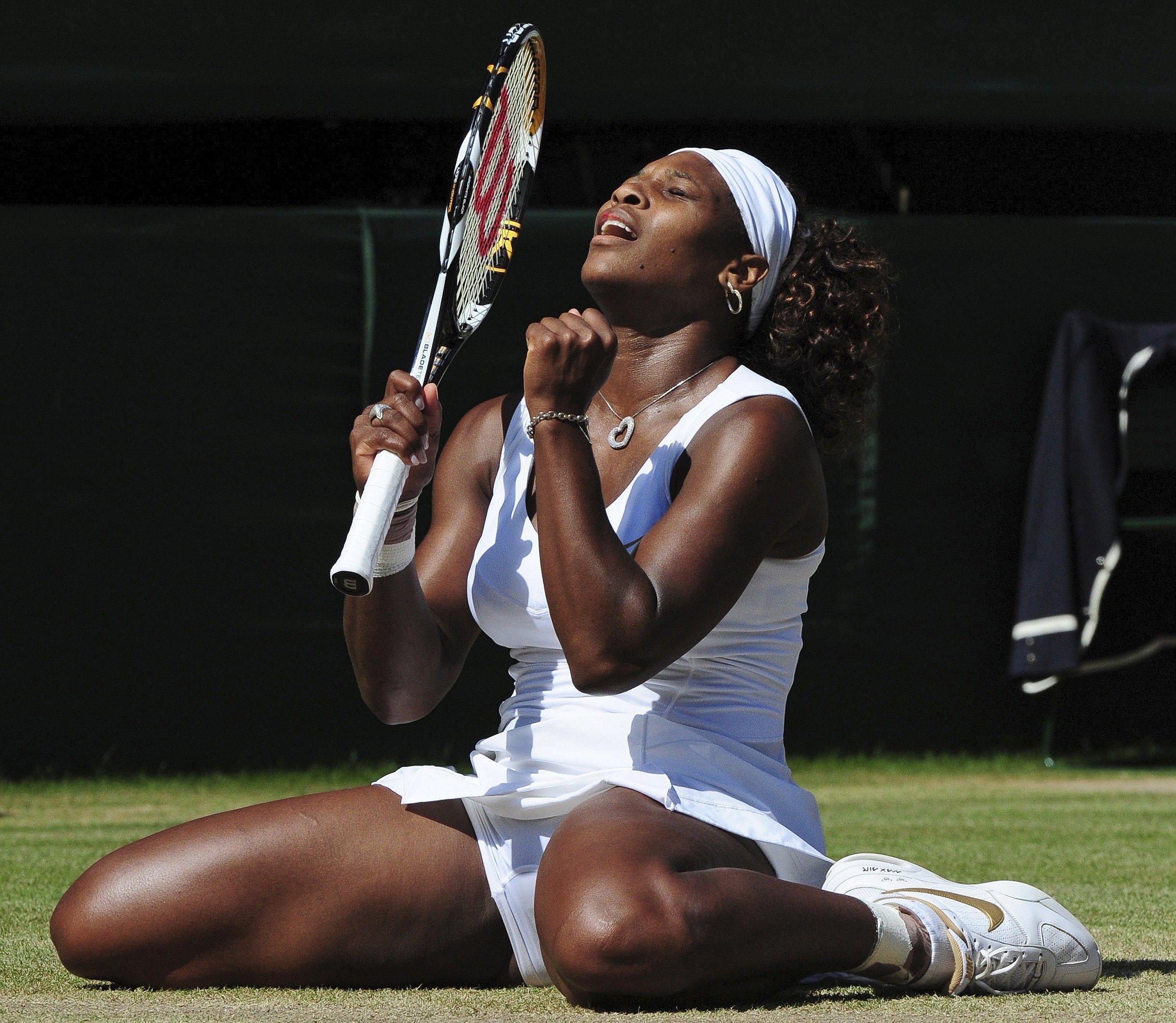
As of 2026, Venus Williams is 46 years old (born June 17, 1980) and Serena Williams is 45 years old (born September 26, 1981). Born just 15 months apart, these two icons have spent over three decades redefining professional tennis through their unprecedented longevity, power-baseline play, and numerous Grand Slam titles.
Understanding the Birthdates and Timeline of the Williams Sisters
The chronology of the Williams sisters is more than just a set of dates; it is a timeline that tracks the evolution of modern women’s tennis. Both sisters were born in the early 1980s and were coached from a very young age by their parents, Richard Williams and Oracene Price.
Venus Ebony Starr Williams was born on June 17, 1980, in Lynwood, California. By the time she reached her 46th birthday in 2026, she had established herself as one of the most resilient athletes in the history of the sport. Venus was the first to break into the professional consciousness, making her debut in 1994 at the age of 14. Her physical stature and reach revolutionized the defensive capabilities of players on the WTA Tour.
Serena Jameka Williams followed closely behind, born on September 26, 1981, in Saginaw, Michigan. Turning 45 in late 2026, Serena’s age has often been a topic of discussion because of how she maintained her number-one ranking and competitive edge well into her late 30s and early 40s. Serena’s professional debut occurred in 1995, only a year after her sister, setting the stage for a dual-dominance that would last for a quarter-century.
While the world primarily focuses on the two tennis champions, the term "Williams sisters" also encompasses their three half-sisters: Yetunde (born 1972, deceased 2003), Isha (born 1975), and Lyndrea (born 1978). In the context of sports and public inquiry, however, the focus remains almost exclusively on the two youngest daughters who conquered the tennis world.
The Age Gap and Its Impact on Their Professional Careers
The 15-month age difference between Venus and Serena played a pivotal role in their development. Richard Williams famously utilized the age gap to allow Venus to serve as a shield for Serena. Venus was the first to face the intense media scrutiny and the pressures of the professional tour, which allowed Serena to observe, learn, and develop a "younger sibling" hunger that many analysts believe fueled her eventual record-breaking career.
During the late 1990s, their ages were a constant point of fascination. At ages 17 and 16 respectively, they were already competing at the highest levels of the Grand Slams. This early start, combined with a carefully managed schedule that avoided the burnout common among teenage prodigies of that era, allowed them to remain competitive long after their peers had retired.
By the time they reached their 30s—an age once considered the "twilight" for female tennis players—the Williams sisters were actually entering a second peak. Serena, in particular, won 10 of her 23 Grand Slam singles titles after turning 30, a feat that fundamentally changed how sports scientists and trainers view the athletic lifespan of women.
Venus Williams: A Career Spanning Four Decades
Venus Williams’ career is a masterclass in longevity. In 2026, looking back at her trajectory, one sees a player who survived various eras of the game. When Venus started, she was playing against legends like Martina Navratilova and Arantxa Sánchez Vicario. By the time she moved into the 2020s, she was competing against players who were not even born when she won her first Wimbledon title in 2000.
Her age has been a testament to her love for the game. Despite being diagnosed with Sjögren’s syndrome—an autoimmune disease that causes fatigue and joint pain—in 2011 at the age of 31, Venus refused to retire. Instead, she adapted her diet, training, and recovery protocols. This adaptation allowed her to reach Grand Slam finals as late as 2017 (at age 37) and continue appearing on the tour in various capacities into the 2020s.
In 2026, Venus’s influence is felt more in her role as a designer and entrepreneur. Her company, V Starr, and her apparel line, EleVen, represent the "second act" of her career, though her identity remains deeply rooted in the discipline she cultivated during her decades on the court.
Serena Williams: Redefining Peak Performance Over Age 30
Serena Williams’ age has often served as a benchmark for excellence. Her ability to maintain high-velocity serves and explosive movement at age 40 was unprecedented. The most significant milestone regarding her age occurred in 2017 when, at age 35, she won the Australian Open without dropping a set. It was later revealed that she was eight weeks pregnant at the time.
Following her "evolution" away from tennis after the 2022 US Open (just before her 41st birthday), Serena has focused on her venture capital firm, Serena Ventures. By 2026, the discussion around Serena has shifted from her age on the court to her age as a titan of industry. Her transition demonstrates that the peak of an athlete’s influence does not necessarily end when they stop competing for trophies.
Serena’s career timeline is often divided into segments:
- The Rise (1995–1999): Winning her first Major at 17.
- The Serena Slam (2002–2003): Holding all four majors simultaneously in her early 20s.
- The Resurgence (2012–2017): Dominating the tour in her 30s.
- The Legacy Phase (2018–2022): Returning as a mother and competing in four more Grand Slam finals.
Comparing the Williams Sisters: Age, Titles, and Statistics
To understand the scale of their careers, it is helpful to look at their statistics side-by-side as they stand in 2026.
| Feature | Venus Williams | Serena Williams |
|---|---|---|
| Birth Date | June 17, 1980 | September 26, 1981 |
| Current Age (2026) | 46 | 44 (turns 45 in Sept) |
| Professional Debut | October 1994 | October 1995 |
| Grand Slam Singles Titles | 7 | 23 |
| Olympic Gold Medals | 4 (1 Singles, 3 Doubles) | 4 (1 Singles, 3 Doubles) |
| Career High Ranking | No. 1 (Feb 2002) | No. 1 (July 2002) |
| Total WTA Singles Titles | 49 | 73 |
| Height | 6'1" (185 cm) | 5'9" (175 cm) |
These statistics highlight how both sisters utilized their physical prime differently. Venus relied on her height and wingspan, while Serena utilized her power and one of the greatest serves in the history of the sport.
Evolution of Training and Longevity in Modern Tennis
The Williams sisters’ ability to play into their 40s was not accidental. It required a complete overhaul of how professional tennis players approached their bodies. In the 1980s and 1990s, it was common for female players to retire by age 25 or 26. The Williams sisters, along with their team, pioneered several strategies that are now standard on the WTA Tour.
Periodization and Scheduling
Unlike many of their contemporaries, the sisters rarely played a "full" schedule of 20+ tournaments a year. They focused on "periodization"—peaking for the four Grand Slams and a few key events. This reduced the wear and tear on their joints and allowed for longer recovery periods, extending their careers by nearly a decade compared to the average pro.
Technological and Medical Advancements
By the time they reached their late 30s, the sisters had access to advanced recovery technology, including cryotherapy, hyperbaric chambers, and sophisticated data analytics to track their movement efficiency. This data-driven approach allowed them to adjust their playing style; as they aged, they focused on shorter points and more aggressive court positioning to conserve energy.
Mental Resilience
Longevity is as much mental as it is physical. Both Venus and Serena had to maintain a high level of motivation despite having won everything the sport has to offer. Their rivalry with each other—they played 31 times professionally—kept them sharp. In the later stages of their careers, the goal changed from simply winning to legacy-building and inspiring the next generation.
The Cultural Significance of the Williams Sisters' Ages
The aging of the Williams sisters in the public eye has had a profound cultural impact. For over 30 years, they have been a constant presence in sports media, representing a shift in how Black women are viewed in high-stakes athletics.
In 2026, their legacy is viewed through the lens of "King Richard"—the biographical story of their father's plan—and the reality of what they achieved. They didn't just win; they aged gracefully in a sport that is notoriously "ageist." They challenged the notion that a woman's athletic prime is limited to her early 20s.
By continuing to compete and remain relevant as they entered their 40s, they provided a roadmap for other athletes. Players like Coco Gauff and Naomi Osaka have often cited the Williams sisters' longevity as an inspiration for their own career planning. For more information on their specific match histories, the official Wimbledon archives provide a comprehensive look at their decades of dominance on grass.
Life After the Pro Tour: 2022 to 2026
By 2026, both sisters have largely transitioned into the "business" phase of their lives, although they remain the most recognizable faces in tennis. Serena’s "evolution" away from tennis in late 2022 was not a hard retirement but a transition. She has spent the intervening years expanding Serena Ventures, focusing on funding diverse founders and women-led businesses.
Venus has continued her work in interior design and fashion. Her presence at major tournaments in 2026 is usually in a mentorship or ambassadorial capacity. The fact that she was still occasionally taking wildcards into her early 40s remains a point of legend in the tennis community.
Their post-playing lives are a reflection of their upbringing. Richard Williams and Oracene Price famously insisted that their daughters have interests outside of tennis, ensuring that when their ages eventually caught up with their physical abilities on the court, they had robust careers waiting for them in other sectors.
Frequently Asked Questions (FAQs)
Who is the oldest Williams sister?
Venus Williams is the oldest of the two famous tennis champions, born in 1980. However, in the broader family context, she has older half-sisters: Yetunde, Isha, and Lyndrea. Venus was the first to enter the professional tennis circuit and the first to reach a Grand Slam final.
Are the Williams sisters still playing tennis in 2026?
By 2026, Serena Williams is officially retired from the professional WTA Tour, having played her final major tournament at the 2022 US Open. Venus Williams has not made a similarly definitive retirement announcement but competes very sparingly, mostly in exhibition matches or as an ambassador for the sport.
How many years apart are Venus and Serena?
There is a 15-month age gap between Venus and Serena. Venus was born on June 17, 1980, and Serena was born on September 26, 1981. This narrow gap allowed them to grow up playing together and competing in the same age brackets throughout their junior and professional careers.
What is the current age of Serena Williams' daughter?
In 2026, Serena's first daughter, Alexis Olympia Ohanian Jr. (born September 1, 2017), is 9 years old. Her second daughter, Adira River Ohanian (born August 2023), is 3 years old. Serena's experience with motherhood while still a professional athlete is considered one of the most significant chapters of her career.
How did the sisters manage their health as they aged?
Venus managed her age and health through a strict plant-based diet and specific training loads to accommodate her Sjögren’s syndrome. Serena focused on high-intensity interval training (HIIT) and a dedicated team of physiotherapists to maintain her explosive power. Both sisters prioritized mental health and took breaks from the tour when necessary to avoid physical breakdown.
Practical Recommendation for Following Their Legacy
If you are looking to study the careers and impact of the Williams sisters, the best course of action is to review their historical match data and current business ventures. You can follow their ongoing impact through the following avenues:
- Archival Footage: Watch the 2001 and 2002 US Open and Wimbledon finals to see the sisters at their physical peak.
- Business Ventures: Monitor Serena Ventures and EleVen by Venus for insights into how elite athletes transition into venture capital and design.
- Documentaries: The documentary "Being Serena" provides an in-depth look at her life as she navigated age, pregnancy, and a return to the court.