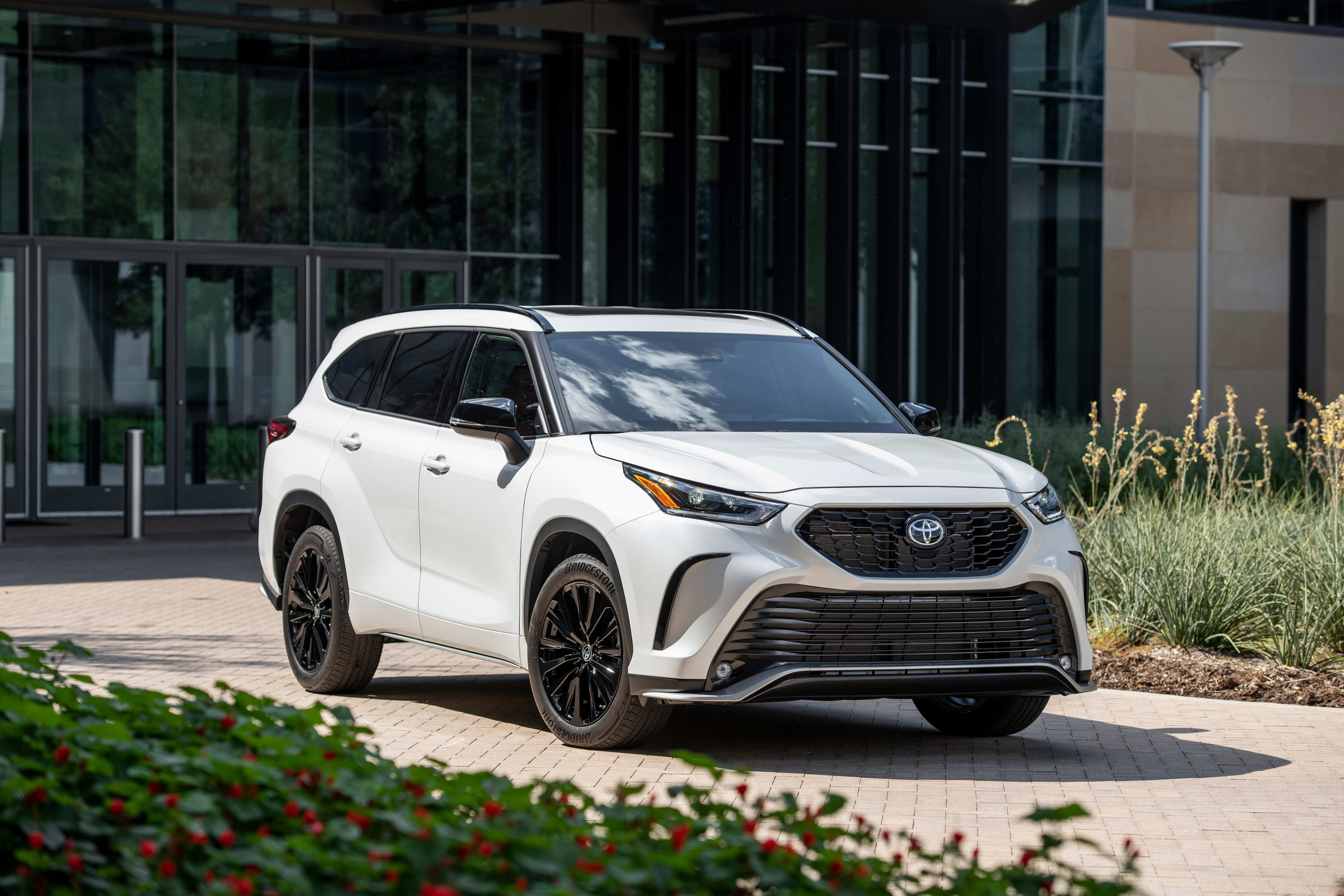
In 2026, the 2025 midsize SUV market stands as a high-water mark for family transportation, offering a refined balance of utility, safety, and technology. Leading options like the Kia Telluride, Toyota Grand Highlander, and the refreshed Ford Explorer provide genuine three-row versatility without the cumbersome footprint or high fuel costs associated with traditional full-size, body-on-frame SUVs.
The midsize three-row SUV segment is arguably the most competitive in the automotive industry. For the 2025 model year, manufacturers shifted their focus toward "legitimate" third rows—spaces that can actually accommodate adults rather than just small children—and advanced hybrid powertrains. As we evaluate these vehicles from our current 2026 vantage point, it is clear that the 2025 vintage represents a peak in internal combustion refinement and the widespread adoption of semi-autonomous driving aids.
Selecting the right vehicle in this category requires balancing specific needs: towing capacity for weekend adventures, cargo volume for grocery hauls, and the ease of access to the rear-most seats. This guide breaks down the top performers of the 2025 model year, providing the technical depth needed to make an informed decision.
The Evolution of the 2025 Midsize Three-Row Segment
For years, "midsize" was a euphemism for a cramped third row. However, the 2025 model year solidified a sub-segment often referred to as "extended midsize." Vehicles in this class utilize unibody construction (like a car) rather than a truck frame, allowing for better interior packaging and lower floor heights. This architecture is what permits the 2025 class to offer surprising legroom in the third row while maintaining car-like handling.
The 2025 market was also defined by a move away from naturally aspirated V6 engines toward turbocharged four-cylinder units and sophisticated hybrid systems. While some purists mourned the loss of cylinder count, the result was a significant increase in low-end torque—essential for merging onto highways with a full load of passengers—and improved thermal efficiency.
The Segment Leaders: Refinement and Value
Kia Telluride and Hyundai Palisade
Despite being several years into their respective lifecycles by 2025, these corporate cousins remained the benchmarks for the segment. Both vehicles utilize a 3.8-liter V6 engine producing 291 horsepower. The 2025 Telluride, in particular, continued to dominate due to its "X-Line" and "X-Pro" trims, which offered slightly increased ground clearance and improved cooling for towing up to 5,500 pounds.
The interior of these vehicles is where they truly shine. They utilize high-quality materials that rival luxury brands, featuring Nappa leather, dual panoramic displays, and a robust suite of safety tech including Highway Driving Assist 2. The third row in both models is among the most spacious in the class, providing 31.4 inches of legroom, which is sufficient for teenagers and smaller adults on medium-length trips.
Toyota Grand Highlander
The 2025 Toyota Grand Highlander was a direct response to the criticism that the standard Highlander was too tight for large families. Built on the TNGA-K platform, the Grand Highlander added roughly four inches to the wheelbase and significantly more width.
What sets the 2025 Grand Highlander apart is its Hybrid MAX powertrain. This system pairs a 2.4-liter turbocharged engine with electric motors to produce 362 horsepower and 400 lb-ft of torque. Unlike older hybrids that felt sluggish, the Hybrid MAX provides near-instantaneous acceleration. More importantly, the third row offers 33.5 inches of legroom, making it one of the few vehicles in this class where an adult can sit comfortably behind another adult.
The Technological Refresh: 2025 Ford Explorer
The 2025 model year was a pivotal one for the Ford Explorer. Facing stiff competition, Ford introduced a significant mid-cycle refresh that addressed previous complaints regarding interior quality and infotainment. The 2025 Explorer moved to a simplified trim structure (Active, ST-Line, ST, and Platinum) and debuted the Ford Digital Experience.
The centerpiece of the 2025 refresh was the 13.2-inch touchscreen and 12.3-inch digital instrument cluster. Ford integrated Google Built-in, allowing for native Google Maps and Assistant integration. Furthermore, the 2025 Explorer expanded the availability of BlueCruise, Ford’s hands-free highway driving system. While the third row remains slightly tighter than the Grand Highlander, the Explorer’s rear-wheel-drive-based architecture offers a more athletic driving experience and a stout 5,000-pound towing capacity across most of the lineup.
The Space Champions: Chevrolet Traverse and Volkswagen Atlas
Chevrolet Traverse
The 2025 Chevrolet Traverse (redesigned for the 2024/2025 cycle) represents one of the largest footprints in the midsize category. It replaced its long-standing V6 with a high-output 2.5-liter turbocharged four-cylinder engine delivering 328 horsepower. The Traverse is notable for its massive 17.7-inch standard infotainment screen and its best-in-class maximum cargo volume of 98 cubic feet. If your primary goal is sheer volume without moving to a Tahoe, the 2025 Traverse is the logical choice.
Volkswagen Atlas
The 2025 Volkswagen Atlas is often overlooked but remains a favorite for those prioritizing a "boxy" design that maximizes vertical space. Every 2025 Atlas is powered by a 2.0-liter turbocharged engine (269 hp). While it lacks a hybrid option, its third row is remarkably easy to access thanks to a second-row seat that can tilt and slide even with a child seat installed. The Atlas offers a "European" driving feel—taut suspension and precise steering—that is rare in a vehicle this size.
Technical Specifications Comparison
To help differentiate between these models, the following table compares the critical metrics for the 2025 model year.
| Model | Max Seating | 3rd Row Legroom (in) | Cargo (Behind 3rd Row) | Towing Capacity (lbs) |
|---|---|---|---|---|
| Kia Telluride | 8 | 31.4 | 21.0 cu ft | 5,000 - 5,500 |
| Toyota Grand Highlander | 8 | 33.5 | 20.6 cu ft | 5,000 |
| Ford Explorer | 7 | 32.2 | 16.3 cu ft | 5,000 |
| Chevrolet Traverse | 8 | 32.1 | 22.9 cu ft | 5,000 |
| Volkswagen Atlas | 7 | 33.7 | 20.6 cu ft | 5,000 |
| Honda Pilot | 8 | 32.5 | 18.6 cu ft | 5,000 |
| Mazda CX-90 | 8 | 30.4 | 14.9 cu ft | 3,500 - 5,000 |
Driving Dynamics: The Performance and Efficiency Trade-off
When selecting a 2025 midsize SUV, buyers usually fall into two camps: those seeking efficiency and those seeking driving engagement.
The Efficiency Leaders
The Toyota Highlander Hybrid and Grand Highlander Hybrid were the undisputed efficiency kings of 2025. The standard Highlander Hybrid can achieve an EPA-estimated 36 MPG combined, a figure that is unheard of for most three-row vehicles. However, the trade-off is a CVT (Continuously Variable Transmission) that can feel "drone-y" under heavy acceleration and a lower towing limit for the base hybrid models.
The Performance Picks
For those who enjoy the act of driving, the Mazda CX-90 and Ford Explorer ST are the standout choices. The 2025 CX-90 is built on a rear-biased platform with an available 3.3-liter turbocharged inline-six engine. This configuration provides a balance and smoothness typically reserved for German luxury brands like BMW. The Ford Explorer ST, with its 400-horsepower EcoBoost V6, remains the choice for those who need to get to soccer practice very, very quickly.
Critical Considerations: Cargo vs. Passenger Access
One of the most common mistakes when shopping for a 2025 midsize SUV with third-row seating is looking only at the "on-paper" legroom. Real-world usability is defined by step-in height and seat-folding mechanisms.
- Ingress and Egress: In the 2025 Honda Pilot, the center seat of the second row is actually removable and can be stored in the floor, creating a walkthrough to the third row. This is a game-changer for families who frequently use the back row but don't want the permanent gap of captain's chairs.
- Cargo with Passengers: While many of these SUVs claim large cargo volumes, that volume is measured with the seats down. If you have a full load of seven passengers, the space remaining for luggage is often quite small. The Chevrolet Traverse and Kia Telluride offer the deepest "wells" behind the third row, which are essential for fitting a stroller or a full set of groceries without folding the seats.
- LATCH Points: If you are installing multiple car seats, verify the number of LATCH (Lower Anchors and Tethers for Children) connectors. In 2025, the Honda Pilot and Volkswagen Atlas led the way by offering more flexible LATCH configurations in both the second and third rows.
Safety and Driver Assistance Technology
By 2025, advanced safety features moved from optional luxuries to standard equipment. Most vehicles in this class come standard with:
- Automatic Emergency Braking (AEB): With pedestrian and cyclist detection.
- Blind Spot Monitoring: Essential for vehicles of this length.
- Rear Cross-Traffic Alert: Helpful when backing out of tight parking spots in a long SUV.
- Lane Keep Assist: Using cameras to prevent the vehicle from drifting.
The 2025 models also saw the maturation of "Driver Monitoring Systems." Using infrared cameras on the steering column, vehicles like the Subaru Ascent and Ford Explorer can detect if a driver’s eyes have left the road for too long, providing an audible and visual alert. This is a critical safety layer for long family road trips where fatigue is a factor.
Maintenance and Long-Term Ownership
As we look at these vehicles in 2026, long-term reliability trends have begun to emerge. The 2025 Toyota models continue to hold their value exceptionally well, largely due to the proven reliability of the TNGA platform and Toyota’s hybrid components.
The Kia and Hyundai models offer the best warranty in the business (10-year/100,000-mile powertrain), which provides significant peace of mind for the second or third owner. However, buyers of used 2025 models should ensure that all software updates have been performed, particularly regarding the infotainment systems and the sophisticated ADAS (Advanced Driver Assistance Systems) sensors.
Frequently Asked Questions
Which 2025 midsize SUV has the most legroom in the third row?
The Volkswagen Atlas and the Toyota Grand Highlander lead the class, offering over 33 inches of third-row legroom. This makes them the most suitable options for transporting adults or tall teenagers comfortably.
Can these SUVs actually tow a boat or trailer?
Yes, most 2025 midsize SUVs are rated to tow 5,000 pounds when properly equipped. This is sufficient for a small Airstream, a pair of jet skis, or a utility trailer. However, the Mazda CX-90 (base) and some hybrid models may have lower limits (around 3,500 lbs), so always verify the specific VIN’s towing capacity.
Are there any electric 3-row midsize SUVs from 2025?
While this guide focuses on midsize internal combustion and hybrid models, the 2025 model year saw the Kia EV9 continue to gain traction as a fully electric alternative. It offers similar dimensions to the Telluride but with an all-electric powertrain.
Does the 2025 Ford Explorer have a V6?
Yes, but it depends on the trim. The 2025 Explorer ST and Platinum trims utilize the 3.0-liter EcoBoost V6 engine. The lower Active and ST-Line trims use the 2.3-liter EcoBoost four-cylinder. Both engines are paired with a 10-speed automatic transmission.
Which model is best for fitting three car seats across?
The Honda Pilot and Chevrolet Traverse are the strongest contenders here. Their extra interior width and flexible seating configurations make it much easier to fit three car seats across the second row or split them between the second and third rows.
Final Recommendation
For the majority of families in 2026 looking back at the 2025 model year, the Toyota Grand Highlander is the most balanced choice, particularly in its hybrid forms. It successfully bridges the gap between fuel economy and the "real" space required for a growing family.
However, if your budget is a primary concern, the Kia Telluride remains the value champion, offering a luxury-adjacent interior for a significantly lower price point than European rivals. For those who prioritize cargo volume above all else, the Chevrolet Traverse is the closest you can get to a minivan’s utility without actually buying a minivan. Before making a final purchase, ensure you test the third-row access with any car seats you plan to use, as the mechanism's ease of use is often more important than the raw measurements on a spec sheet.