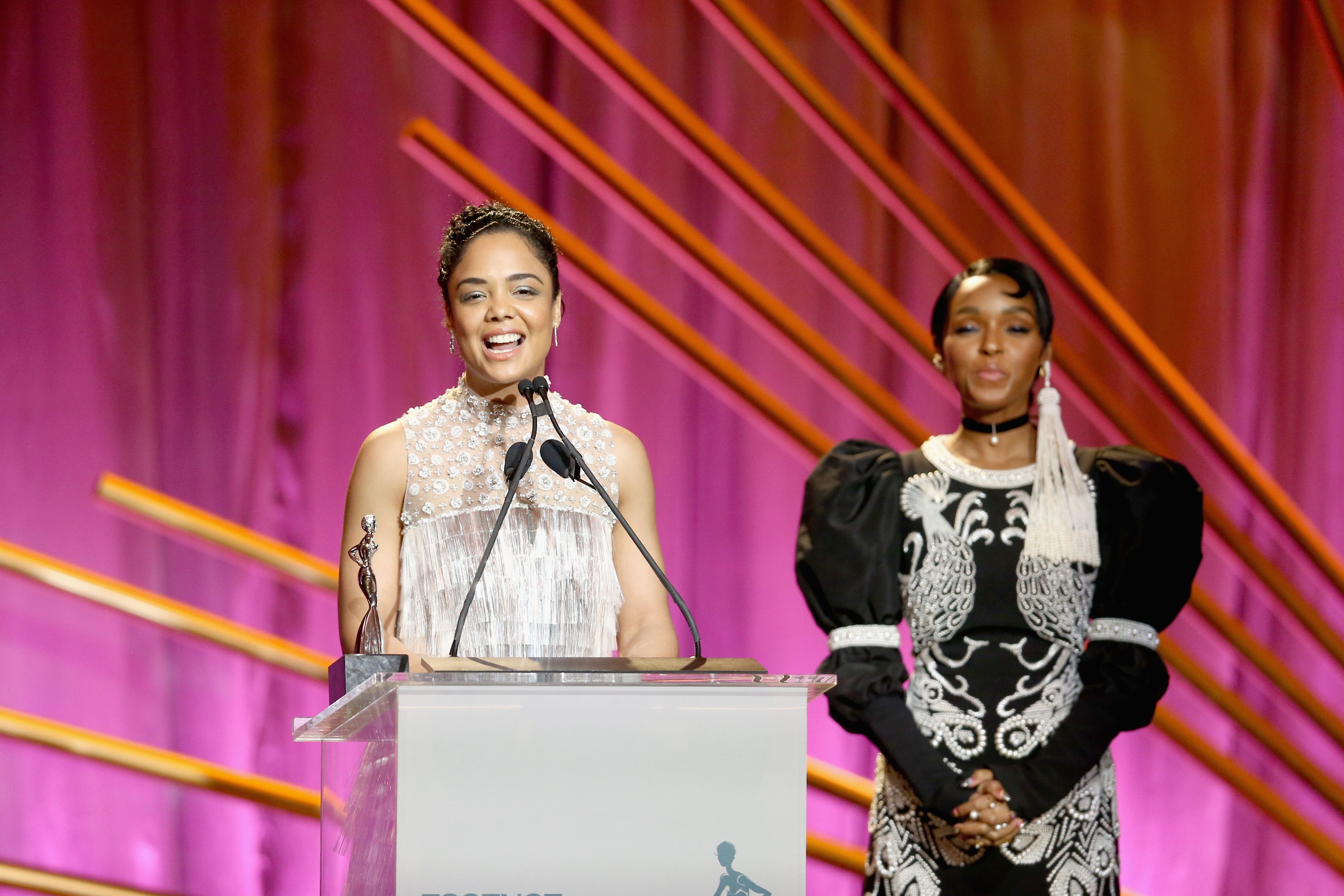
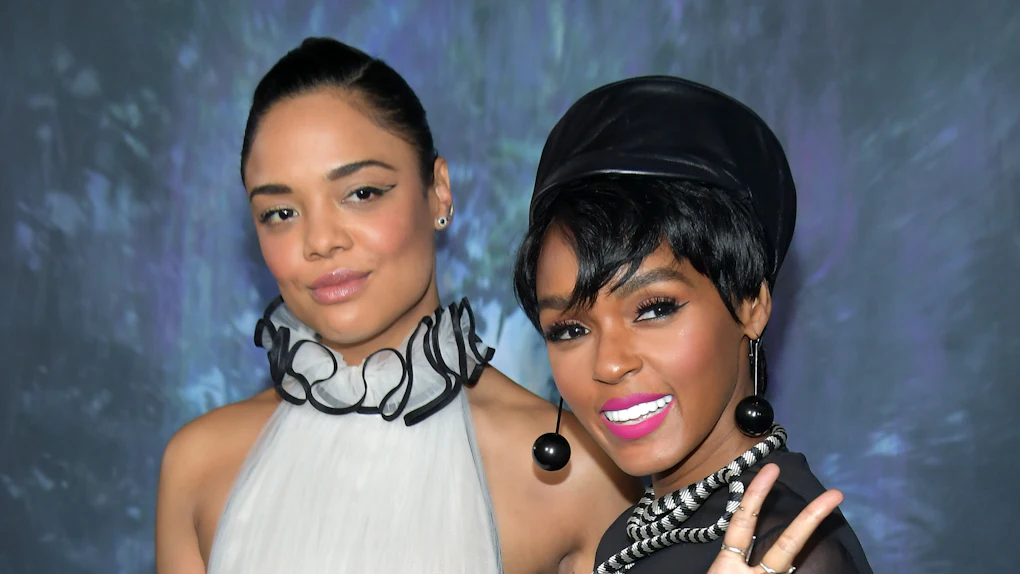
Tessa Thompson and Janelle Monáe redefined celebrity identity by prioritizing artistic collaboration and personal autonomy over traditional public labels. Their relationship, largely framed through the creative lens of Monáe’s "Dirty Computer" era, challenged Hollywood’s rigid demand for categorized sexuality, proving that public visibility can exist alongside private mystery without the need for a formal press release.
The Artistic Catalyst: "Dirty Computer" and the Visual Narrative
The intersection of Tessa Thompson and Janelle Monáe first captured the global consciousness not through a tabloid leak, but through a high-concept artistic endeavor. In 2018, Monáe released Dirty Computer, a "visual album" or "emotion picture" that explored themes of liberation, Afrofuturism, and queer identity. Tessa Thompson starred as Zen, the primary love interest and partner-in-rebellion to Monáe’s character.
The chemistry between the two was more than just acting; it was a narrative of freedom. In a landscape where Black queer women are historically underrepresented, seeing two powerhouses celebrate intimacy on screen was revolutionary. The project didn't just hint at a relationship; it used their real-world connection to bolster a message about the "dirty computers" of society—those who are marginalized for being different—finding power in their own coding.
By choosing to introduce their bond through art, Thompson and Monáe bypassed the typical "coming out" interview cycle. They established a precedent where their work and their identities were inextricably linked but not for sale for the sake of gossip. This approach allowed them to maintain control over their narrative, a rarity in an industry that often exploits the personal lives of its stars for promotional cycles.
Redefining the "Coming Out" Narrative
Historically, Hollywood has demanded a specific kind of transparency from LGBTQ+ actors: a definitive statement, a magazine cover, or a singular label that can be easily marketed. Thompson and Monáe took a different path. When Thompson spoke to Net-a-Porter in 2018, she famously stated that she and Monáe "vibrate on the same frequency" and "love each other deeply."
Crucially, she didn't provide a binary definition of their relationship. She spoke about the freedom to be private while being visible. This nuance was a direct challenge to the "closet" vs. "out" dichotomy. They weren't hiding, but they weren't performing for the public either. This stance resonated with a younger generation that views sexuality as fluid rather than fixed.
The Power of "Free-Ass Motherf***er"
Janelle Monáe’s own journey with labels has been equally influential. In a 2018 Rolling Stone cover story, she identified as pansexual, later clarifying in 2022 on Red Table Talk that she identifies as non-binary. She famously used the term "free-ass motherf***er" to describe her spirit and her approach to life.
This refusal to be pinned down served as a protective barrier for her relationship with Thompson. By existing as "free" entities, they signaled that their connection was not subject to the rules of traditional Hollywood PR. It was a bold romance precisely because it refused to be commodified.
Breaking the Mold: Fluidity vs. Fixed Labels
The impact of Thompson and Monáe on Hollywood labels cannot be overstated. For decades, actors were told that being anything other than heterosexual would "limit their range" in the eyes of casting directors. Thompson, however, continued to lead major franchises like Marvel’s Thor and HBO’s Westworld, while Monáe starred in critically acclaimed films like Hidden Figures and Glass Onion.
They proved that "labels" are often more about the comfort of the observer than the truth of the person. Their partnership—whether interpreted as a deep friendship, a romantic bond, or a creative soul-mate connection—existed in the gray area that many people actually live in but few celebrities dare to acknowledge.
Comparison: Traditional PR vs. The Thompson-Monáe Model
| Feature | Traditional Hollywood Coming Out | The Thompson-Monáe Model |
|---|---|---|
| Announcement Method | Official press release or exclusive interview. | Through collaborative art and subtle social cues. |
| Label Usage | Rigid (Gay, Lesbian, Bisexual). | Fluid (Pansexual, Non-binary, "Frequency"). |
| Publicity Focus | Focused on the "revelation" as a news event. | Focused on the artistic output and personal joy. |
| Media Relationship | Direct answers to invasive questions. | Deflecting labels in favor of discussing values. |
| Visibility | Highly managed, often performative. | Natural, incidental, and integrated into lifestyle. |
The Cultural Impact on Hollywood's LGBTQ+ Landscape
As we look back from the vantage point of 2026, the ripple effects of their "bold romance" are visible across the industry. Their refusal to conform paved the way for more "unlabeled" visibility in Hollywood. Before them, the industry often treated queer identity as a singular, defining trait. Thompson and Monáe treated it as one of many facets of their complex, high-achieving lives.
Their influence is particularly felt among Black women in the industry. They dismantled the "double bind" of being Black and queer, which often carries additional societal pressures. By showing up at events like the Met Gala together—clothed in outfits that signaled unity without needing a caption—they provided a blueprint for how to navigate the public eye with dignity and mystery.
Intersectionality and Representation
The duo also brought intersectionality to the forefront. Monáe’s Afrofuturistic aesthetic and Thompson’s diverse filmography (from the indie Passing to the blockbuster Thor: Love and Thunder) demonstrated that queer Black women could be the faces of both high art and global commerce. They didn't just "defy labels" regarding their romance; they defied labels regarding their career potential.
Privacy as a Radical Act
In an era of oversharing on social media, Thompson and Monáe’s decision to keep the specifics of their bond private was a radical act. Fans spent years analyzing their Instagram posts, their shared appearances, and their lyrical references. However, neither artist ever gave the "full story" that the tabloids craved.
This boundary-setting is a crucial component of their legacy. It suggests that while celebrities owe their fans good work, they do not owe them the intimate details of their hearts. This protection of their inner lives likely contributed to the longevity of their public respect. They stayed "cool" because they stayed somewhat unreachable.
The Evolution of Identity in 2026
By 2026, the "labels" that Hollywood once clung to have become increasingly obsolete. Much of this shift can be traced back to the path blazed by Thompson and Monáe in the late 2010s and early 2020s. The industry has moved toward a more holistic view of actors, where their personal lives are seen as secondary to their talent, yet their authentic identities are allowed to breathe without being forced into boxes.
Tessa Thompson’s role as Valkyrie in the MCU—a character confirmed as the first LGBTQ+ superhero in that universe—was a direct extension of this shift. Thompson advocated for her character’s identity to be acknowledged, just as she advocated for her own truth in her personal life. The synergy between her off-screen courage and on-screen roles changed the expectations for "representation."
Key Moments of Defiance
- The 2018 Met Gala: Their coordinated appearance fueled speculation but was presented as a celebration of fashion and mutual support.
- The "Pynk" Music Video: An anthem for female empowerment and queer subtext that became a cultural touchstone.
- Thompson's Advocacy: Her work with the Time's Up movement emphasized that personal identity is part of a larger fight for systemic change and safety in the workplace.
Frequently Asked Questions
Are Tessa Thompson and Janelle Monáe still together?
As of 2026, both artists continue to maintain a high level of privacy regarding their current relationship status. Historically, they have avoided confirming or denying the specifics of their romantic life, preferring to describe their bond as a deep, enduring love and a shared creative "frequency." Their public interactions remain supportive and collaborative, reflecting a lasting connection that transcends traditional dating labels.
What label does Janelle Monáe use for her sexuality?
Janelle Monáe has used several terms to describe her identity, reflecting her belief in fluidity. In 2018, she came out as pansexual, stating she is open to people of all genders. Later, in 2022, she identified as non-binary, using she/her and they/them pronouns. She often emphasizes that she is a "free-ass motherf***er" who does not want to be restricted by societal expectations of gender or attraction.
How did Tessa Thompson describe her relationship with Monáe?
Tessa Thompson famously told Net-a-Porter that she and Monáe "love each other deeply" and "vibrate on the same frequency." She noted that if people wanted to speculate about their relationship, that was fine, but she felt no obligation to provide a specific label to satisfy public curiosity. She focused on the fact that they are both private people who want to protect their loved ones.
Why is their relationship considered "bold" in Hollywood?
It is considered bold because it challenged the industry's traditional "all-or-nothing" approach to queer visibility. Instead of a carefully managed PR "coming out" moment, they allowed their relationship to exist naturally through their art and public presence. This defied the expectation that Black women in Hollywood must conform to specific, narrow archetypes to maintain their "bankability" as stars.
Did they ever officially confirm they were dating?
They never used the specific phrase "we are dating" in a traditional sense. Instead, they used more expansive language to describe their bond. By avoiding the word "dating" and opting for "love" and "collaboration," they maintained a level of autonomy that challenged the media's ability to categorize their relationship.
Practical Recommendation: Embracing Fluidity
For those looking to understand the significance of the Thompson-Monáe dynamic, the best approach is to view their work through the lens of autonomy. Their "romance" was not just a personal matter but a professional statement on the right to exist without explanation.
In a world that often demands we pick a side or a label, the example set by these two artists suggests a third way: the path of the "Dirty Computer," where you define your own code, choose your own frequency, and love whoever makes you feel free. To truly follow their lead, one should prioritize personal truth over public consumption and support art that pushes the boundaries of identity.