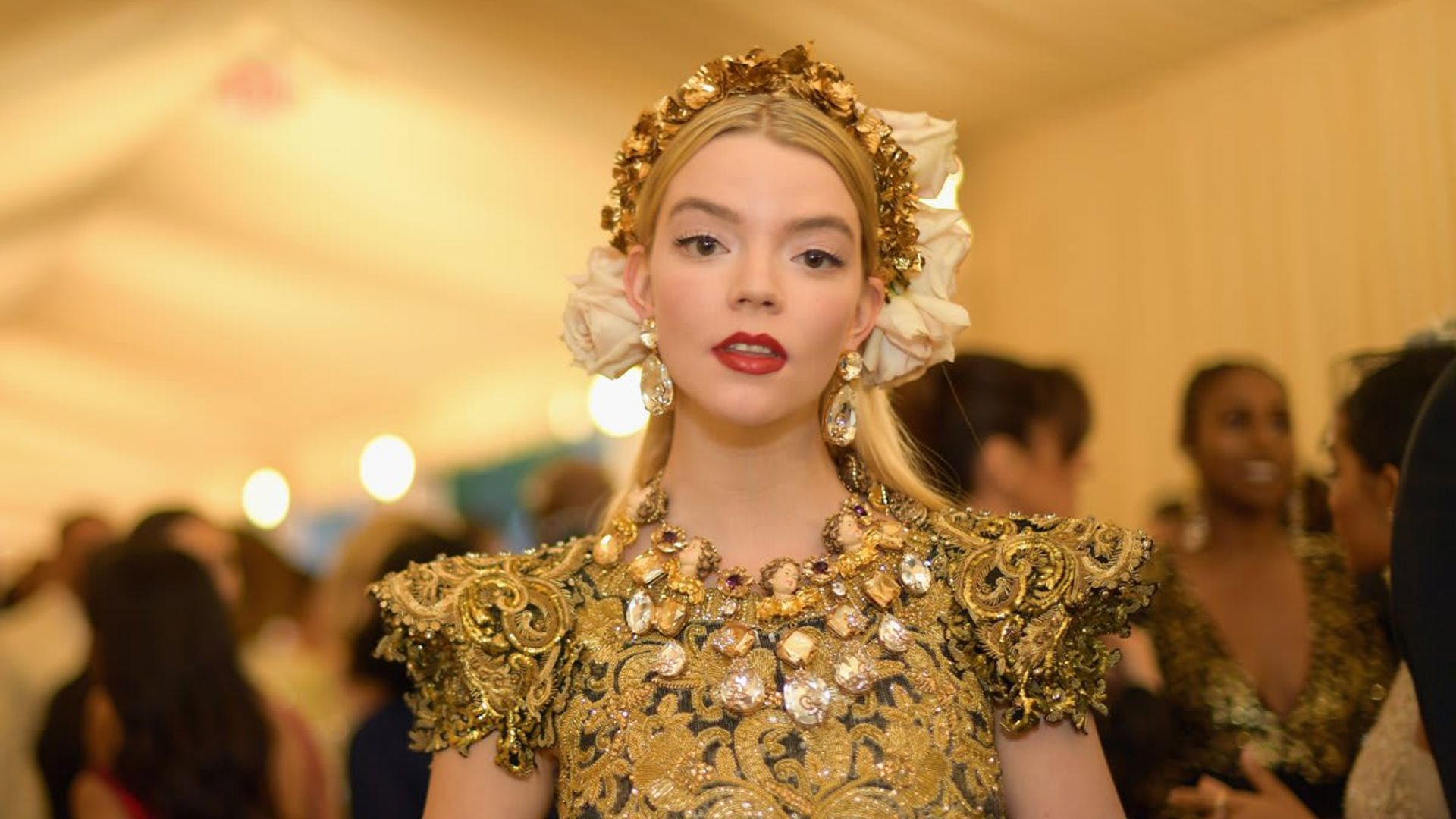
Anya Taylor-Joy is a white woman of Latina heritage, a dual identity that reflects her multi-continental upbringing and ancestry. While she is racially white due to her European lineage, she identifies ethnically as Latina, having spent her formative years in Argentina and speaking Spanish as her first language.
The question of whether Anya Taylor-Joy is white or Latina is not a matter of "either/or" but rather "both." In the context of modern sociological definitions and her own self-identification, Taylor-Joy occupies a space that challenges common misconceptions about identity in the United States and Europe. As of 2026, she remains one of the most prominent examples of how heritage, nationality, and race intersect in a globalized entertainment industry.
The Multi-Continental Roots of Anya Taylor-Joy
To understand Anya Taylor-Joy’s identity, one must first look at the unique history of her parents. Her father, Dennis Alan Taylor, is of Scottish-Argentine descent. He was born in Zambia but was raised in Argentina, where he eventually became a prominent powerboat racer and investment banker. Her mother, Jennifer Marina Joy, was also born in Zambia but grew up in London. Her ancestry is a blend of English and Spanish.
Taylor-Joy was born in Miami, Florida, in 1996, the youngest of six children. However, her time in the United States was brief during her infancy. Her parents moved the family to Buenos Aires, Argentina, shortly after her birth. It was here that her primary cultural identity was forged. She lived in Argentina until the age of six, a period she has frequently cited as the most influential in her development.
In Argentina, Taylor-Joy was immersed in the local culture, and Spanish became her primary language. When her family relocated to London due to political instability in Argentina during the early 2000s, the transition was difficult for her. She famously refused to learn English for two years, hoping that her lack of assimilation would force her parents to move the family back to Buenos Aires. This deep connection to her Argentine roots is the foundation of her Latina identity.
Defining Race vs. Ethnicity in the Case of Taylor-Joy
A major source of confusion regarding Taylor-Joy’s background stems from the distinction between race and ethnicity. In many Western cultures, particularly in the U.S., the term "Latina" is often colloquially used as a racial category, frequently conflated with "Mestizo" (a person of combined European and Indigenous American descent). However, "Latino" or "Latina" is an ethno-linguistic designation, not a racial one.
The Reality of White Latin Americans
Latin America is home to a vast diversity of racial groups, including people of Indigenous, African, Asian, and European descent. Argentina, in particular, has a high percentage of citizens with European ancestry—primarily Spanish and Italian, but also Scottish, Irish, and German.
A person can be racially white and ethnically Latina. This is exactly how Taylor-Joy identifies. Her physical appearance and European ancestry (Scottish, English, Spanish) categorize her as white in a racial context. However, her cultural upbringing, her native language, and her Argentine nationality make her Latina.
The 2021 Variety Controversy
The complexity of her identity became a major talking point in 2021 following her Golden Globe win for The Queen’s Gambit. In a social media post and article, the publication Variety initially referred to her as the first "woman of color" to win in her category in over a decade. This sparked immediate backlash from both fans and critics who pointed out that Taylor-Joy is white.
Variety eventually corrected the article, noting that she identifies as a "white Latina." The incident highlighted a significant disconnect in how the media perceives identity. For many, "Latina" was mistakenly synonymous with "non-white," leading to the erasure of the diverse racial realities within Latin American communities. Taylor-Joy herself has been careful in interviews to acknowledge her privilege as a white woman while maintaining her cultural ties to Argentina.
The Role of Citizenship and Nationality
As of 2026, Taylor-Joy remains a triple citizen, holding passports for the United Kingdom, the United States, and Argentina. This legal status reflects her lived experience as a "global citizen."
- Argentina: This is her cultural home. She has often spoken about her love for Argentine food (specifically empanadas and dulce de leche) and her desire to work in Spanish-language cinema.
- United Kingdom: This is where she spent her teenage years and received her education. Much of her professional "polish" and her frequently heard English accent are products of her life in London.
- United States: While born in Miami, her connection to the U.S. was largely professional until later in her career.
These three pillars of her identity often lead to different perceptions depending on where she is. In the UK, she is often seen as a British actress. In the US, she is frequently grouped with international stars. In Argentina, she is celebrated as a "national pride" who has made it big in Hollywood.
Cultural Identity in Her Professional Career
Taylor-Joy’s identity has occasionally influenced her role selection and her public persona. While she is most famous for roles where she speaks with an American or British accent—such as in The Witch, The Queen’s Gambit, and Furiosa: A Mad Max Saga—she has consistently expressed a desire to represent her Latina heritage on screen.
She has mentioned in various interviews that she would love to act in a Spanish-language film directed by an Argentine filmmaker. Her ability to switch seamlessly between a refined British accent and a distinct "Rioplatense" Spanish accent (the dialect spoken in the River Plate region of Argentina and Uruguay) is a testament to her dual identity.
Furthermore, her background has allowed her to navigate the industry with a unique perspective. She has spoken about the "displaced" feeling of being an immigrant in London, a sentiment that many people from Latin American backgrounds share when moving to Europe or the United States. This sense of being an "outsider" has informed many of her most acclaimed performances, which often feature characters who are isolated or trying to find their place in a world that doesn't quite understand them.
Identity Breakdown: At a Glance
The following table provides a clear breakdown of the different components that make up Anya Taylor-Joy’s background as discussed through 2026.
| Category | Description |
|---|---|
| Race | White (European ancestry) |
| Ethnicity | Latina (Argentine cultural upbringing) |
| First Language | Spanish |
| Nationalities | Argentine, British, American |
| Paternal Heritage | Scottish and Argentine |
| Maternal Heritage | English and Spanish |
| Place of Birth | Miami, Florida, USA |
| Primary Childhood Home | Buenos Aires, Argentina |
Why the Discussion Persists in 2026
The reason the public remains fascinated with Taylor-Joy’s identity is that she represents a shift in how we categorize people. In an increasingly interconnected world, the "box-checking" method of identity—where one must be either "white" or "Latina"—is becoming obsolete.
By 2026, the conversation around celebrity heritage has become more nuanced. There is a growing recognition that identity is layered. Taylor-Joy does not "hide" her whiteness to claim Latina status, nor does she ignore her Argentine roots to fit into a European mold. Instead, she embraces the friction between these two identities.
This transparency is vital because it helps educate the public on the diversity of the Latino community. By identifying as a white Latina, she provides visibility to a group that is often ignored in Hollywood’s stereotypical depictions of South Americans. Her success proves that being Latina is about culture, language, and shared history, rather than a specific skin tone.
Common Misconceptions About Her Background
There are several persistent myths about Anya Taylor-Joy that continue to circulate. Addressing these is essential for a complete understanding of her biography.
- Myth: She learned Spanish for a role. This is incorrect. Spanish was the only language she spoke until she was eight years old. She is a native speaker.
- Myth: She is only "half" Latina. Because her parents have European roots, some assume her Latina identity is diluted. However, in Argentina, being of European descent and being Argentine are not mutually exclusive. Cultural identity is defined by where you are raised and the society you participate in.
- Myth: She grew up in the United States. Although she was born in Miami, she has no memories of living there as a child. She is an immigrant to the U.S. in a professional sense, but her upbringing was entirely international.
FAQ: Understanding the Nuance
Is Anya Taylor-Joy considered a Latina actress?
Yes, she is considered a Latina actress because she was raised in Argentina and identifies with the culture. However, she is also categorized as a white actress due to her racial background. In Hollywood, she is often cited as a "White Latina" to provide a more accurate description of her identity.
Does Anya Taylor-Joy speak fluent Spanish?
She is completely fluent. In fact, Spanish is her native tongue. Many fans are surprised to hear her speak in interviews with a thick Argentine accent, which is quite different from the English accents she uses in her film and television roles.
Why was there a controversy about her being a "Woman of Color"?
The controversy arose because the term "Woman of Color" (WOC) is typically reserved for individuals of non-white descent who face systemic racialization. Since Anya Taylor-Joy is racially white and of European descent, labeling her a WOC was considered factually incorrect and an erasure of the struggles faced by non-white Latinas.
What is her connection to Argentina today?
As of 2026, Taylor-Joy still visits Argentina frequently to see her extended family. She has expressed a deep emotional connection to the country, often referring to it as the place where she feels most at home. She remains a vocal supporter of Argentine culture and cinema.
How does she describe her own identity?
She typically describes herself as a "White Latina" or an "Argentine-British" person. She often emphasizes that her soul is Argentine, even if she has lived much of her life in London and the United States.
Conclusion and Final Considerations
Anya Taylor-Joy’s identity as a white Latina is a factual reflection of her heritage and upbringing. Her story serves as a valuable case study in the difference between race (biological/ancestry) and ethnicity (culture/language). For those seeking to understand her background, it is most accurate to recognize her as a multi-national individual whose formative years in Argentina define her cultural identity, while her European roots define her racial identity.
As she continues her career into the late 2020s, her presence in the media helps to broaden the definition of what it means to be Latina, moving away from stereotypes and toward a more inclusive, accurate understanding of Latin American diversity. For anyone following her work, acknowledging this duality is key to understanding both the woman and the artist.