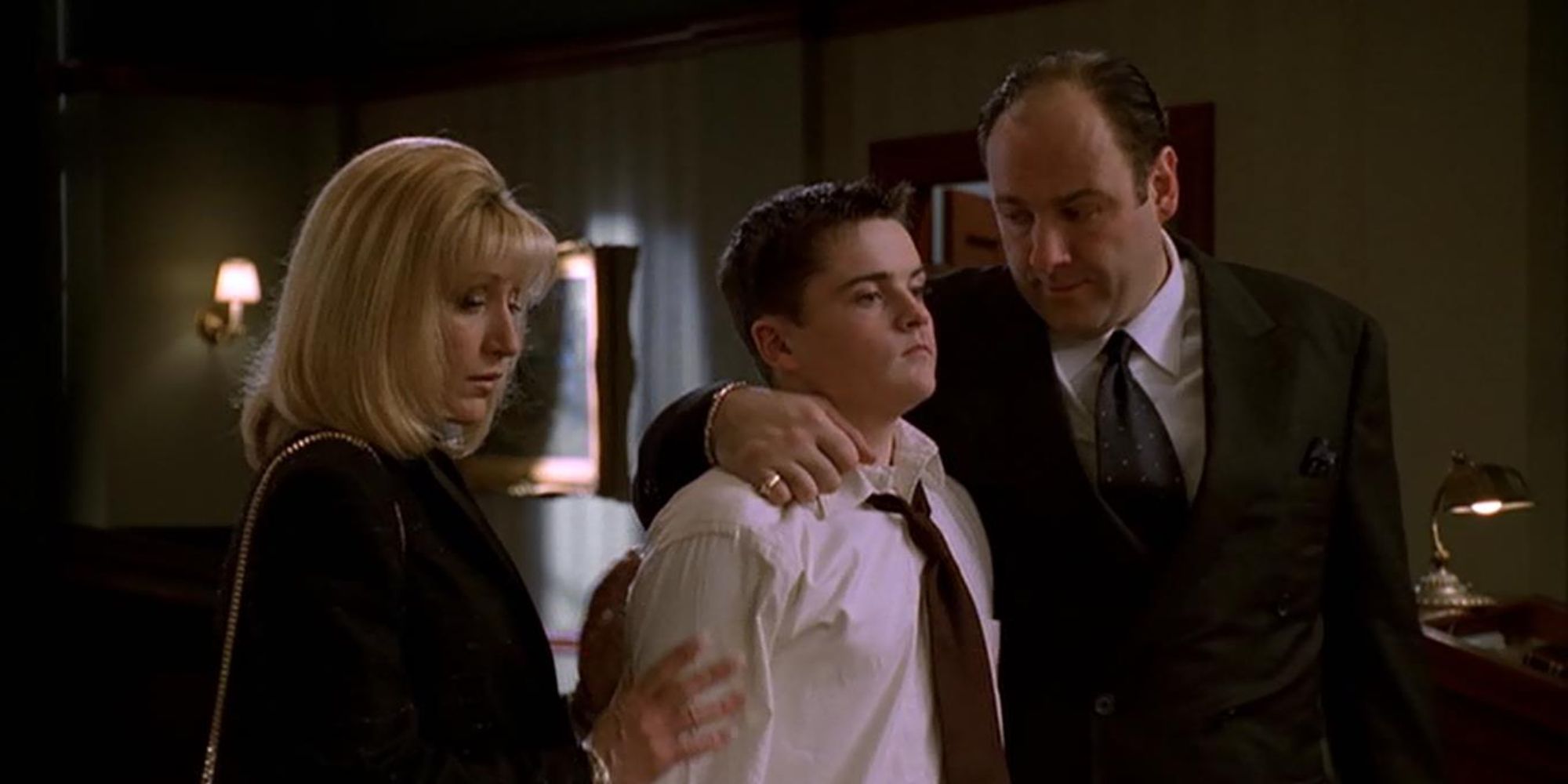
Whether The Sopranos has a good ending depends largely on what you demand from television storytelling. If you define a good finale by definitive plot wrap-ups and neat emotional closures, the iconic ending of The Sopranos may frustrate you. However, from a narrative, artistic, and thematic standpoint, the series finale, "Made in America," is widely considered by critics and television scholars to be one of the greatest and most daring endings in broadcast history.
When the finale aired on HBO on June 10, 2007, its sudden cut to black provoked widespread confusion, anger, and panic. Viewers across America believed their cable subscriptions had failed at the most critical second of the series. In the decades since, public perception has shifted dramatically. What initially felt like an infuriating prank by showrunner David Chase is now recognized as a masterclass in visual storytelling, tension building, and psychological subversion.
The Context of "Made in America"
To understand why the finale works—and why it caused such outrage—it is essential to examine the state of the Soprano crime family in the final episodes of Season 6B. The closing stretch of the series was defined by decay, paranoia, and relentless mortality. The long-simmering war between Tony Soprano’s New Jersey family and the New York Lupertazzi family, led by Phil Leotardo, had degenerated into a bloody, messy feud.
By the time the final episode begins, Tony’s inner circle has been decimated:
- Bobby Baccalieri has been assassinated in a model train shop.
- Silvio Dante lies comatose in a hospital, never expected to wake up.
- Christopher Moltisanti was killed by Tony himself several episodes earlier in a dark moment of opportunism and exhaustion.
The underworld structure that supported Tony for six seasons is crumbling. On the domestic front, his son A.J. is struggling with existential depression, his daughter Meadow is preparing for a career as a defense attorney (partly motivated by the government's pursuit of her father), and an impending federal indictment looms over Tony thanks to turned informants.
"Made in America" does not present the high-octane, glorifying mob violence found in traditional gangster films like Scarface or Goodfellas. Instead, it depicts a world shrinking in size, energy, and significance. The grand criminal enterprise has dissolved into quiet meetings in anonymous suburban locations, highlighting the hollow nature of the life Tony chose.
Deconstructing the Holsten’s Diner Scene
The reputation of the finale rests almost entirely on its final five minutes. Set in Holsten’s Brookdale Confectionery in Bloomfield, New Jersey, the sequence is a study in precise editing, auditory design, and visual grammar.
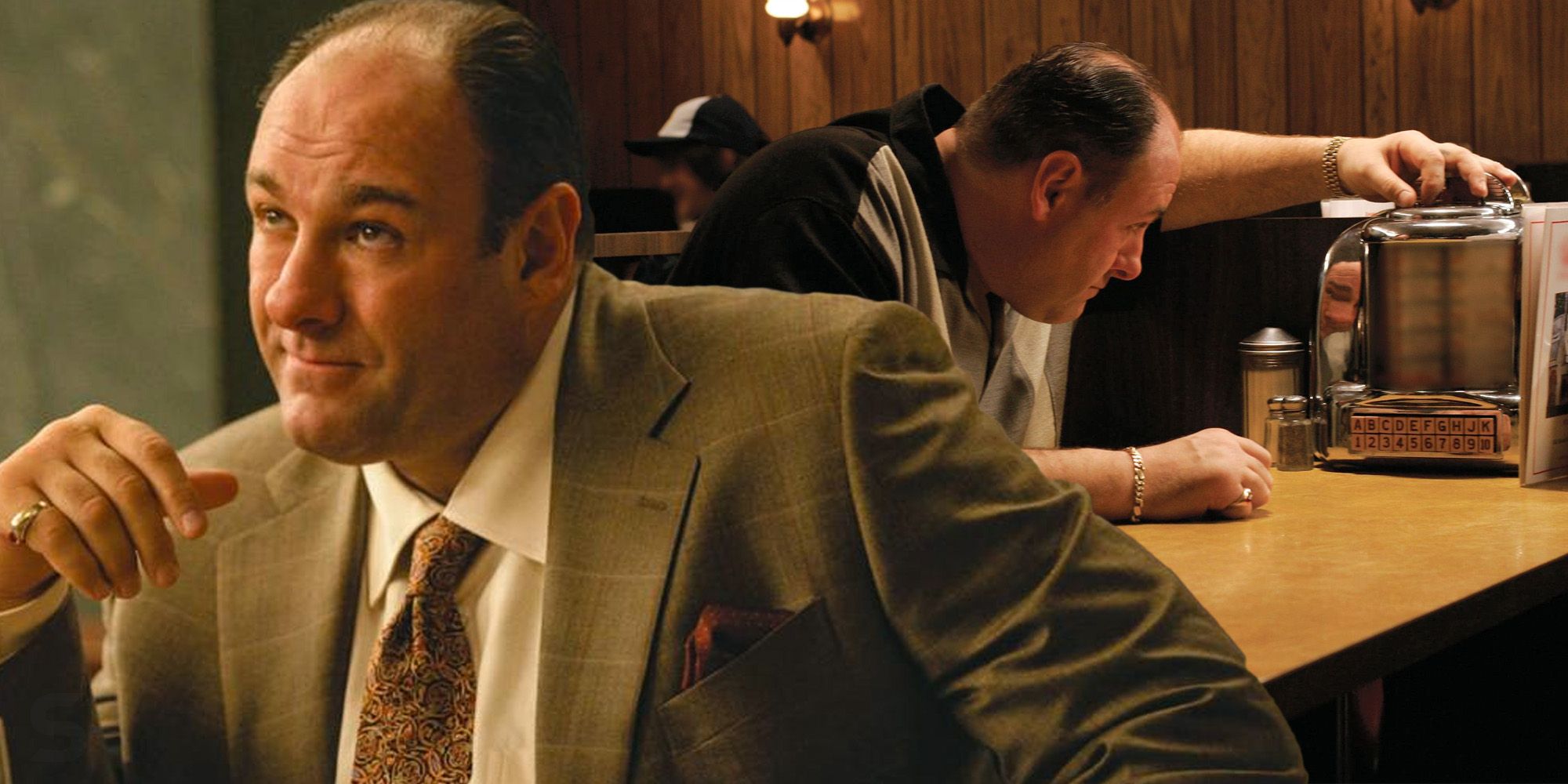
Tony arrives early at the diner, sits in a booth, and browses the tabletop jukebox. He selects Journey’s 1981 rock classic "Don't Stop Believin'." As the music plays, his family members arrive one by one: first his wife Carmela, then his son A.J. Outside, his daughter Meadow struggles to parallel park her car, adding a realistic, mundane layer of anxiety to the scene.
David Chase establishes a strict, rhythmic visual pattern throughout the sequence:
- A doorbell chimes as a customer enters the diner.
- The camera cuts immediately to a close-up of Tony’s face looking up toward the door.
- The camera cuts to a subjective point-of-view (POV) shot from Tony’s eyes, revealing who just walked into the establishment.
This editing rhythm is repeated multiple times as various patrons walk in. Among them are a couple eating dinner, a truck driver, a young family, and a man wearing a "Members Only" jacket. The camera places explicit emphasis on the man in the Members Only jacket, who walks past Tony’s booth, glances at him, and enters the restroom located directly behind Tony’s right shoulder.
Outside, Meadow finally finishes parking her car and runs toward the diner entrance. The door opens, the bell rings, and the sequence reaches its climax:
- We see the door chime ring.
- We cut to Tony’s face raising his eyes upward.
- Instead of showing what Tony sees, the screen instantly snaps to pitch blackness, accompanied by complete silence.
There are no sound effects, no fading music, and no immediate end credits. For eleven full seconds, viewers in 2007 were left staring at a dark screen before the traditional white text credits silently rolled.
Why the Ending Was Initially Hated
The immediate reaction to "Made in America" was unprecedented in the television landscape of 2007. Because the screen abruptly went dark while Journey’s vocal track was cut mid-sentence ("Don't stop—"), millions of viewers assumed their cable boxes had crashed, satellite feeds had frozen, or HBO’s master control room had suffered a catastrophic failure.
Once audiences realized the cut to black was intentional, reaction turned to anger. The complaints boiled down to several distinct grievances:
Lack of Plot Resolution
Standard television conventions dictated that a series finale should deliver definitive closure. Audiences expected a clear outcome: Tony Soprano dying in a hail of gunfire, being dragged off to prison in handcuffs, or securing a definitive victory over his rivals. By refusing to show any of these outcomes, Chase left the plot open-ended on the surface.
Subversion of Mob Expectations
The gangster genre carries specific narrative promises. Viewers expected a climactic showdown between Tony Soprano and the forces aligned against him. The understated diner setting felt anti-climactic to viewers who desired a grand, cinematic reckoning.
Perceived Disrespect for the Audience
Many fans felt the ending was a hostile trick—an intentionally pretentious refusal to give paying subscribers a satisfying conclusion to an eighty-six-episode investment.
The Case for Why The Sopranos Has a Great Ending
Despite the initial backlash, critical consensus over the last two decades has overwhelmingly shifted. "Made in America" is now regarded as an artistic triumph that elevated what television as a medium could accomplish.
| Audience Expectation | "Made in America" Reality |
|---|---|
| Violent shootout climax | Mundane family dinner in diner |
| Definitive death or arrest | Sudden cut to black and silence |
| Complete emotional closure | Enduring thematic ambiguity |
1. Masterful Visual Grammar and Logic
The ending is not a random gimmick; it operates on rigorous cinematic logic established seconds earlier. The visual pattern (Bell Chime $\rightarrow$ Tony’s Face $\rightarrow$ Tony’s POV) is executed consistently throughout the Holsten's scene. When the bell rings for the final time as Meadow enters, the cut to black is simply Tony’s POV. If Tony’s POV is sudden, absolute darkness and silence, it strongly implies his consciousness was terminated instantly by a bullet to the head from the man exiting the restroom.
2. Foreshadowing and Narrative Preparation
The cut to black was heavily foreshadowed throughout the final season. In the Season 6B premiere episode, "Soprano Home Movies," Tony and his brother-in-law Bobby Baccalieri sit on a quiet pontoon boat discussing what it feels like to get killed in the mob. Bobby muses:
"You probably don't even hear it when it happens, right?"
This exact line is repeated as a flashback in the penultimate episode, "Blue Comet." The finale delivers precisely what Bobby described: an instant, silent termination of perception without warning or dramatic buildup.
3. Thematic Realism of Paranoia
Even if one rejects the interpretation that Tony dies at that exact second, the scene functions brilliantly as an expression of Tony’s permanent state of existence. Whether he dies at Holsten's or lives to be 80, Tony Soprano can never enjoy a quiet meal with his family again. Every ringing bell, every stranger in a jacket, and every person walking to the bathroom is a potential hitman or an undercover FBI agent. He is trapped in a prison of his own making, condemned to perpetual fear and vigilance.
4. Audience Complicity and Meta-Commentary
David Chase frequently expressed frustration with viewers who cheered for Tony's brutality while ignoring the moral decay of his actions. Throughout the show's run, audiences acted as voyeurs, enjoying the violence, infidelity, and crime. By cutting the screen to black, Chase effectively turned off the window through which the audience watched Tony’s life. The story did not necessarily end; rather, our access to Tony Soprano was permanently revoked.
Comparison: Traditional Finales vs. The Sopranos
The following table highlights how the ending of The Sopranos deliberately subverted the standard conventions of television drama endings:
| Narrative Component | Traditional TV Drama Finale | The Sopranos ("Made in America") | Narrative & Thematic Effect |
|---|---|---|---|
| Main Character Fate | Explicit death, retirement, or imprisonment. | Sudden cut to black; fate left visually unshown but implied. | Forces the viewer to analyze the mechanics of the scene rather than consume a trope. |
| Tone & Setting | Grand scale, emotional farewells, dramatic speeches. | Mundane suburban diner, eating onion rings, small talk. | Emphasizes the emptiness and banality of Tony's criminal lifestyle. |
| Visual Styling | Slow fades, emotional music overlays, camera pulls away. | Hard cut mid-song ("Don't Stop—"), immediate silence. | Mimics the suddenness of unexpected mortality; removes melodrama. |
| Climax Structure | High-stakes confrontation or trial. | Waiting for family members to arrive; parallel parking. | Builds unbearable tension out of ordinary everyday actions. |
| Viewer Emotion | Catharsis, sadness, or definitive satisfaction. | Disorientation, paranoia, active debate, intellectual engagement. | Keeps the show alive in public discourse long after the broadcast ended. |
The Fate of Tony Soprano: Did He Die?
The central debate surrounding the finale has always been whether Tony Soprano was assassinated in the diner. Over the years, three primary schools of thought have emerged:
Interpretation A: Tony Was Assassinated (The Death Theory)
This is the most popular technical analysis among film scholars. The evidence supporting it includes:
- The Godfather Connection: The man in the Members Only jacket going to the bathroom directly mirrors Michael Corleone going to the restroom to retrieve a hidden gun before shooting Virgil Sollozzo in The Godfather.
- Blind Spot: The bathroom is located to Tony’s right, placing the gunman directly in Tony's blind spot as he comes out.
- The POV Structure: As detailed above, the scene's editing pattern establishes that the black screen is what Tony sees—which is nothing.
Interpretation B: Life in Constant Paranoia (The Survival Theory)
Proponents of this view argue that no actual shot is shown, meaning Tony survives the meal. In this reading, the scene is an allegory for the rest of Tony's life. He defeated Phil Leotardo, but he won nothing. His legal downfall is guaranteed via upcoming grand jury indictments, his mob family is a shell of its former self, and his physical life is constantly threatened. The cut to black signifies that his peace of mind is permanently destroyed.
Interpretation C: The Existential / Philosophical Interpretation
David Chase has repeatedly suggested that focusing exclusively on whether Tony lived or died misses the broader philosophical point of the series. The Sopranos was deeply concerned with existential dread, American materialism, therapy, and the human condition. In this view, the ending is a reminder of human mortality. Death comes for everyone suddenly, often in the middle of mundane life, without warning or dramatic cues.
Visual Sequence Structure at Holsten's:
- Door Bell Rings (Chime Sound)
- Tony Looks Up (Tony's Face)
- Subjective POV Shot (What Tony Sees)
- Final sequence:
- Final Bell
- Final Look
- CUT TO BLACK
What David Chase Has Said About the Ending
In the years following 2007, David Chase was notoriously reluctant to provide a simple "yes or no" answer regarding Tony's survival. He consistently defended the artistic integrity of the scene, stating that he had no desire to leave clues just to play a puzzle game with the audience.
However, in the 2019 book The Sopranos Sessions by critics Matt Zoller Seitz and Alan Sepinwall, Chase made a famous slip during an interview when discussing his early thoughts on how to end the show years prior:
"I had a death scene in mind for three or four years before... Tony was going to be called back to a meeting with Johnny Sack in New York... and he was going to go back through the Lincoln Tunnel, and the screen goes black down in the tunnel and you never see him again."
When Seitz pointed out that he had referred to the concept as a "death scene," Chase paused and responded, "Fuck you guys," before laughing. He later clarified that while he considered various ways to dramatize Tony's demise, the Holsten's scene was designed to convey a feeling rather than function as a riddle to be solved.
For Chase, the ending was intended to be poetic rather than literal: a contemplation of how precious life is, how quickly it can end, and how small humanity is in the face of the universe.
The Legacy of the Finale in Modern Television
When evaluating whether The Sopranos has a good ending from the vantage point of the mid-2020s, the historical impact of "Made in America" cannot be overstated.
Before 2007, American network television favored neat, tied-up narrative arcs where moral order was restored and plot threads were explicitly closed. The Sopranos rejected this framework, demonstrating that a television ending could function like high-concept literature or avant-garde cinema.
The finale paved the way for the golden age of prestige television endings:
- Shows like Mad Men, Breaking Bad, The Leftovers, and Succession drew inspiration from how The Sopranos prioritized character consistency and thematic resonance over pandering to fan service.
- It demonstrated that an ambiguous or abrupt conclusion could spark decades of active audience engagement, discourse, and re-watches.
Rather than fading from memory, the finale of The Sopranos has aged remarkably well. Modern binge-watchers, who consume the series without waiting years between seasons or living through the 2007 cable cut-out panic, often appreciate the Holsten's scene as a natural, brilliant culmination of the show's dark themes.
Frequently Asked Questions
What did the song "Don't Stop Believin'" mean in the final scene?
David Chase chose Journey's "Don't Stop Believin'" because of its rhythmic drive and populist American feel. Within the scene, the song serves two functions: it heightens dramatic tension through its driving tempo, and it creates a poignant contrast between the optimistic lyric ("Don't stop believing") and the abrupt, dark reality that instantly cuts the music short.
Why did the screen cut to black so suddenly?
The sudden cut to black represents the absolute cessation of consciousness. By establishing a strict camera rule where the viewer sees what Tony sees after the door chime rings, the sudden blackness signifies that Tony’s point of view has ended instantaneously—most likely due to an immediate fatal shot to the head.
Did David Chase ever officially confirm if Tony Soprano died?
David Chase has never issued a simple, official declaration stating "Tony died in the diner." While he has referred to the concept as a death scene in interviews, he maintains that the exact physical outcome matters less than the artistic statement: mortality comes without warning, and Tony's life of violence led to an inevitable, inescapable end.
Is The Sopranos still worth watching if I already know how it ends?
Yes. The Sopranos is a character study rich in psychology, dark humor, family dynamics, and social commentary. Knowing how the final scene unfolds does not detract from the performance of James Gandolfini or the brilliant writing across all six seasons. In fact, knowing the ending allows viewers to spot the extensive foreshadowing built into the final season.
Final Verdict: Is It a Good Ending?
The Sopranos has an exceptional ending. While it initially shocked an audience expecting standard Hollywood resolution, "Made in America" remains a triumph of television art. It respects the intelligence of the viewer, stays uncompromisingly true to its core themes of decay and paranoia, and delivers an unforgettable cinematic sequence that continues to be analyzed decades after its original broadcast.
If you are planning to watch or re-watch the series, approach the ending not as a puzzle to be solved, but as a masterfully crafted portrait of human vulnerability, consequence, and sudden darkness.
Editorial Metadata: