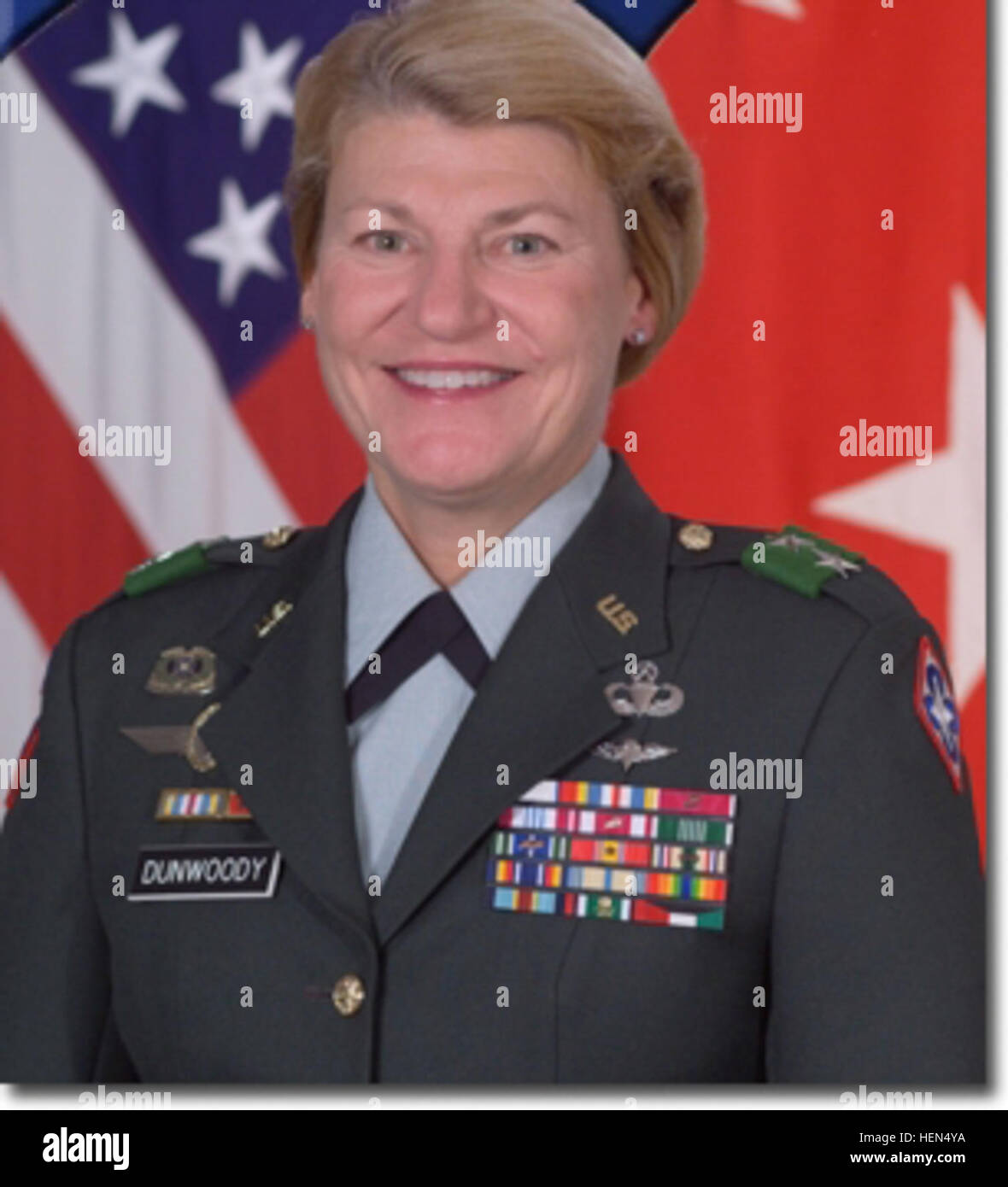
General Ann E. Dunwoody broke historic barriers in the United States Armed Forces on November 14, 2008, when she became the first woman to achieve the rank of four-star general. Over a 37-year career in the U.S. Army, Dunwoody transformed defense logistics, commanded U.S. Army Materiel Command, and established standard-setting operational practices that opened top-tier leadership pathways for women across all military branches.
The Military Heritage and Early Career of Ann E. Dunwoody
General Ann Elizabeth Dunwoody was born into a family with a deep tradition of military service. Her family history in the U.S. military spans four generations, including ancestors who served in the Revolutionary War, the American Civil War, World War I, World War II, the Korean War, and the Vietnam War. Her father, Brigadier General Harold H. Dunwoody, was a decorated veteran of World War II, Korea, and Vietnam, earning the Distinguished Service Cross.
Despite her family background, Dunwoody did not initially intend to pursue a lifelong military career. While attending the State University of New York at Cortland (SUNY Cortland), where she earned a degree in physical education in 1975, she joined the Army’s Women’s Army Corps (WAC) Student Program. The program offered a two-year commitment that helped pay for her college education.
Entering the Women's Army Corps in 1975
When Dunwoody received her commission as a second lieutenant in 1975, the U.S. military was undergoing major structural transitions:
- The Women's Army Corps (WAC): Female soldiers served in a separate branch rather than integrated units.
- Statutory Restrictions: Federal laws and Army policies placed strict caps on the percentage of women serving, restricted the ranks women could hold, and barred them from combat units and direct support roles.
- Integration Transition: In 1978, the WAC was formally disestablished, and female soldiers were integrated into the Army’s regular branches and functional corps.
Dunwoody chose the Quartermaster Corps, a branch responsible for supply, sustainment, and distribution operations. This decision placed her at the operational core of military readiness, where performance is measured by concrete logistical metrics rather than rhetoric.
Career Progression and Breakthrough Command Roles
During the 1980s and 1990s, Dunwoody moved through positions of increasing responsibility in tactical, operational, and strategic logistics. Her career matched the post-Vietnam modernization of the U.S. Army, marked by major investments in training systems and supply chain automation.
- 1975: Commissioned into WAC / Quartermaster Corps
- 1992: First Female Battalion Commander in 82nd Airborne Division (82nd FSB)
- 2000: Commander, 1st Corps Support Command (1st COSCOM)
- 2002: Commander, Surface Deployment and Distribution Command (SDDC)
- 2005: Commander, Combined Arms Support Command (CASCOM)
- 2008: Promoted to General (4-Star); Commander, U.S. Army Materiel Command (AMC)
Breaking New Ground in Airborne and Logistics Units
Dunwoody repeatedly took on roles where female officers had never served:
- 82nd Airborne Division: In 1992, Dunwoody became the first female battalion commander in the 82nd Airborne Division, taking command of the 82nd Forward Support Battalion. In this role, she earned her Master Parachutist badge, managing aerial delivery and field support for rapid-deployment combat forces.
- 1st Corps Support Command (1st COSCOM): By 2000, she commanded the 1st COSCOM at Fort Bragg (now Fort Liberty), North Carolina, overseeing deployable logistics units that supported XVIII Airborne Corps operations globally.
- Surface Deployment and Distribution Command (SDDC): As commander of the Military Traffic Management Command (later renamed SDDC), she managed the movement of surface cargo, military vehicles, and equipment worldwide through civilian ports and military terminals.
Senior Leadership During Post-9/11 Global Operations
Following the attacks of September 11, 2001, the U.S. military engaged in sustained combat operations under Operation Enduring Freedom in Afghanistan and Operation Iraqi Freedom in Iraq. These multi-theater wars placed stress on the defense supply chain.
Dunwoody served as the Army’s Deputy Chief of Staff, G-4 (Logistics), where she oversaw global supply chains, equipment resets, depot maintenance, and operational sustainment. Managing distribution channels across austere landlocked environments like Afghanistan and complex urban environments in Iraq required real-time tracking systems, joint military-civilian logistics operations, and constant resource distribution updates. Her success in keeping deployed units equipped established her as one of the defense department's top operational strategists.
The Historic 2008 Promotion to Four-Star General
On June 23, 2008, President George W. Bush nominated Lieutenant General Ann E. Dunwoody for promotion to the rank of General (four-star). The nomination required confirmation by the United States Senate, which confirmed her appointment unanimously.
On November 14, 2008, at a ceremony held at the Pentagon, Dunwoody was formally promoted. Chief of Staff of the Army General George W. Casey Jr. and Secretary of the Army Pete Geren pinned the four-star insignia on her uniform.
- UNITED STATES ARMED FORCES
- Historic Promotion: Nov 14, 2008
- First Female 4-Star General (All U.S. Military Branches)
- Commander, U.S. Army Materiel Command (Managing $60B+ Logistics Budget)
- Historic Promotion: Nov 14, 2008
National Significance of the Fourth Star
When the U.S. military established permanent four-star officer grades during World War II, access to those ranks was tied directly to major branch commands and combat positions—roles off-limits to female service members for decades.
Dunwoody’s promotion was a historic milestone for several key reasons:
- Breakthrough of the Highest Glass Ceiling: In the 233-year history of the U.S. Army up to 2008, no woman had attained the rank of full General. Her promotion broke a long-standing barrier across all branches of the U.S. Armed Forces.
- Validation of Support Roles: It proved that command excellence in operational support and supply chain management could lead to the highest level of military leadership.
- Paving the Way for Policy Changes: Her success at the four-star level gave military leaders practical evidence of female operational command performance, supporting later policy changes that opened all combat units and occupational specialties to women.
Strategic Impact: Managing AMC's Global Logistics Network
Alongside her promotion, General Dunwoody assumed command of the U.S. Army Materiel Command (AMC), one of the Army's largest commands. AMC is responsible for the research, development, acquisition, maintenance, and deployment of equipment, weapons systems, and supplies for the Army and joint forces.
Oversight of a $60 Billion Operational Enterprise
As head of AMC from 2008 to 2012, Dunwoody managed an enterprise with an annual budget exceeding $60 billion, operating in all 50 U.S. states and more than 140 countries. Her responsibilities included:
Depot Maintenance and Overhaul: Directing national arsenals, depots, and ammunition plants that rebuilt tanks, armored vehicles, aircraft, and communication platforms used in combat operations.
Contracting Oversight: Supervising tens of thousands of defense contracts to supply food, fuel, munitions, uniforms, and spare parts to deployed forces.
Global Workforce: Leading a total workforce of more than 60,000 military personnel, Department of the Army civilians, and defense contractors.
U.S. ARMY MATERIEL COMMAND (General Ann E. Dunwoody)
- ANNUAL BUDGET: Over $60B
- WORKFORCE: 60,000+ Personnel
- GLOBAL REACH: 140+ Countries
Executing Headquarters Relocation and Defense Modernization
During her command, Dunwoody led the relocation of AMC headquarters from Fort Belvoir, Virginia, to Redstone Arsenal in Huntsville, Alabama, under the Base Realignment and Closure (BRAC) directive.
This move transferred thousands of personnel and specialized laboratory assets without disrupting ongoing logistical support for warfighters deployed to combat zones in Iraq and Afghanistan. She also integrated advanced asset tracking systems, predictive maintenance modeling, and automated supply networks, laying the foundation for modern defense supply operations.
Leadership Philosophy: Lessons from "A Higher Standard"
After retiring from active duty in August 2012 following 37 years of service, General Dunwoody documented her leadership model in her 2015 book, A Higher Standard: Leadership Strategies from America's First Female Four-Star General.
Non-Negotiable Standards and Accountability
Dunwoody’s leadership framework centers on the idea that organizations perform up to the standards set and maintained by their leadership.
- Never Accept "Good Enough": Slipping standards in everyday operations leads to systemic failure during crisis operations. Small operational details matter.
- Proactive Accountability: Leaders must enforce standards consistently across all ranks, regardless of an individual's senior status or personal relationships.
- Empowering the Team: High-performing logistics organizations depend on decentralized decision-making. Leaders must give clear commander's intent and trust subordinate leaders to execute actions on the ground.
Mentorship and Institutional Change
Throughout her career, Dunwoody opposed adjusting performance standards based on gender. She argued that women in uniform must meet the exact physical, tactical, and intellectual standards required of their positions to build credibility and operational trust.
She advocated for structured mentorship programs that helped junior officers—both women and men—navigate career paths, secure high-visibility developmental assignments, and build technical expertise in their fields.
Key Milestones in General Dunwoody's Career
The table below outlines the timeline of General Ann E. Dunwoody’s career, key command assignments, and major operational milestones.
| Year | Rank / Status | Role or Assignment | Key Significance & Operational Scope |
|---|---|---|---|
| 1975 | Second Lieutenant | Commissioned in Women's Army Corps (WAC) | Entered Army service before full branch integration; assigned to Quartermaster Corps. |
| 1988 | Major | Graduate, Florida Institute of Technology | Earned Master of Science in Logistics Management. |
| 1992 | Lieutenant Colonel | Commander, 82nd Forward Support Battalion | First female battalion commander in the 82nd Airborne Division; earned Master Parachutist badge. |
| 1995 | Lieutenant Colonel | Graduate, Industrial College of the Armed Forces | Earned Master of Science in National Resource Strategy. |
| 2000 | Colonel / Brig. General | Commander, 1st Corps Support Command | Commanded deployable airborne logistics units at Fort Bragg supporting XVIII Airborne Corps. |
| 2002 | Major General | Commander, Surface Deployment and Distribution Command | Managed global military cargo movements, port operations, and surface transport networks. |
| 2004 | Major General | Commander, Combined Arms Support Command | Directed doctrine development, education, and combat support integration at Fort Lee. |
| 2005 | Lieutenant General | Deputy Chief of Staff, Army G-4 (Logistics) | Led policy, budgeting, and strategy for all U.S. Army supply networks during active combat operations. |
| 2008 | General (4-Star) | Commander, U.S. Army Materiel Command | Historic Milestone: First female 4-star general in U.S. military history; managed a $60B+ enterprise. |
| 2012 | General (Ret.) | Active Duty Retirement | Retired after 37 years of continuous active service. |
| 2015 | Civilian Author | Published A Higher Standard | Authored leadership guide based on operational principles developed during her Army career. |
Long-Term Legacy for Women in the U.S. Armed Forces
General Dunwoody’s service changed the career trajectory for women in the United States military. By demonstrating that a female officer could command large operational organizations and manage tens of billions of dollars in military assets, she removed lingering institutional doubts about female leadership at the highest levels of national defense.
Opening Doors to Higher Flag Rank Commands
Following Dunwoody’s promotion in 2008, all military services saw an increase in women achieving three- and four-star ranks:
- U.S. Navy: Admiral Michelle Howard became the Navy’s first female four-star admiral in 2014 and served as Vice Chief of Naval Operations. Admiral Lisa Franchetti later became Chief of Naval Operations.
- U.S. Air Force: General Lori Robinson became the first female officer to command a major unified combatant command (U.S. Northern Command / NORAD) in 2016. General Jacqueline Van Ovost commanded U.S. Transportation Command.
- U.S. Marine Corps: General Officers like Lieutenant General Lori Reynolds achieved senior leadership roles within Marine Corps cyber and intelligence commands.
Institutional Evolution from Exclusion to Full Integration
During Dunwoody's 37-year career, policy evolved from segregated service units to full operational integration:
- 1975: Segregated Women's Army Corps (WAC); restricted combat support roles.
- 1978: WAC dissolved; female soldiers integrated into regular functional corps.
- 1990s: Women assigned to airborne units and battalion commands (Dunwoody commands 82nd FSB).
- 2008: First female four-star general appointed (Gen. Dunwoody leads Army Materiel Command).
- 2015: Department of Defense removes all combat exclusion policies for qualified women.
Official records maintained by the U.S. Army Center of Military History document this progression from auxiliary units to unified operational command.
Frequently Asked Questions
Why was Ann E. Dunwoody's promotion to four-star general historic?
Ann E. Dunwoody’s promotion on November 14, 2008, marked the first time in the history of the United States military that a woman attained the rank of four-star general. Prior to her promotion, no female officer in any branch of the U.S. Armed Forces had risen above the three-star (Lieutenant General / Vice Admiral) level.
What military branch did Ann E. Dunwoody serve in, and what was her operational specialty?
She served in the United States Army for 37 years. Her operational specialty was logistics and supply chain management within the Quartermaster Corps. She developed deep expertise in material readiness, aerial delivery operations, global transportation, and depot-level maintenance.
What were General Dunwoody's main responsibilities at U.S. Army Materiel Command?
As Commander of U.S. Army Materiel Command (AMC) from 2008 to 2012, Dunwoody oversaw an enterprise with an annual budget exceeding $60 billion and a global workforce of more than 60,000 military, civilian, and contractor personnel. Her responsibilities included weapons development, depot maintenance, contracting oversight, supply chain operations, and equipment distribution across 140 countries.
What key leadership principles did General Dunwoody outline in her book?
In her book A Higher Standard (2015), Dunwoody outlined core principles including:
- Setting non-negotiable standards and enforcing them consistently.
- Refusing to accept "good enough" in routine tasks.
- Taking personal accountability for organizational mistakes.
- Delegating authority to empowered subordinates.
- Mentoring junior leaders based on performance standards rather than gender.
How did General Dunwoody's career impact opportunities for women in the military?
Her success demonstrated that female officers could manage major military commands and large budgets. This helped clear the path for subsequent appointments of female four-star admirals and generals in the Navy, Air Force, and Marine Corps, and supported the formal removal of combat exclusion rules by the Department of Defense in 2015.
Key Takeaways for Military and Civilian Leaders
General Ann E. Dunwoody’s career provides useful lessons for leaders managing complex operations:
- Master the Operational Core: Dunwoody built her career on expertise in logistics, supply chain operational metrics, and readiness. Demonstrable competence in core operational functions creates leadership opportunities.
- Hold the Line on Standards: Leaders set the tone for their organizations. Enforcing clear, uniform standards across an organization prevents performance drift and operational failure.
- Adapt to Strategic Disruptions: Managing the relocation of Army Materiel Command while simultaneously equipping two active combat theaters showed the importance of adaptable planning and dynamic resource allocation.
- Create Inclusive Talent Pathways: By evaluating personnel based solely on performance and standards, organizations expand their talent pool and build operational strength.
Details regarding historical records, official military biographies, and archival documentation of General Dunwoody's assignments can be reviewed via the U.S. Department of Defense Official News Releases.