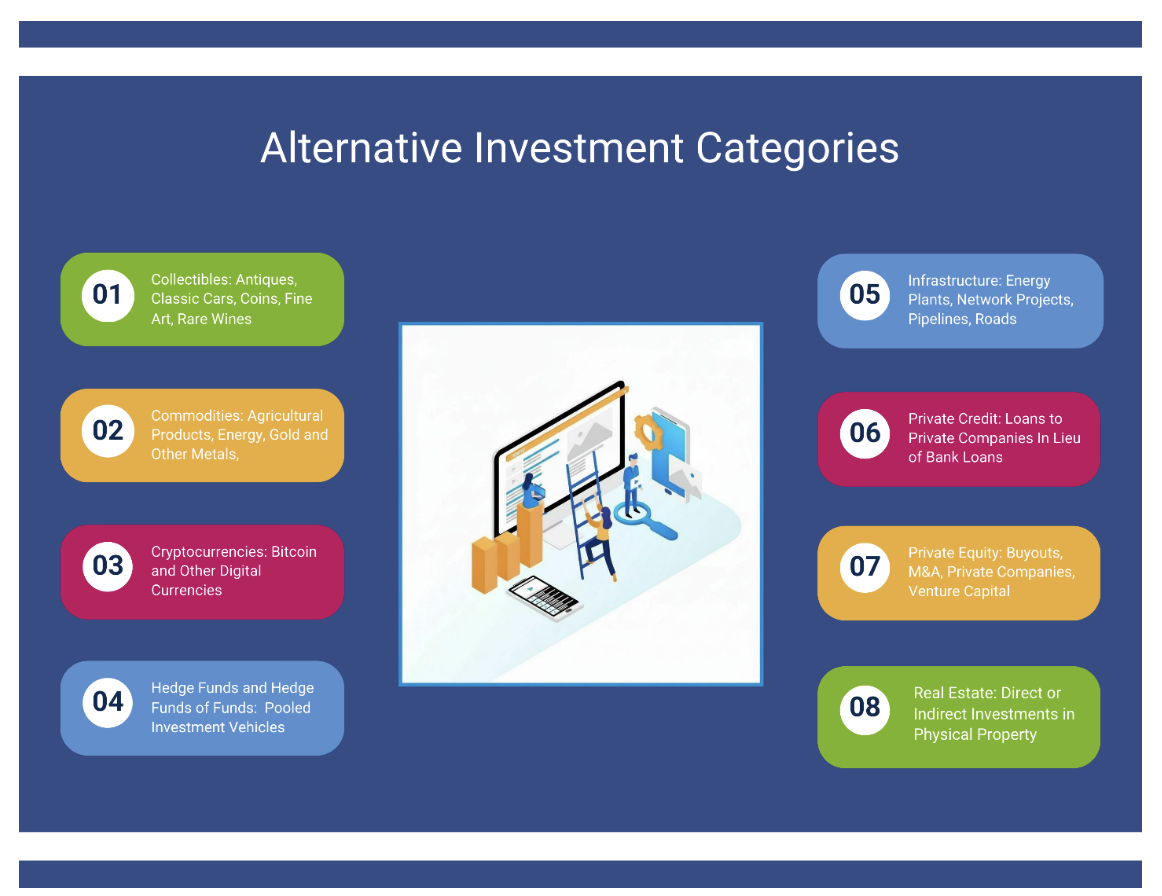
Alternative retirement investments are non-traditional assets—such as real estate, private equity, private credit, and commodities—held within a retirement portfolio to reduce volatility and enhance long-term returns. Unlike standard stocks and bonds, these assets typically require a Self-Directed IRA (SDIRA) for tax-advantaged growth and provide essential diversification against systemic market risks.
The Evolution of Retirement Strategy in 2026
As we navigate the financial landscape of 2026, the traditional 60/40 portfolio—composed of 60% stocks and 40% bonds—is increasingly viewed as a baseline rather than a gold standard. For decades, this model relied on the inverse correlation between equities and fixed income. However, recent periods of simultaneous volatility in both markets have prompted retirees to look toward alternative retirement investments to find "alpha" (excess returns) and "uncorrelated" stability.
The shift toward alternatives is not merely a trend but a structural change in how wealth is preserved. In 2026, institutional-grade assets that were once reserved for pension funds and endowment models are now more accessible to individual investors through technology-driven platforms and updated regulatory frameworks. These assets offer a hedge against inflation and a way to capture premiums from illiquidity, which is often a perfect match for the long-term horizon of a retirement account.
Modern retirement planning now emphasizes the "Total Wealth" approach. This involves integrating private market assets that do not trade on public exchanges, thereby shielding the portfolio from the daily emotional swings of the stock market. While these investments carry unique risks, their role in a 2026 retirement strategy is to provide a sturdier foundation when public markets face headwinds from geopolitical shifts or domestic economic transitions.
Real Estate: The Cornerstone of Alternative Portfolios
Real estate remains the most prominent alternative retirement investment due to its tangible nature and potential for both income and appreciation. In 2026, the methods for incorporating real estate into a retirement plan have expanded beyond simply owning a rental property.
Direct Ownership vs. Real Estate Syndications
Direct ownership involves purchasing a specific property through a Self-Directed IRA. While this offers full control, it requires the investor to manage all expenses—including taxes, insurance, and repairs—strictly through the IRA funds. In 2026, many investors are pivoting toward real estate syndications. These are passive investments where multiple investors pool their capital to purchase large-scale assets like multi-family apartment complexes or industrial warehouses. Syndications allow for fractional ownership, providing access to professional management and institutional-quality assets that would be impossible to acquire individually.
Private REITs and Interval Funds
For those seeking more liquidity than a physical building provides, Private Real Estate Investment Trusts (REITs) and interval funds have become staple choices. Unlike publicly traded REITs, which often move in tandem with the stock market, private REITs are valued based on the underlying net asset value (NAV) of the properties. This valuation method results in significantly lower price volatility. By 2026, the secondary market for these private shares has matured, offering investors improved, though still limited, exit opportunities compared to previous years.
The Role of Industrial and Specialized Real Estate
The 2026 real estate market places a high premium on "e-commerce backbone" assets. This includes cold storage facilities, data centers, and last-mile distribution hubs. For a retirement portfolio, these assets offer long-term leases with creditworthy tenants, providing a reliable stream of income that is often indexed to inflation. Diversifying into these specialized niches helps mitigate the risks associated with the traditional office or retail sectors, which have faced ongoing structural challenges.
Private Credit: The Search for Reliable Yield
With traditional bond yields remaining sensitive to interest rate fluctuations, private credit has emerged as a powerhouse for retirement income. Private credit involves non-bank lending to companies, often small to mid-sized businesses that require capital for growth or restructuring.
Senior Secured Lending
In the 2026 credit market, senior secured debt is highly sought after by retirees. Because this debt is "senior" in the capital structure, these lenders are the first to be repaid in the event of a corporate default. Furthermore, this debt is often "secured" by the company’s assets. For an SDIRA investor, private credit funds offer yields that typically exceed those of high-yield bonds, often with lower actual default risk due to the stringent covenants and direct relationships between the lender and the borrower.
Speciality Finance and Asset-Based Lending
Beyond corporate loans, specialty finance includes niche areas like litigation finance, maritime lending, or equipment leasing. These investments are attractive because their returns are almost entirely uncorrelated with the S&P 500. For instance, the outcome of a legal case or the lease rates for cargo ships depends on factors unrelated to whether the tech sector is up or down. In 2026, these strategies have become more transparent, with dedicated platforms providing the due diligence required for retirement-grade investing.
Private Equity and Venture Capital
Private equity involves investing in companies that are not listed on a public exchange. This asset class allows retirement savers to participate in the value-creation process of a company before it ever reaches the public markets.
Leveraged Buyouts (LBOs) and Growth Equity
The most common form of private equity for retirement accounts is growth equity or buyout funds. These funds take significant stakes in established companies, improve their operations, and eventually sell them for a profit. The "illiquidity premium" is a key concept here: because your money is locked up for 5 to 10 years, you expect a higher return than what you would get from a liquid stock. In 2026, private equity has seen a resurgence in mid-market companies where operational improvements can lead to substantial exits.
The J-Curve and Capital Calls
Investors must understand the "J-Curve" effect in private equity. In the early years of a fund, returns are often negative due to management fees and the time required to deploy capital. Over time, as the companies in the portfolio grow and are sold, the returns turn sharply upward. Furthermore, private equity often uses "capital calls," where the investor commits a total amount but provides the cash only when the fund finds a suitable investment. For a retirement account, this requires careful cash-flow planning to ensure the SDIRA has the liquidity to meet these calls.
Commodities and Hard Assets in an Inflationary 2026
Commodities serve as a classic hedge against the erosion of purchasing power. In 2026, the definition of "hard assets" has expanded to include both traditional precious metals and the raw materials essential for the global energy transition.
Precious Metals: Gold and Silver
Gold remains a foundational alternative retirement investment. In an SDIRA, you can hold physical bullion, provided it meets specific fineness requirements set by the IRS (usually .995+). Gold acts as a "store of value" during periods of currency devaluation or geopolitical instability. Unlike a stock, gold has no counterparty risk; it is an asset that is not someone else's liability.
Energy Transition Metals
By 2026, the demand for copper, lithium, and cobalt has created new investment vehicles. These "green commodities" are essential for battery technology and renewable energy infrastructure. Investors can now access these through private partnerships or physical commodity trusts within their retirement accounts. This provides a way to capitalize on long-term industrial shifts that are independent of short-term interest rate cycles.
Technical Implementation: The Self-Directed IRA (SDIRA)
To hold alternative retirement investments, one cannot use a standard brokerage account at a traditional firm. Instead, a Self-Directed IRA is required. The SDIRA is a specialized vehicle that allows for a much broader range of assets while maintaining the tax-deferred or tax-free (Roth) status of the account.
The Role of the Custodian
In an SDIRA, the custodian is responsible for administrative tasks, such as reporting to the IRS and holding the legal title of the assets. However, unlike a traditional brokerage, the SDIRA custodian does not provide investment advice or conduct due diligence on the assets you choose. The burden of verification and risk assessment falls entirely on the investor. In 2026, it is critical to select a custodian with a robust technology interface that allows for seamless integration with private equity and real estate platforms.
Prohibited Transactions and Disqualified Persons
The IRS maintains strict rules regarding who you can do business with inside your SDIRA. "Disqualified persons" include the account owner, their spouse, parents, and children. You cannot buy a rental property in your IRA and live in it, nor can you hire your son to fix the roof of a property owned by your IRA. Violating these rules can lead to the immediate disqualification of the entire account, resulting in it being treated as a fully taxable distribution plus penalties.
| Investment Type | Typical Minimum | Liquidity Profile | Primary Benefit |
|---|---|---|---|
| Real Estate Syndication | $25,000 - $50,000 | Low (5-7 years) | Passive income & depreciation |
| Private Credit Fund | $10,000 - $100,000 | Moderate (Quarterly) | High consistent yield |
| Physical Gold | ~$2,000 (1 oz) | High (Market based) | Inflation hedge / Crisis hedge |
| Private Equity | $50,000+ | Very Low (7-10 years) | Significant capital appreciation |
| Private REITs | $2,500 - $10,000 | Moderate (Limited) | Diversified property exposure |
Tax Considerations: UBIT and UDFI
While IRAs are generally tax-exempt, alternative retirement investments can sometimes trigger taxes even within the shell of an IRA. This is a technical area where many investors stumble.
Unrelated Business taxable Income (UBIT)
If your IRA invests in an active business (like a partnership that operates a local gym or a car wash), the income generated may be subject to Unrelated Business Taxable Income (UBIT). The IRS views this as the IRA competing with tax-paying businesses, so it levels the playing field by taxing that specific portion of income.
Unrelated Debt-Financed Income (UDFI)
A subset of UBIT is Unrelated Debt-Financed Income (UDFI). This occurs when your SDIRA uses leverage (a mortgage) to purchase an asset. For example, if your IRA buys a $500,000 property with a $250,000 mortgage, roughly 50% of the income generated by that property is considered debt-financed and may be subject to taxation. In 2026, many investors use a "Solo 401(k)" instead of an SDIRA for real estate, as the Solo 401(k) is exempt from UDFI on debt-financed real estate acquisitions under Section 514(c)(9) of the tax code.
Risks and Due Diligence
Investing in alternatives is not without peril. The lack of public oversight means the investor must be their own "compliance officer."
- Valuation Opacity: Unlike a stock that has a price every second, a private company or property might only be valued once a year. This makes it difficult to know the exact value of your portfolio at any given moment.
- Platform Risk: In 2026, many investors use crowdfunding platforms to access alternatives. If the platform itself goes bankrupt, the legal process of reclaiming your interest in the underlying assets can be lengthy and complex.
- Capital Lock-ups: Retirement planning requires matching your assets to your spending needs. If you are 70 years old and your money is locked in a 10-year private equity fund, you may face a liquidity crisis when you need to take Required Minimum Distributions (RMDs).
Frequently Asked Questions
Can I invest in cryptocurrency through my retirement account in 2026?
Yes, digital assets like Bitcoin and Ethereum can be held in a Self-Directed IRA. In 2026, this process has become standardized, with many custodians offering "Institutional-grade" cold storage solutions. However, the IRS treats these as property, and you must ensure that your custodian supports the specific tokens and provides the necessary tax reporting.
What is the "Accredited Investor" requirement for alternatives?
Most high-quality private equity and hedge funds are restricted to "Accredited Investors." As of 2026, this generally requires a net worth of at least $1 million (excluding your primary residence) or an annual income of $200,000 ($300,000 for couples). Some platforms, however, offer "Regulation A+" or "Regulation CF" offerings that allow non-accredited investors to participate in alternative investments with lower minimums.
How do I handle Required Minimum Distributions (RMDs) with illiquid assets?
This is a significant challenge. If your IRA is composed entirely of a building you cannot sell quickly, you may need to take "in-kind" distributions. This involves moving a percentage of the property’s ownership from the IRA to your personal name. This is a taxable event and requires a formal appraisal of the asset to determine the value of the distribution for IRS purposes.
Is it possible to use a standard 401(k) for these investments?
Most employer-sponsored 401(k) plans do not allow for alternative investments. To access these, you typically need to roll over your funds into a Self-Directed IRA after you leave your employer. Some modern "Solo 401(k)" plans for the self-employed do allow for alternatives, often with even more flexibility than an SDIRA.
What are the fees associated with alternative retirement investments?
Fees in the "alt" space are typically higher than the expense ratios of index funds. Private funds often use a "2 and 20" structure: a 2% annual management fee and 20% of the profits (carried interest). Additionally, SDIRA custodians charge annual maintenance fees, transaction fees, and asset-holding fees. Investors must ensure the potential for higher returns justifies these costs.
Strategic Recommendation
For most investors in 2026, a balanced approach involves allocating 10% to 25% of a total retirement portfolio to alternative retirement investments. The first step is to identify your primary goal: if you need income, prioritize private credit or real estate syndications. If you seek maximum growth and have a 10-year horizon, explore private equity. Always consult with a tax professional before opening an SDIRA to ensure you understand the complex reporting requirements and to avoid the pitfalls of prohibited transactions.