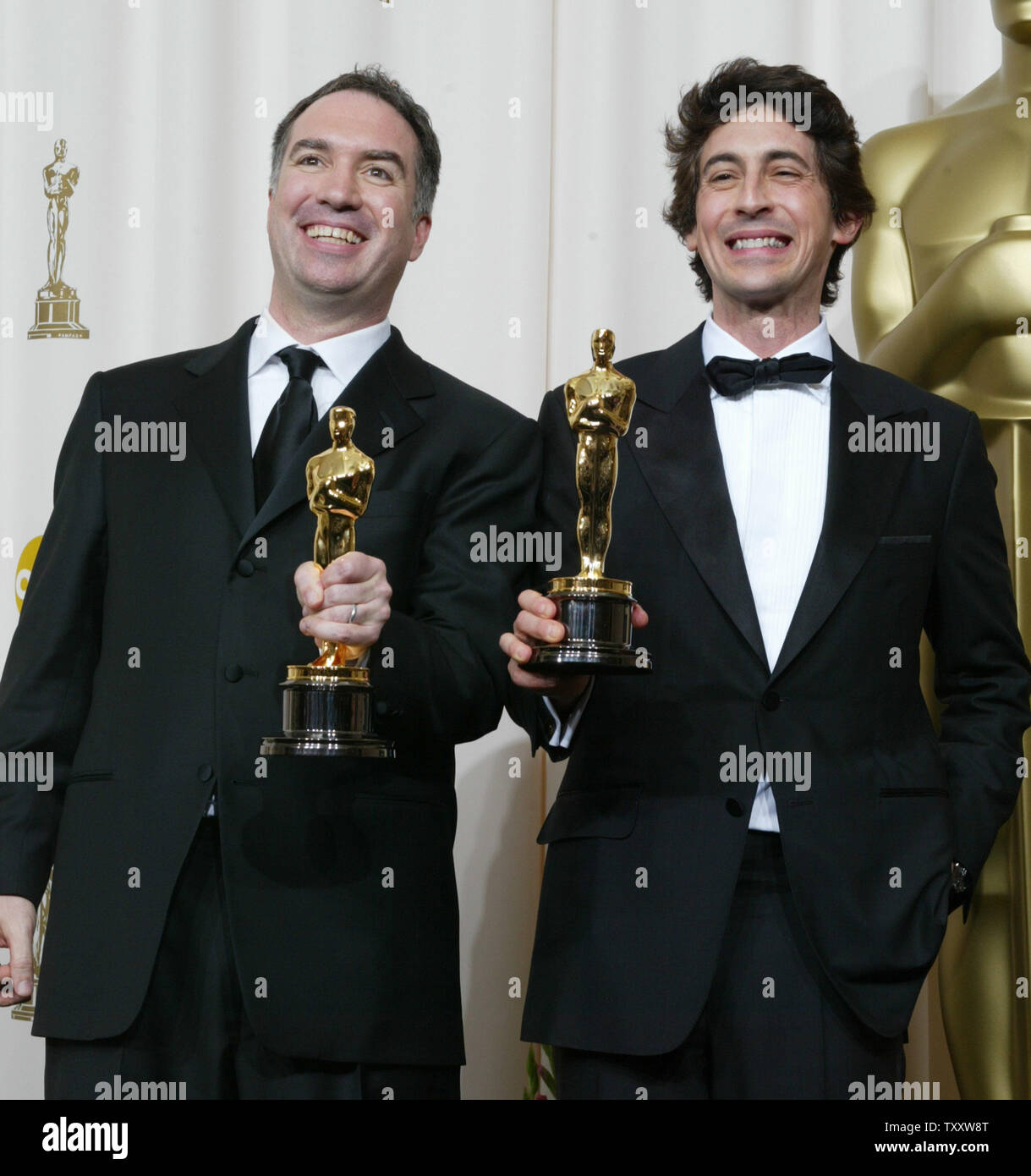
Alexander Payne is a dual Academy Award-winning screenwriter and director whose journey from Omaha, Nebraska, to Hollywood’s elite highlights a commitment to humanistic storytelling. Known for his sharp satire and flawed protagonists, Payne transitioned from local roots to global acclaim by co-writing masterpieces like Sideways and The Descendants.
The trajectory of Alexander Payne’s career serves as a masterclass in independent-minded filmmaking within the studio system. While many directors gravitate toward the spectacle of high-budget blockbusters, Payne has spent decades refining a specific brand of character-driven cinema. As of 2026, his body of work remains a touchstone for aspiring screenwriters who value dialogue, regional specificity, and the "heroic loser" archetype. To understand his transition from a Midwestern upbringing to a celebrated screenwriter, one must examine the intersection of his Greek-American heritage, his academic foundations, and his unique collaborative writing process.
The Omaha Foundation and Greek-American Heritage
Born Constantine Alexander Payne in 1961, Payne’s identity is inextricably linked to Omaha, Nebraska. His father, George Payne, ran "The Payne’s Cafe," a local landmark. This environment provided Payne with a front-row seat to the rhythms of Middle America—a perspective that would later become his most potent tool as a screenwriter. Unlike many of his contemporaries who sought to escape their hometowns, Payne leaned into his roots, using Omaha not just as a setting, but as a lens through which to view the human condition.
His Greek heritage also played a pivotal role in his development. The original family name, Papadopoulos, was shortened to Payne, a common immigrant experience that informs his interest in identity and the American dream. Payne’s upbringing was characterized by a sophisticated, worldly outlook within a traditionally conservative landscape. This duality allowed him to write about the Midwest with both affection and a sharp, satirical edge, avoiding the clichés of "flyover country" that often plague Hollywood productions.
Academic Rigor: Stanford and the UCLA Influence
Payne’s path to screenwriting was paved with a rigorous education that prioritized history and language over early technical training. At Stanford University, he double-majored in Spanish and History. This background in the humanities is evident in his scripts, which often grapple with the historical weight of locations and the linguistic nuances of his characters.
After Stanford, Payne attended the UCLA School of Theater, Film and Television. It was here that he began to marry his literary sensibilities with visual storytelling. His thesis film, The Passion of Martin, caught the attention of industry insiders in the early 1990s. The film, a dark comedy about a lonely cartographer, showcased the themes that would define his Oscar-winning career: obsession, social isolation, and the absurdity of mundane life. This early success led to a writing deal with Miramax, setting the stage for his professional debut.
The Jim Taylor Partnership and the "Payne Voice"
Central to Payne’s success as a screenwriter is his long-term collaboration with Jim Taylor. The duo met in Los Angeles in the late 1980s and developed a shorthand that allowed them to blend their distinct sensibilities. While Payne often brought the structural rigor and visual intent, Taylor contributed a specific wit and tonal balance.
Their writing process is famously collaborative. Rather than "trading pages," the two often sit in the same room, debating every line of dialogue until it rings true. This meticulous approach is what gives a "Payne script" its signature texture—dialogue that feels spontaneous yet carries heavy thematic weight. Their first major collaboration, Citizen Ruth (1996), was a daring satire on the abortion debate that refused to take sides, instead lampooning the fanaticism of both extremes. This script established Payne as a writer who was unafraid of controversy, provided it served a deeper psychological truth.
Breakthrough Success: Election and the Satirical Peak
If Citizen Ruth introduced Payne to the industry, Election (1999) cemented his status as a premier screenwriter. Adapted from Tom Perrotta’s novel, the screenplay is a surgical examination of ambition and ethics within the microcosm of a high school student body election.
The character of Tracy Flick, played by Reese Witherspoon, became an archetype for the overachieving, relentless striver. Payne and Taylor’s adaptation was notable for its use of multiple narrators, a technique that allowed the audience to see the vast gap between how the characters perceived themselves and how they actually behaved. The screenplay earned Payne his first Academy Award nomination for Best Adapted Screenplay, proving that his Omaha-centric stories had universal resonance.
The Road to the Oscar: Sideways and The Descendants
The pinnacle of Payne’s screenwriting career arrived in the 2000s and early 2010s, marked by two Academy Award wins for Best Adapted Screenplay. Each film represented a shift in his tone from biting satire to more poignant, melancholic dramedy.
Sideways: The "Merlot" Effect
In 2004, Sideways became a cultural phenomenon. Adapted from Rex Pickett’s novel, the film follows two middle-aged men on a wine-tasting trip through California’s Santa Ynez Valley. The screenplay is a masterclass in subtext; ostensibly about wine, the script is actually a profound exploration of failure, friendship, and the fear of irrelevance. Payne’s decision to cast Paul Giamatti as Miles—a character who is often unlikable yet deeply sympathetic—showcased his ability to write "difficult" protagonists that audiences ultimately root for. The film’s impact on the wine industry was so significant that it caused a measurable decline in Merlot sales and a surge in Pinot Noir, a testament to the power of Payne’s writing.
The Descendants: Grief and Heritage
By 2011, Payne moved his focus from the Midwest to Hawaii for The Descendants. Co-written with Nat Faxon and Jim Rash, the script deals with a land baron (played by George Clooney) navigating a family crisis following his wife’s boating accident. The screenplay successfully balanced the absurdity of the situation with a grounded, realistic portrayal of grief. It earned Payne his second Oscar, solidifying his reputation as a writer who could navigate complex emotional landscapes without falling into sentimentality.
Key Writing Credits and Accolades
The following table summarizes the primary works that define Alexander Payne's evolution from a regional storyteller to a global screenwriter.
| Film Title | Release Year | Primary Writing Role | Key Accolades/Oscars |
|---|---|---|---|
| Citizen Ruth | 1996 | Co-Writer (with Jim Taylor) | Independent Spirit Nominee |
| Election | 1999 | Co-Writer (with Jim Taylor) | Oscar Nominee: Adapted Screenplay |
| About Schmidt | 2002 | Co-Writer (with Jim Taylor) | Golden Globe: Best Screenplay |
| Sideways | 2004 | Co-Writer (with Jim Taylor) | Oscar Winner: Adapted Screenplay |
| The Descendants | 2011 | Co-Writer (with Faxon & Rash) | Oscar Winner: Adapted Screenplay |
| Nebraska | 2013 | Director (Script by Bob Nelson) | Oscar Nominee: Best Director |
| Downsizing | 2017 | Co-Writer (with Jim Taylor) | Venice Film Festival Selection |
| The Holdovers | 2023 | Director (Script by David Hemingson) | Multiple Oscar Nominations |
Technical Characteristics of a Payne Screenplay
Aspiring screenwriters often study Payne’s work to understand how to balance tone. His scripts frequently occupy the "middle ground"—they are too funny to be pure dramas and too sad to be pure comedies. This tonal ambiguity is achieved through several specific techniques:
- The Flawed Protagonist: Payne’s characters are often their own worst enemies. Whether it is Miles in Sideways or Tracy Flick in Election, the conflict is driven by the character’s internal contradictions rather than external villains.
- Regional Specificity: Payne treats locations as characters. Omaha, the Santa Ynez Valley, and Honolulu are not interchangeable backdrops; the geography, local customs, and even the weather are integral to the plot.
- Epistolary Elements and Voiceover: Payne frequently uses voiceovers or letters to provide insight into a character’s internal world. In About Schmidt, the letters to Ndugu serve as a bridge between the protagonist's repressed exterior and his yearning interior.
- Anti-Spectacle: His scripts prioritize conversation over action. A "big" moment in a Payne film might be a quiet confession at a dinner table or a realization while looking at a historical landmark.
Challenges and Later Career Resurgence
Like any long-standing career, Payne’s journey has faced hurdles. Downsizing (2017), a high-concept social satire, received a polarized response from critics and audiences alike. The film was an ambitious departure from his more grounded work, attempting to address global environmental and economic issues through a sci-fi lens. While some praised its ingenuity, others felt the script lost the intimate character focus that defined his earlier successes.
However, Payne’s late-career resurgence with The Holdovers (2023) demonstrated his enduring relevance. Although he did not write the screenplay (David Hemingson did), the film felt distinctly "Payne-esque" in its focus on three lonely individuals stuck at a New England boarding school during Christmas break. The project reaffirmed his status as a director-screenwriter hybrid who understands the "lost art" of the mid-budget, character-driven adult drama.
The Legacy of an Omaha Visionary
Alexander Payne’s transition from Omaha to the Oscar stage was not a result of conforming to Hollywood trends, but rather of resisting them. By maintaining his focus on the specific, the regional, and the deeply human, he created a niche that became a genre unto itself. His work reminds the industry that compelling cinema does not require massive budgets or superheroes; it requires an observant eye and a script that isn't afraid of the messy, uncomfortable reality of being human.
For screenwriters in 2026, Payne’s career provides a blueprint for longevity: stay true to your voice, collaborate with those who challenge you, and never underestimate the cinematic potential of your own backyard.
Frequently Asked Questions
What is the "Omaha Trilogy" in Alexander Payne's work?
The "Omaha Trilogy" refers to Payne's first three major films—Citizen Ruth, Election, and About Schmidt—which are all set in his hometown of Omaha, Nebraska. While they aren't narratively connected, they share themes of Midwestern identity, social hierarchy, and the mundane struggles of ordinary people. These films established Payne as a regional filmmaker who could translate local stories for a global audience.
How did Alexander Payne win his Academy Awards?
Payne has won two Academy Awards, both in the category of Best Adapted Screenplay. His first win was for Sideways (2004), shared with Jim Taylor, based on the novel by Rex Pickett. His second win was for The Descendants (2011), shared with Nat Faxon and Jim Rash, based on the novel by Kaui Hart Hemmings. Both wins recognized his ability to translate literary internal monologues into cinematic dialogue.
Does Alexander Payne always write the movies he directs?
No, but he is heavily involved in the development of every project. While he co-wrote most of his early successes like Election and Sideways, he directed Nebraska (written by Bob Nelson) and The Holdovers (written by David Hemingson) without a formal writing credit. Even when he is not the primary writer, his directorial style is heavily informed by his background as a screenwriter.
Why is regional setting so important in Payne's screenplays?
Payne believes that the more specific a story is, the more universal it becomes. By grounding his characters in very specific locales—like the specific wine country of California or the suburbs of Omaha—he avoids the "anywhere USA" feel of many studio films. This specificity makes the characters feel like real people with real histories, which helps the audience connect with their emotional journeys.
What is the partnership between Alexander Payne and Jim Taylor?
Jim Taylor has been Payne's primary writing partner since the late 1980s. They met when Taylor was working as an assistant to Ivan Reitman. Their partnership is characterized by a shared sense of irony and a commitment to character-led storytelling. They have collaborated on almost all of Payne's major screenplays, including Citizen Ruth, Election, About Schmidt, Sideways, and Downsizing.
Final Recommendation
For those looking to follow in Alexander Payne's footsteps, the most practical next step is to master the art of the adapted screenplay. Study the source novels of Payne’s films—specifically Election and The Descendants—and compare them to his finished scripts. Notice what he chooses to omit, what he expands upon, and how he translates prose into visual subtext. Payne’s success proves that the ability to find the cinematic "heart" of a literary work is one of the most valuable skills in modern filmmaking.