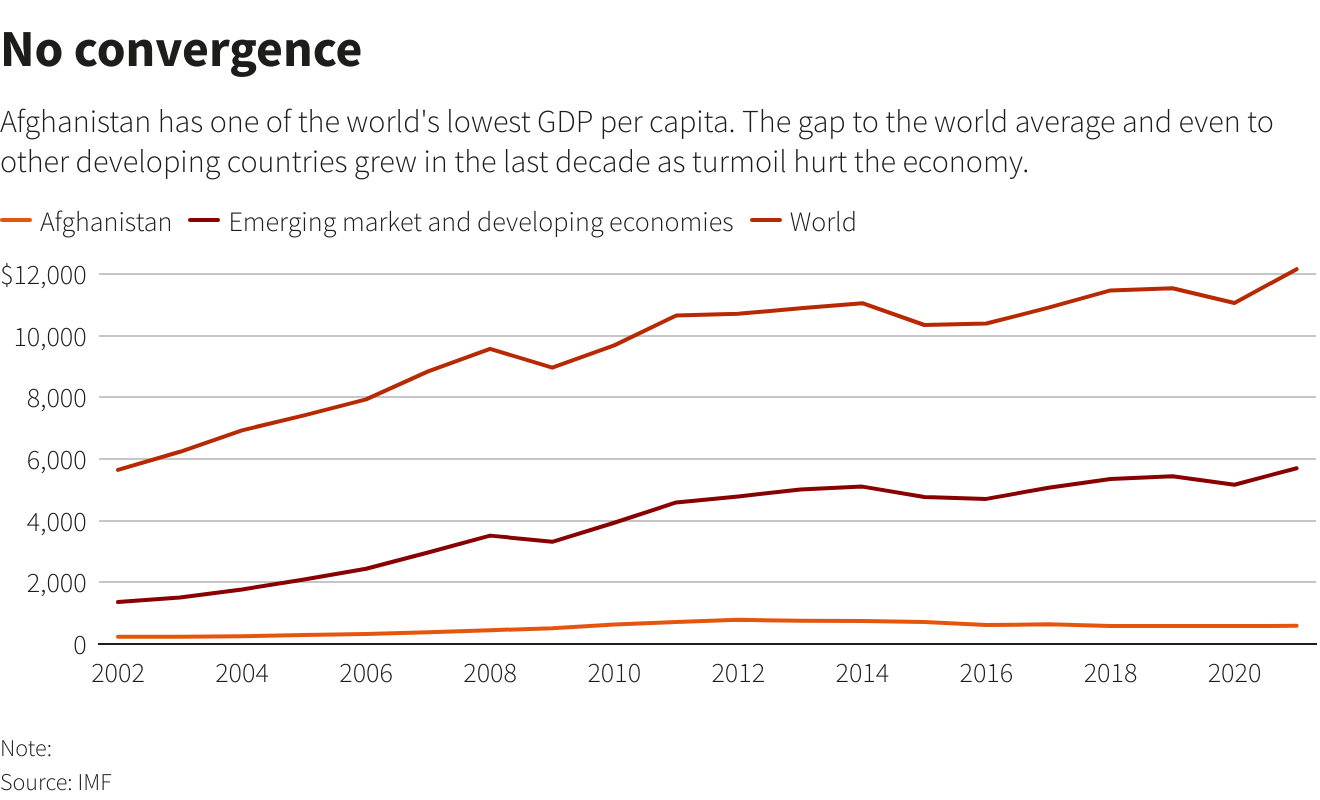
Afghanistan’s economic landscape in the 2020s is defined by a profound transition from a high-dependency, aid-reliant model to a restricted, internal-resource-focused system. Following the political change in August 2021, the economy underwent a sharp contraction, characterized by the freezing of central bank assets, the cessation of direct development assistance, and the imposition of international sanctions, which collectively necessitated a pivot toward subsistence and local trade.
The Structural Shift: From Aid Dependency to Domestic Stabilization
For two decades prior to 2021, the Afghan economy was primarily sustained by international donor grants, which at times accounted for nearly 40% of the national GDP and supported roughly 75% of public expenditures. The withdrawal of this support necessitated a total recalibration of fiscal and monetary policy.
In the 2020s, the economic strategy has shifted toward domestic revenue mobilization. This involves a heavy reliance on customs duties, mining royalties, and administrative fees. The administration has implemented rigorous tax collection methods to fund the national budget without the benefit of external development grants. This transition has led to a significant "hollowing out" of the formal private sector, as businesses—particularly those reliant on international contracts or service-sector demand—have faced liquidity crises and regulatory uncertainty.
The Role of the Extractives Sector
Mining remains the most discussed pathway for long-term economic development in Afghanistan. The country possesses significant, largely untapped deposits of copper, iron ore, lithium, and rare earth elements. Historically, the difficulty in extracting these resources was tied to limited infrastructure, security volatility, and complex geological surveying.
By 2026, the focus has shifted toward attracting regional investment for large-scale mining projects. Projects like the Mes Aynak copper mine are periodically re-evaluated to determine technical and economic viability. However, the development of these sectors faces persistent headwinds:
- Infrastructure Deficits: The lack of reliable power grids and transportation networks (rail and heavy-duty roads) significantly inflates the cost of extraction.
- Logistical Bottlenecks: Afghanistan is landlocked, making it dependent on the efficiency and political stability of trade corridors through neighboring countries.
- Technological Requirements: Industrial-scale extraction requires foreign direct investment (FDI) and technical partnerships that have been difficult to secure due to the country’s international isolation.
Monetary Policy and Financial Constraints
A critical challenge to development in the 2020s is the status of the banking system. The freezing of Da Afghanistan Bank (DAB) assets in international jurisdictions has limited the central bank’s ability to act as a lender of last resort or to stabilize the Afghani (AFN).
Commercial banks in the country have been constrained by liquidity limits and a lack of access to the global SWIFT payment system. This has forced the economy to move toward a cash-based system, complicating trade finance and large-scale industrial investment. Businesses struggle to open Letters of Credit (LCs), which are standard requirements for importing machinery or raw materials. Consequently, international commerce is largely confined to informal money-hawala networks, which, while resilient, lack the oversight required to facilitate large, transparent development projects.
Regional Trade and Connectivity
Recognizing the limitations of global integration, Afghanistan has pivoted heavily toward regional economic cooperation. Trade corridors linking Central Asia to South Asia—often referred to as the "Trans-Afghanistan" routes—are viewed as vital assets.
The construction of infrastructure projects, such as the Qosh Tepa Canal, serves as a test case for domestic development capabilities. The canal, designed to irrigate vast tracts of northern land, represents an effort to improve agricultural self-sufficiency. Agriculture remains the backbone of the economy, employing a majority of the workforce. Improvements in irrigation and cold-chain storage are theoretically capable of reducing the reliance on food imports and increasing the export value of high-margin crops like fruits, nuts, and saffron.
Comparative Indicators of the Economic Landscape
The table below outlines the primary shifts in the economic environment comparing the pre-2021 period to the current realities of 2026.
| Economic Metric | Pre-2021 Environment | 2026 Reality |
|---|---|---|
| Primary Revenue Source | International Donor Grants | Customs Duties & Domestic Taxes |
| Monetary Stability | Central Bank Intervention | Limited; Cash-Based Operations |
| Banking Access | Integration with Global SWIFT | Restricted; Localized Liquidity |
| Infrastructure Focus | Donor-Funded Utility Projects | State-Led Resource & Irrigation |
| Trade Strategy | Global and Regional Markets | Regional Transit-Centric |
The Human Capital Crisis and Economic Participation
The economic development trajectory is deeply influenced by the availability of human capital. During the early 2020s, the country experienced a significant migration of skilled professionals, including engineers, doctors, teachers, and financial experts. This "brain drain" has created a functional gap in the civil service and the private sector.
Development in the mid-2020s is hindered by the limited integration of large segments of the population into the formal workforce. The resulting economic contraction has increased poverty rates, putting pressure on non-governmental organizations (NGOs) and international bodies to provide humanitarian aid. This aid is often "earmarked," meaning it is directed toward survival rather than long-term infrastructure development, creating a persistent cycle of humanitarian necessity.
Challenges to Sustainable Growth
For meaningful economic development to occur, several systemic hurdles must be addressed:
- Regulatory Uncertainty: Potential investors lack clear legal frameworks regarding property rights, contract enforcement, and dispute resolution. Without these, private capital remains largely on the sidelines.
- Energy Poverty: Industrial growth requires consistent electricity. Reliance on imported power from Central Asian neighbors makes the domestic industry vulnerable to price fluctuations and supply cuts.
- Sanctions and Compliance: The ongoing international sanctions regime creates a high risk for any financial institution or corporation attempting to facilitate legitimate business in Afghanistan, effectively de-risking the market for most global players.
Frequently Asked Questions
What is the current primary driver of Afghanistan's national budget? The current budget relies heavily on customs revenues collected at border crossings and internal tax collection. Since the cessation of direct international development grants in 2021, the government has focused on expanding the tax base and maximizing duty collection on imported goods to cover administrative costs.
Why is the banking sector still struggling in 2026? The sector suffers from a lack of access to international payment networks and a shortage of foreign currency reserves. Because major assets remain frozen abroad, local banks cannot easily facilitate cross-border trade, forcing merchants to rely on alternative, less efficient informal financial systems.
What is the significance of the Qosh Tepa Canal? The canal is a major infrastructure project intended to divert water from the Amu Darya river to irrigate the northern provinces. It is framed as a long-term strategy for food security, aiming to convert arid land into productive agricultural zones, thereby reducing the country's dependence on imported grains.
Are there opportunities for foreign investment in 2026? While the government has sought foreign investment in mining and infrastructure, the combination of international sanctions and the lack of a recognized legal banking framework makes it exceptionally difficult for foreign entities to conduct business. Most investment interest is limited to regional neighbors looking for specific transit or resource agreements.
How does agriculture impact the current economic outlook? Agriculture continues to provide the most stable source of income for the rural population. However, it is highly sensitive to climate shocks, such as drought. Development efforts are currently focused on irrigation, as modernizing agricultural output is the most immediate way to stabilize the rural economy and slow internal migration toward urban centers.
Strategic Next Steps
For stakeholders monitoring the economic situation, the primary indicator of development potential will be the evolution of legal frameworks surrounding foreign investment and the potential for a "technical" engagement with international financial institutions. Until there is a mechanism to restore regular banking interactions and legal protections for capital, the economy is expected to remain in a state of subsistence-level stabilization. Observers should track regional trade agreements and the completion of major irrigation projects, as these represent the most concrete efforts toward state-led self-sufficiency currently underway.