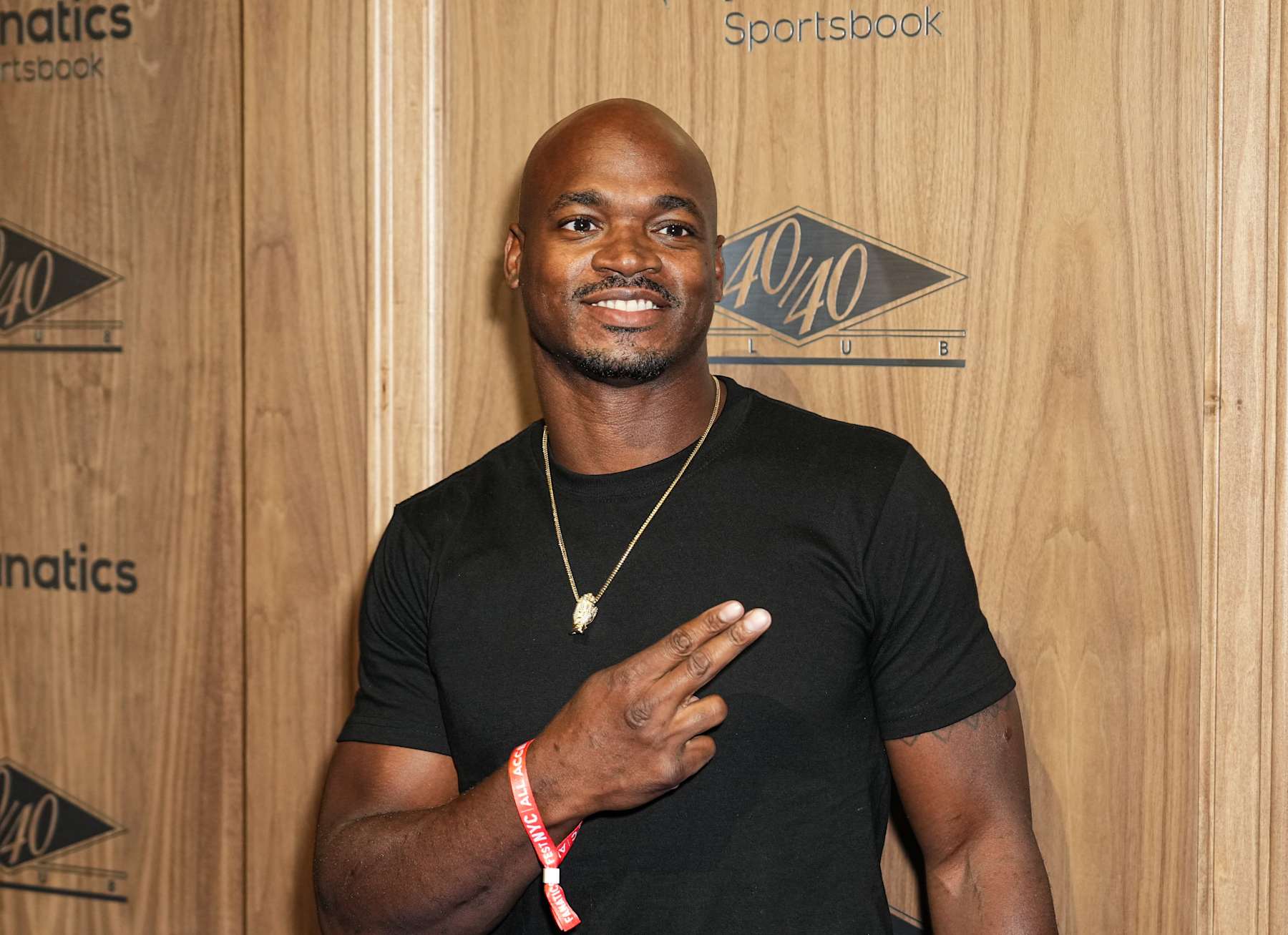
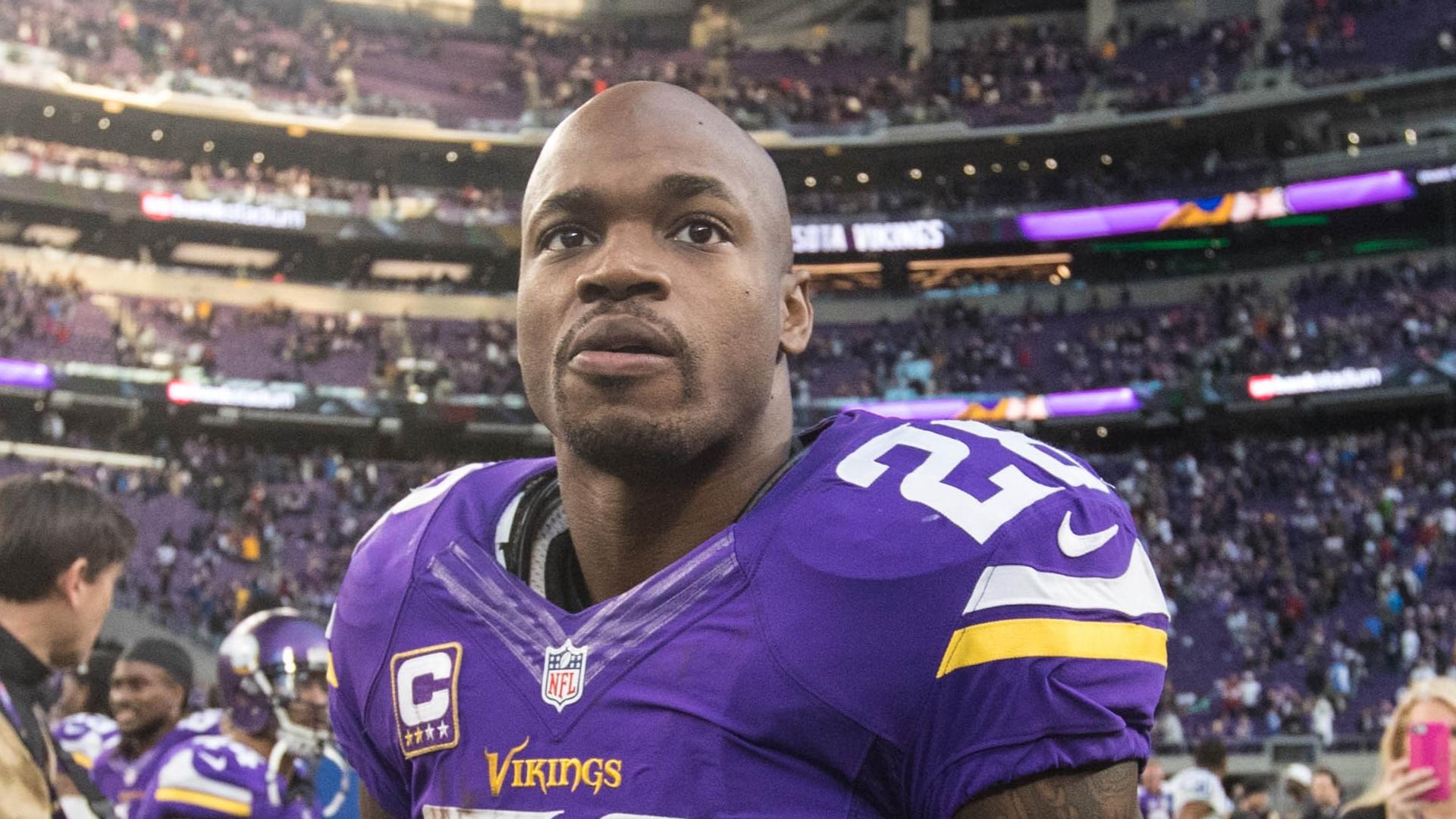
Former NFL running back Adrian Peterson earned over $103 million in gross playing salary during his 15-season professional football career. Despite his status as one of the highest-paid running backs in NFL history, severe financial missteps, high-interest loans, bad investments, and protracted legal judgments led to court-ordered asset seizures totaling over $12 million.
Legendary NFL Career and Salary Breakdown
Drafted seventh overall by the Minnesota Vikings in the 2007 NFL Draft out of the University of Oklahoma, Adrian Peterson quickly established himself as one of the most dominant running backs in professional football history. Over his 15-year career, Peterson accumulated 14,918 rushing yards and 120 rushing touchdowns, placing him fifth on the NFL's all-time rushing yards list. His peak performance arrived in 2012, when he rushed for 2,097 yards—just eight yards short of Eric Dickerson's single-season record—earning him the NFL Most Valuable Player (MVP) award.
Peterson's exceptional on-field performance translated into some of the most lucrative contracts ever awarded to an NFL running back. During an era when running back valuations were beginning to decline relative to other positions, Peterson commanded premier contracts due to his singular impact on the field.
| Category / Team | Amount |
|---|---|
| Minnesota Vikings (2007–2016) | ~$94.8 Million |
| New Orleans Saints & AZ Cardinals (2017) | ~$3.5 Million |
| Washington Commanders (2018–2019) | ~$5.0 Million |
| Detroit Lions, TN Titans, SEA (2020-21) | ~$0.5 Million |
| TOTAL GROSS CAREER SALARY EARNINGS | ~$103.8 Million |
Breakdown of Contract History and Career Earnings
Peterson spent the majority of his playing career with the Minnesota Vikings before taking on short-term veteran contracts with several other franchises.
| Period | Franchise / Team | Contract Terms | Key Details & Guaranteed Money | Estimated Gross Earnings |
|---|---|---|---|---|
| 2007–2010 | Minnesota Vikings | 5 years / $40.5 Million | Initial rookie contract; included $17 million guaranteed. | ~$24.5 Million |
| 2011–2016 | Minnesota Vikings | 7 years / $96.0 Million | Landmark extension; $36 million guaranteed ($13.7M average per year). | ~$70.3 Million |
| 2017 | New Orleans Saints | 2 years / $7.0 Million | Signed in free agency; traded to Arizona after 4 games. | ~$2.5 Million |
| 2017 | Arizona Cardinals | Acquired via trade | Absorbed remaining 2017 base salary requirements. | ~$1.0 Million |
| 2018–2019 | Washington Commanders | 2 years / $8.0 Million | Signed 1-year deal in 2018 ($1.015M), renewed for 2 years in 2019. | ~$5.0 Million |
| 2020 | Detroit Lions | 1 year / $1.05 Million | Single-season veteran contract. | ~$1.05 Million |
| 2021 | Titans / Seahawks | Veteran Minimum Contracts | Brief late-season appearances with Tennessee and Seattle. | ~$450,000 |
| Total | Multiple Teams | 15 NFL Seasons | Combined Contract Value Exceeding $150M | ~$103.8 Million |
While $103.8 million represents Peterson's gross career earnings from NFL team contracts, actual net cash received was significantly lower. Income tax obligations (federal tax rates, state taxes, and regional "jock taxes" assessed in every state where games were played), mandatory agent fees (typically 3%), and player union dues reduced his net compensation to approximately $45 million to $50 million prior to living expenses, investments, and personal obligations.
Key Factors Behind Adrian Peterson's Financial Struggles
The disparity between Peterson’s $103.8 million gross earnings and his severe financial distress stems from a combination of predatory debt cycles, improper financial advice, excessive overhead expenses, and costly legal judgments.
1. High-Interest Emergency Loans and Debt Spirals
The primary catalyst for Peterson's compounding financial liabilities was his reliance on hard-money lenders. In 2016, Peterson took out a $5.2 million loan from Pennsylvania-based lender DeBella Loans. The loan was intended to repay prior debts, including a $2.4 million obligation to Democracy Capital Corp.
Hard-money loans targeting professional athletes frequently carry steep, legal-maximum interest rates—often between 18% and 24% annually—alongside severe default penalties. When Peterson defaulted on the terms of the DeBella loan, accrued interest, late fees, and legal charges caused the balance to balloon far beyond the original principal.
2. Mismanagement by Financial Advisors and Trustees
Peterson publicly asserted that his financial distress resulted from placing implicit trust in unscrupulous financial advisors and managers. In several court proceedings and public statements, Peterson’s legal representation argued that advisors made risky, illiquid investments without proper oversight, took advantage of his limited financial literacy, and executed high-risk financial arrangements under his power of attorney.
While financial advisors may face professional liability or civil lawsuits for breach of fiduciary duty, courts maintain that the borrower remains personally liable for contracts bearing their signature. Consequently, Peterson remained legally responsible for multimillion-dollar loan contracts regardless of third-party mismanagement.
3. High Personal Overhead and Family Obligations
Throughout his peak playing years, Peterson maintained an extraordinary monthly burn rate. Reports from legal proceedings highlighted massive expenditures, including:
- High-end real estate purchases with significant ongoing property tax and maintenance liabilities.
- Lavish personal events, including a heavily publicized 30th birthday party with exotic animals and elaborate custom decor.
- Direct financial support for a large extended family and multiple children across different households, resulting in extensive ongoing child support obligations.
When an athlete's cash flow stops or decreases due to retirement or contract changes, high fixed overhead can rapidly exhaust remaining liquid reserves.
Major Lawsuits, Judgments, and Asset Seizure Timeline
Peterson's financial difficulties escalated into complex litigation spanning federal and state courts across Pennsylvania, Maryland, New York, and Texas.
- 2016: Takes out $5.2M high-interest loan from DeBella Loans.
- 2019: Maryland court orders $2.4M payment to Democracy Capital Corp.
- 2021: NY Judge orders Peterson to pay $8.3M+ to Chase Funding (DeBella debt).
- 2024: Texas court appoints receiver; orders seizure of MVP trophy & gear.
2016–2019: Early Defaults and Preliminary Judgments
In 2016, Peterson encountered initial liquidity issues, prompting him to seek non-traditional financing. After defaulting on payments to Democracy Capital Corp, a Maryland court entered a judgment against him for approximately $2.4 million in 2019.
Simultaneously, the original $5.2 million note from DeBella Loans was assigned or sold to Chase Funding IBV, an investment entity specializing in defaulted debt recovery.
2021: The $8.3 Million New York State Judgment
In 2021, a New York State Supreme Court judge granted summary judgment in favor of Chase Funding IBV. The court held Peterson personally liable for defaulting on the 2016 loan agreement. The total judgment was initially set at $8.3 million, which included:
- The original unpaid principal balance of $5.2 million.
- Millions of dollars in accrued interest calculated at contractual default rates.
- Attorney fees and collection costs.
Because New York statutory post-judgment interest accrues at a rate of 9% annually, the total unpaid judgment continued to expand by hundreds of thousands of dollars each year. By 2024, the total amount owed to Chase Funding IBV surpassed $12.5 million.
2024: Receiver Appointment and Asset Liquidation Order
In mid-2024, enforcement actions moved to Texas, where Peterson resided. Because Peterson failed to satisfy the New York judgment voluntarily, Chase Funding applied to a Texas state court to enforce the foreign judgment under the Uniform Enforcement of Foreign Judgments Act.
In August 2024, a Texas judge appointed a court receiver (Robert Berleth) with broad authority to locate, seize, and liquidate Peterson's personal property to satisfy the $12.5 million debt. The assets subject to court-ordered seizure included:
- Peterson's 2012 NFL Most Valuable Player (MVP) trophy.
- Game-worn jerseys, helmets, and career memorabilia.
- High-value personal luxury items, jewelry, and vehicles.
- Liquid funds held in bank accounts under Peterson's name.
Peterson released video statements clarifying that while he was contesting specific aspects of the receiver's actions, the legal enforcement of the judgment remained active.
Comparative Analysis: NFL Earnings vs. Known Debt Obligations
To understand how high-earning athletes encounter severe financial distress, it is useful to evaluate the math behind gross income, net earnings, and compounding debt.
| Financial Parameter | Amount (USD) | Explanatory Context |
|---|---|---|
| Gross NFL Salary Earnings | ~$103,800,000 | Total career salary earned across 15 seasons (2007–2021). |
| Estimated Net Post-Tax Income | ~$48,000,000 | Cash remaining after federal/state income taxes, agent fees (3%), and union dues. |
| Original Hard-Money Principal (2016) | $5,200,000 | Base loan taken from DeBella Loans to consolidate previous debts. |
| Accrued Interest & Fees (By 2021) | ~$3,100,000 | Additional costs added by court judgment due to high interest rates. |
| Total Enforceable Judgment (2024) | ~$12,500,000+ | Total balance owed following post-judgment statutory interest accumulation. |
| Percentage of Net Earnings Owed | ~26% | Total current debt relative to estimated total career net earnings. |
Wealth Management Lessons from Professional Athlete Cases
The financial difficulties faced by Adrian Peterson highlight common risks encountered by high-net-worth individuals, particularly professional athletes with compressed earning windows.
- Independent Auditing: Eliminates single-advisor authority
- Liquidity Reserve Buffer: Prevents reliance on hard-money loans
- Fiduciary Oversight: Ensures legally bound financial advice
1. Avoiding Emergency Hard-Money Loans
Hard-money or short-term private loans often feature high interest rates, aggressive default triggers, and severe confession-of-judgment clauses. Athletes experiencing temporary liquidity shortfalls should avoid high-interest alternative financing, as the compounding interest can quickly outstrip the original principal.
2. Separating Asset Management from Execution Rights
Giving a single manager or advisor full power of attorney without third-party checks increases exposure to fraud or bad investments. Effective financial management requires dual-authorization protocols and independent, third-party audits of all accounts on a regular basis.
3. Fiduciary Duty vs. General Financial Advisory
Athletes and high-earning professionals should work exclusively with registered investment advisors (RIAs) who operate as legal fiduciaries. Fiduciaries are required by law to act in the client's best interest. Many informal advisors or wealth managers operate under less stringent standards, selling high-commission products or arranging high-risk loans that benefit the broker rather than the client.
4. Accounting for the Short Duration of Athletic Careers
The average NFL career lasts approximately 3.3 years. Even elite players with long careers must structure their budgets around the reality that primary athletic income stops in their 30s. Wealth preservation strategies require establishing low-risk passive income streams rather than maintaining lifetime budgets built on peak playing salaries.
Frequently Asked Questions
What was Adrian Peterson's total career NFL earnings?
Adrian Peterson earned approximately $103.8 million in gross playing salary over his 15-season NFL career. His largest contract was a seven-year, $96 million extension with the Minnesota Vikings signed in 2011.
Why did Adrian Peterson face asset seizure in 2024?
In August 2024, a Texas court appointed a receiver to seize Peterson's assets—including personal memorabilia, his 2012 MVP trophy, and cash reserves—to satisfy an unpaid judgment stemming from a defaulted 2016 loan. The original balance grew to over $12.5 million due to contractual interest, post-judgment interest, and legal fees.
How much money did Adrian Peterson borrow in the main default case?
Peterson borrowed $5.2 million from Pennsylvania-based DeBella Loans in 2016. The loan was intended to consolidate prior financial obligations, including a $2.4 million debt to Democracy Capital Corp.
Did Adrian Peterson lose all his NFL career earnings?
While Peterson grossed over $103 million, taxes, agent fees, living expenses, family support, and poor investments significantly reduced his liquid holdings. The remaining assets became subject to collection actions to satisfy his outstanding legal judgments.
Who was the court-appointed receiver in the 2024 asset collection order?
A Texas judge appointed Houston-based attorney Robert Berleth as the receiver authorized to identify, take control of, and sell Peterson's property to pay off the judgment owed to Chase Funding IBV.
Practical Takeaways for Financial Planning
The legal and financial challenges surrounding Adrian Peterson offer clear lessons for managing high earnings:
- Conduct Independent Audits: Never allow a single financial manager unmonitored access to accounts. Hire independent accountants to conduct unannounced annual audits.
- Review High-Interest Debt Terms: Inspect all short-term loan contracts for aggressive default terms, legal fees, and high interest rates before signing.
- Build Liquid Reserves: Maintain sufficient liquid funds in low-risk accounts to cover lifestyle expenses and tax obligations without turning to high-interest lenders during cash squeezes.
Disclaimer: This financial overview is provided strictly for educational and informational purposes based on public court filings, legal records, and historical contract data. It does not constitute legal, tax, or professional financial advice.