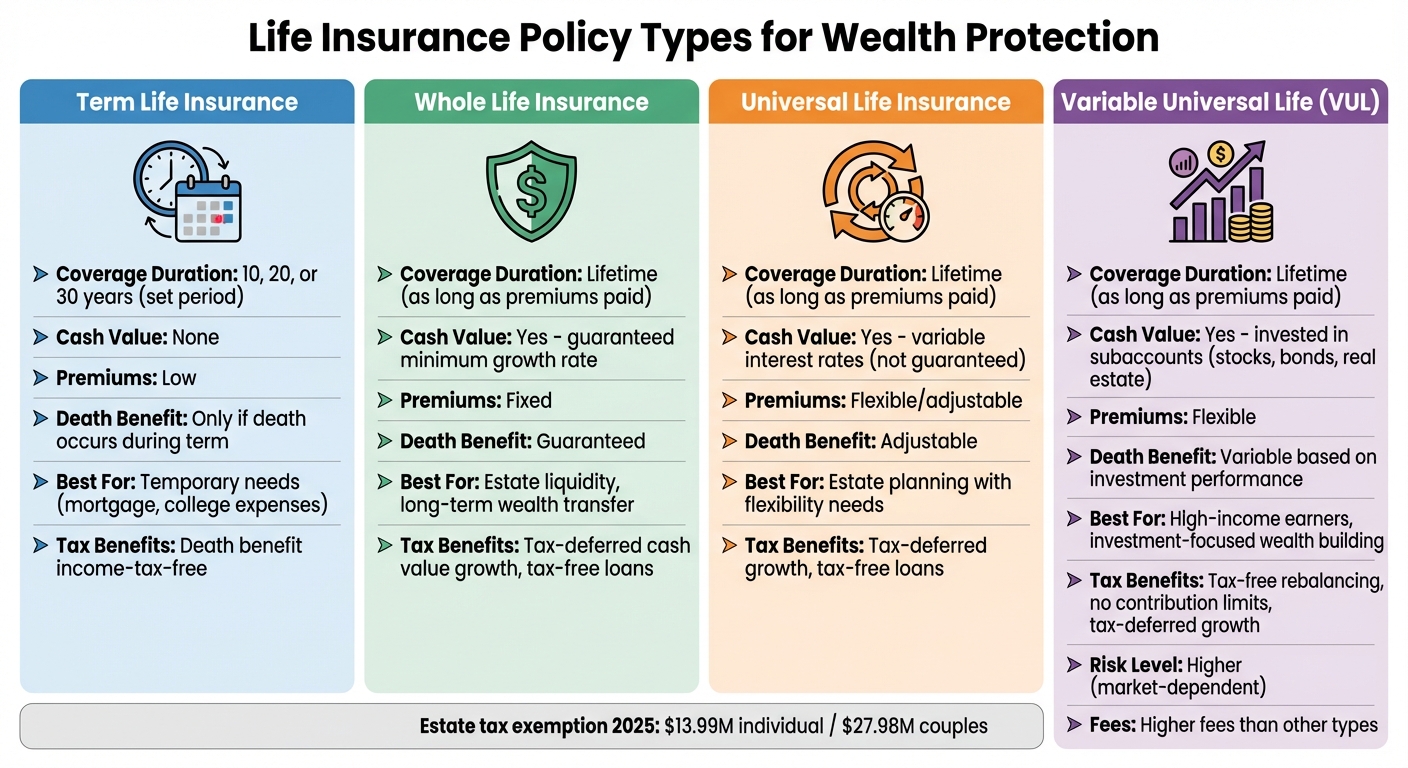
Accounting for life insurance within personal wealth management requires integrating cash-value assets and death benefits into your net worth statements, tax-planning strategies, and estate liquidity models to ensure accurate financial reporting and asset protection.
Introduction to Life Insurance as an Asset Class
When evaluating personal wealth, individuals frequently account for traditional assets such as real estate holdings, equities, bonds, and retirement accounts while omitting or misclassifying life insurance policies. However, certain types of life insurance—specifically permanent policies like Whole Life, Universal Life, and Variable Life—function as dynamic financial instruments that accumulate tangible cash value over time. Proper accounting for life insurance transforms a policy from a mere expense or a deferred death benefit into an active component of your personal balance sheet.
Navigating the intersection of life insurance and personal wealth requires distinguishing between term life insurance and permanent life insurance. Term insurance provides temporary coverage for a specified period and possesses no cash value, rendering it an expense rather than an asset for balance sheet purposes. Permanent insurance, conversely, combines a death benefit with an investment or savings component known as the cash value. This cash value grows on a tax-deferred basis, creating a financial reserve that policyholders can borrow against or withdraw under specific conditions. Integrating these assets accurately into your financial tracking ensures a realistic portrayal of your net worth, optimizes liquidity, and prevents severe tax liabilities during estate transitions.
The Mechanics of Cash Value Growth and Balance Sheet Inclusion
To accurately reflect permanent life insurance on a personal balance sheet, you must understand how cash value accumulates and how accountants categorize it. Unlike a traditional brokerage account where market values fluctuate openly, the cash value of a permanent life insurance policy grows according to the insurer's crediting rates, dividend distributions (in participating policies), or underlying sub-account performance (in variable policies).
When calculating your personal net worth, you should generally record the net cash surrender value rather than the gross cash value or the total death benefit. The net cash surrender value represents the exact amount of money you would receive if you voluntarily terminated the contract today, accounting for any outstanding policy loans, unpaid interest, or surrender charges.
Methods of Valuation
- Cash Surrender Value: The baseline liquidation value of the policy, subtracting any applicable surrender fees during the initial policy years.
- Policy Loan Balances: Liabilities against the policy that must be subtracted from the gross cash value to determine net equity.
- Death Benefit Exclusions: The face value (death benefit) is excluded from the living balance sheet because it is a contingent future asset realized only upon the insured's passing.
Failing to subtract surrender charges during the early years of a policy can artificially inflate your stated net worth. Financial professionals recommend reviewing annual policy statements to update your balance sheet figures, as cash values adjust continually based on premium payments, interest credits, and internal insurance costs (known as mortality charges).
Tax Implications and Wealth Preservation Strategies
Accounting for life insurance also involves monitoring the tax environment governing policy growth, withdrawals, and distributions. One of the primary advantages of permanent life insurance within a wealth-building strategy is its tax-advantaged status, provided the policy complies with Internal Revenue Code (IRC) definitions, such as the corridor test under Section 7702.
Tax Treatment of Policy Growth and Withdrawals
Under current financial regulations, the internal buildup of cash value within a life insurance policy is generally tax-deferred. Policyholders do not pay capital gains tax or income tax on the annual dividends or interest credited to the cash value, allowing the asset to compound more efficiently than it might in a taxable brokerage account.
When accessing funds, the tax treatment follows a First-In, First-Out (FIFO) cost recovery rule for withdrawals, unlike the Last-In, First-Out (LIFO) rule applied to many annuities. This means withdrawals are treated as a return of your principal (the cost basis, or total premiums paid) up to the amount paid in, which makes those initial withdrawals income tax-free. Once withdrawals exceed the cost basis, additional withdrawals or policy loans must be managed carefully to avoid triggering a Modified Endowment Contract (MEC) status, which alters the tax-free nature of policy loans and distributions.
| Financial Action | Tax Treatment & Accounting Impact |
|---|---|
| Annual Cash Value Growth | Tax-deferred; not reportable as income. |
| Withdrawals up to Cost Basis | Income tax-free (FIFO rule applies). |
| Withdrawals exceeding Cost Basis | Subject to ordinary income tax. |
| Policy Loans | Generally tax-free; incurs interest. |
| Death Benefit Distribution | Income tax-free to named beneficiaries. |
Integrating Life Insurance into Estate Planning and Liquidity Models
Beyond day-to-day balance sheet tracking, life insurance serves as a critical tool for estate liquidity and wealth transfer. High-net-worth individuals often accumulate illiquid assets, such as commercial real estate, private business equity, and extensive landholdings. Upon death, these estates face substantial liabilities, including federal and state estate taxes, probate fees, and final administrative expenses, which typically become due within nine months of passing.
Without adequate liquid reserves, executors may be forced to conduct "fire sales" of prime real estate or business shares at depressed prices to satisfy tax obligations. Structuring a life insurance policy to pay out a tax-free death benefit directly to the estate or an explicit trust provides immediate liquidity.
The Role of Irrevocable Life Insurance Trusts (ILITs)
To prevent the death benefit from inflating your taxable estate and triggering federal estate taxes, high-net-worth planners frequently utilize an Irrevocable Life Insurance Trust (ILIT).
- Ownership Transfer: The trust owns the policy rather than the individual insured.
- Tax Exclusion: Because the insured retains no incidents of ownership, the death benefit is excluded from the gross estate for tax purposes.
- Liquidity Provision: The trust uses the tax-free death benefit proceeds to purchase illiquid assets from the estate or pay tax liabilities directly, preserving generational wealth for heirs.
Common Accounting Pitfalls in Personal Wealth Management
Mismanaging life insurance on personal financial statements can distort your financial planning and lead to unexpected tax consequences. Recognizing these errors helps maintain financial accuracy.
- Treating Term Insurance as an Asset: Listing term insurance coverage limits as assets on a balance sheet overstates net worth. Term policies have no cash surrender value and are strictly expense liabilities.
- Ignoring Policy Loan Interest: Failing to account for accrued interest on policy loans can cause the loan balance to exceed the cash value, leading to a policy lapse and triggering a massive, unexpected taxable event ("phantom income").
- Confusing Gross and Net Cash Value: Forgetting to deduct surrender charges or existing policy loans results in an inflated assessment of liquid capital available for emergencies or investments.
- Neglecting MEC Limits: Overfunding a permanent policy too quickly without monitoring the 7-pay test guidelines converts the policy into a Modified Endowment Contract, stripping away favorable withdrawal flexibilities.
Frequently Asked Questions
How do I list life insurance on my personal balance sheet?
You should list permanent life insurance policies under cash and cash equivalents or long-term assets using the net cash surrender value (gross cash value minus surrender fees and outstanding policy loans). Do not list the death benefit.
Is the cash value of life insurance subject to creditors?
Asset protection laws regarding life insurance cash values vary significantly by jurisdiction. Many states offer statutory exemptions that protect a portion or all of a life insurance policy's cash value and death benefit from creditor claims, though specific protections depend on state statutes and policy ownership structures.
What happens to my cash value if I stop paying premiums?
If you discontinue premium payments, the insurer may use the accumulated cash value to automatically pay premiums via a non-forfeiture option called automatic premium loan, or convert the policy to a reduced paid-up or extended term policy until the cash value is depleted.
Can I use my life insurance cash value for retirement income?
Yes. Policyholders frequently utilize cash value accumulation by taking tax-free policy loans or withdrawals during retirement. However, managing this strategy requires careful monitoring to ensure the policy does not lapse due to unpaid loan interest.
Conclusion and Next Actions
Accurately accounting for life insurance within your personal wealth strategy requires regular review of policy statements, precise net-worth calculations based on net cash surrender values, and strategic alignment with estate and tax planning objectives. To operationalize these practices, review your annual insurance anniversary statements, verify your current cost basis and net cash surrender values with your provider, and consult a certified financial planner or estate attorney to ensure your policies integrate seamlessly with your broader wealth management framework.