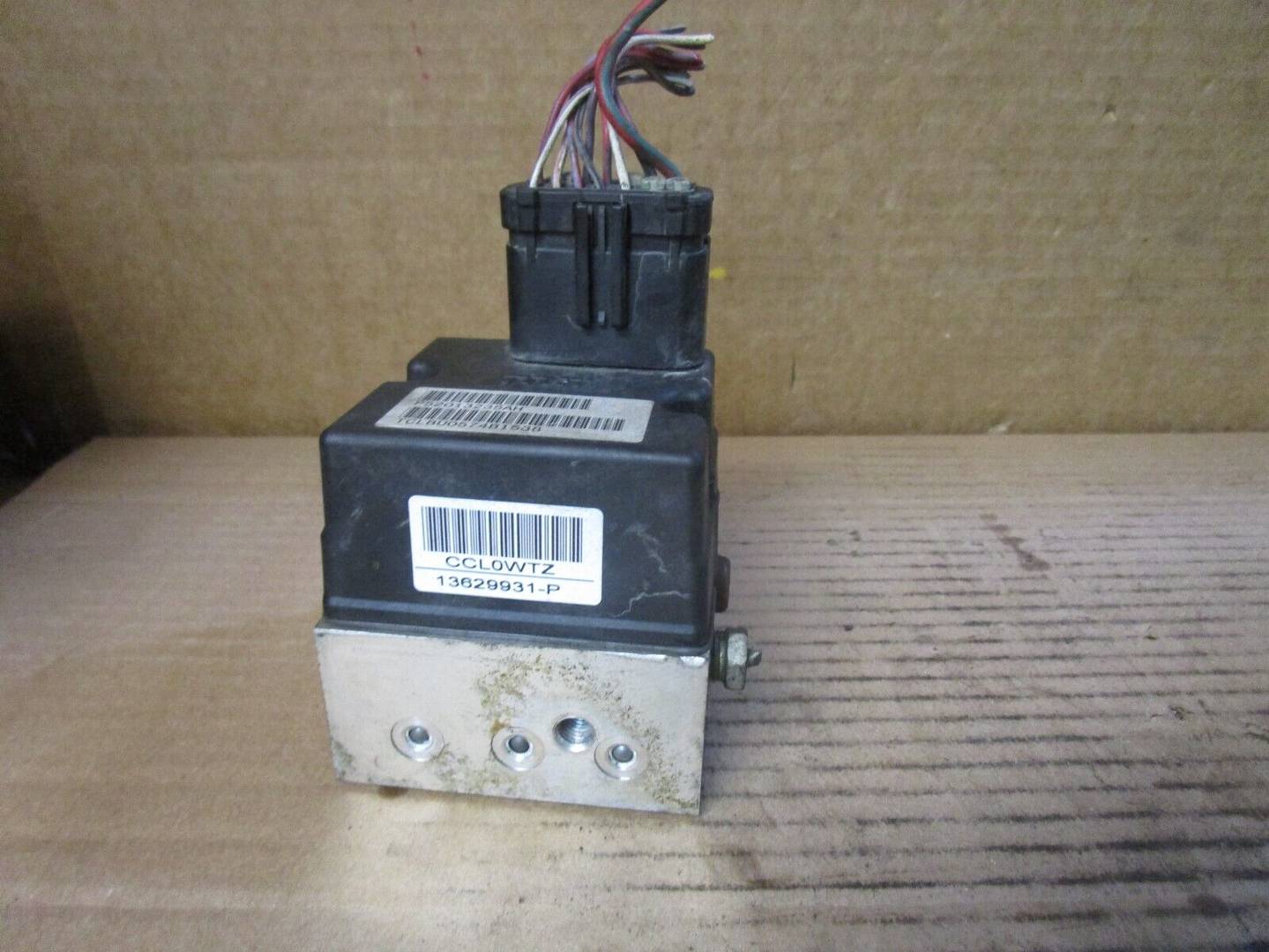
An Anti-lock Braking System (ABS) module can cause transmission problems because modern vehicles rely heavily on a shared network of computers. When the ABS module fails, it can corrupt vital wheel speed sensor data and CAN bus communication signals that the transmission control unit requires to shift gears properly, resulting in erratic shifting, limp mode, or complete transmission failure.
Modern automotive engineering relies on intricate networks of computers and electronic modules communicating simultaneously. While drivers often view systems like braking, steering, and transmission as entirely separate mechanical and hydraulic units, they are deeply intertwined through digital architecture. A malfunction in one system can easily cascade into another. Among these electronic dependencies, a failing or malfunctioning Anti-lock Braking System (ABS) module is one of the most common yet overlooked culprits behind unexpected transmission problems.
Understanding why this occurs requires looking beneath the dashboard and under the hood to examine how modern vehicles process data, make decisions, and execute mechanical actions. When an ABS module begins to fail, it does not just compromise your stopping power; it can completely disrupt how your vehicle accelerates, shifts, and manages power delivery.
The Technological Nexus: How Braking and Transmission Systems Connect
Decades ago, automatic transmissions operated almost entirely on hydraulic pressure, mechanical governors, and vacuum modulators. If a brake component failed, the transmission continued to operate independently. Today, however, vehicles utilize computer-controlled powertrains governed by a central electronic architecture.
At the center of this network is the Controller Area Network (CAN) bus—a specialized internal communications network that allows microcontrollers and devices to communicate with each other without a host computer. The Powertrain Control Module (PCM), the Transmission Control Unit (TCU), and the ABS module are all nodes on this network. They constantly broadcast and receive data streams measured in milliseconds.
The transmission control unit relies heavily on real-time data to determine when to shift gears, how much hydraulic pressure to apply to the clutch packs, and when to engage the torque converter lock-up clutch. One of the single most critical inputs the TCU requires is accurate vehicle speed. While a traditional vehicle might have a dedicated speed sensor mounted directly in the transmission tailshaft, many modern vehicles calculate vehicle speed by averaging the rotational speeds of the individual wheel speed sensors monitored directly by the ABS module.
The Primary Culprit: Wheel Speed Sensor Data Corruption
The ABS module’s primary job is to monitor wheel rotation to prevent lock-up during hard braking. To do this, it processes high-frequency signals from magnetic or digital wheel speed sensors located at each hub.
When an ABS module internal circuit fails, develops cold solder joints, or suffers from power and ground fluctuations, it often corrupts this raw data before broadcasting it across the CAN bus. If the ABS module sends erratic, frozen, or incorrect wheel speed data to the rest of the vehicle, the transmission control unit reacts to that faulty information.
- Ghost Slip Detection: If a failing ABS module tells the TCU that one wheel is spinning significantly faster or slower than the others while cruising down a highway, the computer may falsely interpret this as severe wheel slippage or loss of traction.
- Torque Reduction Commands: To combat perceived traction loss, the vehicle's computer may cut engine power or command the transmission to shift into a lower gear to stabilize the vehicle, resulting in sudden, harsh downshifts or a refusal to upshift.
- Delayed or Erroneous Shift Points: Shift scheduling relies on a calculated balance between vehicle speed and engine load. Corrupted speed data disrupts this calculation, causing the transmission to hunt for gears, shift unusually late, or hold onto lower gears indefinitely.
Common Symptoms of an ABS-Induced Transmission Problem
Because the symptoms of an ABS module failure often mirror internal transmission mechanical failures, vehicle owners and even novice technicians frequently misdiagnose the issue. Replacing a transmission valve body or rebuilding a transmission will not fix the underlying problem if the root cause is a failing ABS computer sending bad data.
Watch for these specific indicators that point toward an electronic or ABS-related root cause rather than pure mechanical transmission failure:
- Illuminated Dashboard Warning Lights: The most reliable indicator is a cluster lit up like a Christmas tree. If you see the ABS light, Traction Control light, Brake warning light, and a Check Engine light simultaneously, the vehicle's diagnostic system is alerting you to a network communication or module failure.
- Limp Mode (Fail-Safe Operation): Many vehicles will enter a protective "limp mode" when the ABS module crashes. In this state, the transmission locks into a single forward gear (usually second or third) and reverse to prevent catastrophic internal damage while allowing you to drive slowly to a repair shop.
- Speedometer Fluctuations: If your speedometer needle drops to zero, jumps erratically, or lags behind your actual acceleration while you are driving, the ABS module is likely failing to process and broadcast vehicle speed properly.
- Disabled Cruise Control: Cruise control requires uninterrupted vehicle speed data and normal ABS operation. If cruise control stops working alongside erratic shifting, it strongly points to an ABS or sensor network fault.
- Inability to Shift Out of Park: The shift interlock system often requires a valid signal from the brake pedal switch and the ABS system to release the shifter. An ABS failure can physically lock you out of gear selection.
Diagnostic Trouble Codes (DTCs) to Look For
When scanning a vehicle with an advanced OBD-II scanner capable of reading manufacturer-specific chassis (C-codes) and network (U-codes) trouble codes, certain patterns emerge when an ABS module is disrupting transmission performance.
| Code Prefix / Type | Common Example Codes | What It Indicates in This Context |
|---|---|---|
| U-Codes (Network) | U0100, U0101, U0121 | Lost communication with the engine, transmission, or ABS control module due to internal module failure or bus shorting. |
| C-Codes (Chassis/ABS) | C0035, C0040, C0550 | Wheel speed sensor circuit malfunctions or an internal ABS module electronic failure ("Internal ECU Fault"). |
| P-Codes (Powertrain) | P0700, P0720, P0715 | Transmission control system fault, output speed sensor circuit malfunction, or input/turbine speed sensor circuit errors triggered by bad ABS data. |
Relying solely on powertrain codes (P-codes) can lead to misdiagnosis. A holistic scan of all modules—engine, transmission, ABS, and body control—is mandatory to trace the issue back to its electronic source.
Diagnostic and Verification Steps
Before committing to expensive mechanical transmission repairs, a systematic diagnostic procedure must be performed to isolate the ABS module as the root cause.
Step 1: Full-System Electronic Scan
Connect an advanced diagnostic scan tool capable of accessing all vehicle modules. Document every code stored across the PCM, TCU, and ABS modules. Clear the codes, road-test the vehicle until the symptoms reappear, and rescan to see which codes return first. Usually, the ABS or communication codes will set immediately, followed by the transmission codes.
Step 2: Live Data Monitoring
Monitor live data streams while driving the vehicle with the scan tool attached. Compare the individual wheel speed sensor graphs displayed by the ABS module against the transmission output shaft speed. If the wheel speed sensors show dropouts, sudden spikes, or erratic discrepancies while traveling at a steady speed on a smooth road, focus your attention on the ABS sensors, wiring, or the module itself.
Step 3: Inspect Power, Grounds, and Connectors
Many ABS modules fail not because of internal component wear, but due to poor power supply or corroded ground connections. Check the main battery voltage, alternator output, and the condition of the multi-pin electrical connector plugged into the ABS hydraulic control unit. Corrosion, moisture intrusion, or loose pins can scramble digital signals.
Step 4: Module Isolation Test
In some professional diagnostic environments, technicians may temporarily disconnect the ABS module harness (where safely permissible and verified via wiring schematics) to see if the transmission exits limp mode and returns to normal hydraulic-only operation. While this will trigger additional dashboard warnings, it can isolate whether the failing module is actively dragging down the CAN bus network.
Repair Options and Cost Considerations
Once it is verified that the ABS module is causing the transmission problems, you generally have three primary paths forward: module repair, module replacement, or hydraulic control unit assembly replacement.
- ABS Module Repair and Rebuilding: Many specialized companies offer mail-in or exchange rebuild services for common ABS modules (such as the Bosch 5.3 or Electronic Brake Control Modules found in many domestic and import vehicles). Rebuilders refit broken solder joints, replace failing microprocessors, and test the unit before return. This is often the most cost-effective solution, typically ranging from $150 to $400 plus labor.
- New or Remanufactured OEM Replacement: Purchasing a brand-new ABS module directly from the vehicle manufacturer guarantees exact compatibility, but prices can range from $600 to over $1,500 depending on the make and model.
- Programming and Configuration: Modern ABS modules are not "plug-and-play." When a new or rebuilt module is installed, it often requires specialized programming (flashing) and calibration (such as steering angle sensor calibration and VIN matching) using factory-level scan tools. Skipping this step will keep the transmission in limp mode even if the hardware is fully functional.
Frequently Asked Questions
Can a bad ABS module put a car into transmission limp mode?
Yes. Because the transmission control unit relies on vehicle speed data processed and broadcast by the ABS module, a failure in the ABS system cuts off or corrupts this vital data. To prevent potential mechanical damage from uncoordinated shifting, the vehicle computer forces the transmission into a protective fail-safe mode known as limp mode.
Will replacing my transmission fix shifting problems caused by an ABS failure?
No. If the root cause of the erratic shifting is corrupted electronic data or a lost communication network originating from the ABS module, installing a brand-new mechanical transmission will yield the exact same symptoms. Always perform a complete electronic diagnostic scan before approving major transmission overhauls.
Can I drive my car safely if the ABS module is causing transmission issues?
Driving a vehicle with an ABS-induced transmission problem is strongly discouraged. Beyond the lack of anti-lock braking protection, operating a vehicle in limp mode or with erratic shifting can cause internal transmission clutches to slip, overheat, and burn out rapidly, turning a relatively affordable electronic repair into a costly mechanical rebuild.
Why do modern cars link the brakes and transmission together?
Automotive manufacturers link these systems to optimize fuel efficiency, safety, and performance. Traction control, electronic stability control, hill-start assist, and adaptive shift schedules all require the brakes, engine, and transmission to share data instantly via the vehicle's internal computer network.
Are some vehicle makes more prone to ABS-related transmission faults?
Yes, certain makes and models utilizing specific integrated hydraulic control units (such as specific generations of Ford, General Motors, Volkswagen, and BMW vehicles) are well-documented for internal ABS solder joint failures or sensor ring corrosion that subsequently disrupt transmission communication.
Next Actions for Vehicle Owners
If your vehicle is exhibiting sudden shifting issues accompanied by multiple dashboard warning lights, do not immediately assume your transmission has suffered a catastrophic mechanical failure. Locate a reputable repair shop equipped with advanced diagnostic scanning capabilities rather than a transmission-only specialty shop that might overlook electronic network faults. Ask the technician specifically to check for pending network communication codes, monitor live wheel speed sensor data, and evaluate the health of the ABS control module before authorizing any major mechanical teardowns. Addressing the electronic root cause first protects your wallet and restores your vehicle's safety systems correctly.