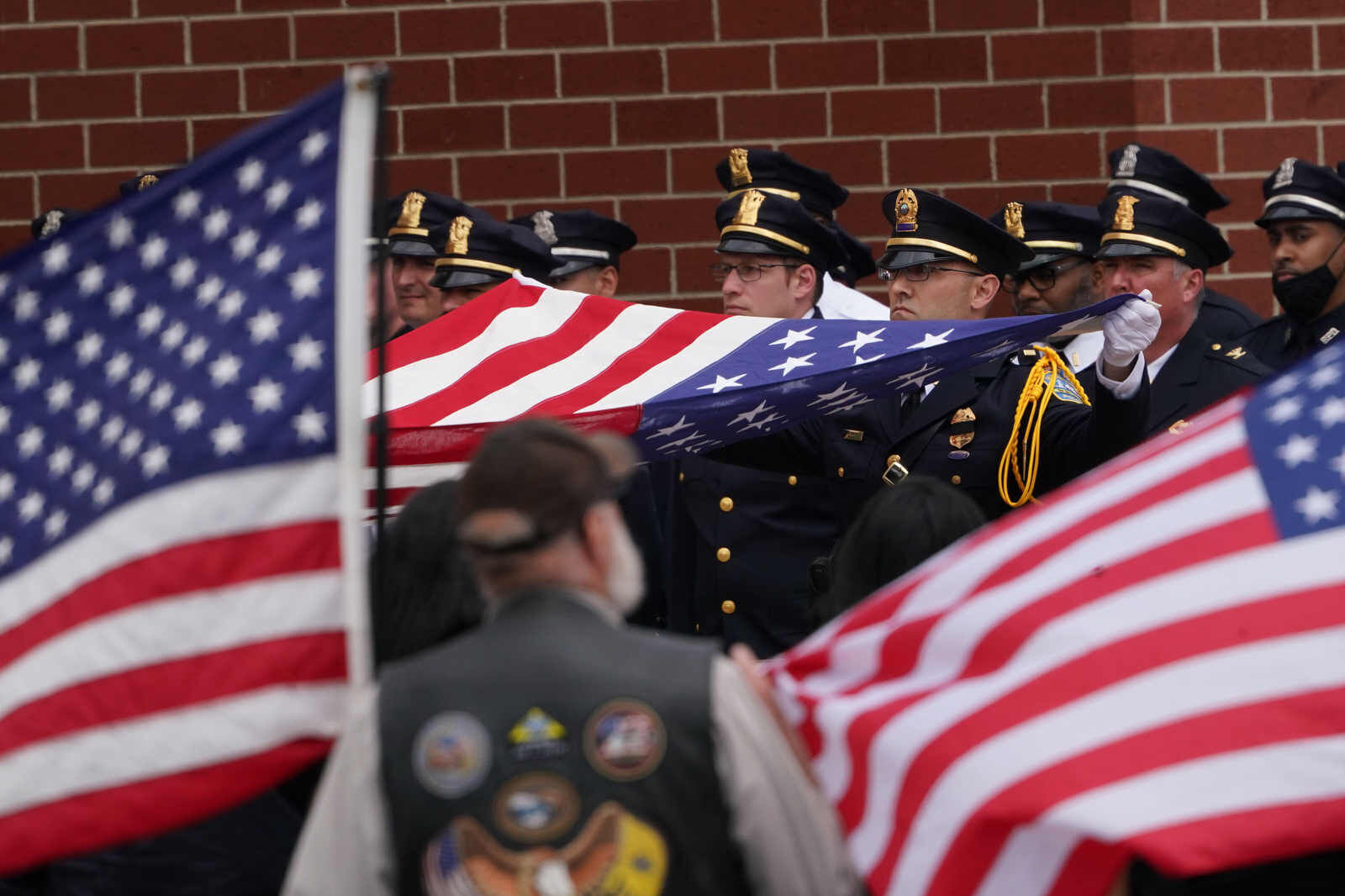
Aaron Salter Jr. was a retired Buffalo police officer who, while working as a security guard, gave his life in a courageous attempt to stop a racially motivated mass shooting at a Tops Friendly Markets store in Buffalo, New York, on May 14, 2022. His decisive actions and selfless defense of the community remain a defining act of bravery in the face of domestic terrorism.
The Role of Aaron Salter Jr. at Tops Friendly Markets
On the afternoon of May 14, 2022, Aaron Salter Jr. was stationed as a security guard at the Tops Friendly Markets on Jefferson Avenue in Buffalo. A retired lieutenant with the Buffalo Police Department, having served the force for 30 years, Salter was well-known in the community for his continued commitment to public safety. When an assailant entered the store with the intent to commit a mass shooting, Salter was the first line of defense.
As the shooter began firing, Salter engaged the assailant in the front of the store. Recognizing the imminent threat to the shoppers and staff, he discharged his firearm at the gunman. Despite the perpetrator wearing heavy tactical gear, including a ballistic vest, Salter’s actions were immediate and deliberate. He prioritized the lives of the civilians around him, placing himself directly between the threat and the public. Tragically, due to the assailant's superior body armor and heavy weaponry, Salter was fatally shot during the confrontation.
His intervention, while not successful in neutralizing the shooter, is widely recognized by law enforcement and community leaders as a heroic effort that likely disrupted the shooter’s focus and potentially saved lives by momentarily distracting a highly prepared and heavily armed individual.
Biographical Context and Professional Career
Before his tenure at Tops, Aaron Salter Jr. spent three decades with the Buffalo Police Department. Joining the force in the early 1990s, he eventually rose to the rank of lieutenant. During his career, he served in various capacities, including the Homicide Bureau, where he gained extensive experience in criminal investigation and emergency response.
His retirement from the police department did not mark the end of his service to the city of Buffalo. By choosing to work as a security professional, Salter continued to apply his training and dedication to protect residents of the East Side of Buffalo. His colleagues described him as a man of integrity, someone who took his duties seriously and held a deep sense of responsibility toward the neighborhood he served.
Following the shooting, local officials, including Buffalo Mayor Byron Brown and members of the Buffalo Police Department, honored him not only as a fallen officer but as a true hero who stayed faithful to his oath of protecting the public until his final moments.
The Tactical Reality of the Confrontation
The incident at the Tops store was classified as an act of domestic terrorism fueled by white supremacist ideology. The perpetrator had meticulously planned the attack, arriving at the location with tactical gear designed to withstand common handgun calibers used by security personnel.
The following table summarizes the key factors regarding the tactical environment faced by security personnel in this specific incident:
| Factor | Description |
|---|---|
| Perpetrator Equipment | Military-grade body armor (rated for rifle rounds) |
| Weaponry | Modified semi-automatic rifle |
| Engagement Type | Premeditated ambush |
| Officer Response | Immediate tactical intervention |
| Outcome | Fatal sacrifice of security personnel |
Because the assailant was prepared specifically to bypass standard security defenses, Salter’s ability to stop the threat was severely hindered by the disparity in equipment. Investigations later confirmed that the shooter had studied the store’s layout and security protocols in advance, making the situation exceptionally difficult for any single guard to resolve successfully.
Community Impact and Recognition
The death of Aaron Salter Jr. left a profound void in the Buffalo community. In the days and weeks following the tragedy, the site of the shooting became a place of memorial. Salter’s name was frequently cited by state and national leaders as a symbol of the courage displayed by individuals who stand up against hate.
Multiple initiatives were launched to honor his legacy. This included the naming of buildings, community centers, and scholarships in his honor to ensure that his decades of service—both in the police force and as a private citizen—would not be forgotten. The Buffalo Police Department held formal honors to commemorate his career, emphasizing that his sacrifice was consistent with the highest traditions of the department.
His family expressed that while the loss was immeasurable, they were comforted by the reports from witnesses who confirmed that he had acted without hesitation to protect others. His story has since been used in training contexts to discuss the challenges of security in retail spaces and the necessity of improved safety measures to address the rise of armed individuals targeting public spaces.
Security Lessons Learned from the Buffalo Incident
The tragic events of May 2022 served as a wake-up call for retail organizations and security firms regarding the preparedness of personnel. Since that time, the industry has shifted focus toward several critical areas of concern:
- Equipment Upgrades: There has been a re-evaluation of the equipment issued to private security guards in high-risk zones, including the potential for enhanced ballistic protection.
- Threat Intelligence: Improved cooperation between private security and municipal law enforcement to share information about potential threats before they escalate.
- Training Protocols: Transitioning from static guard models to more dynamic, alert-based protocols that emphasize immediate notification and lockdown procedures over direct confrontation unless strictly necessary.
- Site Hardening: Physical modifications to retail environments to provide more cover and better egress points for civilians during an active shooter event.
While no single change can mitigate the risk posed by a motivated assailant, the discussions sparked by Salter’s actions have contributed to a more robust approach to retail security in the years since the shooting occurred.
Frequently Asked Questions
What was the professional background of Aaron Salter Jr.? Aaron Salter Jr. was a retired lieutenant with the Buffalo Police Department. He served the city for 30 years, including time in the Homicide Bureau, before transitioning to a career in private security.
Did Aaron Salter Jr. have any chance to stop the shooter? He engaged the shooter immediately upon recognizing the threat. However, the assailant was equipped with high-level ballistic armor specifically designed to withstand the type of firearm Salter was authorized to carry as a security guard, which created an extreme tactical disadvantage.
How has the community honored his memory? The Buffalo community, alongside the police force, has memorialized Salter through public ceremonies, naming community spaces in his honor, and establishing scholarships that support individuals pursuing careers in law enforcement and public safety.
What is the status of the investigation into the shooting? The investigation concluded shortly after the incident. The assailant was apprehended, charged with numerous counts of first-degree murder and domestic terrorism, and ultimately sentenced to multiple consecutive life sentences without the possibility of parole.
Is Aaron Salter Jr. considered an official hero? Yes. Both local and state officials have recognized his actions as heroic. His decision to engage the shooter rather than flee is credited with potentially saving other lives during the initial phase of the attack.
Recommendations for Security Personnel
For those serving in security or public safety roles today, the legacy of Aaron Salter Jr. serves as a reminder of the gravity of the position. If you are a professional in the security industry, it is essential to ensure you are fully trained on your organization's specific active shooter protocols.
Regular drills, communication with local police, and a clear understanding of the limitations of your protective equipment are vital. Always prioritize reporting and alerting local authorities through established emergency channels, and ensure that your tactical training is up to date according to current industry standards for 2026. Security professionals should advocate for regular risk assessments of their facilities to identify potential vulnerabilities that could be exploited by an armed threat.