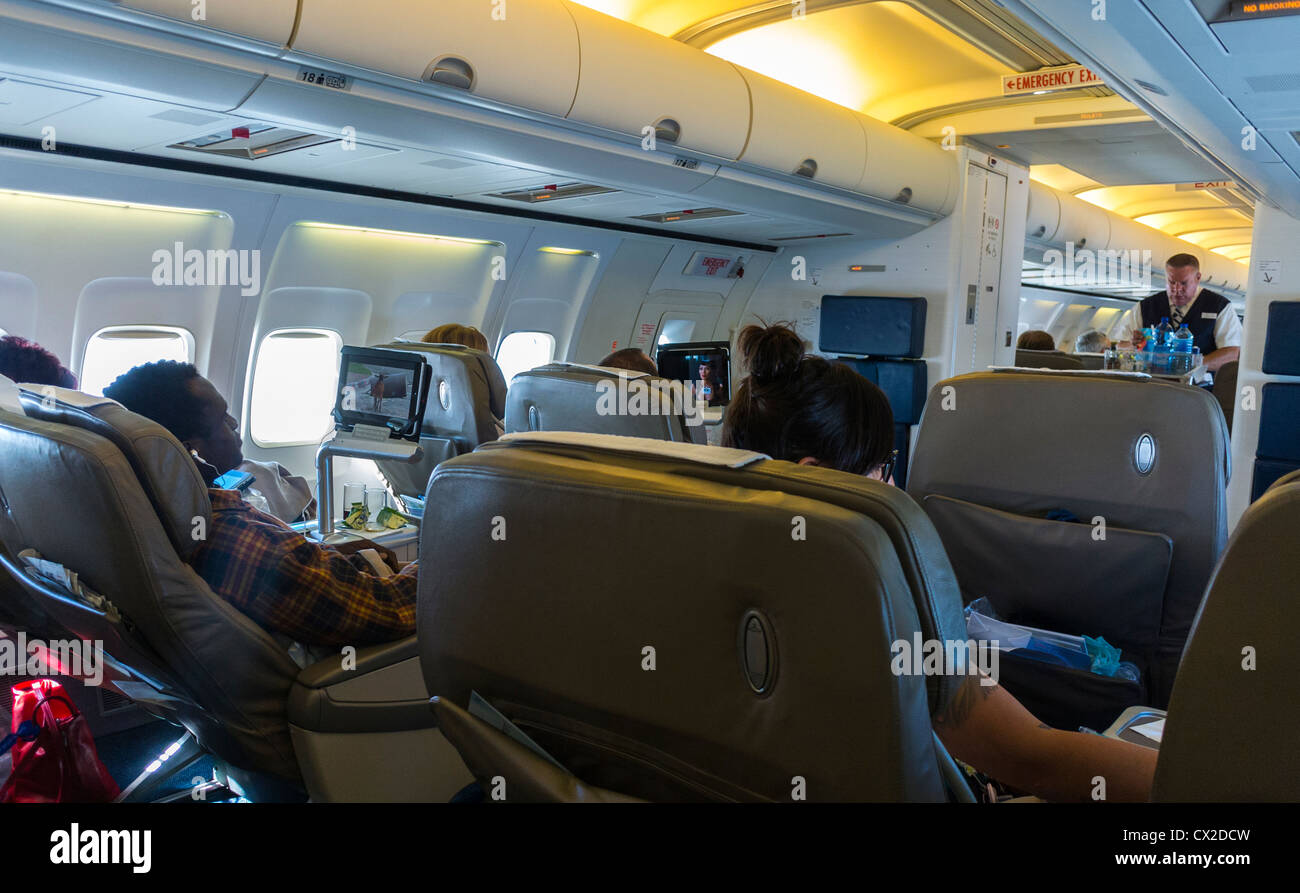
The Boeing 757 cabin reference entry provides the foundational technical data regarding the interior environment of the 757-200 and 757-300 aircraft. It details the Layout of Passenger Accommodation (LOPA), seat pitch, emergency equipment locations, and environmental control systems, serving as a vital resource for airline operations, maintenance, and interior retrofitting.
Introduction to the Boeing 757 Cabin Architecture
The Boeing 757, often referred to as the "pencil" due to its long, slender fuselage, remains a unique staple in aviation as of 2026. Despite the introduction of newer mid-range narrow-body aircraft, the 757 cabin continues to be a subject of intense study for operators who maintain these airframes for transcontinental and thin-long-haul routes. A "reference entry" for the 757 cabin encompasses the structural dimensions, the modularity of the interior components, and the specific certification requirements that govern its operation.
The 757 was designed with a single-aisle, 3-3 seating configuration in the economy section, utilizing a fuselage cross-section shared with the 707, 727, and 737. However, the 757 cabin is distinguished by its height and the specific "glass cockpit" era integration that allowed for more advanced cabin management systems than its predecessors. Understanding the cabin requires looking at the two primary variants: the 757-200, which is the most common, and the 757-300, the "stretch" version that holds the title for the longest single-aisle twinjet ever built.
Physical Dimensions and Structural Layout
The interior of the 757 is engineered to maximize volume within a narrow-body constraint. The cabin width at armrest level is approximately 11 feet 7 inches (3.54 meters). This width allows for a standard six-abreast seating arrangement while maintaining an aisle width that meets FAA and EASA evacuation requirements.
Cabin Length and Zoning
The length of the cabin varies significantly between the two models. The 757-200 cabin length is roughly 118 feet (36 meters), whereas the 757-300 extends this to 142 feet (43.4 meters). In a technical reference entry, the cabin is divided into "zones" (usually Zone A through Zone D or E) separated by galleys or lavatory blocks. These zones are critical for weight and balance calculations, as the distribution of passengers directly impacts the aircraft's center of gravity.
Flooring and Cargo Integration
The cabin floor is constructed from lightweight composite honeycomb panels. These panels are designed to be durable yet easily removable for inspections of the underlying control cables and electrical looms. Below the cabin floor lie the forward and aft cargo holds. In 2026, many 757-200s have been converted to Special Freighters (SF) or Precision Freighters (PF), where the cabin floor is reinforced with a "9g" barrier and a motorized cargo handling system, replacing passenger seats with main-deck cargo containers (ULDs).
Layout of Passenger Accommodation (LOPA)
The LOPA is the primary document within a cabin reference entry that defines the specific arrangement of seats, galleys, and lavatories. As of 2026, 757 LOPAs have evolved significantly from their original 1980s designs.
Premium Cabin Configurations
Most remaining 757-200s operated by major carriers feature a premium cabin (First or Business Class). These are typically configured in a 2-2 arrangement. In the 2020s, many operators retrofitted these cabins with "lie-flat" seats to compete on "long-thin" routes (e.g., US East Coast to Western Europe). This requires significant modification to the cabin's power supply units (PSUs) to provide the necessary wattage for seat motors and In-Flight Entertainment (IFE).
Economy Class and Slimline Seating
In the main cabin, the standard is a 3-3 configuration. To maintain profitability in 2026, airlines have largely transitioned to "slimline" seats. These seats use thinner materials and move the literature pocket to the top of the seatback, allowing for a seat pitch as low as 29–30 inches without significantly compromising knee room. The reference entry for a high-density 757-300 can show a capacity of up to 295 passengers in a single-class charter configuration, though most scheduled airlines cap this at around 230–240 seats to allow for a dual-class service.
Cabin Interior Components and Amenities
The 757 cabin is a modular environment. Components are designed to be "line-replaceable units" (LRUs), allowing maintenance teams to swap out damaged parts quickly.
Overhead Stowage Bins
The original 757 bins were of the "fixed shelf" variety. However, almost all 757s still in service in 2026 have undergone "pivot bin" retrofits. These modern bins drop down to allow for larger roll-aboard bags to be stored on their sides. This modification is not merely cosmetic; it involves reinforcing the fuselage attachment points to handle the increased weight of modern carry-on luggage.
Galleys and Lavatories
The 757 typically features galleys at the very front (G1) and very rear (G4/G5), with mid-cabin galleys often located near the Door 2 area on the 757-200. Lavatories are strategically placed to serve each zone. Technical manuals specify the plumbing and vacuum waste systems, which were revolutionary at the time of the 757's launch for their weight-saving properties compared to the older "blue water" recirculating systems.
Lighting and Aesthetics
In 2026, the "Boeing Sky Interior" or third-party LED lighting retrofits are standard in the 757 fleet. These systems replace traditional fluorescent tubes with programmable LEDs that can simulate sunrise, sunset, or brand colors. This helps mitigate jet lag on longer flights and reduces the electrical load on the aircraft's APU (Auxiliary Power Unit) and engines.
Environmental Control Systems (ECS)
The 757 cabin reference entry must include the ECS, which manages pressurization, temperature, and air quality. The 757 uses "bleed air" taken from the engine compressors, which is then cooled by Air Cycle Machines (ACMs) or "packs."
- Air Filtration: Modern 757 cabins are equipped with HEPA (High-Efficiency Particulate Air) filters. These filters are capable of removing 99.97% of airborne contaminants, including viruses and bacteria.
- Zone Temperature Control: The 757 allows the flight deck to control temperatures in different cabin zones independently. This is crucial because the forward cabin often stays warmer due to lower passenger density, while a packed economy section generates significant metabolic heat.
- Pressurization: The cabin is pressurized to a maximum "cabin altitude" of 8,000 feet when the aircraft is at its service ceiling of 42,000 feet. This is maintained by outflow valves located in the rear of the fuselage.
Safety and Emergency Systems
A technical reference for the 757 cabin is incomplete without a map of emergency equipment. The 757 is known for its "Door 2" boarding, but its exit strategy is complex.
| Feature | 757-200 Specification | 757-300 Specification |
|---|---|---|
| Main Entry Doors | 4 (Two forward, two aft) | 4 (Two forward, two aft) |
| Overwing Exits | 2 or 4 (depending on config) | 4 (standard) |
| Mid-Cabin Plug Doors | Optional (Door 3) | 4 (Two per side) |
| Evacuation Slides | Dual-lane inflatable | Dual-lane inflatable |
| Oxygen System | Chemical Generators | Chemical Generators |
| Emergency Lights | Floor-path markings (LED/Photoluminescent) | Floor-path markings |
Emergency Oxygen
In the event of decompression, masks drop from the PSUs. The 757 uses chemical oxygen generators for the passenger cabin, which provide approximately 15 to 22 minutes of oxygen—enough time for the pilots to perform an emergency descent to 10,000 feet. The flight deck uses a separate gaseous oxygen system.
Evacuation Slides and Rafts
The 757 doors are equipped with "slide-rafts." These are dual-purpose devices that act as an inflatable slide for land evacuations and can be detached to serve as life rafts in the event of a ditching. Technical maintenance of these units involves periodic "blow-outs" to ensure the nitrogen cylinders and inflation headers are functional.
The 757-200 vs. 757-300 Cabin Comparison
While they share a type rating, the cabins of the two variants serve different market niches. The 757-200 is the "versatile" cabin, often seen in high-end VIP configurations or trans-Atlantic service. The 757-300 is the "charter king," designed for high-volume, short-to-medium-haul throughput.
The 757-300 features additional exit doors (Door 3) located just aft of the wing to meet the 90-second evacuation rule for its higher passenger capacity. From a maintenance perspective, the 757-300 cabin requires more frequent inspections of the floor tracks and seat attachments due to the higher "cycle" nature of the flights it typically performs.
Maintenance and Retrofit Considerations in 2026
As of 2026, the 757 is an "out-of-production" aircraft, meaning cabin parts are often sourced from reclaimed airframes or through specialized PMA (Parts Manufacturer Approval) suppliers.
Cabin Interior Health Monitoring
Operators now use digital twins and IoT sensors within the cabin to monitor the health of seats (e.g., recline mechanisms) and IFE systems. This proactive maintenance is essential for the 757 because a "cabin out of service" event can be costly for an older aircraft where replacement parts might have longer lead times.
Connectivity (Wi-Fi)
The 757 cabin reference now includes the installation of Ka-band or Ku-band satellite radomes on the top of the fuselage. Internally, this requires a network of WAPs (Wireless Access Points) hidden behind the ceiling panels to ensure 100% signal coverage throughout the long fuselage.
757 Cabin Reference FAQ
What is the standard seating capacity for a Boeing 757?
The 757-200 typically seats between 160 and 200 passengers in a two-class configuration. The 757-300 can accommodate between 240 and 295 passengers. The exact number depends on the airline's LOPA and the number of lavatories and galleys installed.
Is the 757 cabin considered "narrow-body"?
Yes, the 757 is a narrow-body (single-aisle) aircraft. It uses a 3-3 seating arrangement in economy, which is the standard for narrow-body jets like the Boeing 737 and Airbus A320 families. However, it is much longer than most other narrow-body aircraft.
How does the 757-300 cabin differ from the 757-200?
The 757-300 is roughly 23 feet (7.1 meters) longer than the 757-200. This length requires additional emergency exits (Door 3) and more complex environmental control zones to ensure consistent air temperature from the front of the cabin to the back.
What are the "pivot bins" found in many 757 cabins?
Pivot bins are an aftermarket cabin upgrade (often from companies like Heath Tecna or Boeing's own retrofit kits) that replace the original fixed-shelf overhead bins. They "pivot" down to create a deeper space, allowing passengers to store larger suitcases more efficiently.
Why is the 757 still flying in 2026?
The 757 offers a unique combination of range, capacity, and "short-field" performance (the ability to take off from shorter runways with a full load). While the Airbus A321XLR has taken over many of its routes, the 757 remains economically viable for certain operators, particularly in cargo and specific high-altitude markets.
Summary of Reference Entry
The Boeing 757 cabin is a testament to durable 20th-century engineering enhanced by 21st-century technology. For pilots, crew, and engineers, the cabin reference entry is more than just a seat map; it is a complex schematic of safety, comfort, and structural integrity. Whether it is a 757-200 flying a "thin" route across the Atlantic or a 757-300 hauling holidaymakers to the Mediterranean, the cabin's design remains a benchmark for single-aisle efficiency.
Practical Recommendation: For those involved in the maintenance or operation of 757 assets in 2026, it is vital to consult the specific Airplane Characteristics for Airport Planning document provided by Boeing and the airline's specific Aircraft Maintenance Manual (AMM). These documents provide the precise part numbers and wiring diagrams necessitated by the various "post-delivery" modifications (Service Bulletins) that most 757 cabins have undergone over the last four decades.