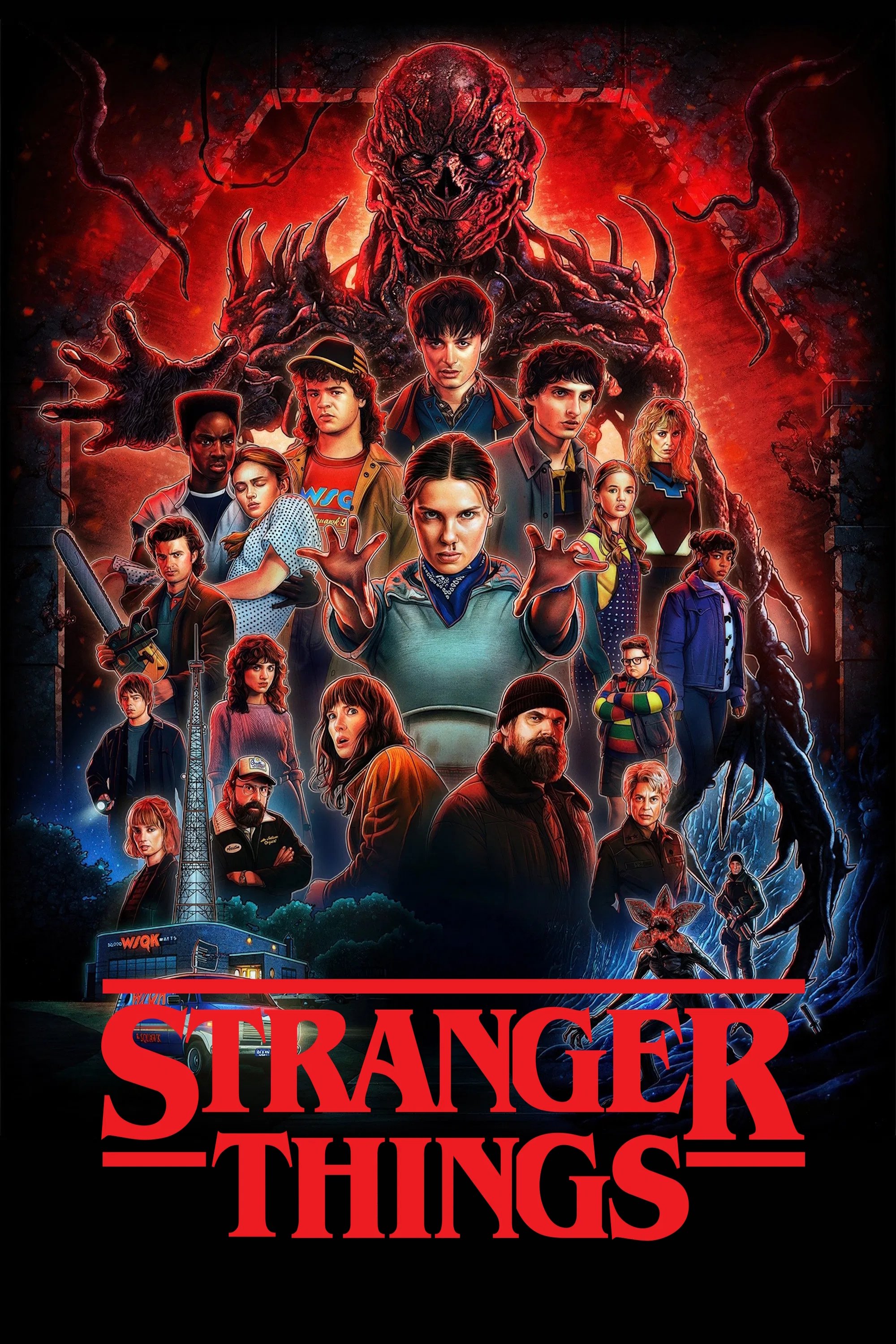
While Stranger Things initially gained fame for its homage to 1980s youth adventure films, adult characters like Joyce Byers, Jim Hopper, and Dr. Martin Brenner do far more than monitor the kids. Adults shape the show by providing emotional realism, unlocking government conspiracy plots, subverting classic 1980s tropes, and driving high-stakes multi-generational narrative tracks across every season.
The Structural Importance of Adults in Stranger Things
When Stranger Things premiered, its marketing naturally emphasized its young cast, channeling classic Amblin Entertainment films like E.T. the Extra-Terrestrial and The Goonies. However, screenwriters Matt and Ross Duffer structured the series around three distinct generational tiers: the kids (the Party), the teenagers (Nancy, Jonathan, Steve, Robin), and the adults (Joyce, Hopper, Murray, and Hawkins Lab scientists).
Without the adult tier, Stranger Things would lack the institutional access, historical stakes, and grounded emotional reality required to sustain a long-form serialized drama. While the kids perceive the Upside Down through tabletop roleplaying game metaphors like the Demogorgon and Mind Flayer, the adults interact with the crisis through the lens of grief, Cold War geopolitics, municipal corruption, and psychological trauma.
Understanding how adult characters shape the series reveals why Stranger Things evolved from a nostalgic homage into one of television’s defining sci-fi dramas.
1. Anchoring Sci-Fi Horror in Raw Emotional Reality
The supernatural elements of Stranger Things—dimension-hopping monsters, telekinesis, and government secret facilities—risk feeling detached from reality if not grounded by authentic human stakes. The adult characters provide this vital tether.
From the pilot episode, Joyce Byers (Winona Ryder) transforms a high-concept sci-fi mystery into a visceral study of maternal grief. When Will Byers goes missing, Joyce's refusal to accept his death is not presented as whimsical intuition; it is depicted as manic, agonizing panic. Her famous Christmas light communication system in Season 1 works dramatically because Ryder plays the scene with absolute desperation rather than genre wonder.
Similarly, Chief Jim Hopper (David Harbour) enters the narrative burdened by the death of his daughter, Sara. His initial cynicism, drug reliance, and emotional withdrawal give Hawkins, Indiana, a gritty, lived-in texture. Hopper’s grief frames every action he takes to protect Eleven and Will. By rooting extraordinary sci-fi events in real-world human suffering, the adult characters establish high emotional consequences for every plot development.
Adult Emotional Anchors: Joyce Byers ---> Maternal instinct vs. grief & institutional disbelief Jim Hopper ---> Trauma recovery & protective paternal rage Murray Bauman---> Cynical skepticism converted into operational commitment
2. Unlocking Institutional and Cold War Subplots
Child protagonists are naturally restricted by their lack of mobility, financial independence, and systemic authority. The adult characters extend the show's narrative boundary outside the borders of suburban Hawkins.
Adult characters actively open narrative paths that younger characters cannot access:
- Law Enforcement and Legal Authority: As Chief of Police, Hopper commands access to autopsy reports, state police files, and secure government properties. His investigation forces open the doors of Hawkins National Laboratory when local officials attempt to cover up Will's disappearance.
- Geopolitical and Cold War Context: Characters like Murray Bauman (Brett Gelman) frame the Upside Down within 1980s geopolitical tensions. Murray’s fluency in Russian and understanding of espionage allow the narrative to expand into Soviet infiltrations and the Kamchatka penal colony storylines in Seasons 3 and 4.
- Scientific and Institutional Lore: Figures such as Dr. Sam Owens (Paul Reiser) provide the audience with technical breakdowns of the rift, environmental contamination, and biological hive minds, giving the supernatural threat a scientific framework.
Without adults navigating government cover-ups, military black sites, and international spy networks, the central conflict would remain isolated to a suburban neighborhood dispute.
3. Redefining 1980s Suburban Archetypes and Parental Roles
Classic 1980s cinema frequently positioned parents as oblivious, incompetent, or absent figures who existed merely to be bypassed by their adventurous children. Stranger Things initially nods to this trope through characters like Ted Wheeler, but it rapidly subverts the formula through its core adult cast.
Joyce Byers directly challenges the "hysterical mother" trope. When suburban society and law enforcement label her crazy, her instincts prove entirely correct. She consistently outpaces official investigations through sheer observational intelligence, such as recognizing Will's drawings as a complex subterranean map of Hawkins in Season 2.
Standard 1980s Film Archetype Stranger Things Subversion ----------------------------- -------------------------- Oblivious, passive parents ---> Relentless, proactive investigators (Joyce) Bumbling local sheriff ---> Tactical, traumatized operative (Hopper) Evil, nameless scientists ---> Morally complex institutionalists (Owens)
Even suburban parents who start as conventional archetypes undergo subtle shifts. Karen Wheeler (Cara Buono) encapsulates the tension of suburban domestic entrapment. Her near-affair with Billy Hargrove and her protective actions during the Season 3 Mind Flayer crisis display an underlying desire for agency, demonstrating that the adults in Hawkins possess complex internal lives rather than serving as flat background props.
4. Powering the Multi-Generational Parallel Narrative Structure
A signature structural feature of Stranger Things is its multi-track storytelling. Every season splits the main cast into distinct groups that investigate separate clues before converging in a multi-front climax.
The adult storylines act as the narrative spine that holds these converging threads together. Because adults operate with different methods than the kids or teens, their plot lines vary the show's pacing and tone:
- The Kids: Conduct investigative field work guided by intuition, pop culture metaphors, and local exploration.
- The Teenagers: Investigate through high school social networks, local journalism (the Hawkins Post), and regional folklore.
- The Adults: Execute tactical operations, international travel, high-level cryptography, and legal confrontation.
This division prevents narrative monotony. During Season 4, while the teenagers investigate Vecna’s history in Creel House and the kids coordinate across Hawkins, Joyce and Murray fly to Kamchatka to extract Hopper from a Soviet gulag. This adult plotline balances the psychological horror in Hawkins with a classic 1980s action-thriller pace, ensuring the series appeals to broader stylistic tastes.
5. Acting as Primary Catalysts and Moral Complexities (Brenner & Owens)
The moral universe of Stranger Things is largely defined by its adult antagonists and grey-area authority figures. While monsters like the Demogorgon and Vecna represent cosmic, predatory evil, adult human characters introduce complex psychological morality.
Dr. Martin Brenner ("Papa"), played by Matthew Modine, is the primary catalyst for the entire series. His abusive experimentation on Eleven at Hawkins National Laboratory opens the original tear between dimensions. Brenner shapes the series not just as a physical antagonist, but as a deep psychological force. Eleven's entire character arc involves unlearning the trauma, conditioning, and twisted paternal attachment Brenner inflicted upon her.
In contrast, Dr. Sam Owens introduces nuance to institutional power. Replacing Brenner in Season 2, Owens represents a pragmatic government figure who genuinely tries to contain the Upside Down while attempting to protect Eleven and Will. The philosophical clash between Brenner's ruthlessness and Owens's compromised ethics forces the audience to engage with complex questions regarding state power, scientific ethics, and human collateral damage.
6. Injecting High-Stakes Cynicism and Analytical Comic Relief
As Stranger Things progresses, the stakes escalate from a single missing boy to world-ending apocalypses. To balance this overwhelming bleakness, adult characters provide sharp, analytical humor that differs from the adolescent banter of the younger cast.
Murray Bauman serves as the series' primary engine for paranoid, cynical humor. As a former investigative journalist turned conspiracy theorist, Murray sees through the illusions of mid-century suburban peace. His interactions with Hopper, Joyce, and Soviet scientist Alexei introduce a biting satirical edge regarding Cold War hysteria and government incompetence.
Character Humor Style Narrative Function --------- ----------- ------------------ Murray Bauman Paranoid, cynical, sharp Exposes conspiracies, breaks romantic tension Jim Hopper Exasperated, blunt, sarcastic Highlights adult stress against kid idealism Joyce Byers Focused, hyper-reactive Translates absurd situations into direct action
Furthermore, the romantic tension between Joyce and Hopper ("Jopper"), combined with Murray's unfiltered commentary on their neuroses, provides mature emotional levity. This adult dynamic balances the coming-of-age romance of the younger cast with complex, baggage-laden adult relationships.
7. Exploring Intergenerational Trauma and Parental Sacrifice
At its core, Stranger Things is an exploration of legacy, trauma, and the protective duties of adulthood. The adult characters carry historical burdens—Vietnam War service, lost children, economic displacement—that shape how they respond to supernatural threats.
Hopper’s journey across four seasons revolves around overcoming the loss of Sara. His willingness to sacrifice his freedom, physical well-being, and ultimately his life (at the end of Season 3) stems from his determination not to lose another daughter figure in Eleven. His monologue in the Season 4 finale regarding his self-perceived "curse" highlights how adult trauma dictates character motivation.
Generational Trauma & Motive Matrix: - Hopper: Guilt over daughter's death ---> Drives ultimate self-sacrificial protection of Eleven - Joyce: Poverty & social marginalization ---> Drives fierce defiance against authoritative denial - Brenner: Scientific hubris & control ---> Drives abusive exploitation of gifted children
This focus on parental sacrifice creates a stark thematic contrast with Vecna (Henry Creel). While Vecna seeks to destroy humanity due to his contempt for human weakness, adults like Joyce and Hopper endure physical torture and psychological trauma to build protective shields around the next generation. The show asserts that adult love and sacrifice are the ultimate defense against cosmic destruction.
Comparative Overview: Adult Roles Across Stranger Things Factions
The table below outlines how key adult figures and factions influence the overall narrative structure, operational scope, and thematic tone of the series.
| Character / Faction | Key Adult Figures | Primary Narrative Function | Strategic Capabilities & Access | Impact on Show's Tone |
|---|---|---|---|---|
| Hawkins Police Department | Jim Hopper, Officer Callahan, Officer Powell | Local investigation, official authority, cover-up disruption | Law enforcement files, firearms, municipal search operations | Gritty 1970s/80s crime procedural |
| Hawkins Civilian Adults | Joyce Byers, Karen Wheeler, Ted Wheeler | Emotional grounding, parental stakes, suburban context | Intuition, home base support, community representation | Domestic realism and melodrama |
| Independent Investigators | Murray Bauman | Conspiracy analysis, linguistic translation, rogue operations | Cryptography, Russian translation, off-grid safehouses | Cold War spy thriller & dark comedy |
| Hawkins Lab Leadership | Dr. Martin Brenner, Dr. Sam Owens | Narrative catalyst, scientific explanation, moral conflict | Government funding, military troops, advanced science labs | Sci-fi horror & psychological thriller |
| Soviet Operatives / Military | Antonov (Dmitri), Warden Melnikov | International expansion, high-stakes obstacles, prison survival | Military logistics, gulag facilities, international smuggler networks | Classic action-adventure & survival horror |
How to Re-Watch Stranger Things Through the Adult Perspective
Viewers looking to re-evaluate the series ahead of final story developments can focus on specific structural cues that highlight the adult characters' influence:
- Track the Information Pipeline: Notice how information flows between generations. Kids usually discover supernatural symptoms, but adults discover the causes and institutional histories.
- Observe Visual Framing: Pay attention to how director photography treats Joyce and Hopper. While kids are often filmed with wide-angle lenses emphasizing smallness against large environments, adults are frequently framed in tight, claustrophobic close-ups to emphasize psychological pressure.
- Analyze Sound Design and Score: Listen to how synth motifs shift during adult scenes. Scenes featuring Murray or Hawkins Lab regularly utilize darker, industrial synth textures compared to the whimsical fantasy arrangements used during kid-led sequences.
- Examine the Cost of Action: Note the physical consequences. While kid characters suffer emotional strain, adult characters bear intense physical violence, imprisonment, torture, and career destruction, emphasizing the physical cost of keeping Hawkins safe.
Frequently Asked Questions
Why did the Duffer Brothers include an adult main cast in a kid-focused show?
The Duffer Brothers designed Stranger Things as a multi-generational drama to reflect the full scope of 1980s cinema, which ranged from kids' adventure movies like E.T. to adult thrillers like JAWS, Close Encounters of the Third Kind, and Alien. Including adults provided institutional access, mature themes, and complex emotional stakes that younger characters could not logically support.
How does Joyce Byers differ from traditional 1980s horror mothers?
Traditional 1980s horror mothers were often portrayed as passive, oblivious, or quickly overwhelmed by supernatural events. Joyce Byers subverts this by becoming an active, relentless investigator. She trusts her own perceptions over institutional authority, uncovers the mechanics of the Upside Down, and repeatedly puts herself in direct physical danger to save her family.
What is the significance of Dr. Brenner's relationship with Eleven?
Dr. Martin Brenner ("Papa") serves as both a primary antagonist and the core source of Eleven's psychological trauma. His abusive conditioning at Hawkins Lab unlocked Eleven's powers but left her psychologically scarred. Brenner represents the danger of unchecked scientific ambition and toxic paternal control, acting as a moral contrast to Hopper’s protective fatherhood.
How does Murray Bauman bridge the gap between adult and teen storylines?
Murray Bauman acts as an analytical bridge because he operates outside official institutions. His background as an investigative journalist allows him to decode information that neither local police nor teenagers can fully analyze alone. His safehouse acts as a neutral ground where adult plotlines intersect with teenage investigations, such as Jonathan and Nancy's Season 2 expose on Hawkins Lab.
How did the role of adult characters change between Season 1 and Season 4?
In Season 1, adults were focused locally on finding Will Byers and investigating Hawkins Lab. By Season 4, their scope expanded globally. Adult storylines involved international prison rescues in Russia, covert military operations in Nevada, and navigating high-level defense department conspiracies, shifting their role from local protectors to international operatives fighting a global threat.
Key Takeaways for Viewers
To fully appreciate the narrative architecture of Stranger Things, keep these key analytical points in mind:
- Emotional Anchoring: Adult characters ground complex sci-fi concepts in real human suffering, grief, and parental commitment.
- Narrative Access: Adults possess the legal, tactical, and international reach required to expose government black sites and Cold War plots.
- Genre Balance: The adult storylines incorporate elements of crime procedurals, Cold War thrillers, and dark comedy, ensuring the series transcends simple nostalgia.
- Thematic Core: The series ultimately frames the fight against the Upside Down as an intergenerational effort, where adult sacrifice protects youth innocence.
For fans re-watching the series, focusing on the adult characters provides a deeper understanding of how Stranger Things balances high-concept horror with authentic drama.