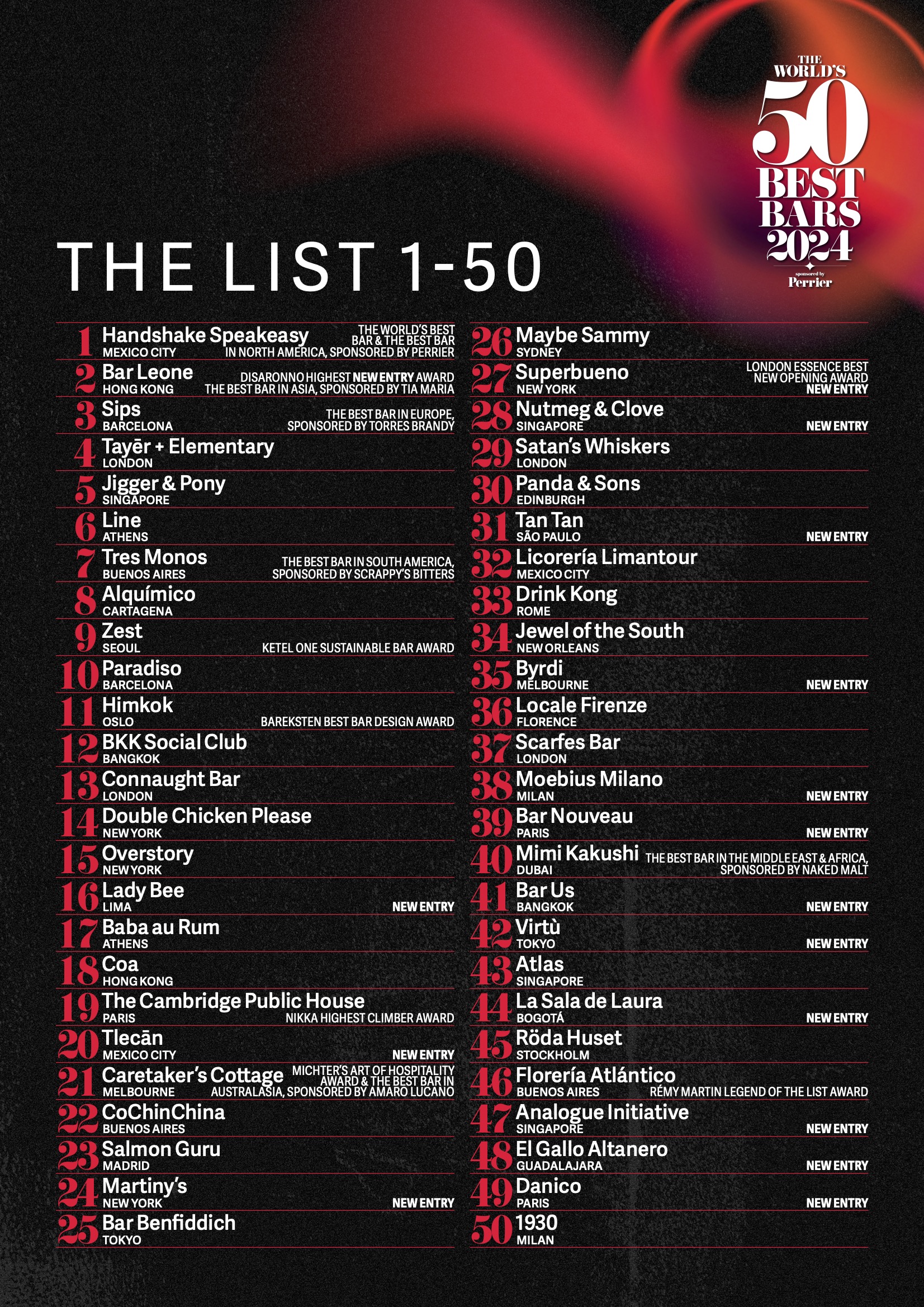
The 2015 ranking of the World's 50 Best Bars captured a pivotal era of modern mixology, celebrating London’s enduring dominance while spotlighting the rapid ascendance of New York and a burgeoning craft cocktail scene across Asia and Europe. Published annually by Drinks International, the 2015 list reflected a shifting global palate that prioritized artisanal ice, house-made tinctures, hyper-local ingredients, and deeply personalized hospitality.
The Genesis and Significance of the 2015 Rankings
To understand the weight of the 2015 list, one must examine the landscape of global bar culture at the time. By 2015, the craft cocktail movement had matured from an underground, speakeasy-inspired trend into a sophisticated, highly institutionalized global industry. The World's 50 Best Bars awards served as the definitive scorecard for this evolution, guiding travelers, industry professionals, and ambitious bartenders alike.
The voting body for the 2015 awards comprised over 400 industry experts from across the globe, including renowned bartenders, consultants, drinks writers, and cocktail connoisseurs. Each voter cast votes for five establishments, with strict regional quotas and auditing rules designed to prevent regional bias. This methodology ensured that the final tally represented a balanced cross-section of international excellence, rewarding establishments that not only executed flawless classic and contemporary drinks but also provided exceptional ambiance, service, and consistency.
London and New York: The Transatlantic Powerhouses
In 2015, the conversation about the world's best drinking dens was largely a transatlantic dialogue dominated by two cities: London and New York. These metropolises acted as the primary incubators for cocktail trends, pioneering techniques like rotovap distillation, fat-washing, and culinary-driven cocktail menus.
London's Reign at the Summit
London captured the number one spot for the second consecutive year with The Artesian at The Langham hotel, helmed by Alex Kratena and Simone Caporale. The Artesian became legendary not just for its immaculate execution of classic drinks, but for its theatrical, multi-sensory presentation. Drinks were served in bespoke vessels—ranging from copper grasshoppers to ceramic elephants—accompanied by custom lighting, scent, and soundscapes.
London’s strength in 2015 was deep rather than singular. The city claimed a massive share of the top 50 slots, with staples like:
- Nightjar (Shoreditch), renowned for its vintage glassware, live jazz, and complex, historical libations.
- Connaught Bar (Mayfair), celebrated for its elegant, tableside martini trolley service and understated luxury.
- Happiness Forgets (Hoxton), proving that subterranean basement bars with zero pretension could rival five-star hotel lounges.
New York's Craft Vanguard
New York City matched London's ambition with a distinctively American swagger, blending pre-Prohibition history with avant-garde culinary techniques. Dead Rabbit Grocery & Grog in Lower Manhattan stood as London's primary challenger, securing the second overall spot in 2015. Combining a sawdust-floored ground-floor taproom with a second-floor parlor serving meticulously researched historical punches and cocktails, The Dead Rabbit set a global benchmark for thematic execution and operational rigor.
Other influential New York establishments on the 2015 list included:
- Employees Only, which anchored the West Village scene with its high-energy hospitality and late-night steak tartare.
- PDT (Please Don't Tell), maintaining its status as the quintessential modern speakeasy hidden behind a hot dog shop phone booth.
- Death & Co, a Lower East Side institution that essentially functioned as a finishing school for the world's top modern bartenders.
The Global Spread: Europe, Asia, and Beyond
While London and New York commanded the headlines, the 2015 rankings signaled an undeniable decentralization of cocktail excellence. European cities outside the UK demonstrated immense sophistication, while Asian markets began their modern surge toward global dominance.
European Standouts
Paris continued to refine its neoclassical cocktail culture with venues like Sherry Butt and Le Little Red Door, where minimalist aesthetics met fiercely inventive drink menus. In Athens, The Clumsies emerged as an international darling, blending a creative all-day concept with experimental mixology. Meanwhile, classic cocktail capitals like Rome and Barcelona retained strong footholds through establishments that honored Mediterranean ingredients and historical drinking rituals.
The Asian Ascendance
The 2015 list marked a crucial stepping stone for Asian bar culture, laying the groundwork for the region's subsequent dominance in later decades. Singapore anchored Asia's presence on the global stage, led by 28 HongKong Street, which introduced world-class American-style hospitality and subterranean secrecy to Southeast Asia, alongside Operation Dagger. Tokyo maintained its reputation for fanatical technical precision and ice-carving artistry through bars situated in high-end Ginza hotels, setting standards for minimalist decor and quiet reverence for the craft.
| Rank (2015) | Bar Name | City | Country | Defining Characteristic |
|---|---|---|---|---|
| 1 | The Artesian | London | United Kingdom | Theatrical presentation and multi-sensory glassware |
| 2 | The Dead Rabbit | New York | United States | Historical Irish pub meets high-volume craft cocktails |
| 3 | Nightjar | London | United Kingdom | Live jazz, vintage styling, and complex historical drinks |
| 4 | Connaught Bar | London | United Kingdom | Impeccable tableside Martini trolley service |
| 5 | Employees Only | New York | United States | High-energy West Village hospitality and late-night dining |
Defining Trends of the 2015 Cocktail Era
Analyzing the 2015 World's 50 Best Bars provides a clear window into the prevailing techniques and business philosophies that shaped the decade's beverage industry.
The Rise of Culinary Mixology
By 2015, the boundary between the kitchen and the bar had largely dissolved. Top bartenders routinely utilized culinary equipment—sous-vide immersion circulators, dehydrators, centrifuges, and rotovaps—to clarify juices, infuse spirits with volatile organic compounds, and create bespoke cordials. Drinks featured ingredients traditionally reserved for Michelin-starred plates: bone marrow, truffle oils, fermented grains, and earthy root vegetables.
Immersive Hospitality and Design
The physical environment of bars underwent a massive transformation in 2015. Gone were the generic, sticky-floored taverns of the past; instead, top-tier venues invested heavily in interior architecture. Whether it was the plush, colonial-era opulence of Singapore's heritage bars or the stark, industrial-chic concrete of New York hotspots, bar design became an essential component of the guest journey, reinforcing the narrative of the menu.
Operational Rigor and Ice Programs
Behind the Instagram-friendly presentations lay intense operational discipline. 2015 was the era when crystal-clear, hand-carved ice became an absolute non-negotiable for high-end bars. Programs were established to cut blocks of ice using Japanese handsaws, ensuring precise dilution and chilling rates. Furthermore, inventory management, standardized specs, and structured staff training programs became standard operating procedure as bars scaled into multi-million-dollar global hospitality brands.
Frequently Asked Questions
How were the World's 50 Best Bars selected in 2015?
The list was compiled by Drinks International using votes from an academy of over 400 global drinks industry professionals. Voters were divided into geographic regions, ensuring fair representation from Europe, the Americas, Asia, Australasia, and the Middle East/Africa.
Why did London dominate the 2015 rankings?
London’s dominance stemmed from a unique combination of historical pub culture, a welcoming regulatory environment for creative hospitality ventures, an influx of international talent, and major hotel investments in destination cocktail bars like The Artesian and the Connaught Bar.
What was the highest-ranking bar in Asia in 2015?
Singapore's 28 HongKong Street stood as one of Asia's highest-ranking establishments in 2015, helping to put Southeast Asia on the global map for world-class hospitality and speakeasy-style concepts.
Did the 2015 rankings include bars from South America?
Yes, South America maintained a notable presence, particularly through pioneering bars in Buenos Aires and São Paulo that championed local spirits like cachaça and pisco alongside classic mixology techniques.
How has the World's 50 Best Bars list evolved since 2015?
While the core mission of celebrating global excellence remains, the voting academy has since expanded, geographic diversity has broadened significantly (with greater representation across Asia, Latin America, and the Middle East), and sustainability has emerged as a major judging criterion alongside taste and hospitality.
Conclusion and Historical Legacy
Looking back from the vantage point of 2026, the 2015 ranking of the World's 50 Best Bars stands as a time capsule of a golden age of cocktail innovation. It captured the exact moment when mixology transitioned from a localized service trade into a respected, global culinary art form. The leaders of the 2015 list did not merely serve drinks; they established new paradigms for hospitality, design, and technique that continue to influence how the world drinks today.