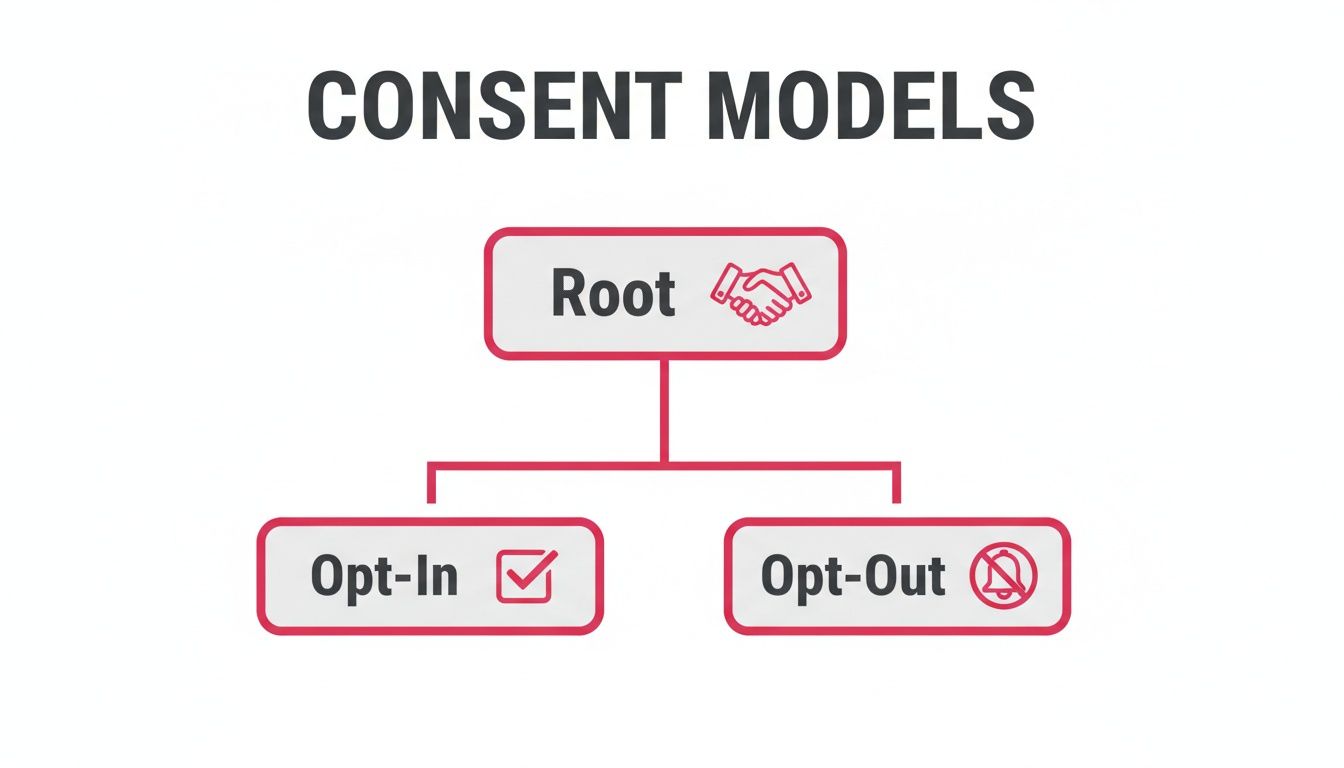
To ensure legal compliance with regulations such as the TCPA, GDPR, and CAN-SPAM, businesses must provide clear, functional opt-out mechanisms in every marketing communication. Effective examples include the "Reply STOP" command for SMS, one-click unsubscribe links in email footers, and preference centers that allow users to granularly manage their data and communication frequency.
The Critical Role of Opt-Out Compliance in 2026
As we navigate the digital marketing landscape of 2026, the threshold for consumer privacy and data autonomy has reached an all-time high. Regulatory bodies, including the Federal Communications Commission (FCC) and various European data protection authorities, have tightened the requirements for how businesses communicate with their audiences. Compliance is no longer a "set it and forget it" task; it is a dynamic process that requires precision in wording, technical reliability, and immediate execution.
An opt-out message is a legally mandated instruction that allows a recipient to terminate further communications from a specific sender. While it may seem counterintuitive to make it easy for a customer to leave your ecosystem, a transparent and compliant opt-out process actually protects your brand reputation, improves deliverability, and prevents astronomical fines. In 2026, carrier-level filtering for SMS and AI-driven spam detection for email are more aggressive than ever. If your opt-out process is cumbersome, users will simply report your message as spam, which can lead to your domain or short code being blacklisted.
Understanding the Legal Framework
Before implementing specific message examples, it is essential to understand the underlying laws that dictate their structure:
- TCPA (Telephone Consumer Protection Act): Primarily governs SMS and voice calls in the United States. It requires "prior express written consent" for marketing and mandates that users can revoke that consent at any time through any reasonable means.
- GDPR (General Data Protection Regulation): In the European Union, the GDPR mandates that withdrawing consent must be as easy as giving it. This often necessitates "one-click" solutions and clear language.
- CAN-SPAM Act: Focuses on email communication in the US. It requires a visible and operable unsubscribe mechanism that must be processed within 10 business days.
- 10DLC (10-Digit Long Code) Regulations: In 2026, mobile carriers have standardized 10DLC requirements, making "STOP" and "UNSUBSCRIBE" keywords mandatory for all commercial messaging campaigns to pass through carrier filters.
5 Opt Out Message Examples for Compliance
The following examples are designed to meet the rigorous standards of 2026 compliance while maintaining a professional and user-friendly tone.
1. The Standard SMS "Keyword" Opt-Out
This is the most common and essential form of opt-out for text message marketing. It relies on automated triggers within your SMS gateway to instantly add a number to a suppression list.
Example: "Shop our 24-hour flash sale! Get 20% off with code SAVE20. [Link] Reply STOP to opt out. Msg&Data rates may apply."
Why it works: This example fulfills several regulatory requirements simultaneously. By using the word STOP, you are using a "universal keyword" recognized by all major telecommunications carriers. Including "Msg&Data rates may apply" is a disclosure requirement by the CTIA (Cellular Telecommunications and Internet Association). In 2026, carriers use automated systems to scan for these specific phrases; omitting them can result in your message being blocked before it reaches the recipient.
2. The Detailed Email Footer with Physical Address
Under the CAN-SPAM Act, an unsubscribe link alone is insufficient. You must also include a valid physical postal address and a clear statement identifying the message as an advertisement.
Example: "You are receiving this email because you subscribed to the [Brand Name] newsletter. If you no longer wish to receive these updates, you can [Unsubscribe here] or [Manage your preferences]. Our office: 123 Marketing Way, Suite 500, Austin, TX 78701."
Why it works: The link is "conspicuous," meaning it isn't hidden in a tiny font or a color that blends into the background. By providing a "Manage your preferences" option alongside the "Unsubscribe" link, you offer a middle ground for users who might want fewer emails rather than a total cessation of contact. This often helps retain subscribers who are simply overwhelmed by frequency.
3. The One-Click "List-Unsubscribe" Header
While not a message the user reads in the body of an email, the technical "List-Unsubscribe" header is a compliance necessity for high-volume senders in 2026.
Example (Technical Implementation):
List-Unsubscribe: ,
Why it works: Major email service providers (ESPs) like Gmail and Outlook use this header to display an "Unsubscribe" button right next to the sender’s name at the top of the email interface. Implementing this reduces the likelihood of a user clicking the "Report Spam" button, as the opt-out mechanism is the most prominent action available. From a compliance perspective, this satisfies the "easy to withdraw consent" requirement of the GDPR.
4. The "Double-Confirmation" SMS Opt-Out
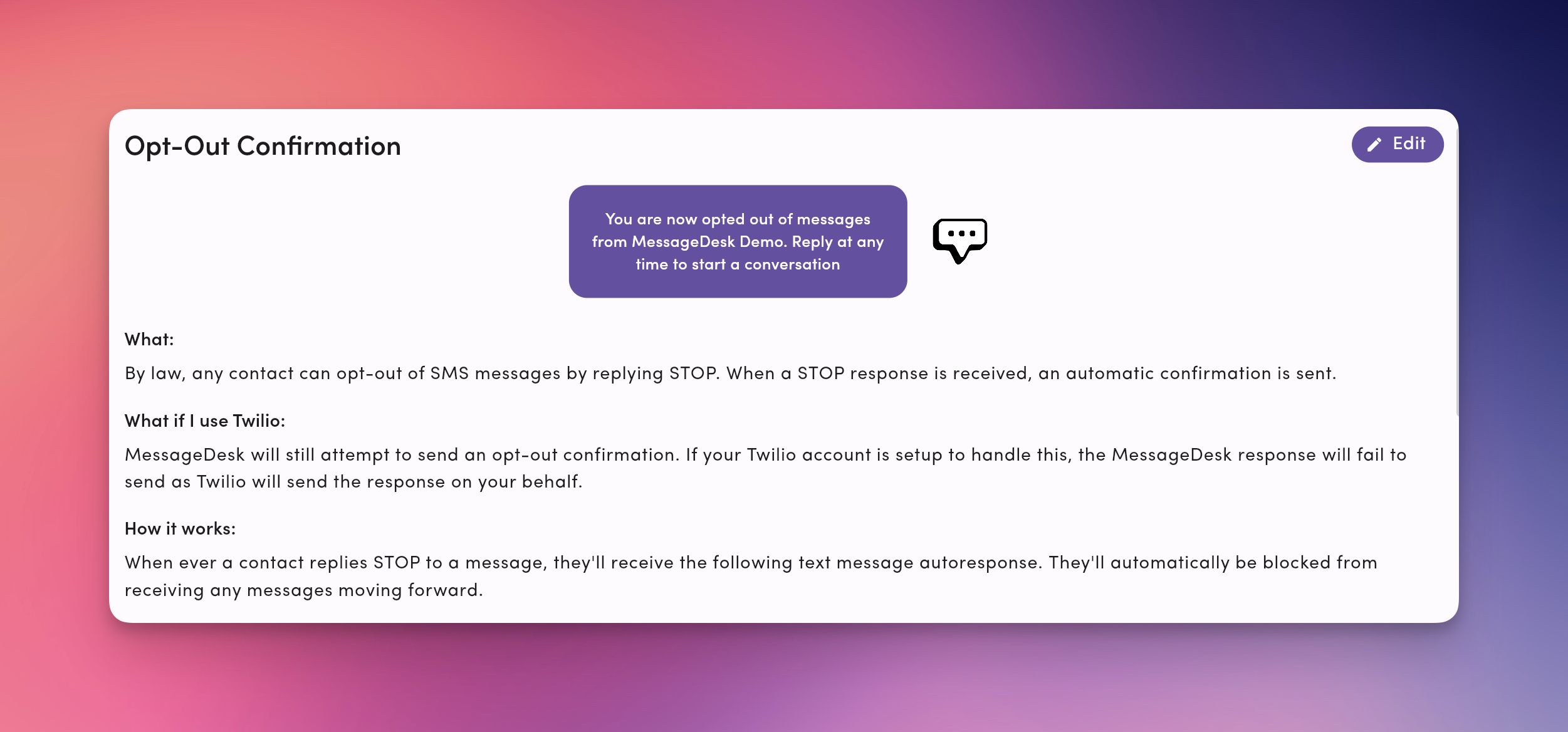
When a user texts "STOP," regulations (and carrier guidelines) require you to send one final, non-marketing message to confirm that the request has been processed.
Example: "You have successfully opted out of [Brand Name] alerts. You will no longer receive messages from this number. To re-subscribe, reply START. No further messages will be sent."
Why it works: This message provides the user with immediate confirmation, preventing confusion. It also explicitly states that "No further messages will be sent," which is a key requirement for ending the communication loop legally. Crucially, it provides a path for re-entry (the "START" keyword), which is essential for maintaining a clean and compliant subscriber database.
5. The Transactional vs. Marketing Distinction
In 2026, distinguishing between transactional messages (like shipping updates) and marketing messages (like sales) is vital. Users may want to opt out of marketing but still receive receipts.
Example: "Your order #12345 has shipped! Track it here: [Link]. To stop receiving promotional offers, reply STOP. Note: You will still receive order-related updates."
Why it works: This example protects the business from accidentally opting a user out of critical information. Under the TCPA and GDPR, transactional messages often fall under a different "legal basis" (contractual necessity) than marketing messages (consent). By clearly bifurcating these, you ensure the user understands what they are opting out of, reducing customer service inquiries and ensuring compliance across different message categories.
Technical Implementation and Prerequisites
Implementing these examples requires a robust backend infrastructure. Simply having the text in your message is not enough; the system must actually work in real-time.
The Suppression List
The most critical technical requirement for compliance is the Suppression List (also known as an Opt-Out List). When a user clicks an unsubscribe link or texts "STOP," their contact information must be moved from the "Active" database to the "Suppression" database immediately.
In 2026, manual processing of opt-outs is considered high-risk. Automation is the standard. Your system should:
- Timestamp the Opt-Out: Keep a record of exactly when the user withdrew consent. This is your primary defense in a compliance audit or a TCPA lawsuit.
- Global vs. Campaign Opt-Out: Determine if the user is opting out of a specific product line or the entire brand. For the highest compliance safety, a "STOP" request should be treated as a global opt-out unless specified otherwise.
- Cross-Channel Synchronization: If a user opts out of SMS, should they also be opted out of email? While not always legally required, "holistic" preference management is a 2026 best practice for customer experience.
Technical Standards for 2026
Businesses should adhere to the following technical specifications to ensure their opt-out messages are recognized by filters and regulators:
| Feature | SMS Requirement | Email Requirement |
|---|---|---|
| Primary Keyword | STOP, QUIT, UNSUBSCRIBE, CANCEL | Unsubscribe (Link) |
| Response Time | Immediate (Automated) | 10 Days (CAN-SPAM) / Immediate (Best Practice) |
| Confirmation | Single confirmation text required | Confirmation page (Landing page) |
| Storage | 5 years of consent records | Indefinite (while active) + 5 years post-opt-out |
| Carrier Approval | Required via 10DLC or Short Code registry | DMARC, SPF, and DKIM authentication |
Common Compliance Mistakes to Avoid
Even with the best intentions, small errors in your opt-out process can lead to significant legal exposure. In 2026, regulators have become particularly sensitive to "dark patterns"—design choices that make it intentionally difficult to opt out.
- Requiring a Login: You cannot require a user to log into an account to unsubscribe. The process must be accessible directly from the message.
- The "Hidden" Link: Using a font color that is nearly identical to the background or placing the link inside a large block of legal jargon is a violation of the "clear and conspicuous" rule.
- Charging a Fee: You cannot charge a user a "processing fee" or any other cost to stop receiving marketing messages.
- Asking "Why" Before Unsubscribing: While you can ask for feedback on why a user is leaving, you cannot make the unsubscribe action contingent on answering a survey. The opt-out must happen first, or the survey must be optional after the fact.
- Vague Language: Using phrases like "Click here if you want to change things" is insufficient. Use direct, unambiguous language like "Unsubscribe."
Managing Opt-Outs Across Global Jurisdictions
If your business operates internationally, a one-size-fits-all opt-out message may not suffice. The GDPR (General Data Protection Regulation) and the UK GDPR require a "legal basis" for processing. If you are relying on consent, the opt-out must be effortless.
In Canada, the CASL (Canada’s Anti-Spam Legislation) is even more stringent than the US CAN-SPAM Act. CASL requires that the unsubscribe mechanism remain functional for at least 60 days after the message is sent.
In 2026, many global companies have adopted the "highest common denominator" approach. By following the strictest elements of GDPR and TCPA, they ensure that their opt-out messages are compliant in virtually every jurisdiction. This includes:
- Immediate, automated suppression.
- Clear, non-technical language.
- No barriers (logins/surveys) to opting out.
- Consistent confirmation of the action.
Troubleshooting and Verification
To ensure your opt-out messages remain compliant throughout 2026, regular auditing is required. Technical failures are a common cause of compliance lawsuits.
- Test Your Keywords: Monthly, send a test message to your system and reply with "STOP," "QUIT," and "UNSUBSCRIBE." Ensure the system sends the confirmation and effectively moves the number to the suppression list.
- Link Verification: Check that every "Unsubscribe" link in your email templates is active. Broken links are a frequent source of FTC complaints.
- Review Carrier Logs: If you are using SMS, review your 10DLC or Short Code logs to see if carriers are flagging any of your messages as "Spam Likely." This often indicates that your opt-out language is missing or formatted incorrectly.
FAQ: Opt-Out Compliance in 2026
How quickly must an opt-out request be processed? Under the CAN-SPAM Act, you have 10 business days to process an email unsubscribe request. However, for SMS under TCPA and carrier guidelines, the processing must be near-instant. In the competitive environment of 2026, anything longer than 24 hours is considered a poor business practice and increases the risk of spam reports.
Can I send a confirmation email after someone unsubscribes? For SMS, a single confirmation text is legally allowed and often required by carriers. For email, it is generally better to direct the user to a "Success" landing page rather than sending another email. Sending an email to confirm an unsubscribe from emails can be viewed as a violation of the request to stop receiving emails.
What happens if I don't include an opt-out message? The consequences can be severe. In 2026, TCPA violations can cost between $500 and $1,500 per message sent. For a campaign sent to 10,000 people, the fines can reach millions of dollars. Additionally, carriers may permanently revoke your ability to send messages on their networks.
Do I need an opt-out message for transactional alerts? Technically, purely transactional messages (receipts, password resets, shipping alerts) do not require an opt-out under CAN-SPAM. However, if the message contains any marketing content, it is considered a "hybrid" message and must comply with marketing opt-out rules. Providing an opt-out even for transactional messages is a recommended best practice for transparency.
Is "Reply STOP to cancel" enough for SMS compliance? By itself, "Reply STOP" is the core requirement, but it is often insufficient for full carrier approval. You should also include your brand name and the disclosure "Msg&Data rates may apply" to meet the full CTIA standards used by carriers to vet traffic in 2026.
Final Recommendation
To maintain compliance and build consumer trust in 2026, treat your opt-out process as a vital feature of your customer service rather than a legal burden. Use the Standard SMS Keyword and Email Footer examples as your baseline. Ensure your technical team has automated the synchronization between your messaging platform and your suppression list to prevent accidental re-messaging. Finally, conduct quarterly audits of your opt-out links and keywords to ensure that a simple technical glitch doesn't lead to a costly regulatory violation.