Renewable natural resources are infinite elements of the Earth's ecosystem that naturally replenish themselves faster than humans consume them, providing clean energy, water, and materials essential for modern life.
Understanding Renewable Natural Resources
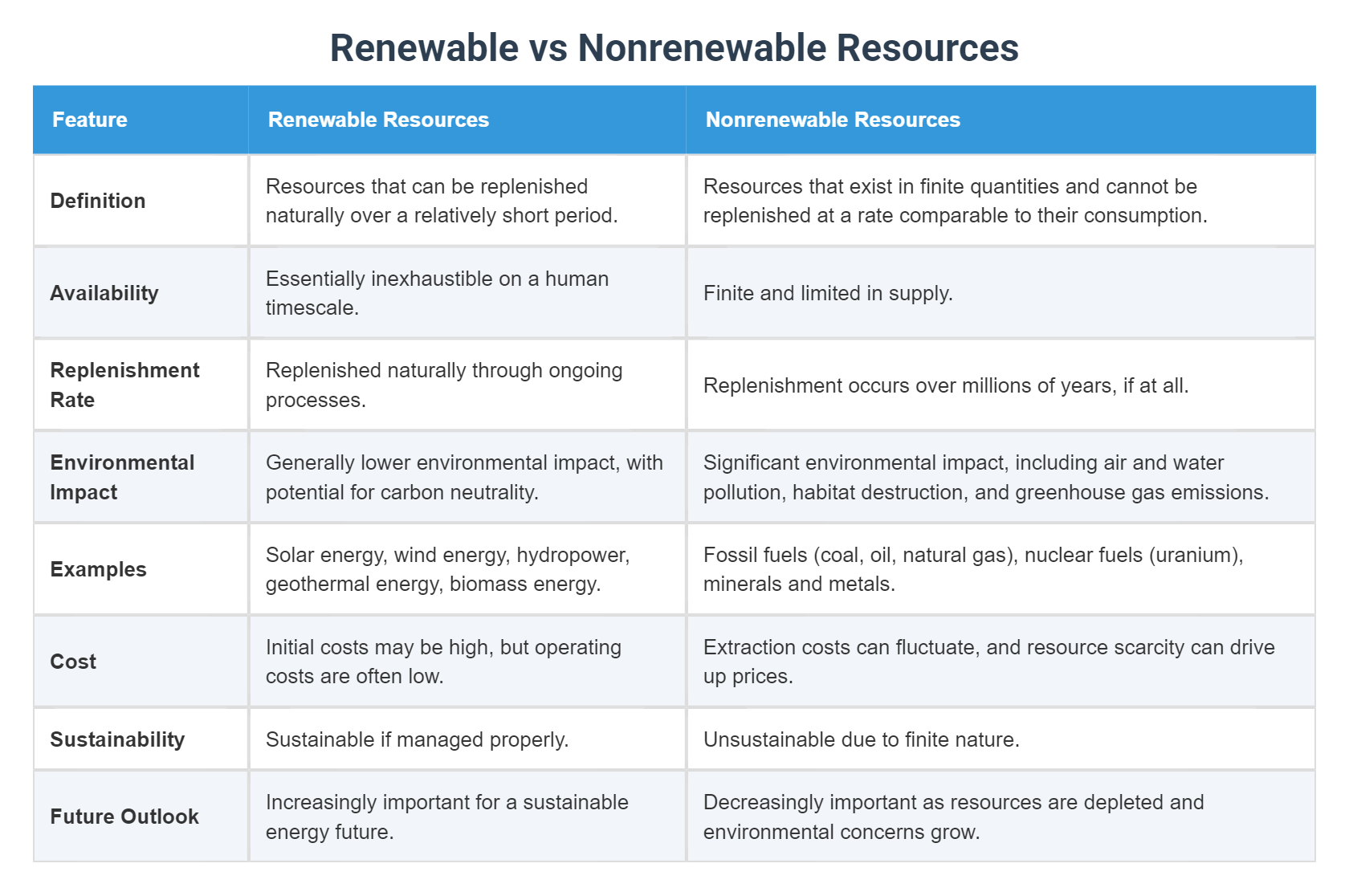
The modern global economy relies heavily on the extraction and utilization of Earth's materials. To achieve true sustainability, humanity must pivot away from finite, highly polluting reserves and toward systems that leverage renewable natural resources. By definition, a renewable resource is a natural asset that can be replenished naturally over time through biological reproduction, chemical cycles, or physical processes. Unlike fossil fuels—which take hundreds of millions of years to form and exist in fixed, depleting quantities—renewable resources regenerate continuously on a human timescale.
However, the word "renewable" does not automatically mean "indestructible." Even the most abundant renewable assets can be rendered functionally non-renewable if they are mismanaged, polluted, or harvested at rates that exceed their natural replenishment threshold. For instance, an overfished ocean or a clear-cut forest can cross a tipping point where natural regeneration can no longer keep pace with demand. Understanding the core mechanics, operational limits, and practical applications of these assets is critical for scientists, policymakers, and everyday citizens working toward environmental stability.
1. Solar Energy
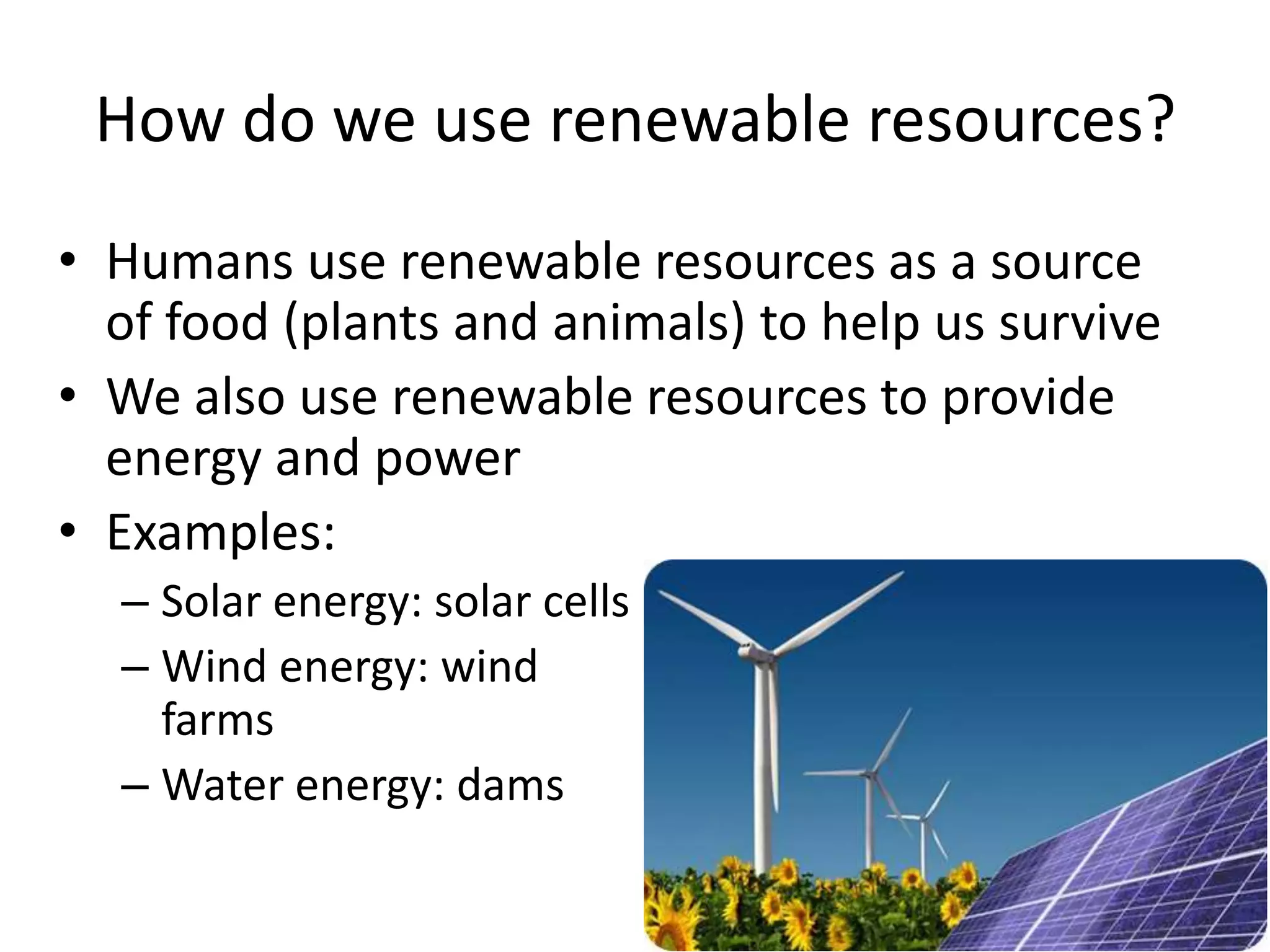
Solar energy is the radiant light and heat emitted by the Sun, harnessed using a range of ever-evolving technologies such as solar heating, photovoltaics, solar thermal electricity, and artificial photosynthesis. It stands as the most abundant energy resource on Earth; the amount of solar energy hitting the planet's surface in a single hour is greater than the total global energy consumption for an entire year.
How Photovoltaic Systems Work
At the heart of modern solar technology is the photovoltaic (PV) cell, typically constructed from silicon. When photons (light particles) strike the surface of a solar cell, they knock electrons free from their atoms. If conductors are attached to the positive and negative sides of a cell, it forms an electrical circuit. When electrons flow through this circuit, they generate electricity. Multiple cells make up a solar panel, and multiple panels make up a solar array.
Advantages and Operational Limitations
- Advantages: Solar power produces zero greenhouse gas emissions during operation, requires minimal maintenance once installed, and can be deployed in modular configurations ranging from small rooftop residential panels to utility-scale desert solar farms.
- Limitations: Solar generation is intermittent, depending entirely on weather conditions, geographic location, and the day-night cycle. Energy storage solutions, such as lithium-ion or flow batteries, are typically required to bridge gaps in generation, adding to initial setup costs.
2. Wind Energy
Wind energy describes the process by which the kinetic energy of moving air masses is converted into mechanical power or electricity. Driven by the uneven heating of the Earth’s surface by the sun and the rotation of the planet, wind has powered maritime navigation for millennia and now stands as a cornerstone of modern renewable electricity grids.
Mechanics of Wind Turbines
Modern utility-scale wind turbines operate on a simple aerodynamic principle. As wind flows across the blades of a turbine—which are designed similarly to airplane wings—the air pressure drops on one side of the blade. This pressure difference causes the blades to lift and rotate, spinning a rotor connected to a main shaft. The shaft turns a generator, often via a gearbox that increases rotational speed, converting kinetic energy into electrical energy.
| Wind Turbine Type | Typical Scale | Primary Application | Major Advantage |
|---|---|---|---|
| Onshore Wind | Utility (Megawatt scale) | Regional power grids | Lower capital costs, easier grid integration |
| Offshore Wind | Large Utility (Multi-megawatt) | Coastal urban centers | Stronger, more consistent marine winds |
| Distributed Wind | Small-scale (Kilowatt scale) | Remote homes, farms, businesses | Off-grid capability, localized resilience |
Environmental Impact and Siting Challenges
While wind power is entirely emission-free during generation, deployment requires careful planning. Wind farms require significant land footprints, and poorly sited turbines can pose hazards to local bird and bat populations. Offshore wind mitigates some land-use conflicts but introduces higher engineering and maintenance complexities due to marine corrosion and harsh weather environments.
3. Hydropower
Hydropower, or hydroelectric power, utilizes the natural flow of water—typically rivers and streams—to generate electricity. It is currently the largest source of renewable electricity in the global power sector, providing a reliable, dispatchable baseline power source that can ramp up or down much faster than traditional coal or nuclear plants.
Technologies: Run-of-River vs. Impoundment
Hydropower systems generally fall into two primary structural categories:
- Impoundment Facilities: These traditional systems use a dam to store river water in a reservoir. Water is released through hydraulic turbines to drive generators. These systems offer significant energy storage and flood control benefits.
- Run-of-River Facilities: These systems capture the natural flow of a river with little or no water storage. They rely on the river's existing flow velocity, minimizing ecological disruption to the surrounding watershed, though their output fluctuates directly with seasonal water volume.
Ecological Trade-offs
While hydroelectric plants do not burn fossil fuels, large impoundment dams drastically alter aquatic ecosystems. Dams fragment river habitats, impede migratory fish species like salmon, and can submerge vast tracts of upstream land, releasing trapped organic matter that generates methane, a potent greenhouse gas.
4. Biomass Energy
Biomass energy is derived from organic materials—recent plant and animal matter—that store chemical energy captured from the sun through photosynthesis. Unlike solar or wind, biomass is a dispatchable energy source, meaning it can be burned or converted on demand to provide continuous power regardless of weather conditions.
Conversion Pathways
Biomass can be utilized directly through combustion to produce heat, or processed into liquid and gaseous biofuels through various technological pathways:
- Direct Combustion: Burning wood chips, agricultural waste, or municipal solid waste in high-efficiency boilers to generate steam for electricity or district heating.
- Anaerobic Digestion: Microorganisms break down biodegradable organic matter—such as animal manure and food waste—in an oxygen-free environment, producing biogas (methane and carbon dioxide) that can be used for heating or electricity generation.
- Biofuel Refining: Converting crops like corn, sugarcane, or oilseeds into ethanol and biodiesel for transportation sectors.
Sustainability Considerations
The sustainability of biomass depends heavily on sourcing practices. If harvested wood is replanted at an equal or greater rate, the carbon emitted during combustion is theoretically balanced by the carbon absorbed during the growth of replacement trees, creating a closed-loop carbon cycle. However, intensive monoculture farming for biofuels can compete with food crop production and threaten biodiversity if not strictly regulated.
5. Sustainable Forestry and Timber
Forests are quintessential living renewable resources. Beyond serving as carbon sinks that absorb massive amounts of carbon dioxide from the atmosphere, forests provide timber, paper products, and non-timber forest resources that sustain rural economies worldwide.
The Principles of Sustainable Forest Management
Sustainable forestry ensures that forest harvesting does not exceed the forest's natural regeneration capacity. Foresters use selective logging, rotation cycles, and replanting protocols to maintain forest health, soil integrity, and wildlife habitats. Certifications from international organizations, such as the Forest Stewardship Council (FSC), verify that wood products originate from responsibly managed ecosystems.
Balancing Ecological and Economic Demands
Unregulated logging leads to deforestation, soil erosion, and severe habitat loss. Conversely, strict sustainable management protects watersheds, preserves biodiversity, and maintains long-term economic viability for timber industries. Integrating agroforestry—the practice of growing trees and agricultural crops in an integrated system—further enhances land productivity while maintaining ecological stability.
Frequently Asked Questions
What makes a natural resource renewable?
A natural resource is considered renewable if it possesses the intrinsic capacity to replenish itself through natural ecological, biological, or physical cycles within a human timescale, outstripping the rate of human extraction.
Are renewable resources completely free of environmental impacts?
No. While renewable resources produce significantly fewer greenhouse gas emissions than fossil fuels during operation, their infrastructure—such as manufacturing solar panels, building wind turbine foundations, or constructing hydroelectric dams—requires raw materials, land, and energy, which carries localized environmental footprints.
Can renewable resources run out?
Yes, they can become depleted if mismanaged. For example, over-extracting groundwater from aquifers faster than natural precipitation can recharge them, or overharvesting fish stocks, transforms a theoretically renewable asset into a depleted resource.
How does energy storage enhance renewable resources?
Because sources like wind and solar are intermittent—generating power only when the wind blows or the sun shines—advanced energy storage technologies, such as battery storage systems and pumped-storage hydroelectricity, are essential to capture excess energy and dispatch it during periods of high demand.
What is the difference between renewable energy and renewable resources?
Renewable energy specifically refers to power generated from renewable sources like sunlight, wind, and water. Renewable resources is a broader category that includes energy sources as well as biological and material assets like timber, freshwater, and fertile soil.
Conclusion and Next Actions
Transitioning toward a sustainable future requires a deep understanding of how renewable natural resources operate and where their limitations lie. To participate effectively in this transition, evaluate your personal or organizational energy consumption, explore certified green utility programs, investigate residential solar or efficiency audits, and support policies that prioritize responsible resource stewardship.