Choosing a life insurance policy for your spouse requires balancing financial protection, premium affordability, and future family needs by evaluating income replacement value, selecting between term and permanent coverage types, and coordinating beneficiary structures to ensure seamless payouts during a crisis.
Navigating the financial marketplace to secure life insurance for a spouse is a critical decision that blends emotional protection with rigorous financial planning. When a partner passes away, the surviving family faces not only profound emotional grief but also immediate and long-term economic shifts. Mortgages, daily living expenses, childcare costs, and future retirement savings can suddenly fall onto a single income stream. Selecting the optimal policy prevents these compounding economic strains.
Because the marketplace offers a vast array of products—ranging from temporary protection to lifelong asset-building vehicles—households need a structured methodology. Below are three core strategies to evaluate needs, compare policy structures, and finalize the best life insurance policy for a spouse without overpaying or leaving coverage gaps.
Strategy 1: Calculate True Income Replacement and Debt Obligations
The foundation of any sound life insurance decision relies on accurate math rather than guesswork or generic rules of thumb. Many buyers rely on outdated benchmarks, such as purchasing a flat ten times their spouse's annual salary, which often fails to capture the unique financial footprint a partner brings to a household. To pick the most accurate policy, you must quantify both economic contributions and total liabilities.
Assessing Earned Income Versus Unpaid Labor
Financial contribution goes far beyond a formal paycheck. When evaluating a spouse's economic value, consider two distinct categories:
- Earned Income: The direct salary, bonuses, and benefits (such as employer-sponsored health insurance or retirement matches) that the spouse contributes to the household cash flow.
- Unpaid Economic Labor: If a spouse stays home to manage childcare, eldercare, cooking, cleaning, or household management, replacing those services commercially carries a substantial cost. Studies from organizations like Salary.com regularly value stay-at-home labor in the tens of thousands of dollars annually.
Failing to account for unpaid labor leaves surviving partners financially vulnerable if they must suddenly hire external help to maintain their work schedules.
Applying the DIME Formula
A reliable method for calculating exact coverage needs is the DIME formula, which breaks financial obligations down into four distinct categories:
- Debt: Total non-mortgage liabilities, including car loans, credit card balances, and student loans that would become the surviving spouse's sole responsibility.
- Income: The annual income of the insured spouse multiplied by the number of years their family will need financial support (often until the youngest child reaches adulthood or until retirement age).
- Mortgage: The total balance remaining on the home loan, ensuring the surviving spouse can pay off the property and eliminate housing payments.
- Education: Estimated future college tuition and secondary school expenses for children.
Subtracting existing liquid savings and investments from this total sum yields the precise death benefit needed, protecting the family from underinsurance.
Strategy 2: Match Policy Structure to Financial Timeline
Once the required coverage amount is established, the next step involves choosing the correct policy structure. Life insurance generally splits into two primary categories: term life insurance and permanent life insurance (such as whole life or universal life). Choosing the right option depends entirely on whether the financial need is temporary or permanent.
| Feature | Term Life Insurance | Permanent Life Insurance |
|---|---|---|
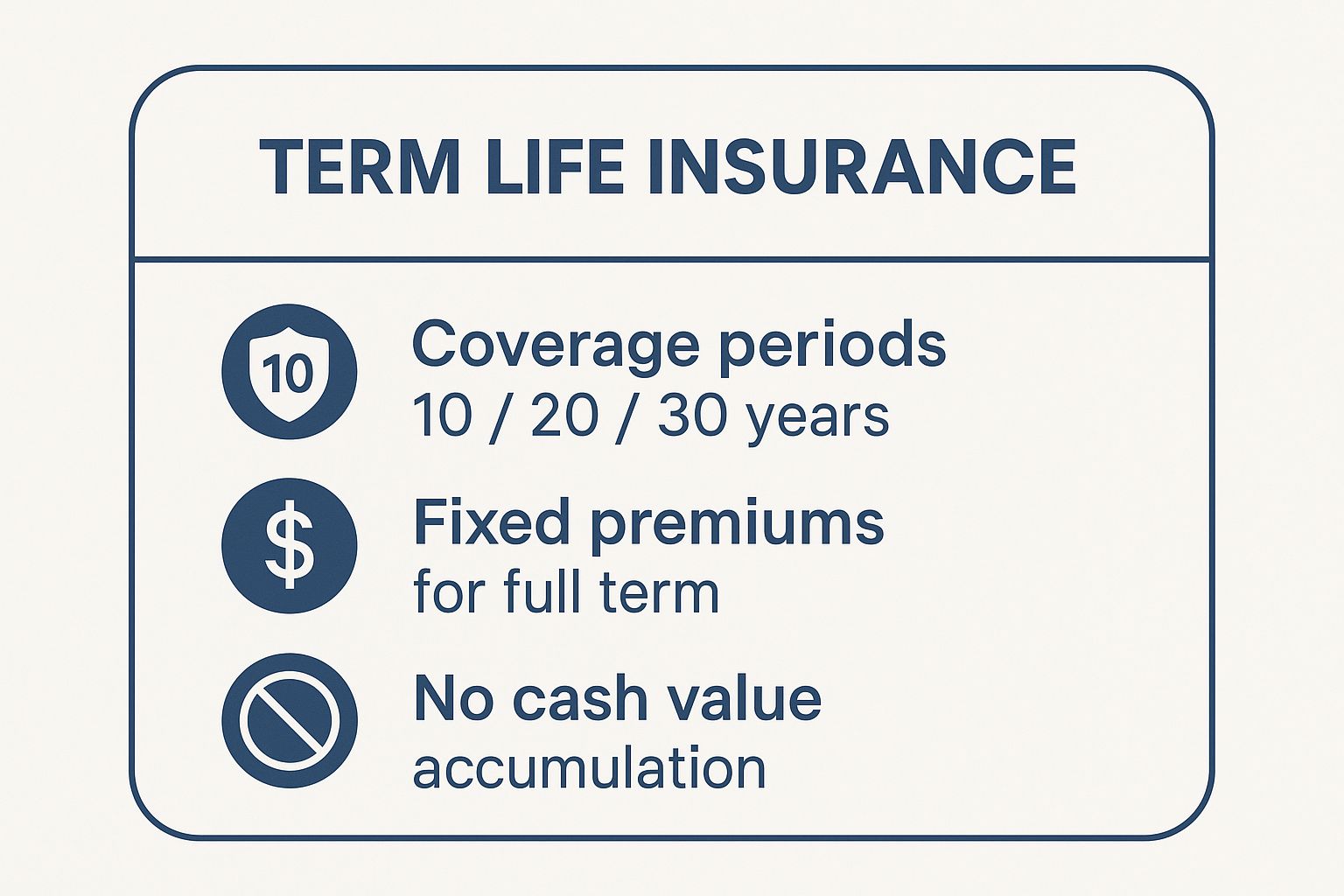
| Duration | Fixed period (10, 20, 30 years) | Lifelong (as long as premiums are paid) |
| Premium Costs | Lower, level payments during the term | Significantly higher initial payments |
| Cash Value | None | Builds tax-deferred cash value over time |
| Best Used For | Income replacement during peak working and child-rearing years | Estate planning, lifelong dependents, final expenses |
When to Choose Term Life Insurance
For most families, term life insurance represents the most cost-effective and practical choice. It provides pure death-benefit protection for a specified timeframe—typically 10, 20, or 30 years.
- Affordability: Because term policies do not include investment components, premiums are significantly lower, allowing families to secure a high death benefit (e.g., $500,000 or $1,000,000) when financial obligations are highest.
- Targeted Protection: If your primary goals are paying off a 30-year mortgage and funding children's education until they graduate, a 20- or 30-year term policy matches that exact timeline. Once the children are independent and the mortgage is settled, the need for coverage naturally diminishes.
When to Consider Permanent Life Insurance
Permanent insurance remains active for the entire life of the insured, provided premiums are paid, and it includes a cash value account that grows on a tax-deferred basis.
- Lifelong Dependents: If you have a child with special needs who will require lifelong financial support, a permanent policy ensures funds remain available long after you are gone.
- Estate Planning and Final Expenses: High-net-worth couples often use permanent insurance to cover estate taxes or guarantee a legacy. For average households, however, permanent policies can strain monthly budgets due to premiums that cost five to ten times more than equivalent term policies.
Strategy 3: Optimize Ownership, Insurability, and Underwriting
The final strategy involves the mechanics of application, policy ownership, and medical underwriting. Securing the lowest possible rates requires strategic timing and proper structuring of the policy contract.
Understanding Medical Underwriting and Health Classes
Life insurance pricing depends heavily on underwriting results. Insurers evaluate height, weight, medical history, family medical history, driving records, and lifestyle habits (such as tobacco use or extreme sports).
- Apply Early: Premiums increase with every year of age. Locking in a policy while a spouse is young and healthy permanently secures a lower rate.
- Manage Controllable Factors: Minor improvements in blood pressure or cholesterol managed through diet or medication prior to a paramedical exam can shift an applicant from a "Standard" rate class to a "Preferred" or "Preferred Plus" class, saving thousands of dollars over the life of the policy.
Structuring Policy Ownership and Beneficiaries
Who owns the policy matters significantly for tax purposes and claims processing.
- The Three-Party Rule: In standard scenarios, the insured (spouse A), the owner (spouse B), and the beneficiary (spouse B) are structured so that the surviving spouse receives the death benefit completely income-tax-free.
- Avoiding Probate: Naming a specific individual as the primary beneficiary—rather than "Estate"—ensures the death benefit bypasses the lengthy and costly probate court process, delivering immediate liquidity to the surviving partner when bills arrive.
- Contingent Beneficiaries: Always designate a contingent beneficiary (such as an adult child or a living trust) in case both spouses pass away simultaneously in an accident.
Common Mistakes to Avoid When Buying Spouse Insurance
Navigating the life insurance market can lead to missteps if certain pitfalls are overlooked. Keeping these common errors in mind protects your investment and ensures genuine financial security:
- Insuring Only the Breadwinner: Ignoring the economic value of a stay-at-home spouse forces the surviving partner to absorb high out-of-pocket costs for childcare and household management.
- Relying Solely on Employer-Provided Group Life: While group policies offered through an employer are convenient and often inexpensive, they are typically tied to your job. Leaving the company usually means losing the coverage, and the death benefit amount (often one or two times salary) is rarely enough to cover a family's long-term needs.
- Buying Too Little Coverage Out of Fear of Cost: Many buyers select a lower face value because they assume insurance is unaffordable, leaving their family dangerously underinsured. Term insurance quotes often prove surprisingly affordable for healthy adults.
Frequently Asked Questions
Can I buy a life insurance policy on my spouse without their consent?
No. Insurance regulations require the proposed insured to sign the application and consent to the underwriting process. This prevents fraudulent policies and ensures individuals know about coverage placed on their lives. However, you can act as the owner and payer of the policy while your spouse is the insured.
What happens to the policy if we get divorced?
If a divorce occurs, the policy owner retains control of the contract. The owner can change the beneficiary, surrender the policy for its cash value (if permanent), or stop paying premiums. In many divorce settlements, court decrees mandate that one ex-spouse maintain a term policy naming the other ex-spouse as a trustee for minor children to secure child support or alimony obligations.
Is life insurance payout taxable to the surviving spouse?
Generally, life insurance death benefits paid out in a lump sum are completely free from federal income tax. However, if the proceeds are left with the insurer to earn interest, the interest earned after the insured's death is subject to income tax.
Can a smoker spouse get affordable life insurance?
Smokers pay higher rates—often double or triple non-smoker rates—because of associated health risks. However, many carriers offer smoker-rated policies that allow individuals to reapply for non-smoker rates after remaining tobacco-free (including cigarettes, cigars, pipes, and e-cigarettes) for a consecutive period, usually one to three years.
Should we buy a joint life insurance policy or individual policies?
Individual policies are almost always superior to joint first-to-die policies. While joint policies cover two people under one contract, they typically pay out only upon the first death and can complicate matters in the event of a divorce or changing coverage needs. Two separate individual term policies provide greater flexibility and control.
Final Recommendation
To secure the best life insurance policy for your spouse, begin by calculating your family's exact financial obligations using the DIME formula, prioritizing a reliable term life insurance policy for its cost-effectiveness and high coverage limits, and complete the underwriting process while your spouse is young and healthy. Review quotes from multiple reputable carriers, consult an independent insurance broker or financial advisor if necessary, and lock in a policy that protects your household against unexpected loss.