Using a .223 Remington for whitetail deer hunting is legal in many jurisdictions, but it requires careful bullet selection, strict shot placement, and a thorough understanding of cartridge limitations. While modern bonded and monolithic copper bullets have made the .223 significantly more effective than older lead-core varmint rounds, hunters must remain disciplined regarding distance and angle to ensure ethical harvests.
Evolution of the .223 Remington in Big Game Hunting
For decades, the .223 Remington was universally dismissed by big-game hunters as a varmint cartridge suited strictly for coyotes, woodchucks, and paper targets. Early military-surround 5.56x45mm and civilian .223 loads relied on thin-jacketed, fragmenting bullets designed to yaw and break up upon impact. While devastating on small pests, these lightweight bullets lacked the structural integrity and mass required to penetrate a whitetail deer’s heavy muscle, ribs, and shoulder bone to reach the vital organs.
However, significant advancements in bullet engineering over the last two decades have transformed the cartridge's viability. Modern hunting bullets designed specifically for intermediate cartridges—such as heavier monolithic copper solids and chemically bonded lead-core projectiles—retain their weight, expand reliably at lower velocities, and achieve the deep linear penetration mandated by ethical hunting standards.
Despite these technological strides, the .223 remains a cartridge with very little margin for error. It relies entirely on precision and specialized ammunition rather than raw kinetic energy. Understanding both its capabilities and its severe physical limitations is essential for any hunter considering taking it into the deer woods.
Legal Landscape and State Regulations
Before planning a whitetail hunt with a .223 Remington, hunters must carefully review state and provincial game laws. Wildlife management agencies regulate cartridge use to minimize wounded, unrecovered game, and regulations vary wildly across North America.
State-by-State Regulatory Framework
- Prohibited States: Several states historically banned any centerfire cartridge under .24 caliber (6mm) for big game. While many have updated their laws to accommodate modern bullet technology, hunters should always check current local statutes.
- Permissive States: A large majority of states now permit the use of .22-caliber centerfire rifles for deer hunting, provided the ammunition meets specific construction requirements.
- Special Restrictions: Some jurisdictions restrict .223 use to specific weapon types, such as single-shot rifles, handguns, or specific firearm seasons, while others mandate minimum barrel twist rates or magazine capacity limits.
| State Regulation Type | Typical Requirements | Examples of Jurisdictions |
|---|---|---|
| Unrestricted Centerfire | Any centerfire rifle cartridge legal; no minimum caliber specified. | Texas, Ohio, Alabama |
| Minimum Caliber (.22 or greater) | Must use a centerfire rifle of .22 caliber or larger; expanding bullets required. | Michigan, Virginia, Pennsylvania |
| Restricted / Higher Caliber Minimum | Must use .24 caliber (6mm) or larger; .223 is strictly illegal for deer. | Washington, Colorado, Illinois |
Note: Regulations change frequently. Always consult the official state Department of Natural Resources (DNR) or Fish and Wildlife rulebooks before heading afield.
Terminal Ballistics: How the .223 Works on Deer
To understand why a .223 Remington can harvest a whitetail deer, one must look past raw muzzle energy figures and examine terminal ballistics—specifically, how a bullet behaves upon impact.
A standard .223 load firing a 55-grain soft point generates roughly 1,300 foot-pounds of energy at the muzzle, which drops off rapidly past 100 yards. By comparison, traditional deer cartridges like the .30-30 Winchester, .243 Winchester, or .308 Winchester deliver significantly more mass and momentum. Because the .223 lacks excess energy, it cannot rely on hydrostatic shock or massive tissue disruption. Instead, it must achieve two critical milestones:
- Adequate Penetration: The bullet must pass through 12 to 18 inches of soft tissue to reach both lungs or the heart, even if it encounters a heavy shoulder blade or ribs.
- Controlled Expansion: The bullet must open up to create a sufficient wound channel while retaining at least 80% to 90% of its original weight to prevent premature disintegration.
The Twist Rate Factor
Bullet stabilization is another critical technical hurdle. Traditional .223 barrels often featured a slow 1:12 or 1:14 twist rate, designed to stabilize lightweight varmint bullets (40 to 55 grains). Modern hunting bullets—particularly heavy copper monolithics weighing 62 to 77 grains—require a faster twist rate, such as 1:8 or 1:7, to stabilize properly in flight. Firing an un-stabilized bullet results in "keyholing" (tumbling), catastrophic accuracy loss, and unpredictable terminal performance.
Choosing the Right Ammunition
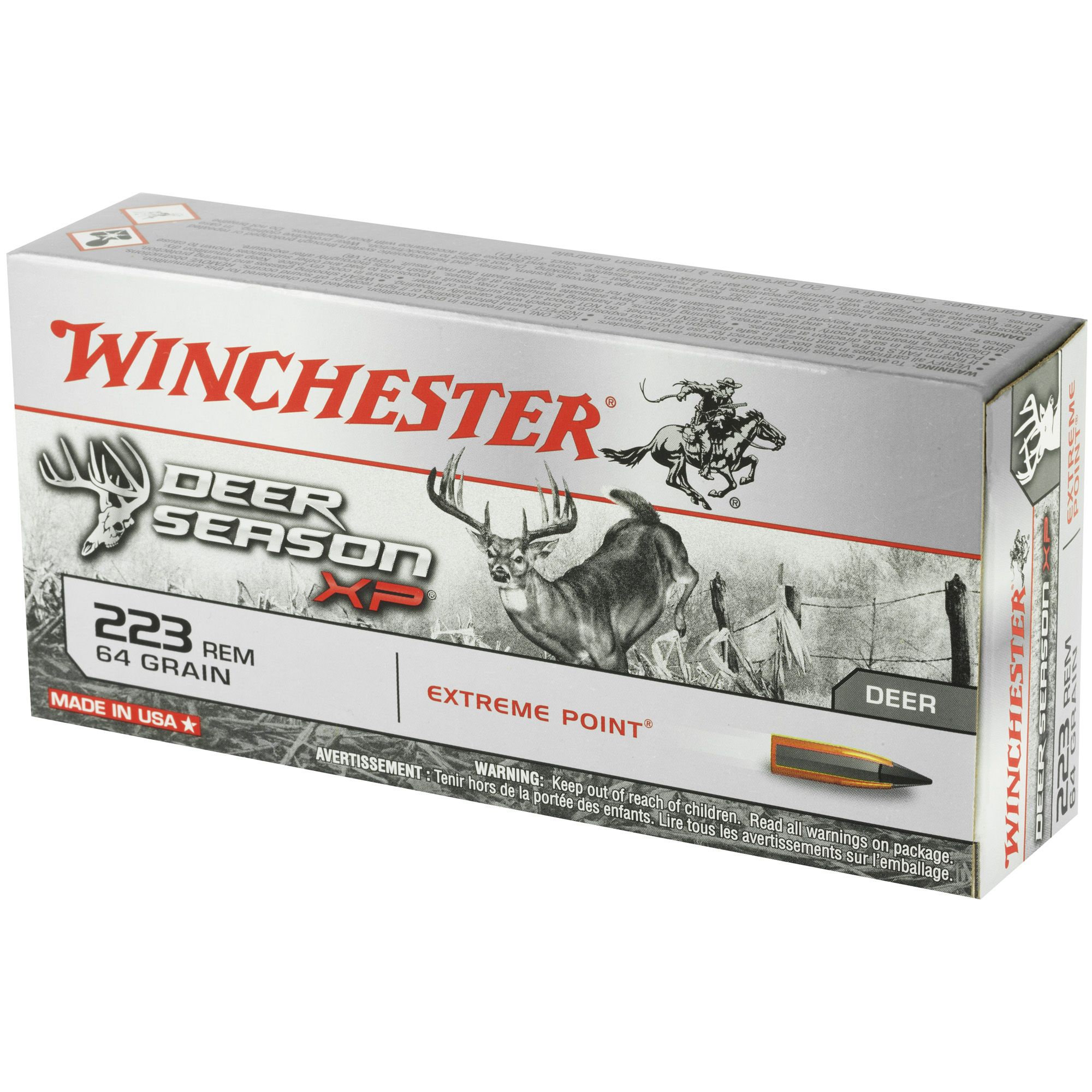
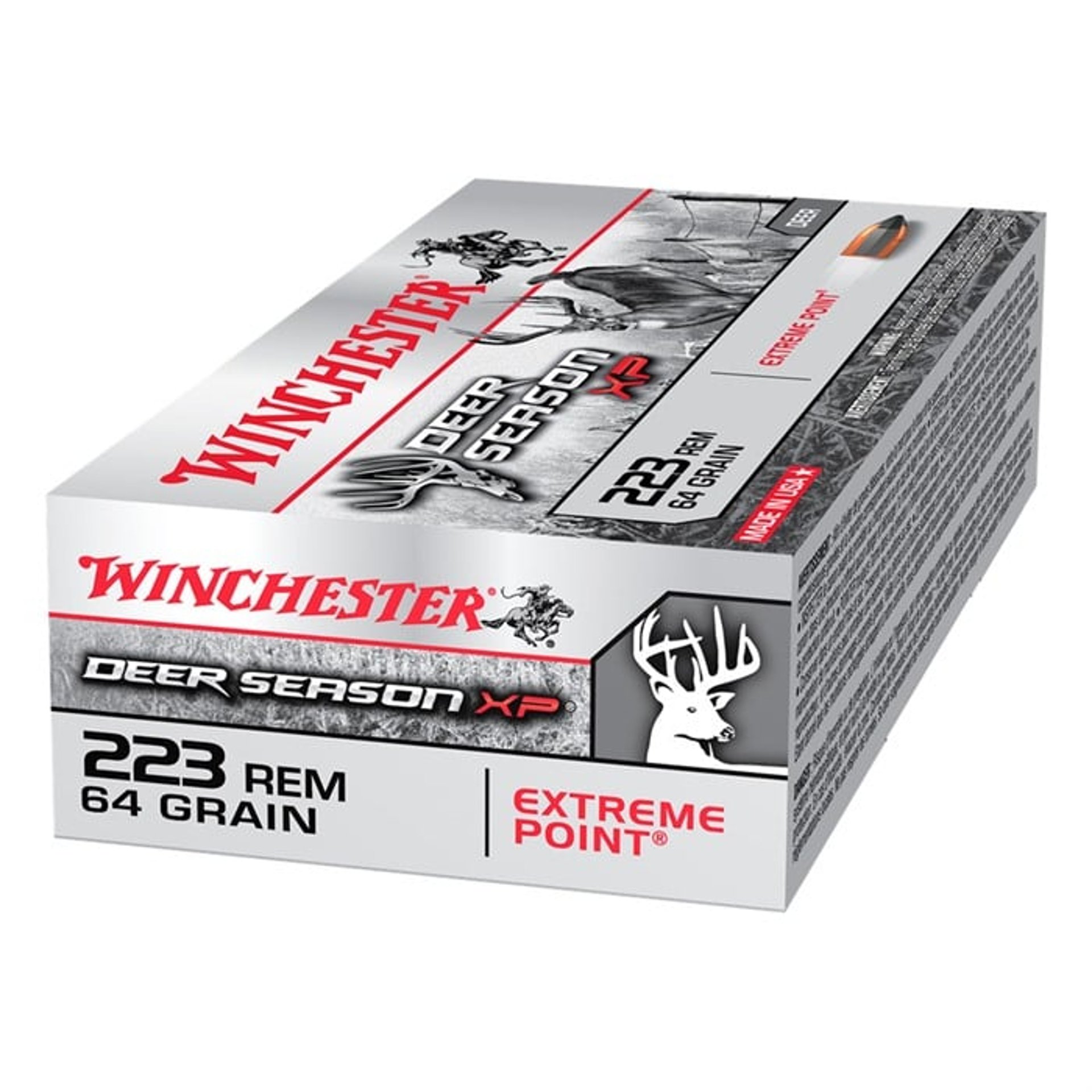
Standard range "target" ammo (such as military surplus M193 or M855, or cheap 55-grain full metal jacket rounds) is completely unethical and often illegal for whitetail deer hunting. Hunters must select specialized big-game ammunition designed specifically to perform at intermediate velocities.
Recommended Bullet Categories
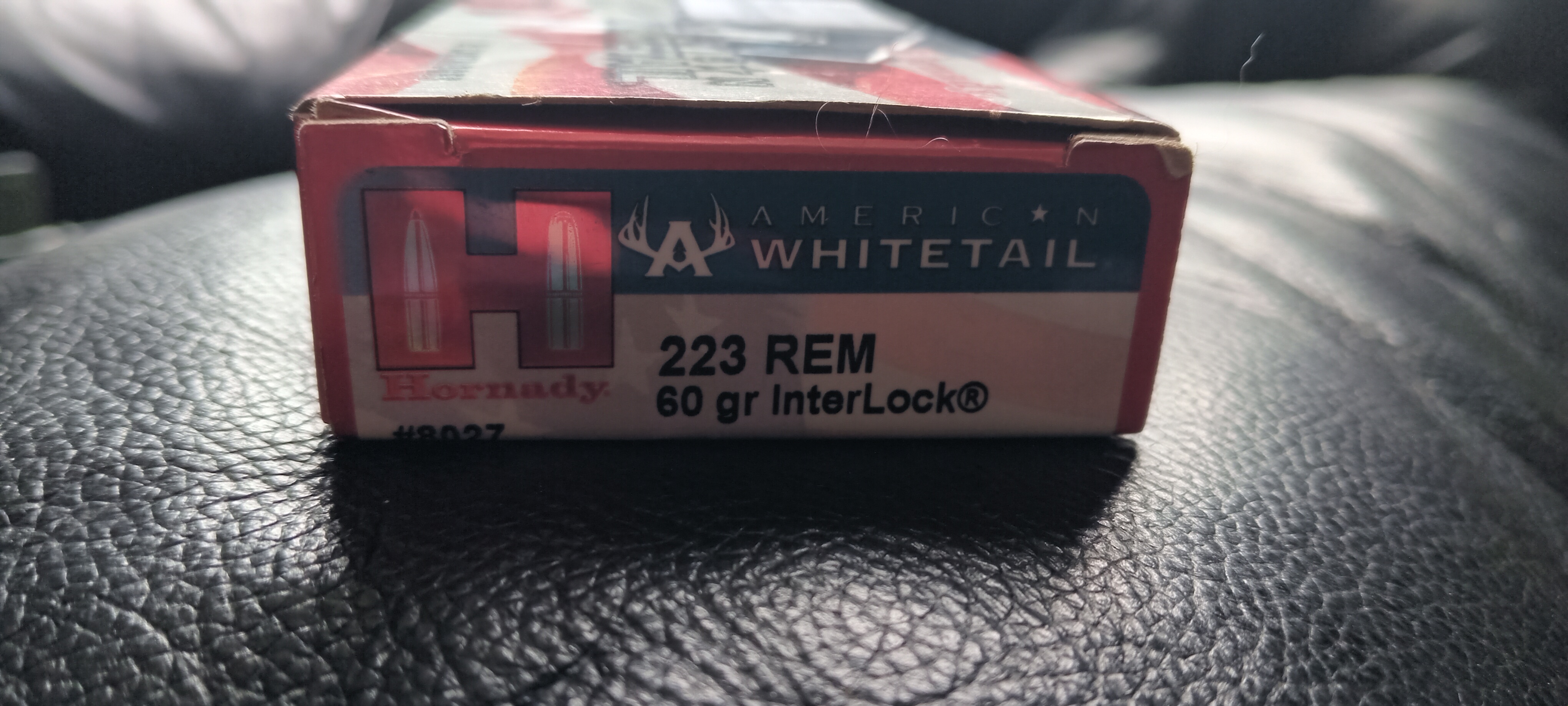
- Monolithic Solid Copper Bullets: Brands like Barnes (VOR-TX TSX and TTSX) and Hornady (GMX/CX) are among the top choices for a .223. Because copper is less dense than lead, these bullets are manufactured slightly lighter (e.g., 50 to 62 grains) to achieve proper length and stabilization. Upon impact, they peel back into razor-sharp petals while retaining nearly 100% of their weight, driving exceptionally deep through bone and muscle.
- Bonded Lead-Core Bullets: Premium bonded options like the Federal Fusion, Swift Scirocco, or Nosler Partition chemically fuse the lead core to the copper jacket. This prevents the core from separating from the jacket when hitting heavy bone, ensuring deep, straight-line penetration.
- Heavier Grain Weights: Look for weights ranging from 60 grains to 77 grains, provided your rifle's barrel twist rate can stabilize them. Heavier bullets maintain their momentum and velocity much better downrange.
Practical Limitations in the Field
Even with premium ammunition, shooting a whitetail deer with a .223 Remington demands strict adherence to operational limitations. Ignoring these parameters dramatically increases the likelihood of losing a wounded animal.
1. Distance Limitations
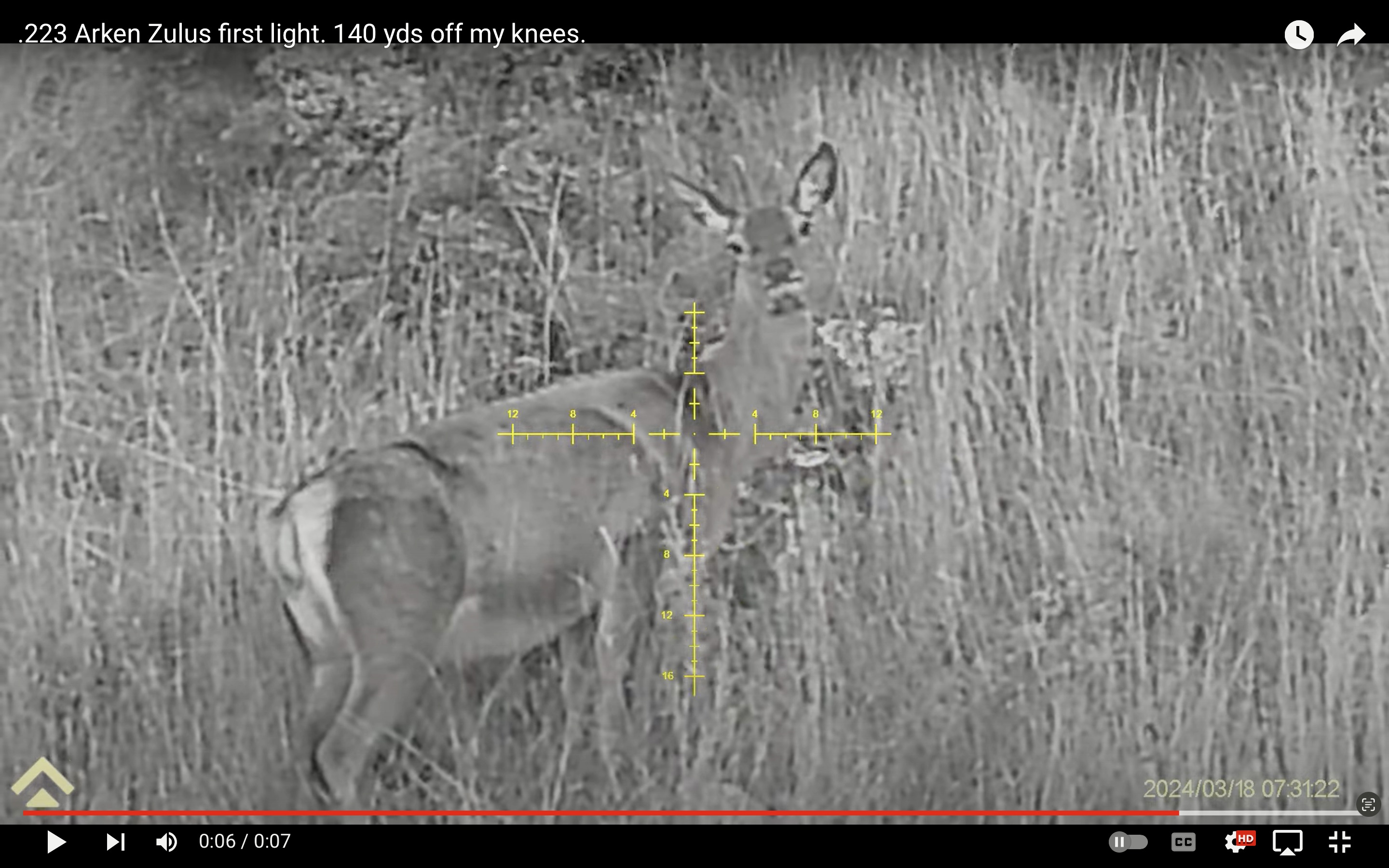
While a .223 can easily hit targets at 300 to 500 yards on a paper range, its terminal effectiveness on big game drops precipitously past 150 yards. As velocity drops below approximately 2,000 feet per second, many expanding hunting bullets fail to open up reliably, acting more like a solid metal rod passing cleanly through soft tissue. For ethical hunting, keep shots well within 100 to 150 yards.
2. Shot Placement Discipline
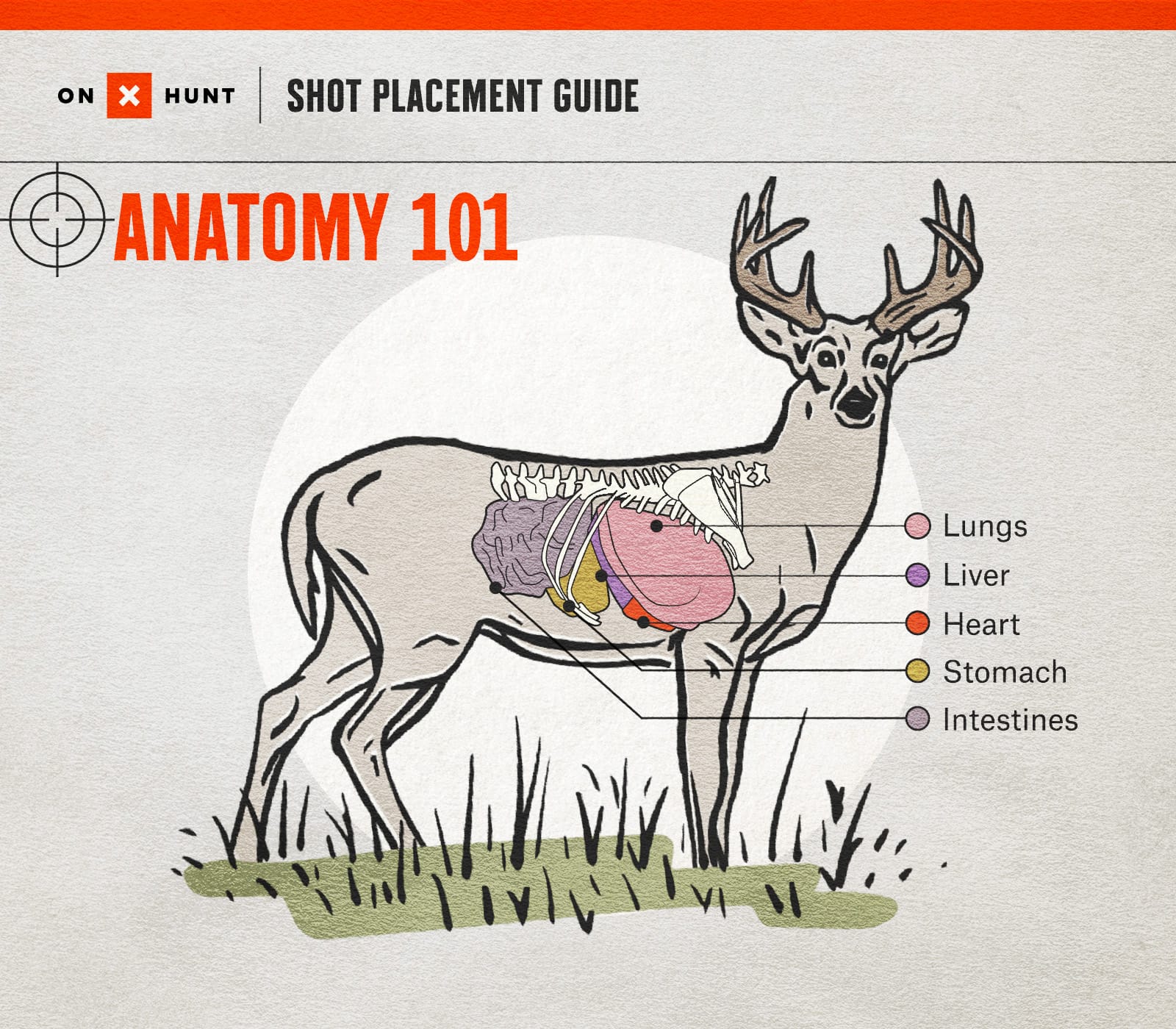
With a large-caliber rifle like a .30-06 or .300 Winchester Magnum, a poorly placed marginal hit in the gut or liver can still cause terminal trauma through sheer hydrostatic shock and massive blood loss. With a .223, shot placement is absolute. Hunters must wait for a clean, broadside or slightly quartering-away angle. Head and neck shots should be avoided entirely, and shoulder shots through heavy bone should only be attempted with monolithic copper bullets that will not fragment.
3. Environmental and Physical Obstructions
The lightweight nature of a .223 bullet makes it highly susceptible to deflection. A thin twig, a blade of tall grass, or even heavy brush between the muzzle and the deer can cause the bullet to tumble or veer off course entirely before reaching the target. A completely clear line of sight is mandatory.
Comparison: .223 Remington vs. Traditional Deer Cartridges
To put the .223 into perspective, it helps to compare its core specifications directly against standard, widely accepted whitetail deer cartridges.
| Cartridge | Typical Bullet Weight | Muzzle Velocity | Muzzle Energy | Effective Whitetail Range | Recoil Level |
|---|---|---|---|---|---|
| .223 Remington | 62 gr – 77 gr | 2,700 – 3,100 fps | 1,200 – 1,400 ft-lbs | Up to 150 yards | Extremely Low |
| .243 Winchester | 90 gr – 100 gr | 2,900 – 3,100 fps | 1,800 – 2,000 ft-lbs | Up to 300 yards | Very Low |
| .30-30 Winchester | 150 gr – 170 gr | 2,200 – 2,400 fps | 1,800 – 2,000 ft-lbs | Up to 150 yards | Low-Moderate |
| .308 Winchester | 150 gr – 180 gr | 2,600 – 2,800 fps | 2,600 – 2,800 ft-lbs | 400+ yards | Moderate |
As the comparison demonstrates, the .223 shares a similar effective maximum range with the classic .30-30 Winchester lever-action cartridge, but accomplishes it through high velocity and small mass rather than large bullet weight and moderate velocity.
Advantages of Using the .223 for Deer
Despite its limitations, experienced hunters frequently choose the .223 Remington for whitetail deer due to several distinct practical benefits:
- Virtually Non-Existent Recoil: Heavy recoiling magnums often cause shooters to flinch involuntarily, pulling shots off target. The negligible recoil of the .223 allows hunters—especially youth, small-framed adults, and recoil-sensitive individuals—to maintain proper shooting form, watch their bullet impact through the scope, and fire with absolute confidence.
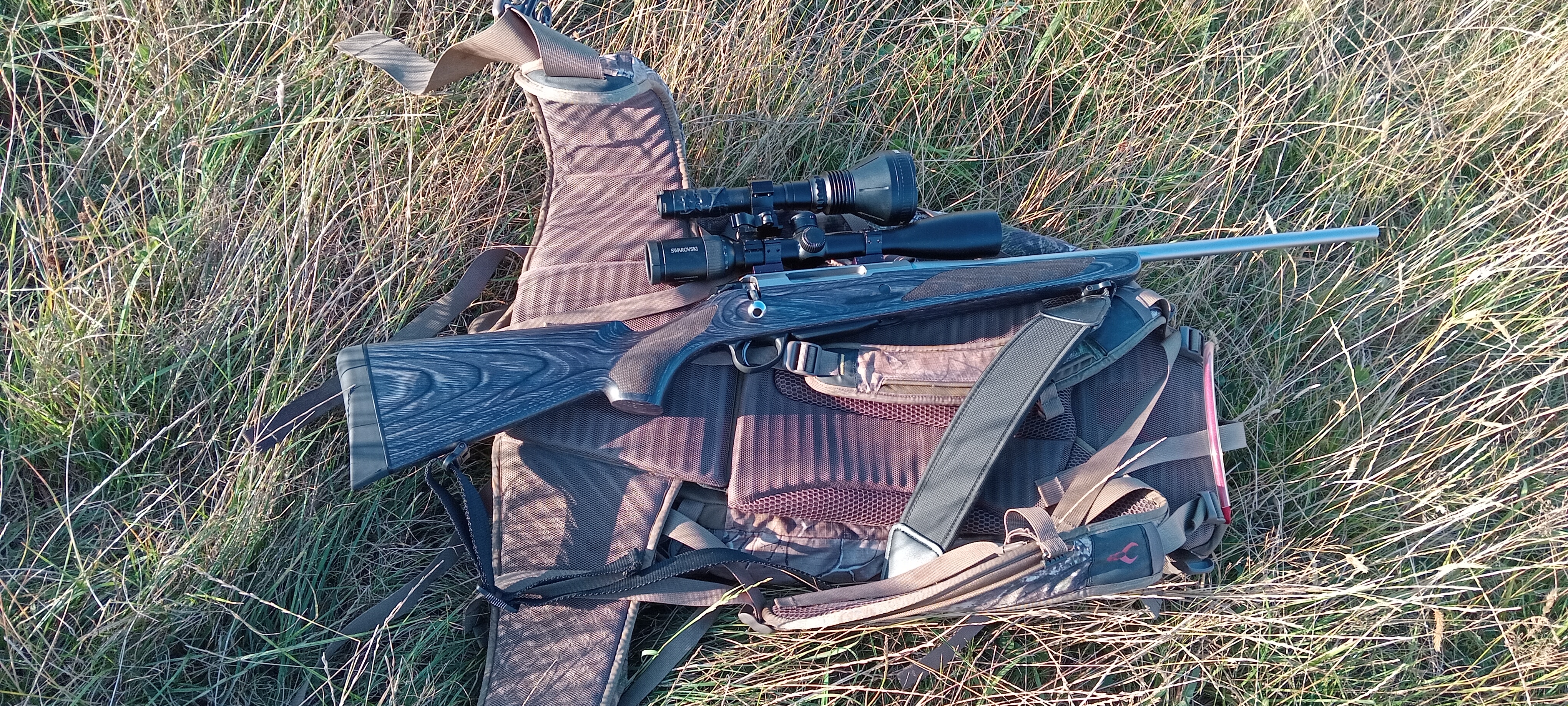
- Exceptional Mechanical Accuracy: Modern bolt-action rifles and AR-15 platforms chambered in .223 are inherently capable of sub-MOA (Minute of Angle) accuracy. This laser-like precision allows a skilled marksman to place a bullet precisely into a vital zone the size of a teacup.
- Platform Versatility and Economy: Ammunition is widely available, affordable, and inexpensive to practice with. Mastery of the rifle platform comes easier when a shooter can fire hundreds of rounds at the range without physical fatigue or high costs.
Frequently Asked Questions
Is the .223 Remington legal for deer hunting in all states?
No. Several states maintain minimum caliber restrictions—such as requiring a minimum of .24 caliber (6mm) or larger—which legally prohibits the use of the .223. Other states allow it provided the ammunition uses expanding bullets. Always verify current state game regulations before hunting.
What is the maximum ethical shooting distance for a .223 on whitetail?
Most experienced hunters recommend keeping shots under 100 to 150 yards. Beyond this distance, the bullet's velocity drops below the threshold required for reliable expansion, drastically reducing its terminal lethality.
Can I use standard full metal jacket (FMJ) military surplus ammo for deer?
Never use FMJ or "ball" ammunition for big game. FMJ bullets do not expand; they drill clean, narrow holes through tissue, resulting in slow, painful deaths and unrecovered animals. Always use heavy, premium bonded soft-point or monolithic copper hunting bullets.
What is the best barrel twist rate for hunting .223 loads?
A faster twist rate, such as 1:8 or 1:7, is ideal. It allows the rifle to stabilize heavier, longer hunting bullets (62 to 77 grains) that provide the necessary mass and sectional density for deep penetration on big game.
Where should I aim when hunting deer with a .223?
Aim exclusively for the vitals behind the front shoulder (lung shot) or a high shoulder shot if using a heavy monolithic copper bullet designed to break bone. Never take risky angled, quartering-to, or gut shots with a .223.
Conclusion and Final Recommendations
Using a .223 Remington for whitetail deer is entirely viable, but it is an expert's tool wrapped in an accessible package. Success depends entirely on discipline: selecting heavy, premium copper or bonded hunting ammunition, verifying that your rifle's twist rate stabilizes the round, restricting shots to close ranges under 150 yards, and waiting for an absolute broadside vital-zone presentation. For hunters willing to practice restraint and marksmanship, the .223 provides a low-recoil, highly accurate option for harvesting venison ethically.