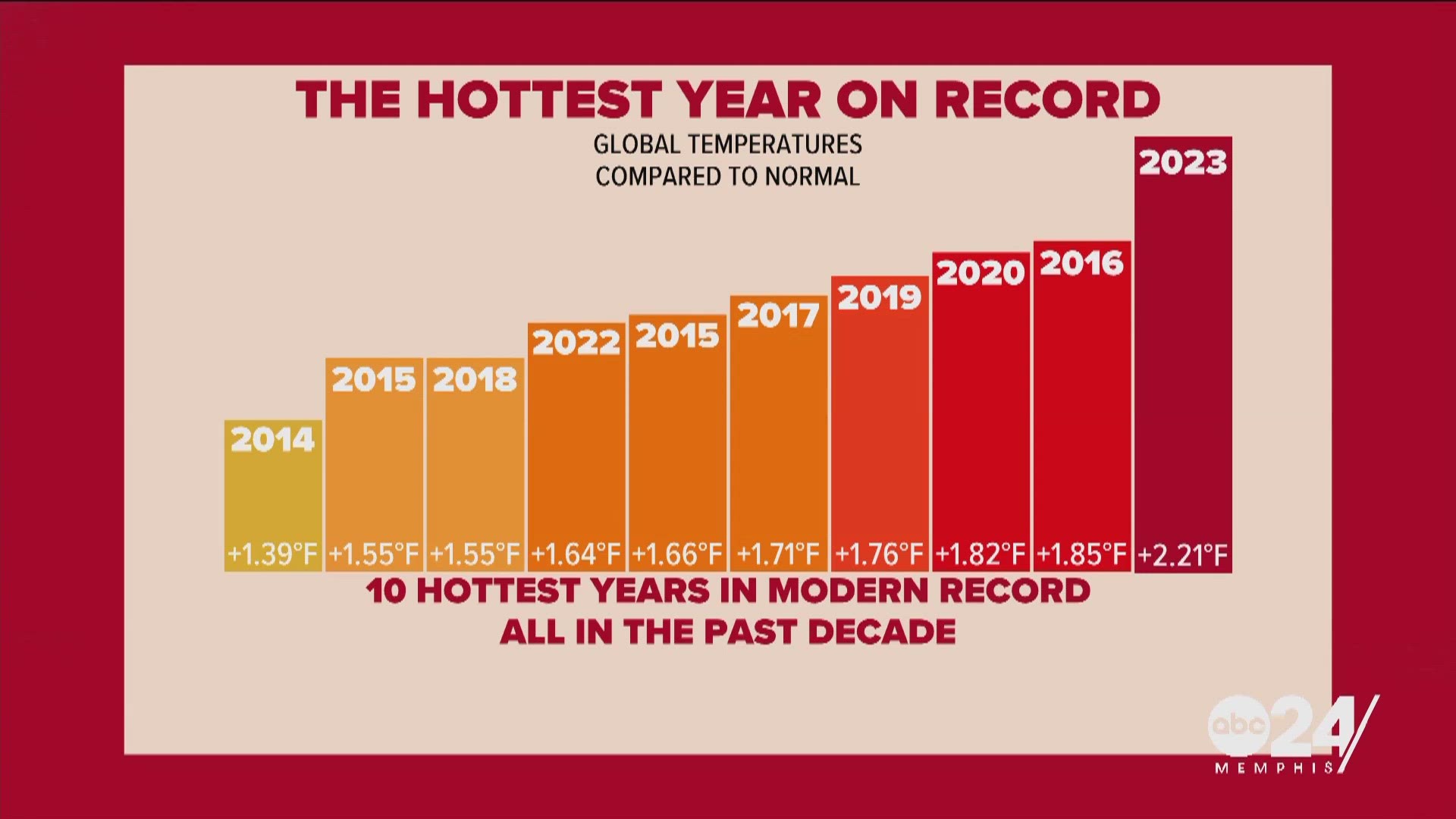
The year 2024 was officially confirmed as the hottest year on record, surpassing all previous temperature benchmarks since global record-keeping began in the mid-19th century. This milestone in climate data carries profound implications for community infrastructure, public health, local economies, and the long-term resilience of urban and rural settlements facing unprecedented environmental stressors.
The Scientific Context of Record-Breaking Heat
To understand why 2024 marked a pivotal moment in climatology, it is essential to look at the metrics provided by major climate monitoring organizations, including the Copernicus Climate Change Service and the National Oceanic and Atmospheric Administration (NOAA). The year was characterized by consistent monthly temperature anomalies where global averages remained significantly higher than the 1991–2020 reference period.
This heat was not merely a singular atmospheric event but the result of a convergence between long-term anthropogenic warming—largely driven by greenhouse gas emissions—and short-term natural variability, such as the El Niño Southern Oscillation (ENSO). When these forces combined, the result was a systemic elevation of global surface temperatures that pushed ecosystems and social systems toward their operational limits.
How Global Records Are Validated
Climate records are not determined by a single thermometer; they are the result of data synthesis from thousands of weather stations, ocean buoys, and satellite remote sensing platforms. Scientists verify these findings through a process called "homogenization," which accounts for changes in equipment, urban heat island effects (where cities become significantly warmer than surrounding rural areas), and geographical sampling bias. By 2026, the scientific consensus remains absolute: the warming observed in 2024 was statistically significant and outside the bounds of historical climate variation.
Direct Impacts on Community Infrastructure
The physical infrastructure of our communities—roads, power grids, and water systems—was engineered under the assumption of relatively stable historical weather patterns. The extreme heat of 2024 tested these systems, revealing structural vulnerabilities that now require urgent attention.
Power Grid Strain and Energy Demand
As temperatures hit record highs, energy demand for air conditioning and cooling surged, creating a "perfect storm" for power grids. When ambient temperatures remain high overnight, electrical transformers struggle to dissipate heat, leading to increased failure rates. Communities experienced a rise in "rolling blackouts" or precautionary load shedding, as utility providers struggled to balance the extreme load with the decreasing efficiency of power delivery hardware at high temperatures.
Transportation and Public Works
Heat does not just affect the air; it affects the materials used to build our world. In 2024, cities observed increased buckling in concrete pavements and the "bleeding" of asphalt on roads, which can lead to rapid degradation and safety hazards. Public transportation systems, particularly rail, faced speed restrictions because steel rails expand in extreme heat, risking "sun kinks"—a dangerous warping that can cause derailments.
Public Health and Social Equity
Perhaps the most visceral impact of 2024’s heat was felt in public health. Heat is often called a "silent killer" because its effects are cumulative and disproportionately affect vulnerable populations.
Health Vulnerabilities
Extreme heat exacerbates underlying cardiovascular and respiratory conditions. During the peak heat periods of 2024, emergency rooms reported spikes in heat-related illnesses, ranging from heat exhaustion to severe heatstroke. The physiological burden of heat is compounded by "nighttime heat," where temperatures fail to drop low enough for the human body to recover effectively from the day's stress.
The Role of Urban Planning
The "Urban Heat Island" (UHI) effect became a central topic of community discussion in 2024. Neighborhoods with dense concentrations of concrete, asphalt, and minimal tree canopy experienced temperatures several degrees higher than leafier, more permeable suburbs. This highlighted a significant issue of social equity: lower-income areas often lack the green infrastructure and energy-efficient building standards required to mitigate the heat, making the impact of record-breaking years a matter of socioeconomic disparity as much as meteorology.
Comparative Impact Assessment
The following table summarizes the different sectors impacted by the 2024 temperature anomalies and the nature of the challenges faced by local communities.
| Sector | Primary Challenge | Long-term Consequence |
|---|---|---|
| Power Infrastructure | Transformer failure & peak load | Need for grid hardening & decentralized energy |
| Public Health | Heat-related morbidity | Increased demand for emergency services |
| Agriculture | Crop yield reduction & soil moisture loss | Increased reliance on drought-resistant crops |
| Water Management | Evaporation & reservoir depletion | Policy shifts toward water rationing |
| Transportation | Rail warping & road surface damage | Higher maintenance costs & safety retrofits |
Economic Consequences and Adaptation Costs
The economic reality of 2024 is still being processed as of 2026. The costs of extreme heat are often hidden but substantial. Increased energy bills for households and businesses drain discretionary income, while agricultural output fluctuations caused by heatwaves impact food prices.
Furthermore, local governments have faced rising costs for emergency management, hospital staffing, and the repair of climate-damaged infrastructure. This has forced municipalities to reconsider their long-term capital improvement plans. Many cities are now prioritizing the installation of "cool roofs," the expansion of urban canopy cover, and the development of mandatory cooling centers as standard community infrastructure rather than temporary solutions.
Strategies for Building Resilient Communities
Looking back at 2024, the primary lesson learned is that climate resilience cannot be reactive. It requires a multi-faceted approach to ensure that future heat records do not result in total system failure.
- Green Infrastructure: Planting trees is one of the most effective ways to lower localized temperatures. A mature canopy can reduce surface temperatures by as much as 10 to 15 degrees Celsius.
- Building Efficiency: Updating building codes to require higher levels of insulation and reflective materials can reduce the internal heat burden, lowering reliance on mechanical cooling.
- Community Cooling Networks: Establishing a network of climate-resilient community centers—equipped with backup power and clean air filtration—is essential for protecting those without home air conditioning.
- Data-Driven Planning: Utilizing local heat-mapping data to identify the most vulnerable blocks within a city allows for targeted interventions, such as high-albedo (reflective) paint applications on streets or rapid shade-structure installation.
Frequently Asked Questions
Why was 2024 specifically the hottest year on record? 2024 was the hottest because it combined the long-term upward trend of global warming with the tail end of a strong El Niño event, which typically adds extra heat to the global climate system.
How is a "record-breaking" year calculated? Climate scientists use "anomaly" measurements. They compare the global average temperature of a specific year to a long-term baseline (usually a 30-year average). When the anomaly is higher than all previous years in the reliable instrumental record, a new record is established.
Does the 2024 heat record mean every future year will be hotter? Not necessarily every single year. Climate change is a trend, not a straight line. There will be cooler years due to natural variability, but the overall trend line is consistently pointing upward.
What is the urban heat island effect? It is the phenomenon where urban areas become significantly warmer than their rural surroundings due to human activity, the lack of vegetation, and the heat-trapping properties of materials like asphalt and concrete.
How can I protect my home from future heat extremes? Prioritize improving your home's thermal envelope through better attic insulation, installing energy-efficient windows, and utilizing external shading devices to prevent solar heat gain.
Next Steps for Residents and Policy Makers
The 2024 record should be viewed as a clear signal for immediate action. For residents, the next step involves an audit of personal living spaces to determine cooling efficiency. For local policy makers, the focus must shift from disaster response to systemic adaptation. By investing in green space, upgrading aging electrical grids, and redesigning urban surfaces to reflect rather than absorb solar radiation, communities can reduce the dangerous impacts of the warming trends observed in 2024. The goal for 2026 and beyond is to transition from merely observing the records to fundamentally altering our built environment to withstand them.