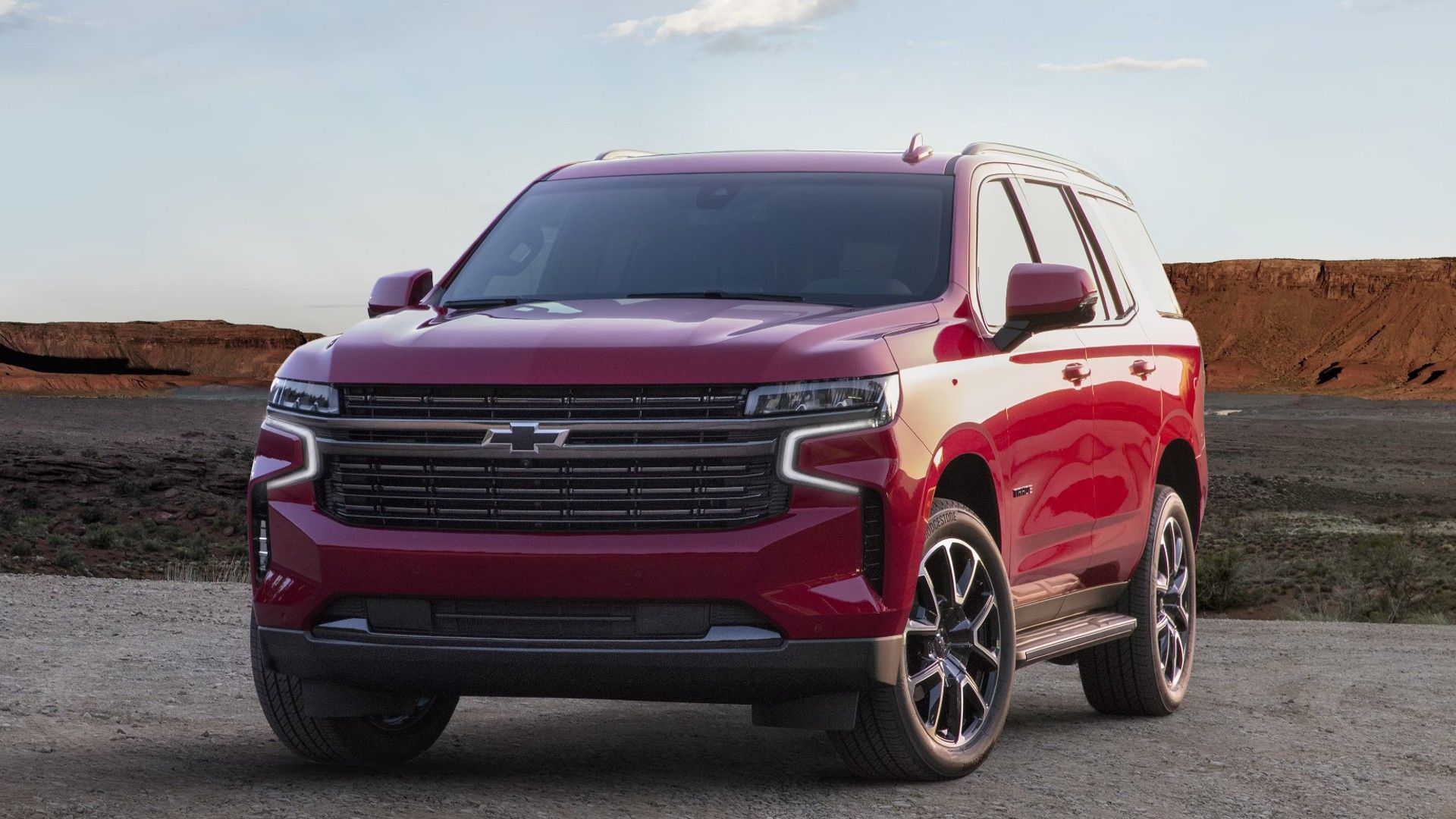
The 2020 Chevrolet Tahoe achieves an EPA-estimated fuel economy ranging from 15 mpg in the city to 22 or 23 mpg on the highway, depending on whether you select the standard 5.3-liter V8 or the larger 6.2-liter V8 engine, and whether your model is configured with rear-wheel drive (RWD) or four-wheel drive (4WD).
As a staple of the traditional full-size sport utility vehicle segment, the 2020 Chevrolet Tahoe balances immense towing capacity, passenger accommodation, and cargo volume against the undeniable realities of moving a multi-thousand-pound body-on-frame platform. For prospective buyers, understanding the real-world fuel economy of this vehicle requires examining its powertrain configurations, aerodynamics, driving dynamics, and how it compares to both its contemporary competitors and subsequent generations. This guide provides a comprehensive breakdown of the 2020 Tahoe mpg ratings, examining how engine choices, drivetrain options, and operational habits influence fuel consumption in a full-size SUV.
Powertrain Options and Official EPA Ratings
The fuel efficiency of the 2020 Chevrolet Tahoe is governed primarily by its two available engine choices. General Motors engineered this model year with two robust small-block V8 powerplants designed for heavy-duty hauling and highway cruising rather than hyper-miling.
The 5.3-Liter EcoTec3 V8 Engine
The standard engine for the 2020 Tahoe is the 5.3-liter EcoTec3 V8, which produces 355 horsepower and 383 lb-ft of torque. This engine utilizes Direct Injection, Active Fuel Management (AFM), and continuously variable valve timing to optimize combustion efficiency. AFM allows the engine to deactivate up to four cylinders under light-load conditions, such as cruising on flat highways, to conserve fuel.
- Rear-Wheel Drive (RWD): EPA-estimated at 15 mpg city / 22 mpg highway / 18 mpg combined.
- Four-Wheel Drive (4WD): EPA-estimated at 15 mpg city / 21 mpg highway / 17 mpg combined.
The 6.2-Liter EcoTec3 V8 Engine
Available exclusively on the top-tier Premier trim—frequently paired with the RST Performance Package—is the larger 6.2-liter EcoTec3 V8. This powerhouse generates 420 horsepower and 460 lb-ft of torque. It is mated to a 10-speed automatic transmission rather than the 6-speed automatic found in the 5.3-liter variants. Despite its larger displacement and higher output, the 10-speed transmission helps mitigate fuel penalties by keeping the engine in its optimal power band across a wider range of speeds.
- Rear-Wheel Drive (RWD): EPA-estimated at 14 mpg city / 23 mpg highway / 17 mpg combined.
- Four-Wheel Drive (4WD): EPA-estimated at 14 mpg city / 22 mpg highway / 16 mpg combined.
| Engine Option | Drivetrain | Transmission | City MPG | Highway MPG | Combined MPG |
|---|---|---|---|---|---|
| 5.3L V8 | RWD | 6-Speed Automatic | 15 | 22 | 18 |
| 5.3L V8 | 4WD | 6-Speed Automatic | 15 | 21 | 17 |
| 6.2L V8 | RWD | 10-Speed Automatic | 14 | 23 | 17 |
| 6.2L V8 | 4WD | 10-Speed Automatic | 14 | 22 | 16 |
Real-World Driving Dynamics and Fuel Consumption
While EPA laboratory tests provide a standardized baseline, real-world fuel economy for a full-size SUV like the 2020 Tahoe frequently varies based on environmental conditions, payload, and driving style. Body-on-frame SUVs have high coefficients of drag and substantial curb weights—ranging from approximately 5,300 pounds to over 5,800 pounds depending on equipment.
In urban and suburban driving environments, stop-and-go traffic presents the greatest challenge to the Tahoe's efficiency. Moving a heavy chassis from a complete stop requires significant energy, causing city fuel economy to hover around the 13 to 15 mpg mark. Drivers who frequently idle or accelerate aggressively will see real-world figures drop toward the lower end of that spectrum.
Conversely, highway driving yields much more favorable results. At sustained cruising speeds, the aerodynamics take effect, and cylinder deactivation systems engage seamlessly. Many owners report achieving or slightly exceeding the EPA highway estimates of 21 to 23 mpg during long, flat interstate trips, provided speeds remain moderate. Maintaining speeds above 75 mph significantly increases aerodynamic drag, counteracting the efficiency gains of high gear ratios.
The Impact of Towing and Cargo on MPG
One of the primary reasons buyers choose a full-size body-on-frame SUV like the 2020 Tahoe is its towing capability. When properly equipped, the Tahoe can tow up to 8,600 pounds (for RWD 5.3L models). However, utilizing this capability has an immediate and pronounced impact on fuel economy.
When towing a heavy enclosed trailer, boat, or camper, the engine operates under a much higher load, which keeps all cylinders active continuously and forces the transmission to downshift frequently to maintain speed. Under heavy towing conditions, fuel efficiency often drops into the single digits—typically ranging between 8 and 12 mpg, depending on the weight, frontal area of the trailer, and terrain.
Similarly, hauling a full cabin of passengers alongside cargo in the rear storage area increases the vehicle's mass. While incremental weight has a less dramatic effect on fuel consumption than aerodynamic drag or trailer weight, it still requires additional energy to accelerate, lowering overall miles per gallon during road trips.
Strategies to Optimize Fuel Economy in a 2020 Tahoe
Although physical constraints limit how efficient a large V8 SUV can be, drivers can employ several operational and maintenance practices to maximize their fuel economy:
- Tire Pressure Maintenance: Keeping tires inflated to the manufacturer's recommended PSI reduces rolling resistance. Under-inflated tires force the engine to work harder to maintain momentum.
- Weight Reduction: Removing unnecessary cargo, roof racks, or heavy accessories when they are not in use minimizes dead weight.
- Smooth Acceleration and Anticipation: Gradual acceleration from stops and anticipating traffic flow to avoid hard braking helps preserve kinetic energy.
- Routine Maintenance: Ensuring clean air filters, fresh spark plugs, and clean fuel injectors keeps the engine running at peak thermal and volumetric efficiency.
- Limiting Excessive Idling: Modern V8 engines consume notable amounts of fuel while idling. Turning off the vehicle during extended stops reduces wasted fuel.
Comparing the 2020 Tahoe to Competitors and Successors
To contextualize the 2020 Tahoe's fuel efficiency, it is helpful to examine how it compares to other full-size utility vehicles of its era and subsequent generations.
Contemporary Competitors
During the 2020 model year, the primary rival to the Chevrolet Tahoe was the Ford Expedition. The Expedition utilized a 3.5-liter EcoBoost twin-turbo V6 engine paired with a 10-speed automatic transmission. This turbocharged V6 configuration typically yielded slightly higher EPA ratings, achieving up to 17 mpg city and 24 mpg highway in RWD configurations. While the Ford offered better paper efficiency, many truck traditionalists preferred the low-end torque delivery and traditional sound of GM's small-block V8 engines.
Generational Shifts
The 2020 model year marked the final year of the fourth-generation Tahoe. In 2021, Chevrolet introduced a completely redesigned fifth-generation Tahoe. This newer generation introduced an independent rear suspension, increased interior room, and—crucially for fuel economy—the addition of a 3.0-liter Duramax turbocharged inline-six diesel engine. The diesel variant drastically altered the full-size SUV fuel economy landscape, offering EPA estimates reaching up to 21 mpg city and 28 mpg highway, significantly outperforming any gasoline V8 configuration from the 2020 model year.
Frequently Asked Questions
What is the actual fuel tank capacity of a 2020 Chevrolet Tahoe?
The 2020 Chevrolet Tahoe is equipped with a 26.0-gallon fuel tank. Combined with its average combined fuel economy of 16 to 18 mpg, drivers can expect a theoretical driving range of roughly 400 to 450 miles on a single tank of gasoline during mixed driving conditions.
Does the 2020 Tahoe require premium fuel?
No, both the 5.3-liter and 6.2-liter V8 engines in the 2020 Chevrolet Tahoe are designed to run on regular unleaded gasoline (87 octane). While the 6.2-liter engine can utilize premium fuel (91 octane or higher) to achieve its maximum advertised horsepower output, regular gasoline is fully acceptable and will not harm the motor.
How does Active Fuel Management affect fuel economy?
Active Fuel Management (AFM) deactivates four of the eight cylinders when power demand is low. In real-world driving, this technology can improve fuel efficiency by roughly 5% to 7% during steady highway cruising by reducing pumping losses within the engine cylinders that are temporarily rested.
Is the 6.2L V8 less efficient than the 5.3L V8?
In city driving, the 6.2-liter V8 is slightly less efficient (14 mpg versus 15 mpg). However, on the highway, models with the 6.2-liter engine benefit from a standard 10-speed automatic transmission, which allows them to achieve highway fuel economy ratings comparable to or slightly exceeding the 6.2-speed automatic models paired with the 5.3-liter engine.
Can I install aftermarket modifications to improve my 2020 Tahoe's MPG?
While aftermarket cold-air intakes, exhaust systems, or engine tuners are often marketed as efficiency enhancers, their real-world impact on a heavy vehicle like the Tahoe is usually negligible. The best ways to maintain optimal fuel economy are adhering to strict maintenance schedules and modifying driving habits.
Conclusion and Final Recommendation
The 2020 Chevrolet Tahoe delivers fuel efficiency that aligns with the traditional expectations of a full-size, body-on-frame utility vehicle powered by a displacement-focused V8 engine. While 15 mpg city and 22 mpg highway will not rival modern hybrid or compact crossovers, the sacrifice in fuel economy is the direct cost of exceptional towing capacity, three-row passenger accommodation, and rugged capability. Prospective buyers evaluating a used 2020 Tahoe should prioritize matching their intended use—whether daily commuting, family road trips, or heavy towing—with the appropriate engine and drivetrain combination to ensure satisfaction with its operational costs.