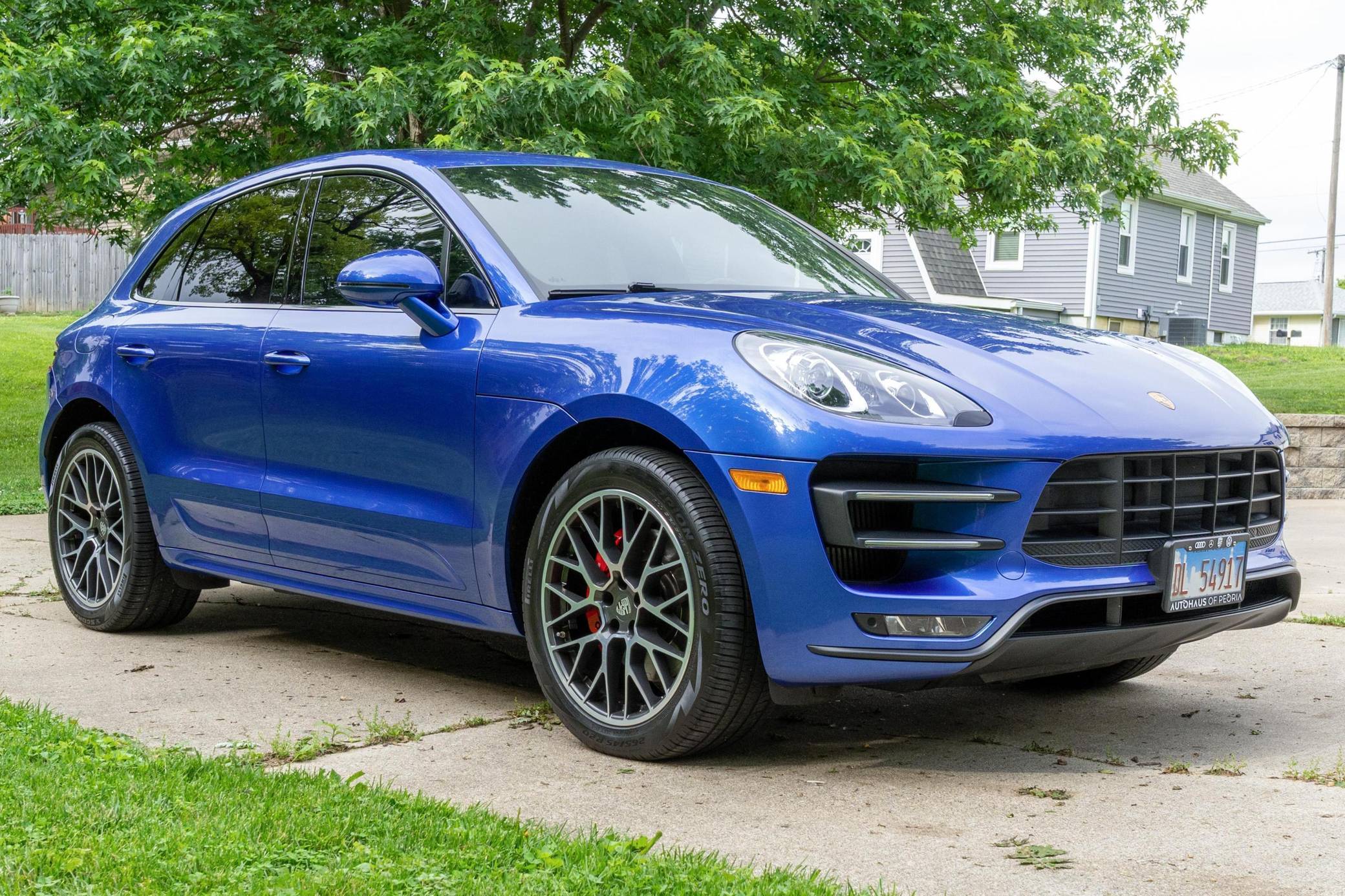
The 2018 Porsche Macan Turbo delivers a factory-stated 0-60 mph time of 4.6 seconds, which drops to 4.4 seconds when equipped with the optional Sport Chrono Package. This high-performance compact luxury SUV redefined segment expectations by pairing track-inspired acceleration with the daily utility of a crossover, remaining a benchmark for handling precision even years after its release.
Understanding the 2018 Porsche Macan Turbo Performance Architecture
To appreciate the 0-60 mph capabilities of the 2018 Porsche Macan Turbo, one must look beneath the sheet metal at the sophisticated powertrain engineering that Porsche employed. At the heart of this vehicle lies a 3.6-liter twin-turbocharged V6 engine. Unlike many forced-induction setups of that era that suffered from noticeable turbo lag, the Macan Turbo’s engine is tuned to deliver its peak torque—398 lb-ft—across a wide plateau, starting from as low as 1,350 RPM.
The engine produces 400 horsepower (hp) in its standard configuration. This power is routed through a seven-speed Porsche Doppelkupplung (PDK) dual-clutch transmission. The PDK is widely considered one of the most responsive transmissions in the automotive industry; it provides lightning-fast gear changes that are physically impossible to replicate with a manual gearbox or a traditional torque-converter automatic. By keeping the engine within its optimal power band during acceleration, the PDK is the primary enabler of the vehicle's impressive launch statistics.
The Role of the Sport Chrono Package
The 2018 Macan Turbo is often encountered with the Sport Chrono Package, a factory option that significantly alters the vehicle’s performance profile. While the standard vehicle is exceptionally quick, the Sport Chrono Package introduces specific hardware and software calibrations designed to maximize acceleration.
The most notable feature is "Launch Control." When this mode is engaged, the vehicle optimizes the engagement of the clutches and the ignition timing to provide the most aggressive start possible from a standstill. Without this system, the vehicle remains quick but lacks the instant, violent jump off the line that characterizes high-performance Porsche models. The package also adds the "Sport Plus" button, which sharpens the throttle response, modifies the transmission shift points, and firms up the Porsche Active Suspension Management (PASM) system to minimize squat during acceleration.
Engineering Dynamics Beyond the Stoplight
While the 0-60 sprint is a common metric for performance, it only tells part of the story regarding the Macan Turbo’s identity. The vehicle’s performance is defined by its standard All-Wheel Drive (AWD) system, known as Porsche Traction Management (PTM). PTM is designed to prioritize rear-wheel-drive characteristics, shifting power to the front axle only when necessary to maintain traction.
This rear-biased setup ensures that when the driver mashes the accelerator, the weight transfer onto the rear tires maximizes grip. Furthermore, the 2018 model features a sophisticated chassis control system that balances the high center of gravity typical of an SUV with the stiff, communicative suspension of a sports car. For owners, this means the 0-60 performance is not just a straight-line trick; it is a stable, repeatable event that remains consistent regardless of the driver's experience level, provided the tires are at operating temperature.
Comparative Performance Analysis
When assessing the 2018 Porsche Macan Turbo, it is helpful to place its capabilities within the context of the luxury compact SUV market of its time. While newer performance SUVs have since pushed acceleration times even lower, the 2018 Macan Turbo remains a formidable performer when compared to its peers.
| Vehicle Model | Engine | 0-60 mph Time (Seconds) | Notable Characteristic |
|---|---|---|---|
| 2018 Porsche Macan Turbo | 3.6L Twin-Turbo V6 | 4.4–4.6 | Benchmark handling |
| 2018 Audi SQ5 | 3.0L Turbo V6 | 5.1 | Refined daily driver |
| 2018 BMW X3 M40i | 3.0L Turbo I6 | 4.6 | Linear power delivery |
| 2018 Mercedes-AMG GLC 63 | 4.0L Twin-Turbo V8 | 3.8 | Higher raw horsepower |
As shown in the table above, the Macan Turbo sits in a "sweet spot" of performance. While the AMG GLC 63 offers a V8 and faster acceleration, it comes at the cost of fuel efficiency and front-heavy weight distribution. The Macan Turbo manages to bridge the gap between pure utility and sports car agility with a level of mechanical refinement that few competitors could match in 2018.
Maintenance Considerations for Consistent Performance
Achieving the advertised 0-60 performance requires the vehicle to be in peak mechanical condition. Over time, performance degradation in the Macan Turbo is almost exclusively linked to deferred maintenance. Owners should pay close attention to several key areas:
- Tire Integrity: The Macan Turbo relies heavily on its mechanical grip. Using tires with improper tread depth or incorrect rubber compounds will result in significantly slower launch times due to wheel spin. High-performance summer tires are essential for achieving the advertised 4.4-second sprint.
- Transmission Fluid: The PDK transmission is a highly sensitive piece of engineering. Failure to replace the transmission fluid at the manufacturer's suggested intervals can lead to clutch slippage, which will manifest as sluggish gear changes and a decrease in straight-line performance.
- Turbocharger Health: The two turbochargers are subject to intense heat cycles. Using high-quality synthetic oil and ensuring the engine has reached operating temperature before engaging in aggressive acceleration is critical to preserving the internal seals and bearings of the turbos.
- Software Updates: While the 2018 model is considered a "mature" platform by 2026, authorized Porsche service centers occasionally offer software refinements for the engine management and transmission control modules that can smooth out power delivery.
Common Misconceptions Regarding Performance
One frequent point of confusion for prospective owners or enthusiasts involves the difference between the standard Macan Turbo and the "Performance Package" trim that was available for the 2018 model year. The Performance Package bumped the engine output to 440 hp and shaved the 0-60 time down to 4.2 seconds. It is easy to mistake a standard Macan Turbo for the Performance Package trim if one is looking at the vehicle from a distance.
Additionally, drivers often underestimate the influence of ambient temperature on acceleration. Forced-induction engines like the one in the Macan Turbo are sensitive to intake air temperature. On a hot summer day, the engine control unit (ECU) may pull timing to prevent detonation, which can lead to a noticeable drop in acceleration compared to a cool, crisp morning. This is not a mechanical fault, but a byproduct of the engine's protective mapping.
Frequently Asked Questions
Does the 2018 Porsche Macan Turbo require premium fuel? Yes, the Macan Turbo requires 93 octane (or the highest available) premium unleaded gasoline. The high compression ratio and forced-induction system are calibrated specifically for high-octane fuel to prevent "knocking" or pre-ignition, which can cause internal engine damage and reduce performance.
How does the weight of the vehicle affect its acceleration? The Macan Turbo is relatively heavy, weighing in at over 4,000 pounds. However, this weight is mitigated by the advanced AWD system and the torque-heavy powerband of the engine. The vehicle’s weight is effectively managed by the PASM system, which prevents excessive body roll and ensures that the power is applied to the pavement efficiently.
Is the Launch Control system harmful to the vehicle? Porsche engineered the Launch Control system to operate within the mechanical limits of the vehicle. While frequent use of any high-performance feature increases wear on components like the clutches and tires, using Launch Control is not inherently "harmful" provided the vehicle is maintained according to the service schedule.
Can the 0-60 time be improved with aftermarket modifications? Yes, aftermarket engine tuning (often called "ECU flashing") can increase horsepower and torque significantly, potentially bringing the 0-60 time below the 4-second mark. However, such modifications may void factory-backed extended warranties and can place additional stress on the transmission and drivetrain components not originally designed for that level of output.
What is the difference between the 2018 Macan Turbo and the 2018 Macan S? The Macan S utilizes a 3.0-liter V6 that produces significantly less power than the 3.6-liter twin-turbo unit found in the Turbo model. While both offer impressive handling, the Turbo model provides a distinct leap in straight-line speed, making it the preferred choice for those specifically prioritizing acceleration metrics.
Final Recommendation
The 2018 Porsche Macan Turbo remains a premier choice for those seeking a balance of SUV utility and sports car acceleration. If your primary goal is to maximize performance, ensure the vehicle you are considering is equipped with the Sport Chrono Package and has a comprehensive service history, particularly regarding the PDK transmission. Before committing to a purchase, request a pre-purchase inspection from a Porsche-specialized technician to verify the health of the turbochargers and the AWD system. For the enthusiast, this vehicle provides a driving experience that remains relevant even in the current 2026 automotive landscape.