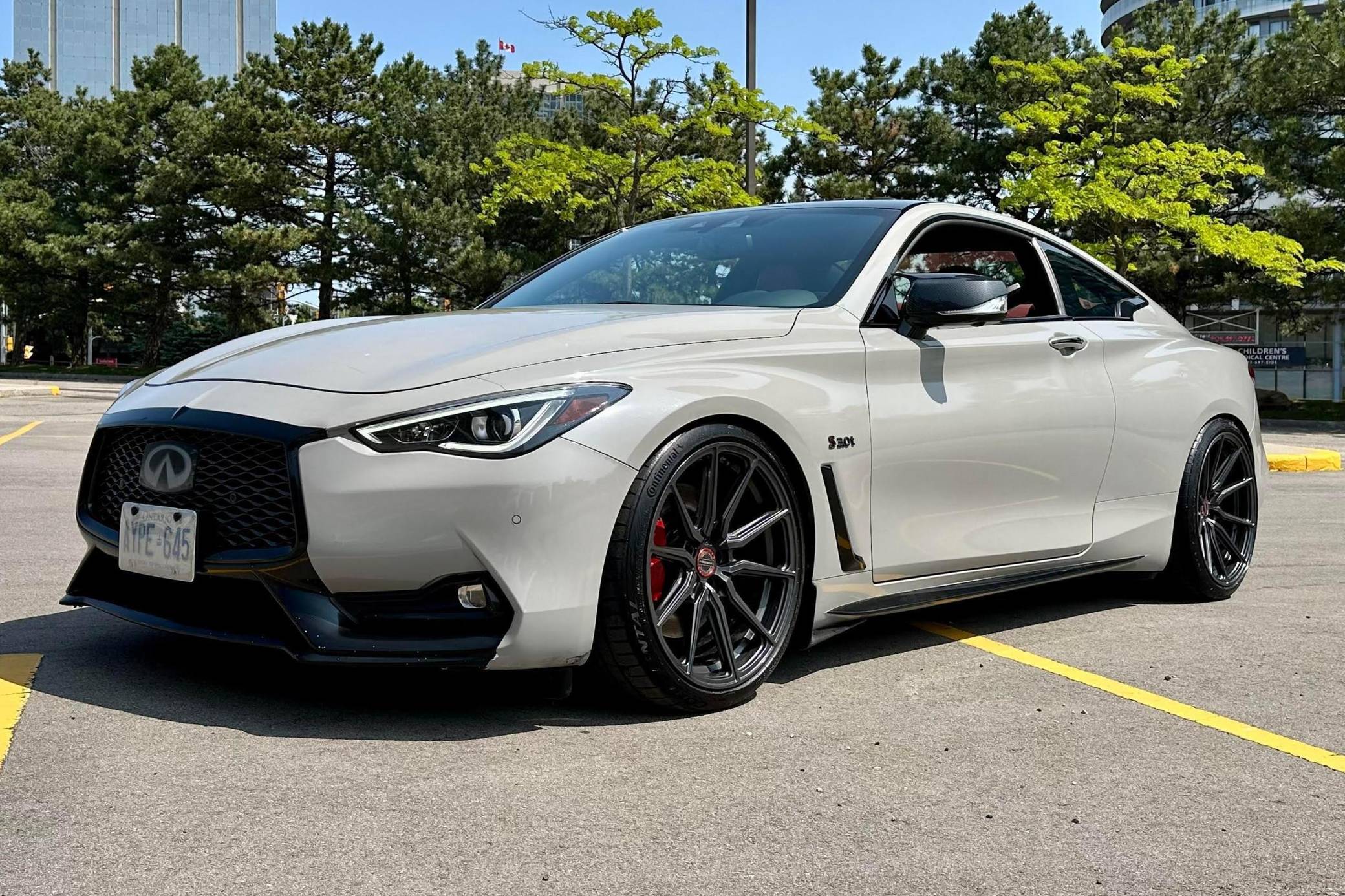
The 2017 Infiniti Q60 Red Sport 400 achieves 0–60 mph in 4.4 seconds with All-Wheel Drive (AWD) and 4.5 to 4.7 seconds in Rear-Wheel Drive (RWD) trim during independent instrumented testing. Powered by a twin-turbocharged 3.0-liter V6 engine generating 400 horsepower, its straight-line launch performance places it competitively alongside contemporary German luxury sport coupes.
0–60 MPH Acceleration Breakdown: Official vs. Real-World Testing
The standard acceleration benchmark for the 2017 Infiniti Q60 Red Sport 400 depends significantly on drivetrain configuration, tire traction, and ambient test conditions. While Infiniti advertised impressive response times, independent automotive publication testing revealed distinct differences between factory claims and street performance.
0–60 mph Acceleration Summary:
- AWD Model: 4.4 seconds (Best condition, brake-torqued launch)
- RWD Model: 4.5–4.7 seconds (Traction-limited off the line)
In optimal conditions on asphalt, the AWD variant accelerates from 0 to 60 mph in 4.4 seconds, covering the quarter-mile in approximately 12.8 seconds at 109 mph. The launch advantage stems from Infiniti's Intelligent All-Wheel Drive system, which can route up to 50 percent of available torque to the front axle when rear wheel slip occurs.
The RWD variant struggles to put its 350 lb-ft of torque down cleanly from a standing start. Without an option for a factory mechanical limited-slip differential in 2017, rear tire spin limits launch performance. Consequently, 0–60 mph sprint times for the RWD Red Sport cluster between 4.5 and 4.7 seconds, with quarter-mile runs finishing in 13.0 seconds at around 110 mph.
Key performance parameters impacting launch times include:
- Tire Compound and Temperature: Factory Dunlop SP Sport Maxx 050 run-flat tires lack the sticky compound necessary for peak off-the-line traction, particularly in cooler ambient temperatures.
- Transmission Brake-Torque Technique: Achieving the fastest 4.4-second sprint requires holding the foot brake while building engine speed to roughly 2,000–2,500 rpm before release, loading the turbochargers with boost pressure prior to launch.
- Electronic Stability Control (VDC): Leaving Vehicle Dynamic Control fully engaged results in throttle intervention during high-rpm launches, extending 0–60 times by 0.3 to 0.5 seconds.
VR30DDTT Engine Architecture: How the Power Is Made
At the heart of the 2017 Q60 Red Sport's 0–60 mph performance is the VR30DDTT engine, a 3.0-liter, twin-turbocharged, 60-degree V6 constructed from aluminum alloy. This engine superseded the naturally aspirated VQ-series engines, introducing high-pressure direct fuel injection and forced induction to compete directly with modern turbocharged powertrains.
VR30DDTT Core Engine Specs:
- Configuration: 3.0-Liter 60° V6 Twin-Turbo
- Horsepower: 400 hp @ 6,400 RPM
- Torque: 350 lb-ft @ 1,600–5,200 RPM
- Boost Pressure: 14.7 psi (Peak)
- Compression Ratio: 10.3:1
- Redline: 6,800 RPM
Turbocharger Optimization and Thermal Management
To extract 400 horsepower from a 3.0-liter displacement, Infiniti engineers integrated small-diameter turbochargers directly into the exhaust manifolds. This close proximity reduces exhaust gas travel distance, minimizing turbo lag and yielding immediate throttle response off the line.
The Red Sport trim specifically incorporates two key technical enhancements over the standard 300-horsepower VR30 variant:
- Optical Turbo Speed Sensors: These sensors monitor turbine rotation speeds in real-time, allowing the turbos to spin safely up to 220,000 rpm. This active tracking enables the engine to push maximum boost—up to 14.7 psi (compared to 9.5 psi on the 300-hp base version)—without risking overspeed damage.
- Dual Water-to-Air Intercoolers: To control intake air temperatures under high boost, two water-to-air charge coolers are integrated into the intake plenum. Separate electric water pumps circulate coolant through dedicated heat exchangers, maintaining dense, cool air charges during repeated 0–60 launches.
Variable Valve Timing and Fuel Delivery
The engine features an electronic intake valve timing system (e-VTC) driven by an electric motor rather than traditional oil-pressure solenoids. This design allows faster valve phase adjustments across cold starts and sudden acceleration events. Combined with a direct-injection fuel system operating at up to 200 bar (2,900 psi), fuel is atomized directly into the cylinder bowl for efficient combustion and a broad torque band stretching from 1,600 to 5,200 rpm.
Drivetrain and Transmission Mechanics
Transferring 400 horsepower to the pavement requires precise coordination between the transmission, electronic control modules, and differential assemblies.
7-Speed Automatic Transmission (JATCO JR710E/JR711E)
Every 2017 Q60 Red Sport 400 came equipped with a 7-speed electronically controlled automatic transmission featuring magnesium paddle shifters mounted to the steering column. A manual gearbox was not offered.
- Gear Ratios: First gear features a aggressive 4.923:1 ratio, designed to launch the vehicle's nearly two-ton curb weight quickly. Second (3.193:1) and third (2.042:1) gears keep the engine squarely within its maximum torque plateau (1,600–5,200 rpm) through the 0–60 threshold.
- Adaptive Shift Control: When switched to Sport or Sport+ mode, transmission logic increases throttle blip speed downshifts and holds gears higher into the powerband. Shift times, however, remain slower than dual-clutch alternatives found in European rivals, which slightly retards absolute acceleration performance.
ATTESA E-TS All-Wheel Drive vs. Rear-Wheel Drive Systems
Infiniti's Intelligent All-Wheel Drive utilizes an electro-magnetic clutch within the transfer case to manage torque distribution. Under standard driving conditions, 100 percent of torque is sent to the rear wheels to preserve classic sports coupe handling characteristics. When front-wheel speed sensors detect slip during hard launches, the system can dynamically divert up to 50 percent of available power to the front axle.
Torque Split Characteristics (AWD Model):
- Standard Launch / Steady Cruising: 0% Front / 100% Rear
- Hard Launch / Wheel Slip Detected: Up to 50% Front / 50% Rear
One key mechanical limitation of the factory 2017 Q60 Red Sport was the absence of a mechanical limited-slip rear differential (LSD). Instead, Infiniti utilized Active Trace Control, a system that uses the ABS and vehicle stability sensors to selectively drag the inside rear brake during hard cornering or open-differential wheelspin. While effective for everyday road driving, this brake-based system generates thermal buildup under continuous hard acceleration runs.
Technical Specifications and Competitor Benchmark
To understand where the 2017 Infiniti Q60 Red Sport stands performance-wise, compare its metrics against key contemporary luxury sport coupes from the 2017 model year:
| Vehicle Model | Engine / Displacement | Output (HP / Torque) | 0–60 MPH Time (AWD/RWD) | 1/4 Mile Performance | Curb Weight | Drivetrain Layout |
|---|---|---|---|---|---|---|
| 2017 Infiniti Q60 Red Sport 400 | 3.0L Twin-Turbo V6 | 400 hp / 350 lb-ft | 4.4s (AWD) / 4.6s (RWD) | 12.8s @ 109 mph | 4,023 lbs (AWD) / 3,866 lbs (RWD) | Front-Engine, RWD / AWD |
| 2017 BMW 440i xDrive Coupe | 3.0L Single Turbo Inline-6 | 320 hp / 330 lb-ft | 4.4s (AWD) | 13.0s @ 106 mph | 3,825 lbs | Front-Engine, AWD |
| 2017 Audi S5 Coupe | 3.0L Single Turbo V6 | 354 hp / 369 lb-ft | 4.3s (AWD) | 12.8s @ 107 mph | 3,836 lbs | Front-Engine, AWD |
| 2017 Mercedes-AMG C43 Coupe | 3.0L Twin-Turbo V6 | 362 hp / 384 lb-ft | 4.1s (AWD) | 12.7s @ 110 mph | 3,900 lbs | Front-Engine, AWD |
| 2017 Lexus RC F | 5.0L Naturally Aspirated V8 | 467 hp / 389 lb-ft | 4.4s (RWD) | 12.8s @ 112 mph | 3,958 lbs | Front-Engine, RWD |
Key Takeaways from the Data
- Horsepower Superiority vs. Real-World Acceleration: Despite generating more horsepower (400 hp) than the BMW 440i (320 hp) and Audi S5 (354 hp), the Q60 Red Sport's heavier curb weight and slower shifting 7-speed automatic yield similar 0–60 mph acceleration times.
- Power-to-Weight Factor: The AWD Red Sport tips the scales at 4,023 lbs, giving it a power-to-weight ratio of approximately 10.05 lbs per horsepower. By contrast, lighter rivals maximize launch traction through rapid-shifting 8-speed or dual-clutch transmissions.
Chassis Dynamics, Steering, and Braking Systems
Acceleration velocity must be balanced by vehicle chassis control, braking power, and handling systems. The Q60 Red Sport integrated several advanced dynamic control systems.
Dynamic Digital Suspension (DDS)
The Red Sport 400 came standard with electronic adjustable dampening. Using continuous road feedback sensors, the Dynamic Digital Suspension alters shock valve dampening rates instantly.
- Standard Mode: Emphasizes compliance and ride comfort over uneven pavement.
- Sport / Sport+ Modes: Stiffens rebound and compression dampening, reducing body roll and fore-aft pitch during hard 0–60 launches and emergency braking maneuvers.
Steering Systems: DAS 2.0 vs. Standard Rack-and-Pinion
Infiniti offered two distinct steering setups on the 2017 Q60 Red Sport:
- Standard Electric Power Steering (EPS): A conventional, rack-mounted electronic power-assisted setup offering direct, mechanical road feedback.
- Direct Adaptive Steering (DAS 2.0): Infiniti’s second-generation steer-by-wire system. DAS eliminates a physical mechanical link between the steering wheel and road wheels under normal driving conditions, translating driver input via electronic control units (ECUs). While fast and customizable, some performance enthusiasts noted that DAS reduced tactile road feedback during aggressive maneuvers.
Braking Hardware
To bring a 4,000-pound vehicle down from speed safely, Infiniti equipped the Red Sport 400 with upgraded braking hardware:
- Front Brakes: 4-piston opposed red-painted calipers clamping on 14.0-inch ventilated iron rotors.
- Rear Brakes: 2-piston opposed red-painted calipers clamping on 13.8-inch ventilated iron rotors.
- 60–0 MPH Stopping Distance: Approximately 112 feet when equipped with summer performance tires.
Tunability and Aftermarket Acceleration Potential
The VR30DDTT platform is widely recognized for its high tuning headroom. Owners seeking faster 0–60 mph acceleration times often turn to basic bolt-on modifications to unlock the engine's latent capacity.
Common Modification Stages for VR30DDTT:
- Stage 1 (ECU Flash + High-Flow Drop-In Filters): ~430–450 WHP / 0–60: ~3.8–4.0s (AWD)
- Stage 2 (ECU Flash + Lower Downpipes + Heat Exchanger): ~470–500 WHP / 0–60: ~3.5–3.7s (AWD)
Essential Upgrades for Enhanced Acceleration
- Engine Control Unit (ECU) Calibration: Custom tunes via software platforms like EcuTek recalibrate boost targets, ignition timing, and fuel maps. Increasing boost from the factory 14.7 psi to roughly 17–18 psi pushes wheel horsepower beyond 440 whp without internal mechanical revisions.
- Auxiliary Heat Exchanger Upgrades: Because the VR30 relies on water-to-air charge cooling, ambient temperatures rapidly heat-soak the stock cooling system after 2-3 consecutive 0–60 mph runs. Installing a larger aftermarket heat exchanger prevents power output degradation caused by ECU heat-protection timing retard.
- Lower Downpipes: Replacing restrictive factory catalyst sections behind the turbochargers decreases backpressure, allowing the turbos to spool faster and lowering overall exhaust gas temperatures (EGTs).
- Sticky Tire Compounds: Upgrading from factory run-flat tires to high-performance summer tires (e.g., Michelin Pilot Sport 4S) dramatically improves launch traction, shaving up to 0.2 seconds off the 0–60 time on RWD models.
Long-Term Considerations for Pre-Owned Buyers
When evaluating a pre-owned 2017 Q60 Red Sport 400, several mechanical factors deserve technical inspection to ensure optimal performance and longevity.
Early VR30 Mechanical Inspection Items
- Serpentine Belt Alignment: Early production runs of the 2017 VR30DDTT engine experienced premature serpentine belt wear or belt displacement due to sub-optimal AC compressor bracket alignment. Inspect the belt for fraying or improper tracking; Infiniti issued service bulletins to update alignment pulleys.
- Turbocharger Oil Seals: Check for blue exhaust smoke upon cold startup or under heavy boost condition. Turbo seal degradation or excessive shaft play can leak oil into the intake tract or exhaust housing, reducing boost pressure and 0–60 performance.
- Intercooler Coolant Levels: Examine the secondary cooling circuit reservoir dedicated to the charge-air coolers. Low fluid levels indicate a potential internal leak within the intercooler cores or external leaks at the auxiliary water pumps.
- Differential Bushings: Inspect the rear differential subframe bushing for fluid leaks. The factory hydraulic liquid-filled bushing is prone to cracking over time, introducing drivetrain slop during full-throttle launches.
Frequently Asked Questions
What is the quarter-mile time for the 2017 Infiniti Q60 Red Sport 400?
The 2017 Infiniti Q60 Red Sport 400 completes the quarter-mile in 12.8 seconds at 109 mph in All-Wheel Drive configuration. The Rear-Wheel Drive model covers the quarter-mile in roughly 13.0 seconds at 110 mph due to lower off-the-line traction.
Is the AWD Q60 Red Sport faster from 0 to 60 mph than the RWD version?
Yes, the AWD model is roughly 0.2 to 0.3 seconds faster from 0 to 60 mph. While both models feature the same 400-hp VR30DDTT engine, the AWD system prevents rear-wheel slip during hard launches, converting engine power into immediate forward acceleration.
Does the 2017 Infiniti Q60 Red Sport have a built-in launch control system?
No, Infiniti did not equip the 2017 Q60 Red Sport with a dedicated electronic launch control program. Drivers achieve optimal launch times using manual brake-torquing techniques: holding the foot brake while applying throttle to build turbo boost around 2,000–2,500 rpm before releasing the brake pedal.
Why is the Q60 Red Sport's 0–60 time similar to competitors with less horsepower?
While the Q60 Red Sport makes 400 horsepower, its curb weight (4,023 lbs for AWD) and 7-speed automatic transmission are slightly less optimized for acceleration than key competitors. Rivals like the Audi S5 and BMW 440i use faster dual-clutch or 8-speed automatic gearboxes and weigh less, offsetting Infiniti's raw horsepower advantage.
Can you improve 0–60 mph times on a stock 2017 Q60 Red Sport just by changing tires?
Yes. Switching from the factory run-flat tires to high-performance summer tires significantly increases grip off the line. On RWD models especially, improved tire traction reduces wheelspin, lowering 0–60 mph acceleration times by 0.1 to 0.2 seconds without any engine modifications.
Summary Recommendation
The 2017 Infiniti Q60 Red Sport 400 remains a compelling performance value, delivering reliable 4.4-second 0–60 mph acceleration and standard 400-horsepower twin-turbo power. For drivers targeting maximum straight-line performance, the All-Wheel Drive (AWD) variant is the preferred configuration due to its launch consistency and superior foul-weather power delivery.
Buyers seeking enhanced responsiveness should consider replacing factory run-flat tires with dedicated performance compound rubber and adding an upgraded auxiliary heat exchanger to keep the VR30DDTT engine running at peak efficiency during repeated hard acceleration runs.