Replacing the front struts on a 2011 BMW 328i (E90/E91/E92/E93 platform) is a critical maintenance task that restores the vehicle’s intended handling precision, ride comfort, and safety. This procedure involves removing the McPherson strut assemblies to replace the shock absorbers, which over time lose their ability to dampen road oscillations, leading to compromised braking distances and tire wear.
Understanding the Suspension Dynamics of the 2011 BMW 328i
The 2011 BMW 328i utilizes a sophisticated front suspension system based on the McPherson strut design. In this configuration, the strut functions as both a structural member that locates the wheel in space and a damping unit that controls the spring's energy. Unlike many mainstream vehicles, the BMW E90-series suspension is engineered for a specific balance of dynamic responsiveness and touring comfort.
When your front struts reach the end of their service life—typically between 80,000 and 100,000 miles, depending on road conditions—the symptoms are often subtle at first. You may notice increased "nose dive" during heavy braking, a "floating" sensation over highway crests, or a clunking noise when traversing sharp bumps. Because these degradations occur gradually, many drivers adjust their driving habits without realizing the suspension has failed. Replacing worn struts is not merely about comfort; it is a fundamental safety repair that ensures your tires maintain constant contact with the road surface.
Evaluating Replacement Options: OEM vs. Aftermarket
Selecting the correct replacement hardware is the most significant decision in the maintenance process. You generally have three paths when sourcing parts for the 2011 328i:
1. Genuine BMW (OEM)
These are components sourced through authorized dealerships, manufactured to the exact specifications of the original factory parts. These provide the most predictable ride quality but are usually the most expensive option.
2. Original Equipment Supplier (OES)
Brands like Sachs, Bilstein, and Boge often serve as the Tier 1 suppliers for BMW. Buying directly from these manufacturers (e.g., a "Sachs Touring" strut) usually provides identical performance to the dealership part at a lower price point, as you are bypassing the branded packaging.
3. Performance/Aftermarket Upgrades
If you prefer a firmer ride, manufacturers like Bilstein (B6 or B8 series) or Koni offer adjustable or sport-tuned dampers. These are excellent for enthusiasts but may increase the rigidity of the chassis beyond what some drivers prefer for daily commuting.
Comparison of Strut Selection Paths
| Feature | OEM/OES (Sachs/Boge) | Performance (Bilstein/Koni) | Budget Aftermarket |
|---|---|---|---|
| Ride Quality | Factory standard/Comfort | Firm/Sport-oriented | Variable |
| Longevity | High (Factory grade) | High (Often lifetime warranty) | Low to Medium |
| Cost | Mid-High | High | Low |
| Installation Effort | Standard | Standard | Standard |
Prerequisite Tools and Safety Requirements
Working on the 2011 BMW 328i suspension requires specific tools due to the use of metric fasteners and the inherent tension of the coil springs.
Required Equipment:
- Spring Compressor: A high-quality internal or external compressor is non-negotiable. The force stored in a compressed strut spring is sufficient to cause severe injury if released improperly.
- Metric Socket/Wrench Set: You will need deep-well sockets, particularly for the top strut mount nuts, and specific sizes like 18mm and 21mm for the lower mounting bolts.
- Pass-through Socket Set: This is highly recommended for the top nut of the strut, as it allows you to hold the strut rod still with an Allen key while loosening the nut.
- Floor Jack and Jack Stands: Never work under a vehicle supported only by a hydraulic jack. Ensure the car is stable on four jack stands.
- Penetrating Oil: The lower pinch bolts and sway bar end links are prone to rust; applying penetrating oil 24 hours before starting can prevent snapped bolts.
The Step-by-Step Replacement Workflow
Preparation and Access
Begin by loosening the lug nuts on the front wheels before lifting the car. Once the car is secured on jack stands, remove the front wheels to expose the suspension components. You must remove the top cowl covers in the engine bay to access the three nuts securing the top of the strut mount.
Detaching the Components
Under the wheel well, remove the sway bar end link from the strut. Next, loosen the pinch bolt that holds the bottom of the strut inside the steering knuckle. This is often the most difficult step due to oxidation. You may need a strut spreader tool to open the knuckle slightly to allow the strut to slide out.
Spring Transfer and Reassembly
Once the strut assembly is removed, use the spring compressor to take the load off the top mount. Carefully unscrew the top nut, remove the mount and the spring, and transfer them to the new strut. If your bump stops or dust boots are crumbling—which is common for a 2011 model—replace them now. Reassemble the unit, ensuring the spring is properly seated in the lower perch, and install the assembly back into the vehicle.
Common Pitfalls and Troubleshooting
The "Clunking" Mystery
If you replace the struts and still hear a clunk, the issue is likely the sway bar end links or the strut mount bearings themselves. Many mechanics recommend replacing the strut mount bearings whenever the struts are serviced, as these bearings often seize, leading to audible clicking during low-speed steering maneuvers.
Alignment Necessity
Always perform a professional four-wheel alignment after replacing front struts. Even if you reinstall the parts exactly where they were, minor variances in the new strut's geometry will alter your camber and toe settings. Failing to align the vehicle will lead to uneven tire wear within a few thousand miles, effectively negating any cost savings you achieved by doing the job yourself.
The Importance of the Pinch Bolt
The pinch bolt that secures the strut to the steering knuckle is a single-use item in many professional repair guides. If it shows significant rust or thread deformation, replace it. Using high-quality thread locker and the correct torque specifications (consulting a shop manual for the 2011 328i torque values) is vital for structural integrity.
Frequently Asked Questions
1. Should I replace front struts in pairs?
Yes. You should always replace struts in pairs (both left and right). Replacing only one side will create an imbalance in the vehicle’s damping characteristics, causing the car to pull to one side during cornering and braking.
2. How can I tell if my 2011 BMW 328i struts are bad?
Check for oil seepage on the strut body, uneven tire wear (cupping), and excessive bounciness after driving over a speed bump. A "bounce test" where the car continues to oscillate after the suspension is compressed is a clear sign the valving has failed.
3. Do I need an alignment after replacing struts?
Absolutely. The front strut holds the steering knuckle; changing the strut changes the angle at which the wheel meets the road. Without an alignment, your handling will be unpredictable and your tires will wear out prematurely.
4. Can I use "quick-strut" assemblies?
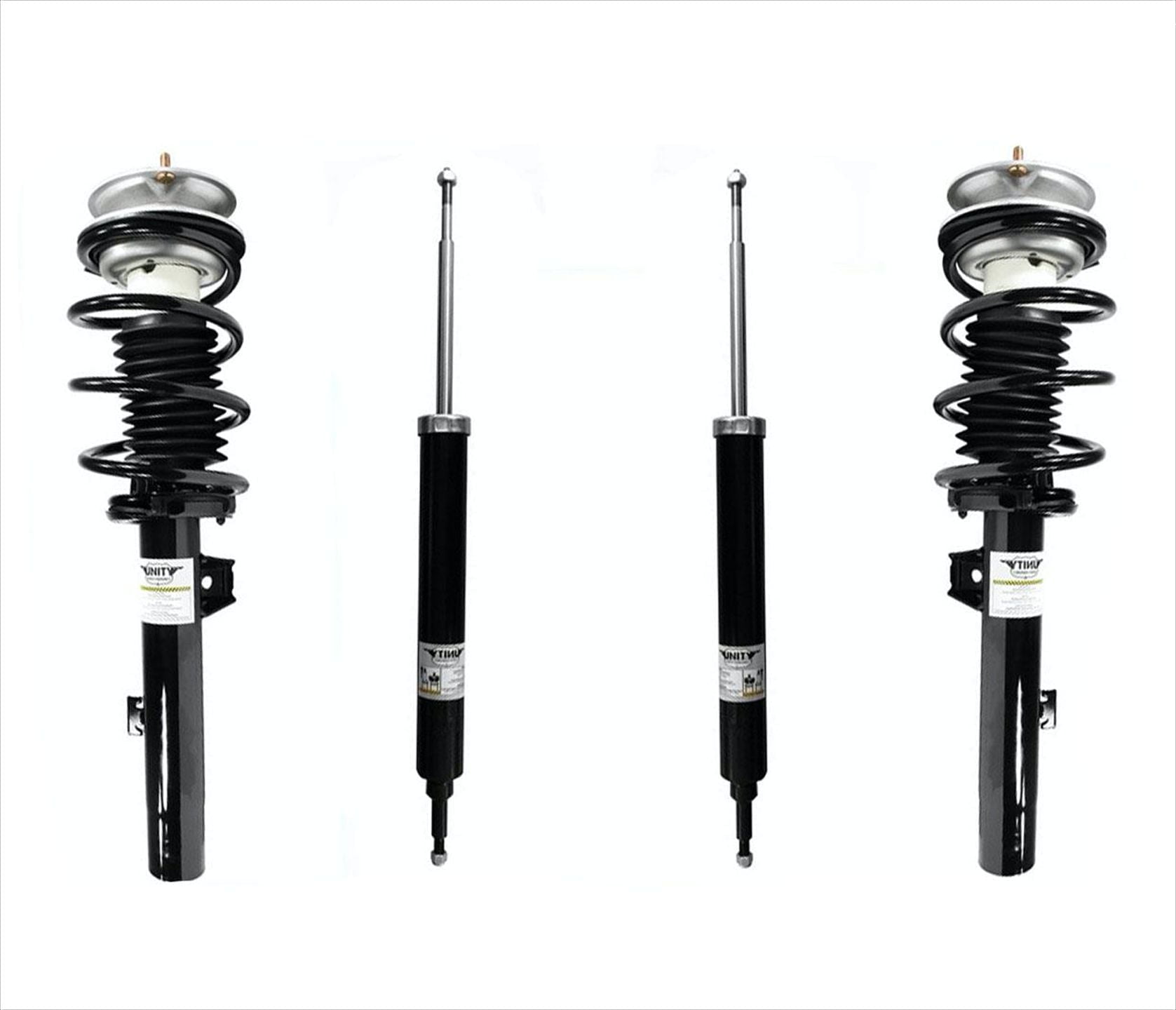
Unlike many domestic vehicles, high-quality, pre-assembled "quick-strut" units are rare for the BMW E90 platform. Most owners find it more reliable to purchase the high-quality individual shock and transfer the factory springs, provided they are in good condition.
5. Is this a job for a beginner?
This is an intermediate-level project. It requires mechanical aptitude and an understanding of spring safety. If you are not comfortable managing compressed coil springs, consult a local independent BMW specialist to handle the labor.
Professional Guidance and Final Actions
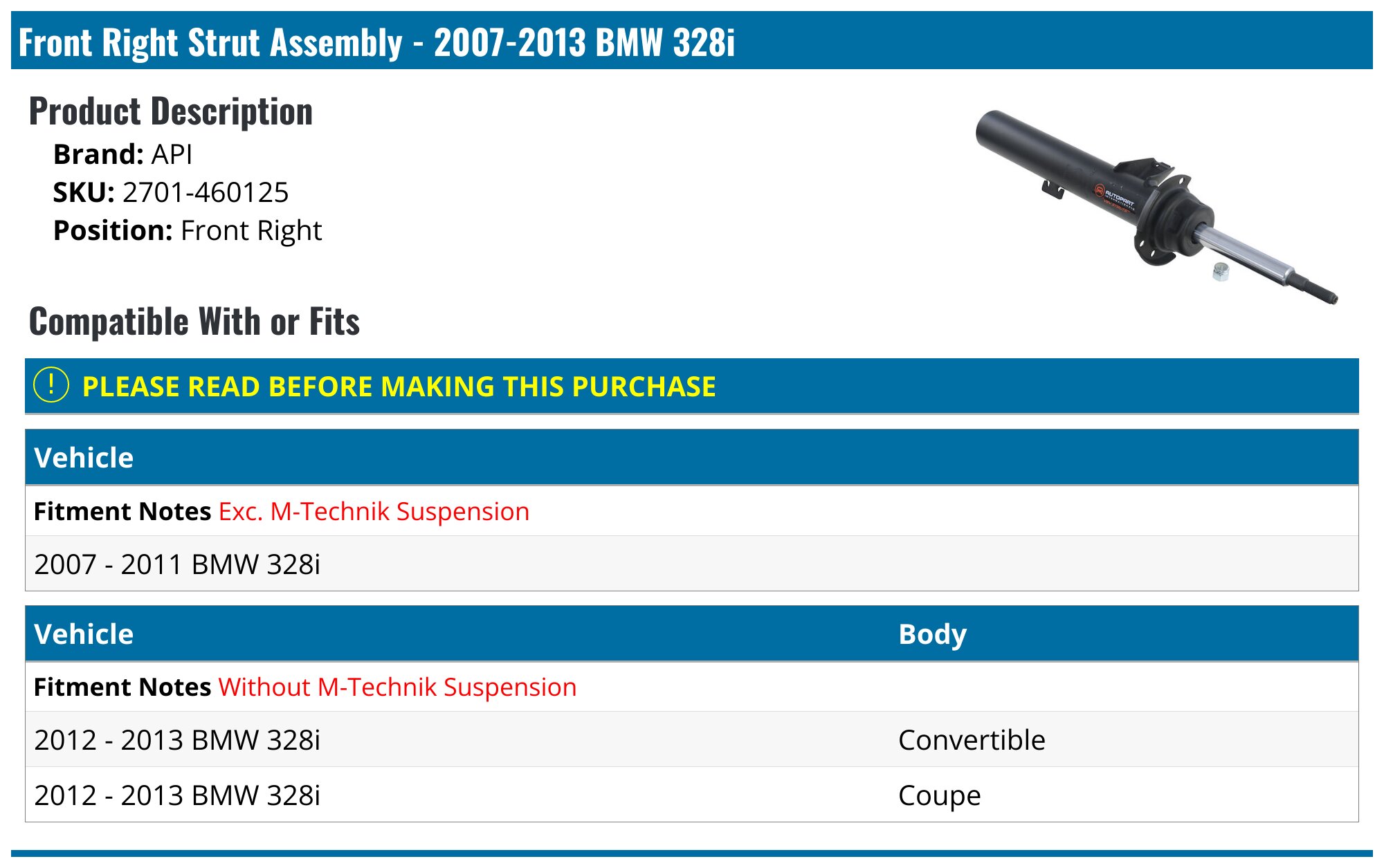
For owners of the 2011 BMW 328i, the suspension remains one of the most rewarding areas to restore. By selecting quality OES components and ensuring a professional alignment post-installation, you can reclaim the precise, planted driving feel that defined the 3-series era. Before beginning, verify your exact chassis configuration (e.g., standard suspension vs. sport suspension), as spring perches and strut lengths can vary slightly between these factory packages. Always prioritize safety equipment, particularly when handling pressurized spring assemblies, and document your maintenance for future resale value.