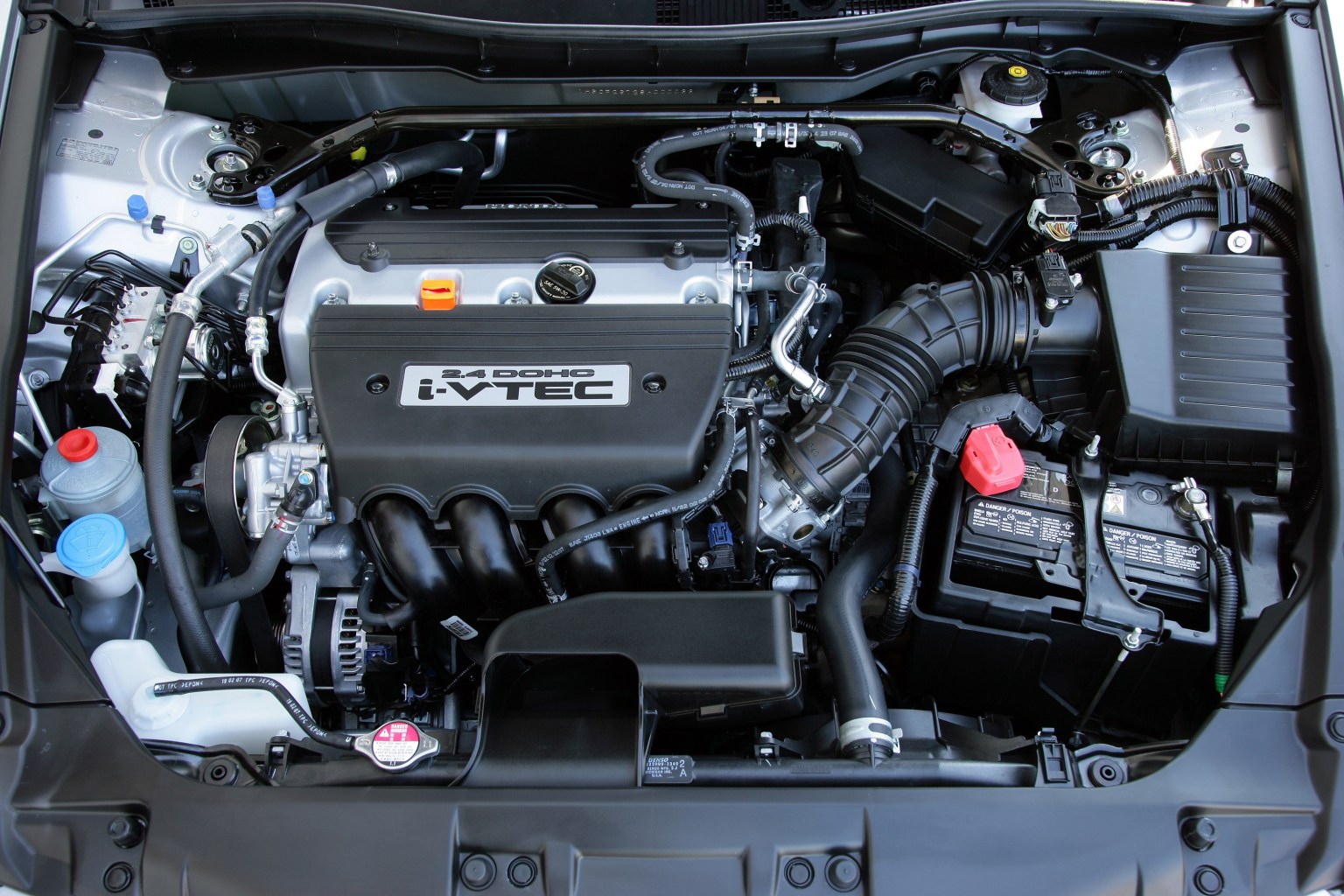
The 2008 Honda Accord EX-L serves as a benchmark for mid-size sedan engineering, primarily equipped with either the K24Z2/Z3 2.4-liter i-VTEC inline-four or the J35Z2 3.5-liter i-VTEC V6 engine. These powertrains emphasize a balance of long-term reliability, fuel efficiency, and responsive power delivery, solidifying the eighth-generation Accord’s reputation for mechanical durability in the automotive market.
Engineering Philosophy and Architecture
The 2008 Honda Accord represented a significant departure from previous iterations, moving toward a larger, more sophisticated platform. The EX-L trim level—standing for "Executive Luxury"—was positioned as the top-tier offering, usually paired with these robust engine options to match its refined interior appointments.
The K24 Inline-Four Engine
For buyers prioritizing efficiency, the 2.4-liter K-series engine is the heart of the four-cylinder EX-L model. This engine utilizes Honda’s i-VTEC (intelligent Variable Valve Timing and Lift Electronic Control) system. Unlike older VTEC systems that simply switched between two cam profiles, the "intelligent" aspect allows for continuous adjustment of intake valve timing based on engine load, RPM, and throttle position.
The K24 engine in the 2008 Accord is noted for its "square" design, where the bore and stroke dimensions are relatively close, promoting a balance between low-end torque and high-end horsepower. The use of a timing chain rather than a timing belt contributes to lower maintenance costs over the lifespan of the vehicle, provided the engine oil is changed at regular, manufacturer-specified intervals.
The J35 V6 Engine
The 3.5-liter V6 engine offered in the EX-L V6 variant is part of the J-series engine family, which is widely considered one of the most reliable V6 architectures ever mass-produced. The 2008 model year introduced the Variable Cylinder Management (VCM) system on the automatic transmission V6 models. This technology allows the engine to deactivate two or three cylinders under light-load conditions—such as steady-state highway cruising—to improve fuel consumption.
The VCM system is seamless, utilizing electronically controlled engine mounts to cancel out the vibrations inherent in running on fewer cylinders. For enthusiasts, the V6 provides a substantial performance increase, producing 268 horsepower and 248 lb-ft of torque, making it a favorite for those who prioritize highway passing power and smoothness.
Technical Specifications Comparison
Understanding the technical differences between the two primary engine configurations is essential for owners and prospective buyers. The following table outlines the mechanical distinctions between these two powerplants as they appeared in the 2008 production cycle.
| Specification | 2.4L I4 (K24Z2) | 3.5L V6 (J35Z2) |
|---|---|---|
| Displacement | 2,354 cc | 3,471 cc |
| Horsepower | 190 hp @ 7,000 rpm | 268 hp @ 6,200 rpm |
| Torque | 162 lb-ft @ 4,400 rpm | 248 lb-ft @ 5,000 rpm |
| Valvetrain | DOHC i-VTEC | SOHC i-VTEC |
| Induction | Naturally Aspirated | Naturally Aspirated |
| Timing Component | Chain | Belt |
| Cylinder Management | N/A | VCM (Auto Only) |
Key Technical Systems and Maintenance Considerations
i-VTEC: The Core of Efficiency
The i-VTEC system in the 2008 Accord is not just about raw power; it is an emissions and efficiency strategy. By controlling the intake valves precisely, the engine can mimic the characteristics of a smaller engine during cruising (reducing pumping losses) and a larger, high-performance engine during acceleration. Owners must ensure that oil levels remain consistent, as the VTEC system relies on oil pressure to actuate the rocker arm pins. Low oil levels or the use of incorrect viscosity (5W-20 is standard) can lead to sluggish performance or potential mechanical failure of the VTEC solenoid.
The Timing Belt Interval (V6 Only)
While the 2.4L four-cylinder engine uses a maintenance-free timing chain, the 3.5L V6 engine utilizes a timing belt. This is the most critical maintenance item for the V6 EX-L. The belt, which synchronizes the rotation of the crankshaft and the camshafts to ensure engine valves open and close at the correct time, has a specified replacement interval. Neglecting this maintenance can lead to a catastrophic "interference" event where valves strike the pistons, causing extensive internal engine damage. Industry standards for this engine suggest replacing the belt, water pump, and tensioner assembly every 105,000 miles or seven years.
Variable Cylinder Management (VCM) Observations
The VCM technology, while impressive in 2008, requires vigilant ownership. Some owners have reported concerns related to oil consumption in VCM-equipped engines. The theory is that the deactivated cylinders, which do not undergo combustion, can lead to oil blow-by past the piston rings. Maintaining clean oil is the best defense against this, as sludge buildup can interfere with the operation of the piston rings and the VCM oil control solenoids.
Performance and Driveability
The EX-L trim adds features that complement the engine output. The suspension tuning in the 2008 Accord is firmer than previous generations, which, when paired with the V6 engine, provides a "sport-sedan" feel that is rare in the segment.
The 2.4L engine is paired with either a 5-speed manual or a 5-speed automatic transmission. The manual transmission is highly regarded for its crisp, light shifter action, which allows the driver to extract the maximum available power from the K24 engine. The 5-speed automatic, meanwhile, is calibrated for smoothness.
The V6 EX-L is typically paired with a 5-speed automatic transmission. The transition between 3, 4, and 6-cylinder modes via the VCM system is largely imperceptible to the average driver, indicated only by an "ECO" light on the dashboard. This balance between luxury cruising and available power is the defining characteristic of the 2008 V6 EX-L.
Troubleshooting Common Mechanical Concerns
Even the most robust engines experience issues over long periods of operation. By 2026, most 2008 Honda Accord models have surpassed the 150,000-mile mark, meaning that wear-and-tear items are the primary focus for current owners.
Oil Consumption
Both the K24 and J35 engines can exhibit increased oil consumption at higher mileage. This is often due to the hardening of valve stem seals or carbon buildup on piston rings. Regular oil analysis or consistent monitoring of the dipstick is recommended for high-mileage units.
Engine Mounts
The V6 EX-L uses active electronic engine mounts to manage the vibration caused by the VCM system. Over time, the rubber in these mounts degrades, leading to increased cabin vibration, especially at idle. If the vehicle exhibits a harsh idle or "shuddering" when accelerating, the mounts should be the first point of inspection.
Valve Lash Adjustments
Although the engines utilize hydraulic or high-precision mechanical valvetrains, periodic valve lash adjustment (the clearance between the rocker arm and the valve stem) is recommended to ensure optimal performance. If the engine produces a rhythmic "ticking" sound from the cylinder head area, it is likely that the valve clearances have drifted out of spec.
Practical Advice for Longevity
To maximize the life of your 2008 Honda Accord EX-L engine, adhere to a strict maintenance schedule that exceeds the basic requirements.
- Fluid Integrity: Change the engine oil every 5,000 miles, regardless of the onboard maintenance minder’s suggestions. High-quality synthetic oil is highly recommended to keep the VTEC and VCM solenoids clean.
- Cooling System: The cooling system is vital for preventing heat-related damage to the aluminum block and heads. Replace the coolant at recommended intervals and ensure the radiator is free of debris to maintain optimal heat dissipation.
- Ignition System: The 2008 Accord uses long-life iridium spark plugs. These should be replaced every 100,000 miles to prevent ignition coil stress and to ensure efficient combustion.
- Professional Inspection: Given the age of the vehicle in 2026, finding a mechanic who specializes in Honda J-series and K-series engines is beneficial. They will be familiar with the specific quirks of the VCM system and the nuances of the i-VTEC timing components.
Frequently Asked Questions
Does the 2008 Honda Accord EX-L 2.4L have a timing belt? No, the 2.4-liter four-cylinder (K24Z2) engine uses a steel timing chain. This component is designed to last the life of the engine under normal driving conditions, provided the oil is kept clean, as the chain tensioner relies on engine oil pressure.
What is the "ECO" light on my V6 EX-L dashboard? The "ECO" light indicates that the Variable Cylinder Management (VCM) system is currently running the engine on fewer than six cylinders to save fuel. This is a normal operation mode during light-throttle cruising or downhill driving.
Should I use premium fuel in the V6 EX-L? The 3.5L V6 engine is engineered to run on regular unleaded fuel (87 octane). While higher octane fuel will not cause damage, it provides no measurable performance or efficiency benefit in this specific engine, as the ECU is tuned for standard-grade gasoline.
Why does my V6 engine feel like it shudders at low speeds? This is often a symptom of failing active engine mounts. The VCM system generates vibrations, and the active mounts are designed to neutralize them; if the rubber or the electronic vacuum component fails, the vibration is transferred directly to the cabin chassis.
Is the V6 EX-L engine considered an interference engine? Yes, both the 2.4L (due to the timing chain setup) and the 3.5L V6 are interference engines. This means that if the timing chain or belt fails, the pistons will collide with the valves. This underscores the necessity of strict adherence to timing belt replacement intervals for the V6 model.
Final Recommendation
The 2008 Honda Accord EX-L represents a pinnacle of Honda's mid-2000s powertrain engineering. Whether you own the K24 four-cylinder or the J35 V6, these engines are capable of extreme longevity if properly maintained. For current owners, the priority should be the timing belt (V6) and consistent, high-quality lubrication for both variants. By addressing these specific technical requirements, you can continue to enjoy the reliability and performance that defined the eighth-generation Accord’s reputation for years to come.