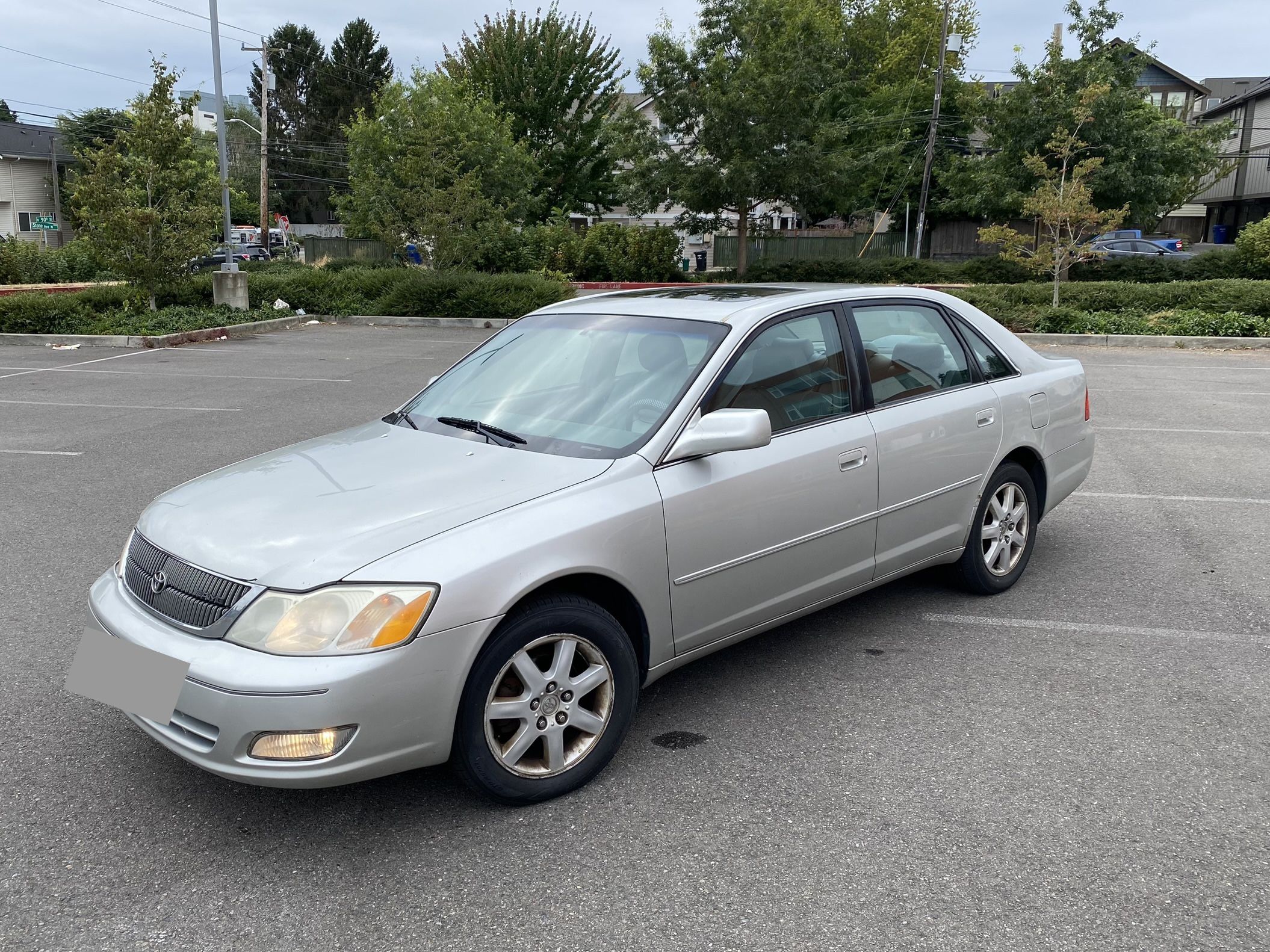
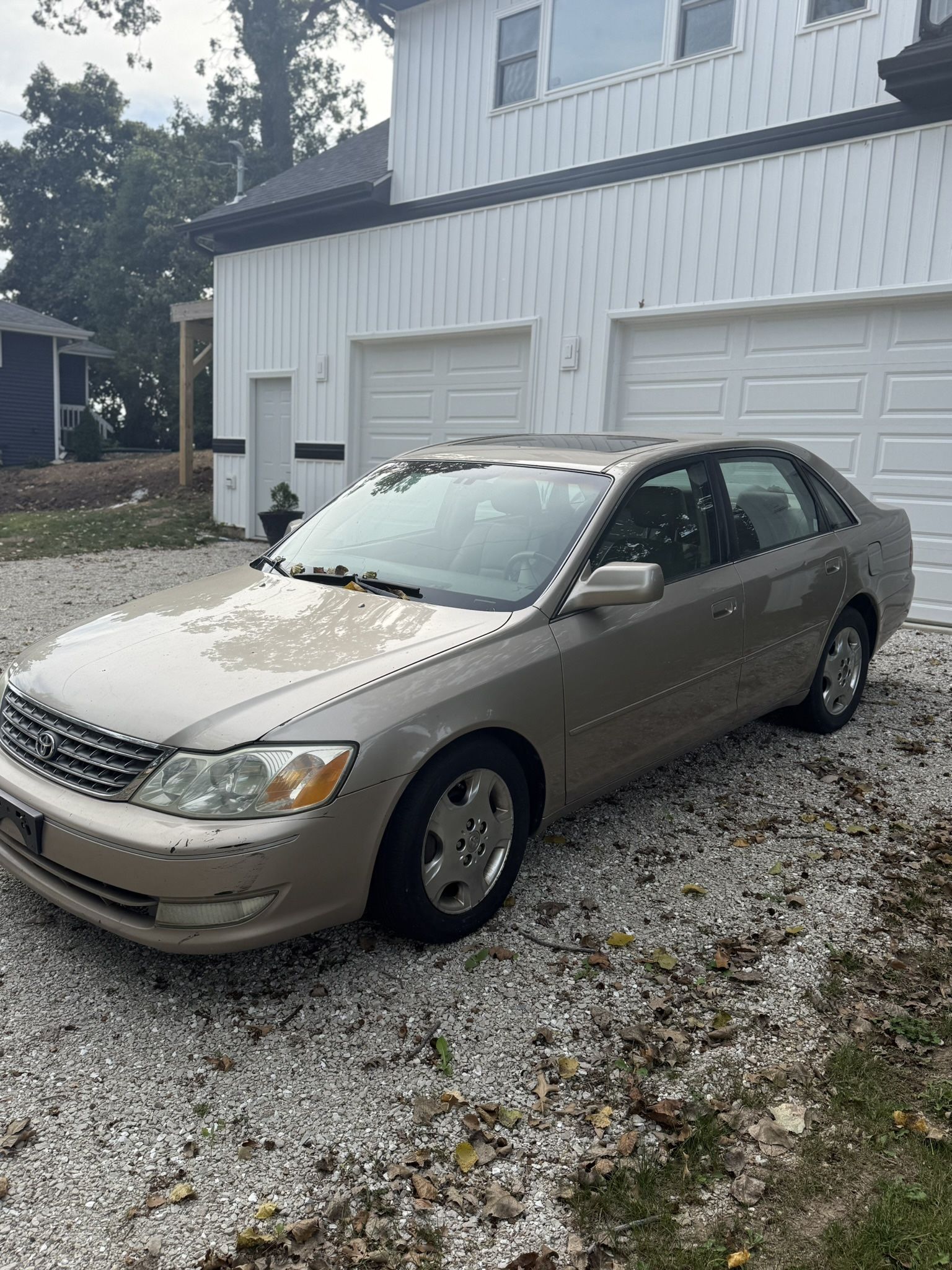
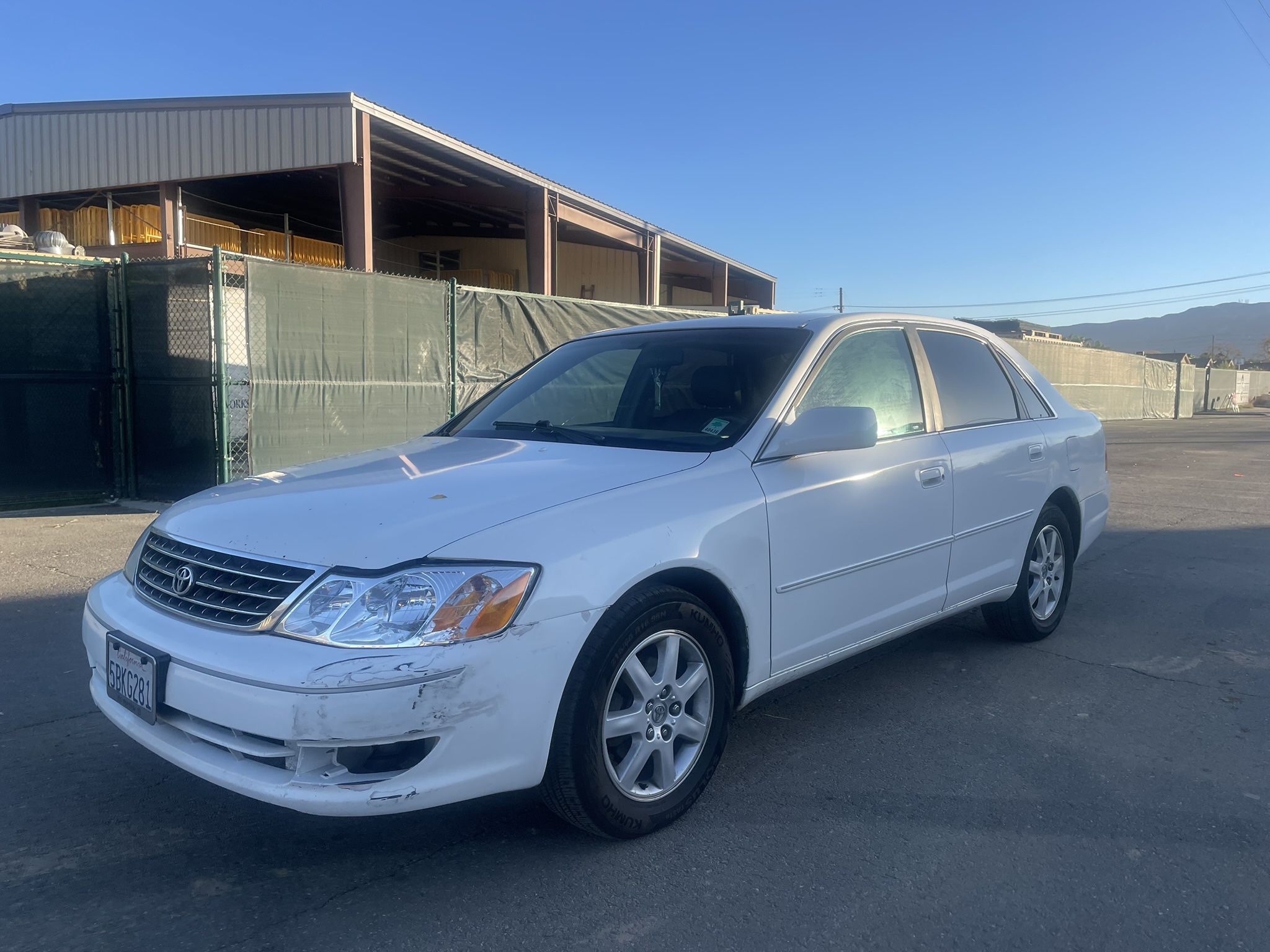
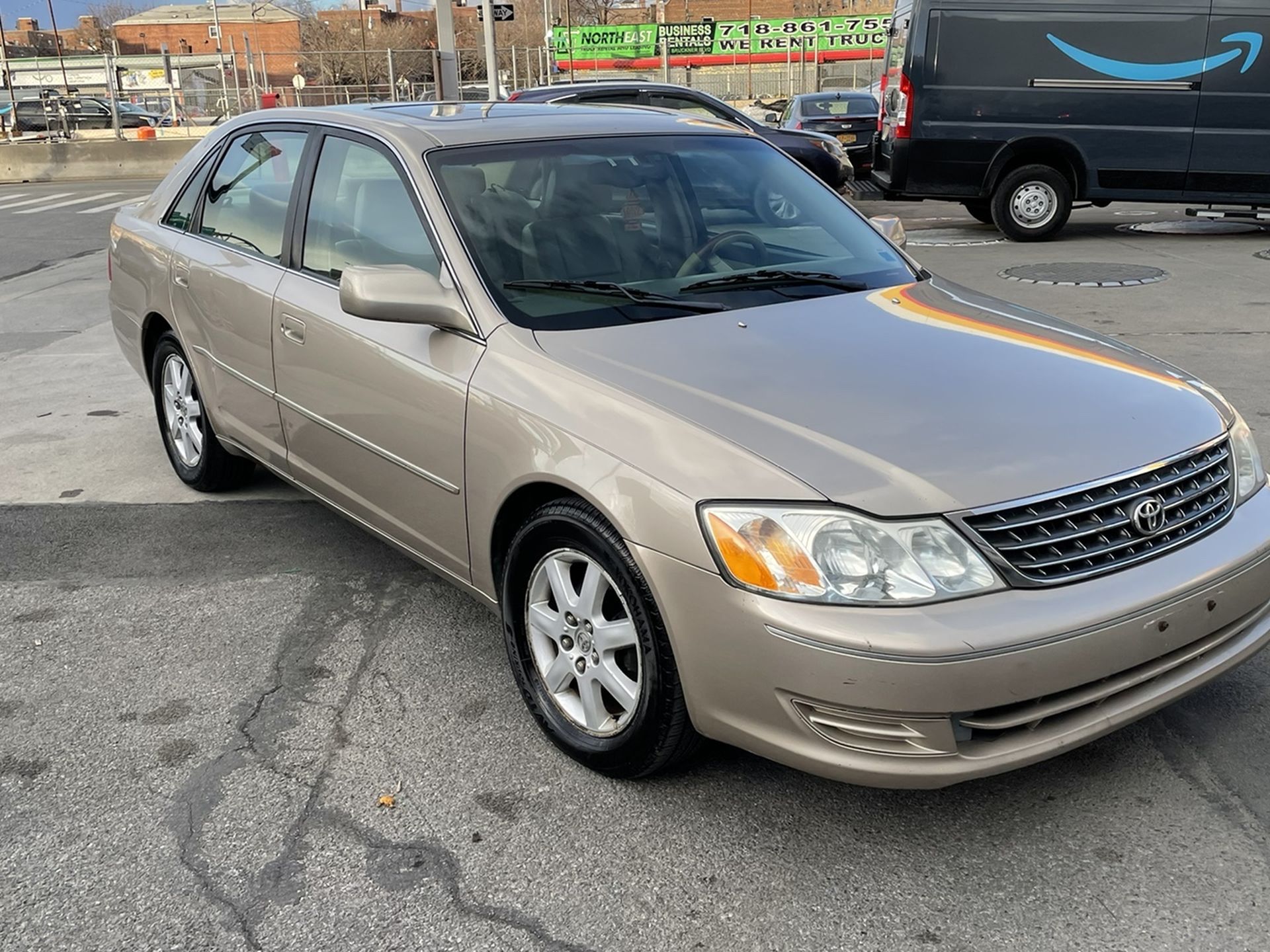
The 2003 Toyota Avalon is a full-size front-wheel-drive sedan powered by a 3.0-liter 1MZ-FE V6 engine producing 210 horsepower, mated to a 4-speed automatic transmission. It offers a spacious interior accommodating up to six passengers across two bench seats or five with individual bucket seats, prioritizing smooth ride quality, high reliability, and plush comfort over sporty handling.
Introduction to the 2003 Toyota Avalon
The 2003 Toyota Avalon represents the final model year of the second generation (X20 platform) of Toyota’s flagship sedan in North America. Positioned above the mid-size Camry, the Avalon was engineered specifically for drivers who valued traditional American full-size car attributes—such as a soft, isolating ride, a spacious cabin, and quiet cruising—combined with legendary Japanese build quality and mechanical durability.
For the 2003 model year, the Avalon carried over with minimal changes, having received a minor refresh for the 2000 model year that lengthened the body, redesigned the exterior styling, and introduced standard side-impact airbags. Understanding the 2003 Toyota Avalon specs requires examining its powertrain architecture, chassis design, interior packaging, safety ratings, and historical context within the full-size sedan market. This guide provides a detailed technical breakdown of what makes this vehicle a notable entry in early-2000s automotive engineering.
Powertrain and Mechanical Specifications
At the heart of the 2003 Toyota Avalon is a refined, naturally aspirated V6 engine designed for longevity and smooth power delivery. Rather than focusing on high-revving performance, the powertrain is tuned for low-end torque and effortless highway passing.
Engine Architecture: The 1MZ-FE V6
- Displacement: 3.0 liters (2,995 cc)
- Configuration: 6-cylinder, 60-degree V, aluminum block and aluminum alloy cylinder heads
- Valvetrain: DOHC, 4 valves per cylinder with VVT-i (Variable Valve Timing with intelligence)
- Bore x Stroke: 87.5 mm x 83.0 mm (3.44 in x 3.27 in)
- Compression Ratio: 10.5:1
- Horsepower: 210 hp @ 5,800 rpm
- Torque: 220 lb-ft @ 4,400 rpm
- Fuel Induction: Sequential multi-port electronic fuel injection
- Recommended Fuel: Regular unleaded (87 octane)
The inclusion of VVT-i allows the engine to optimize valve overlap across various driving conditions, broadening the torque curve and ensuring responsive throttle application whether starting from a dead stop or accelerating at highway speeds.
Transmission and Drivetrain
- Transmission Type: 4-speed electronically controlled automatic (ECT-i) with overdrive
- Gear Ratios:
- 1st: 2.810
- 2nd: 1.549
- 3rd: 1.000
- 4th: 0.735
- Reverse: 2.175
- Final Drive Ratio: 3.631:1
- Drivetrain Layout: Transverse front-engine, front-wheel drive (FWD)
The 4-speed automatic transmission works seamlessly with the V6, though modern standards might find the gear count low compared to contemporary 6- or 8-speed units. However, its mechanical simplicity contributes significantly to its long-term reliability.
Dimensions, Weight, and Exterior Design
The Avalon is classified as a large, full-size sedan, providing an expansive footprint that translates directly into interior volume and trunk capacity.
Exterior Measurements
- Wheelbase: 107.1 inches (2,720 mm)
- Overall Length: 191.9 inches (4,874 mm)
- Overall Width: 71.7 inches (1,821 mm)
- Overall Height: 57.3 inches (1,455 mm)
- Front Track: 61.0 inches (1,549 mm)
- Rear Track: 60.0 inches (1,524 mm)
- Ground Clearance: 5.5 inches (140 mm)
Weight and Capacities
- Curb Weight: Approximately 3,465 lbs (XL trim) to 3,525 lbs (limited trim)
- Gross Vehicle Weight Rating (GVWR): 4,375 lbs
- Fuel Tank Capacity: 18.5 gallons (70 liters)
- Trunk Volume: 15.6 cubic feet
The exterior design features clean, conservative lines with chrome accents, multi-reflector halogen headlamps, and body-colored bumpers. Higher trim levels added alloy wheel designs and optional power moonroofs.
Chassis, Suspension, and Braking Systems
The driving dynamics of the 2003 Avalon are tuned entirely for comfort. Road imperfections are absorbed efficiently by a fully independent suspension setup.
Suspension Architecture
- Front Suspension: Independent MacPherson struts with coil springs, gas-filled shock absorbers, and a stabilizer bar
- Rear Suspension: Independent dual-link strut configuration with coil springs, gas-filled shock absorbers, and a stabilizer bar
The suspension geometry minimizes body roll during standard cornering while floating smoothly over potholes and rough asphalt.
Steering and Braking
- Steering Type: Power-assisted rack-and-pinion
- Turning Circle: 36.4 feet (curb-to-curb)
- Brakes: Power-assisted 4-wheel disc brakes (ventilated front discs, solid rear discs)
- Anti-lock Braking System (ABS): Standard 4-wheel, 4-sensor ABS with Electronic Brake-force Distribution (EBD)
Interior Packaging and Trim Levels
The 2003 Toyota Avalon was offered primarily in two main trim levels: the well-equipped base XL and the luxury-oriented Limited. A notable feature available on both trims was the front bench seat option, which allowed the car to seat up to six passengers—a rarity in modern sedans.
| Specification / Feature | 2003 Avalon XL (Base) | 2003 Avalon Limited |
|---|---|---|
| Seating Material | Premium Cloth | Perforated Leather |
| Front Seating Configuration | Bucket or Bench (6-passenger) | Bucket or Bench (6-passenger) |
| Driver Seat Adjustments | Manual or Optional Power | 8-way Power with Lumbar Support |
| Audio System | AM/FM/Cassette with 6 Speakers | JBL Premium Audio, In-Dash 6-Disc CD Changer |
| Climate Control | Manual Air Conditioning | Automatic Climate Control |
| Wheels | 15-inch Steel with Full Covers | 15-inch or 16-inch 5-Spoke Alloy Wheels |
| Interior Trim | Simulated Wood-Grain Accents | Genuine Wood-Grain Accents |
Interior Dimensions
- Head Room (Front/Rear): 39.7 inches / 38.0 inches
- Leg Room (Front/Rear): 43.1 inches / 40.3 inches
- Shoulder Room (Front/Rear): 58.9 inches / 58.2 inches
- Passenger Volume: 106.3 cubic feet
Fuel Economy and Performance Metrics
Efficiency for a large V6 sedan of this era was competitive, balancing power output with reasonable fuel burn during highway cruising.
- EPA Fuel Economy Estimates:
- City: 19 mpg
- Highway: 27 mpg
- Combined: 22 mpg
- Acceleration (0–60 mph): Approximately 7.3 to 7.8 seconds
- Top Speed: Electronically limited to approximately 130 mph
Safety Ratings and Equipment
Safety equipment in the 2003 Avalon reflects early-2000s automotive safety standards, incorporating standard passive and active systems.
- Airbags: Dual front SRS airbags and front seat-mounted side-impact airbags.
- Seatbelts: 3-point seatbelts for all seating positions, with front pretensioners and force limiters.
- Crash Test Performance: The National Highway Traffic Safety Administration (NHTSA) awarded the 2003 Avalon 4 out of 5 stars for driver protection and 5 out of 5 stars for front passenger protection in frontal impact evaluations. Side-impact testing yielded strong marks due to the standard side airbags.
Common Maintenance Items and Technical Considerations
Owners and prospective buyers of the 2003 Toyota Avalon should be aware of several mechanical characteristics inherent to the 1MZ-FE engine platform:
- Oil Sludge Tendency: Early versions of the 1MZ-FE engine were susceptible to oil sludge formation if oil change intervals were neglected. Routine synthetic oil changes every 5,000 miles mitigate this risk entirely.
- Timing Belt Replacement: The 3.0L V6 utilizes a rubber timing belt rather than a timing chain. This belt must be inspected and replaced every 90,000 miles or 9 years along with the water pump and tensioner pulleys.
- Knock Sensors: The engine utilizes dual knock sensors under the intake plenum. Over time, the wiring harness for these sensors can degrade due to heat exposure, triggering a check engine light (Diagnostic Trouble Code P0325 or P0330).
Frequently Asked Questions
What kind of engine is in a 2003 Toyota Avalon?
The 2003 Toyota Avalon features a 3.0-liter 1MZ-FE V6 engine with dual overhead cams and VVT-i. It produces 210 horsepower and 220 lb-ft of torque, providing smooth acceleration and dependable long-term reliability.
Does the 2003 Toyota Avalon have a timing belt or timing chain?
The 2003 Toyota Avalon utilizes a rubber timing belt to synchronize the crankshaft and camshafts. This belt requires scheduled replacement every 90,000 miles to prevent catastrophic engine interference damage if it snaps.
How many people can a 2003 Toyota Avalon seat?
Depending on the interior configuration, the 2003 Avalon can seat up to six passengers. It was available with either dual front bucket seats (5-passenger capacity) or a front bench seat with a column or floor shifter configuration (6-passenger capacity).
What is the fuel economy of a 2003 Toyota Avalon?
According to EPA estimates, the 2003 Avalon achieves roughly 19 mpg in city driving and 27 mpg on the highway, resulting in a combined rating of 22 mpg using regular unleaded gasoline.
Is the 2003 Toyota Avalon a reliable car?
Yes, the second-generation Avalon is widely recognized by automotive mechanics and enthusiasts as one of the most reliable sedans of its era. With proper maintenance—particularly addressing oil changes and timing belt intervals—these vehicles frequently surpass 200,000 to 300,000 miles.
Conclusion and Next Actions
The 2003 Toyota Avalon stands out as a benchmark for durability, comfort, and mechanical simplicity in the full-size sedan segment. When evaluating or maintaining this vehicle, verify service records for timely timing belt replacements, check for suspension wear components such as struts and control arm bushings, and inspect fluid conditions. For current owners or prospective buyers, maintaining regular fluid intervals ensures this classic powertrain continues to deliver its signature refined performance.