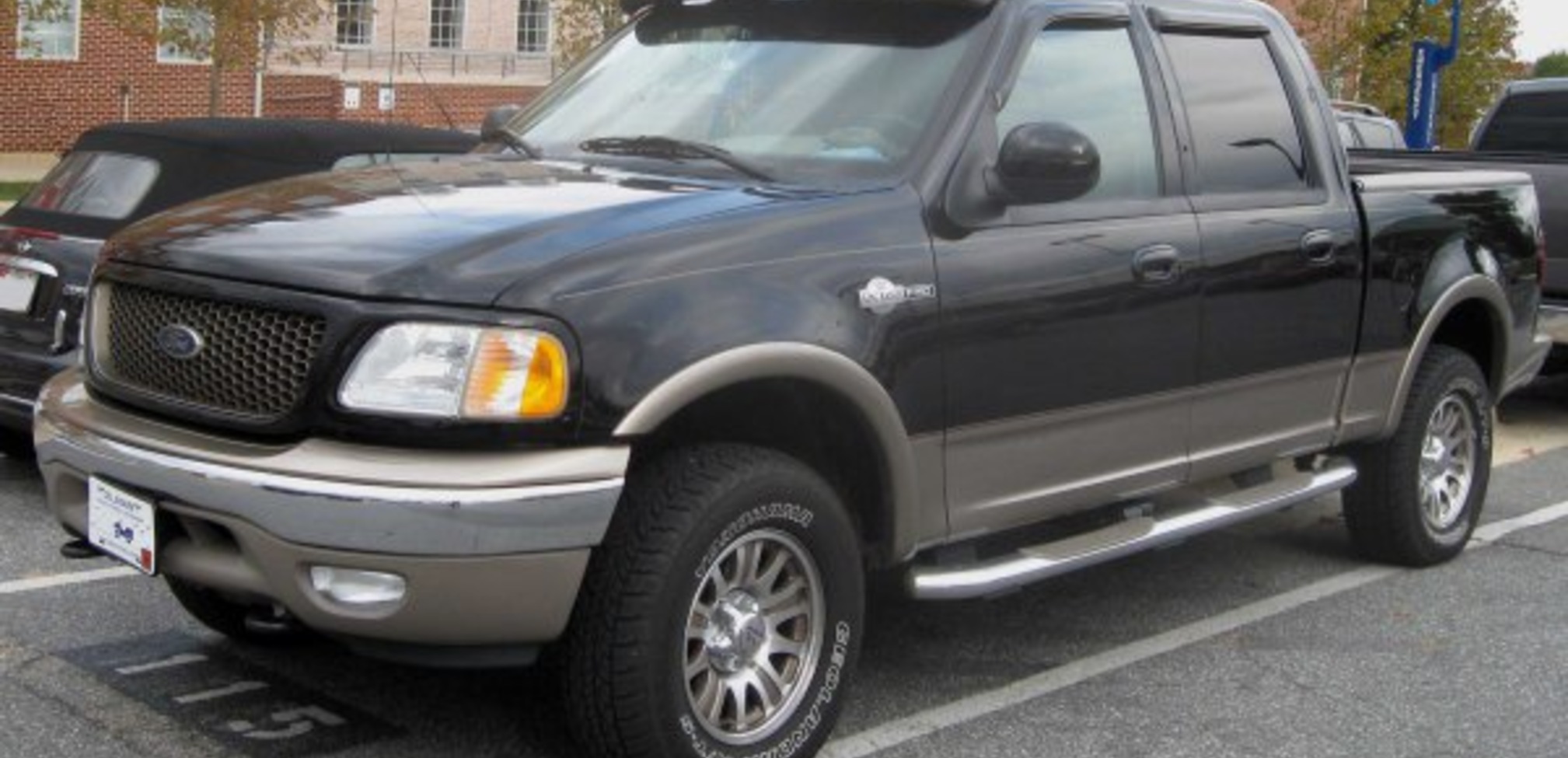
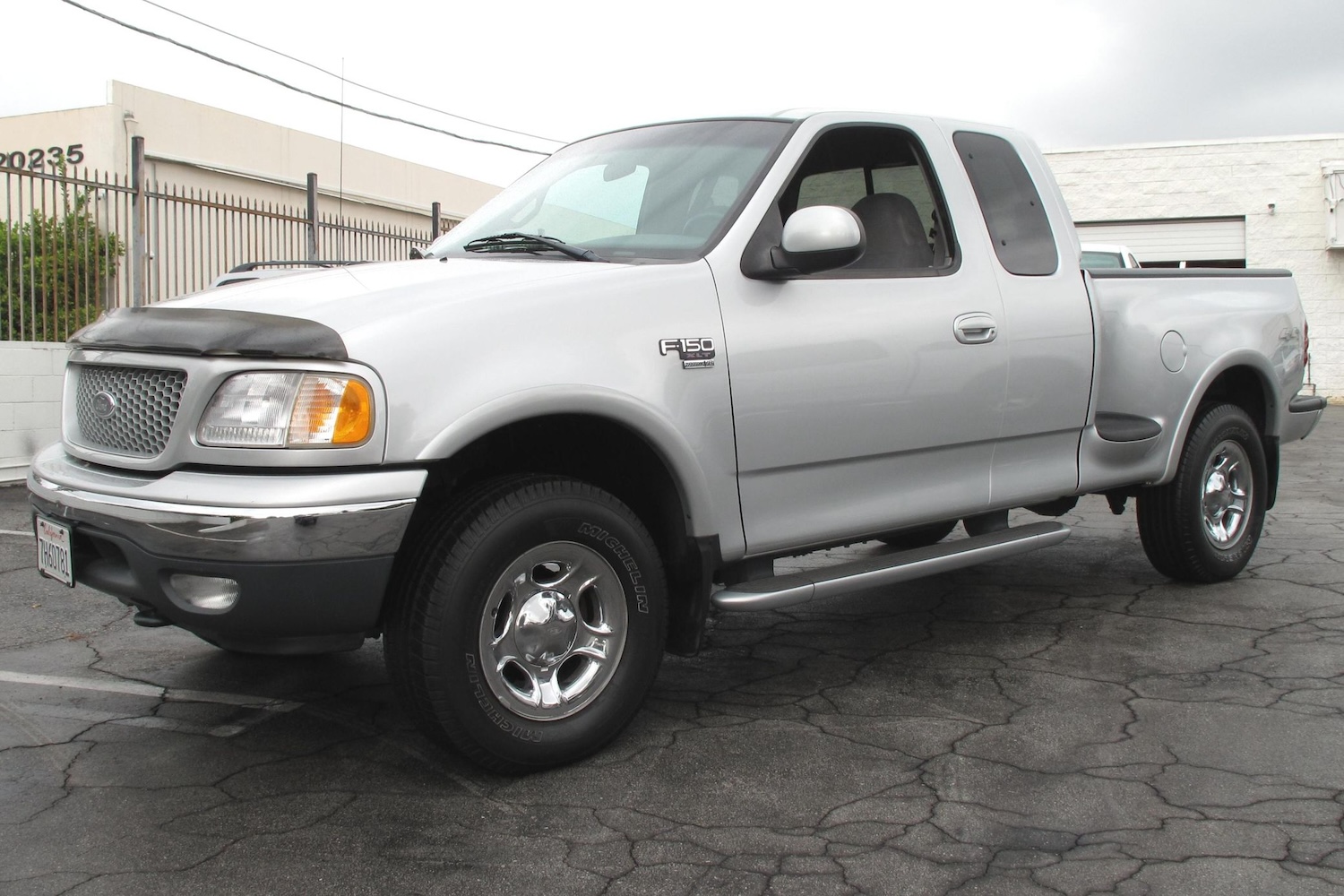
The 1999 Ford F-150 remains a cornerstone of the tenth-generation F-Series, representing a pivotal era where pickup trucks transitioned from utilitarian workhorses to comfortable family vehicles. While a true four-door "SuperCrew" cab was not introduced until the 2001 model year, the 1999 SuperCab provided a four-door configuration via rear-hinged access doors, offering a blend of passenger capacity and cargo flexibility that defined the late-90s truck market.
Historical Context: The 10th Generation Revolution
To understand the 1999 Ford F-150, one must look back to the radical redesign Ford launched for the 1997 model year. This generation, the tenth for the F-Series, broke away from the boxy, "brick-nose" styling of the 1980s and early 90s in favor of a more aerodynamic, rounded aesthetic. By 1999, Ford had refined this platform, addressing early production quirks and expanding the lineup to include more powerful engines and specialized variants like the SVT Lightning.
The 1999 model year was significant because it marked the transition toward higher-output Triton V8 engines. Ford increased the horsepower and torque figures for both the 4.6L and 5.4L engines this year, making the F-150 more competitive against the newly redesigned Chevrolet Silverado and GMC Sierra. It was also the year Ford celebrated the F-Series' 50th anniversary (technically occurring in 1998, but celebrated through the 1999 production cycle), solidifying its position as the best-selling vehicle in America.
Disambiguating the "Crew Cab" for 1999
There is often confusion regarding the "Crew Cab" designation for the 1999 model year. In modern truck parlance, a "Crew Cab" implies four full-sized, front-hinged doors. However, for the 1999 F-150:
- The SuperCab: This was the primary extended configuration. In 1999, Ford made a significant update by making the SuperCab a "four-door" model by standardizing two rear-hinged "suicide" doors. These doors could only be opened once the front doors were ajar, providing access to a rear bench seat.
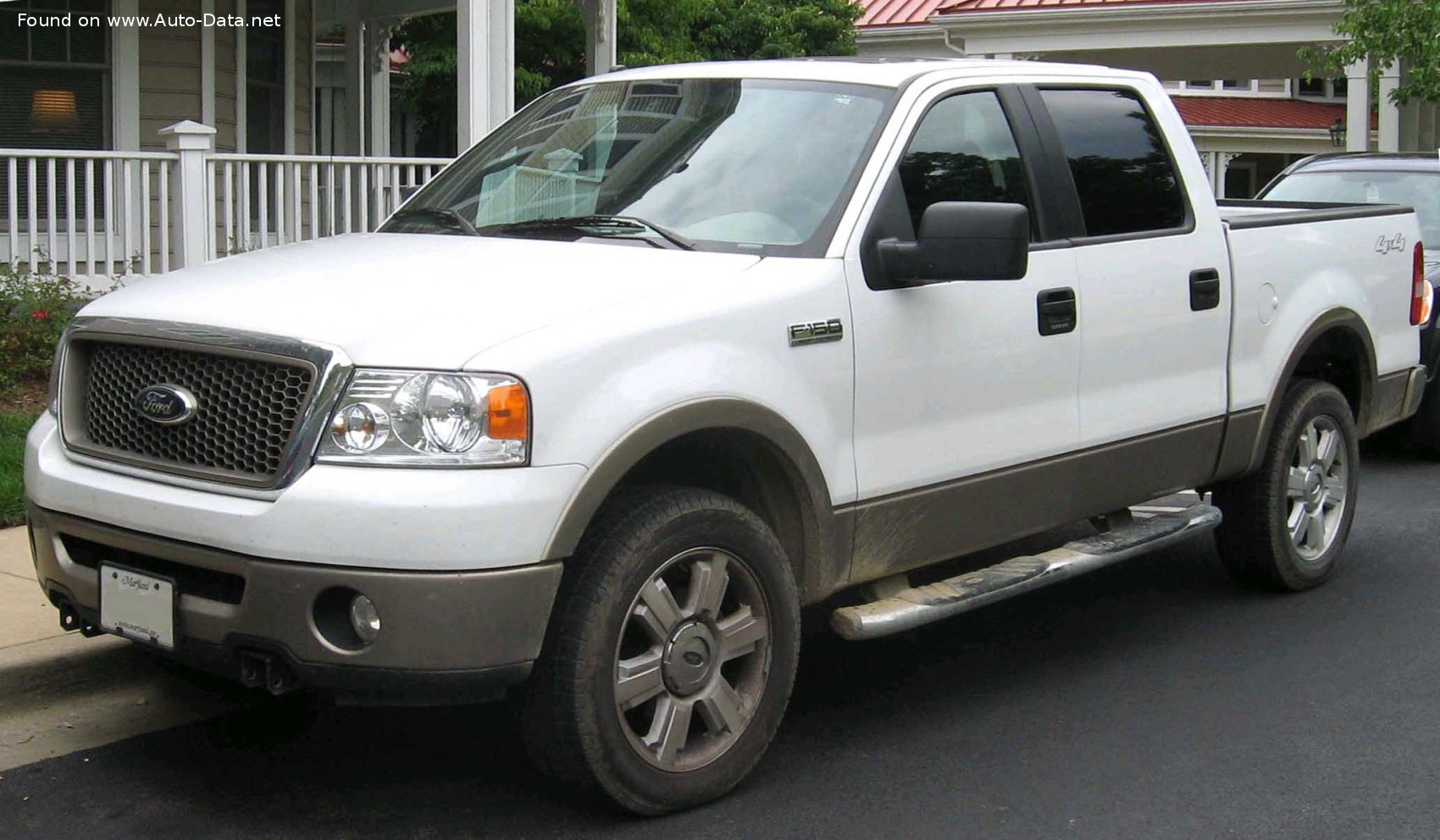
- The SuperCrew Absence: The F-150 SuperCrew (with four full doors) did not enter the market until late 2000 as a 2001 model.
- The F-250 Light Duty: In 1999, there was an "F-250" that shared the F-150's body style (often called the F-250 LD or 7700 package). While it offered more payload, it utilized the same cab configurations as the F-150.
For the purpose of this overview, we focus on the 1999 F-150 SuperCab, as it was the four-door passenger-oriented option available to buyers at that time.
Powertrain Options and Performance
In 1999, Ford offered three primary engines for the F-150, each catering to different levels of duty and fuel economy.
4.2L Essex V6
The base engine was a 4.2-liter V6. While often overlooked in favor of the V8s, this engine was a reliable workhorse for light-duty tasks. For 1999, it produced approximately 202 horsepower and 252 lb-ft of torque. It was primarily paired with a five-speed manual transmission, though a four-speed automatic was available. This engine is noted for its decent low-end torque for a V6 but lacks the passing power required for heavy towing.
4.6L Triton V8
The 4.6L V8 was the mid-range choice and the entry point into the Triton engine family. For 1999, Ford updated the cylinder head design (the "Power Improved" or PI heads), which bumped the output to 220 horsepower and 290 lb-ft of torque. The 4.6L is widely regarded as one of the most durable engines Ford ever produced, frequently reaching 300,000 miles with proper maintenance, though it was somewhat underpowered compared to the larger 5.4L.
5.4L Triton V8
The 5.4L V8 was the powerhouse of the 1999 lineup. Thanks to the PI head upgrades implemented this year, its output jumped to 260 horsepower and 350 lb-ft of torque (up from 235 hp in 1998). This engine transformed the F-150 into a serious towing machine, providing the necessary grunt to pull trailers and heavy loads through the four-speed 4R70W automatic transmission.
Interior Comfort and Trim Levels
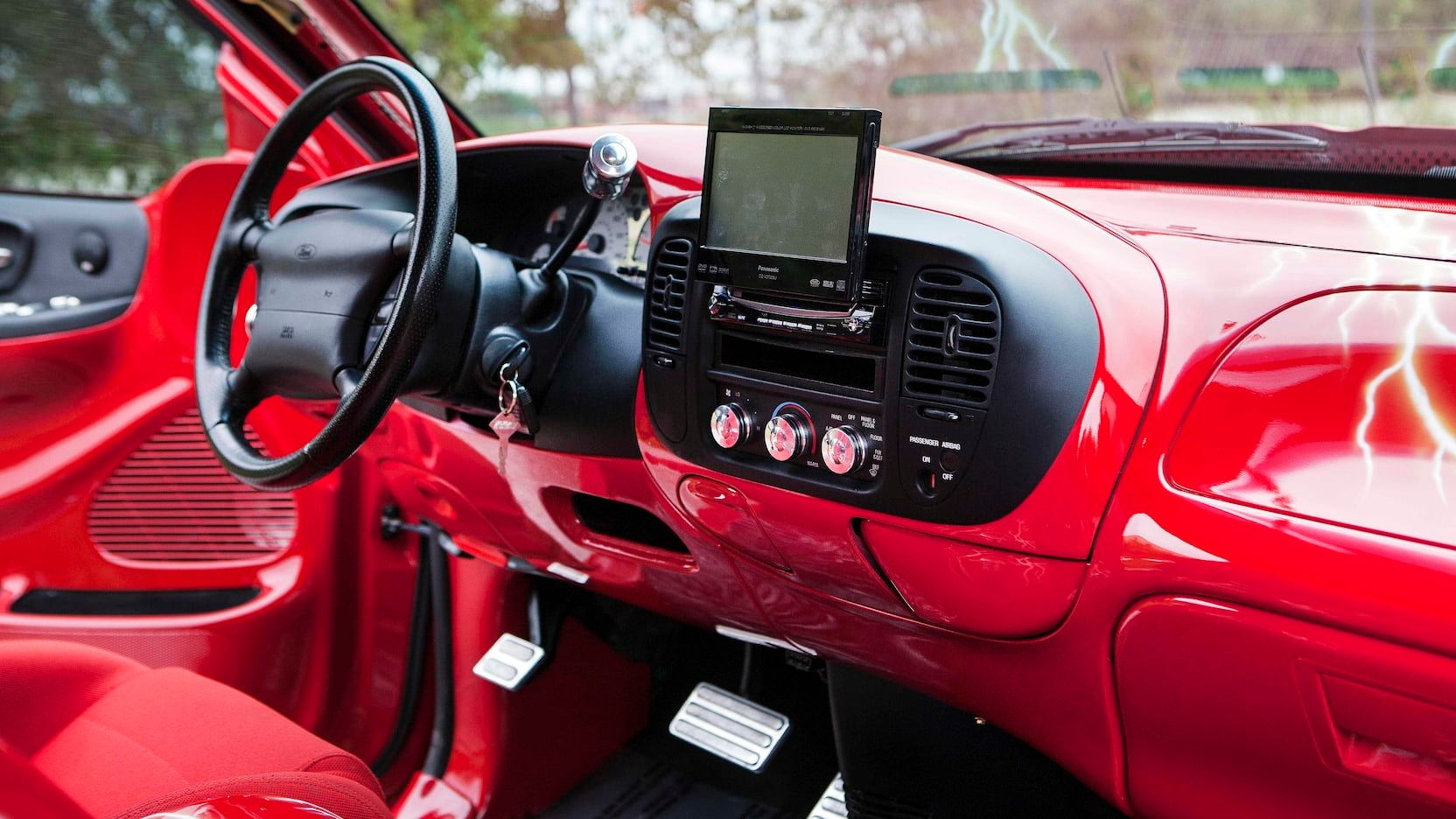
The 1999 F-150's interior was a massive departure from the utilitarian cockpits of the past. It featured a car-like dashboard with ergonomic controls and rounded surfaces.
- XL Trim: The base work truck. It featured vinyl or basic cloth upholstery, manual windows, and a simple AM/FM radio. It was designed for durability and ease of cleaning.
- XLT Trim: The most popular trim. It added power windows, power locks, air conditioning, cruise control, and upgraded cloth seats with a folding center armrest. Most SuperCabs found on the used market today are XLTs.
- Lariat Trim: The luxury tier. The Lariat included leather seating surfaces, a power driver's seat, unique alloy wheels, and often an overhead console with a compass and outside temperature display.
The SuperCab's rear seating was best suited for children or short trips for adults. The seat bottom could be flipped up to provide additional dry storage inside the cab, a feature that remains a staple of Ford trucks today.
Technical Specifications and Capabilities
The 1999 F-150 utilized a fully independent front suspension on 4x2 models, while 4x4 models used a torsion bar setup. This gave the truck a much smoother ride than the solid-front-axle trucks of previous generations.
| Feature | Specification (SuperCab 4x2) | Specification (SuperCab 4x4) |
|---|---|---|
| Wheelbase | 138.5 inches | 138.8 inches |
| Max Towing Capacity | Approx. 8,000 lbs (with 5.4L) | Approx. 7,700 lbs (with 5.4L) |
| Max Payload | Approx. 1,800 - 2,000 lbs | Approx. 1,500 - 1,800 lbs |
| Fuel Tank Capacity | 25 or 30 gallons | 25 or 30 gallons |
| Brakes | 4-wheel disc (Standard for 1999) | 4-wheel disc (Standard for 1999) |
| Turning Circle | 45.9 feet | 46.1 feet |
Note: Towing and payload capacities vary significantly based on the axle ratio (3.08, 3.31, 3.55, or 3.73) and the presence of the factory towing package.
Reliability, Common Issues, and Maintenance
As of 2026, the 1999 F-150 is a "modern classic." While the platform is robust, several well-documented issues have surfaced over the decades that potential owners must be aware of.
The Spark Plug "Blowout" Issue
The early 2-valve Triton V8 engines (4.6L and 5.4L) are notorious for having a limited number of threads in the cylinder head spark plug holes. If plugs are not torqued correctly, or if the threads weaken over time, the engine can literally "spit" a spark plug out, stripping the threads and requiring a Timesert or Helicoil repair.
Suspension and Chassis Wear
The 10th generation F-150s are prone to ball joint and tie rod wear. Because these trucks are often used for heavy work, the front-end components require frequent inspection. Furthermore, the rear leaf spring shackles are a common rust point in northern climates; if they fail, the leaf spring can punch through the bed floor.
Transmission Health
The 4R70W automatic transmission is generally reliable, but it is sensitive to heat. For those using a 1999 F-150 for towing in 2026, installing an auxiliary transmission cooler and performing regular fluid exchanges is mandatory to prevent torque converter shudder or planetary gear failure.
Braking System
1999 was a transition year where 4-wheel disc brakes became more common across the lineup. While an improvement over rear drums, the early ABS sensors on these trucks are known to fail, often causing the ABS light to illuminate or the system to engage unnecessarily at low speeds.
The 1999 SVT Lightning: A Performance Icon
No overview of the 1999 F-150 is complete without mentioning the return of the SVT Lightning. After a hiatus, the Lightning returned for the 10th generation in 1999 as a Regular Cab, short-bed street sleeper.
It featured a supercharged 5.4L V8 producing 360 horsepower and 440 lb-ft of torque. It utilized a heavy-duty 4R100 transmission (borrowed from the Super Duty) and a lowered, sport-tuned suspension. While not a "crew cab" or SuperCab, its debut in 1999 brought immense prestige to the F-150 nameplate, proving that a pickup could handle and accelerate like a muscle car.
Buying a Used 1999 F-150 in 2026
If you are looking to purchase a 1999 Ford F-150 today, you are likely looking at a vehicle with high mileage. However, due to the sheer volume produced, parts are incredibly cheap and readily available at any auto parts store or salvage yard.
What to look for:
- Frame Rust: Check the area where the box meets the cab and the rear fuel tank straps.
- Exhaust Manifolds: These often leak (indicated by a ticking sound when cold) due to rusted or snapped studs.
- Odometer Failure: The digital odometers on this generation often suffer from a cold solder joint, causing the display to go blank intermittently.
- Engine Codes: Use an OBD-II scanner to check for P0171/P0174 (lean codes), which often point to a perished PCV elbow behind the intake manifold.
Frequently Asked Questions
Did the 1999 Ford F-150 come with a full 4-door Crew Cab?
No. In 1999, the F-150 was only available in Regular Cab and SuperCab. The SuperCab had four doors, but the rear doors were smaller and rear-hinged. The first full 4-door F-150 (the SuperCrew) was released for the 2001 model year.
How much can a 1999 F-150 SuperCab tow?
Depending on the engine and axle ratio, a 1999 F-150 SuperCab is typically rated to tow between 6,000 and 8,000 pounds. For maximum towing, the 5.4L V8 and the 3.73 rear axle ratio are required.
Is the 1999 F-150 fuel efficient?
By modern standards, no. The 4.2L V6 might achieve 16-17 MPG on the highway, while the 5.4L V8 often struggles to break 13-14 MPG in real-world driving conditions.
Is the 1999 F-150 safe?
The 10th generation F-150 received a "Poor" rating from the Insurance Institute for Highway Safety (IIHS) for its frontal offset crash test performance. While it features dual airbags and standard ABS (in most trims), its structural integrity in high-speed crashes is inferior to modern trucks.
Which engine is the best in the 1999 model?
The 4.6L V8 is widely considered the most durable for longevity, but the 5.4L V8 is the better choice for those who need to haul or tow. The 4.2L V6 is adequate for a basic commuter or light-duty work truck.
Final Recommendation
The 1999 Ford F-150 SuperCab is an excellent choice for a budget-conscious buyer looking for a dependable secondary vehicle or a first truck for a teenager. Despite its age in 2026, its mechanical simplicity makes it a favorite for DIY mechanics. When shopping, prioritize trucks with documented maintenance records—specifically those regarding spark plug changes and transmission services—to ensure the vehicle remains a reliable asset rather than a project.