The 1981 Most Valuable Player (MVP) awards in Major League Baseball were presented to Mike Schmidt of the Philadelphia Phillies in the National League and Rollie Fingers of the Milwaukee Brewers in the American League. These awards are historically significant because they were granted during a season shortened and divided by a massive labor dispute, which fundamentally altered the competitive landscape of the sport.
The Context of the 1981 MLB Season
To understand the significance of the 1981 MVPs, one must first recognize the unique environment of that year. A players' strike, which began on June 12 and lasted until July 31, resulted in the cancellation of 713 games. Because the season was interrupted, Major League Baseball adopted a split-season format. Teams were ranked based on their performance in the first half (before the strike) and the second half (after the strike).
This structure created a chaotic path to the postseason, where teams that finished with the best overall record were not guaranteed a spot in the playoffs if they failed to win either half-season segment. For award voters, this presented a major challenge: how to evaluate a player’s value when the standard 162-game baseline was non-existent.
National League MVP: Mike Schmidt
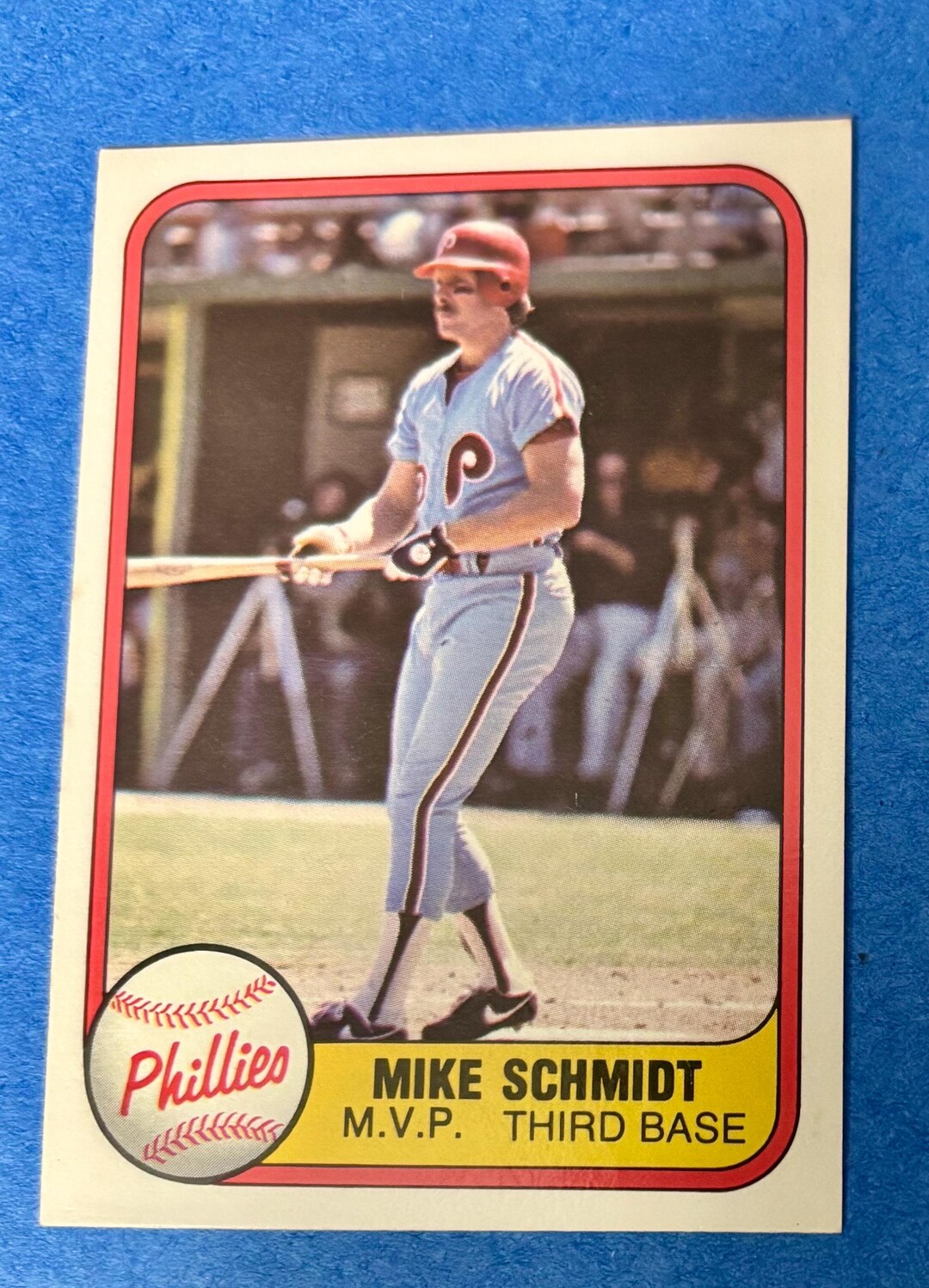
Mike Schmidt, the legendary third baseman for the Philadelphia Phillies, secured the 1981 National League MVP award in a landslide. This marked his second consecutive MVP win, having also claimed the honor in 1980.
In the shortened 102-game season, Schmidt demonstrated offensive dominance that solidified his status as the best player in the league. He hit .316 with 31 home runs and 91 runs batted in (RBI). His performance was particularly notable because of the high-pressure environment of the post-strike months. Schmidt’s ability to remain consistent while his team navigated the transition from the first half of the season to the second proved his immense value. He also led the league in slugging percentage (.644) and on-base percentage (.435), metrics that were beginning to gain more traction in voter considerations during that era.
American League MVP: Rollie Fingers
The American League MVP race in 1981 was a testament to the changing perception of relief pitching. Rollie Fingers, the veteran closer for the Milwaukee Brewers, became one of the few relief pitchers in history to capture the MVP award.
Fingers’ contribution to the Brewers was transformative. In 1981, he appeared in 47 games, recording 28 saves—a total that led the American League—while maintaining a stellar 1.04 earned run average (ERA). His presence at the end of games provided stability for the Brewers, who reached the playoffs for the first time in franchise history that year. Voters were clearly swayed by the tangible impact Fingers had on his team's ability to hold leads in a condensed season where every single game held magnified importance. His win signaled a shift in baseball analytics, moving away from purely counting stats and toward the recognition of high-leverage situational performance.
Comparative Analysis: Position Players vs. Pitchers
The 1981 awards highlight a fascinating dichotomy in baseball history. Mike Schmidt’s MVP was a reinforcement of the status quo: a superstar position player performing at an elite level. Rollie Fingers’ MVP, conversely, was a departure from tradition. At the time, relief pitchers were rarely considered for the MVP, as the Cy Young Award was viewed as the standard vehicle for recognizing elite pitching performance.
The following table compares their key offensive and pitching statistics for the 1981 season:
| Player | Team | League | Key Role | Major Stat |
|---|---|---|---|---|
| Mike Schmidt | Philadelphia Phillies | NL | Third Base | 31 HRs |
| Rollie Fingers | Milwaukee Brewers | AL | Relief Pitcher | 28 Saves |
While the statistics are not directly comparable due to the differing nature of the roles, the impact on their respective teams was deemed equally profound by the Baseball Writers' Association of America (BBWAA).
The Role of the BBWAA Voting Process
The selection of the 1981 MVPs was handled by the BBWAA, which has been responsible for the award since 1931. The 1981 vote was unique because the voters had to reconcile their ballots based on a truncated sample size. With fewer games played, "counting stats" like total hits or total home runs were naturally deflated compared to a standard 162-game schedule.
Voters had to weigh the quality of performance over the quantity of output. For Schmidt, this meant focusing on his elite efficiency. For Fingers, this meant recognizing that in a season divided into two halves, the ability to secure victory in the late innings of a short sprint was perhaps more valuable than it would have been in a long marathon. This decision-making process set a precedent for how future voters might handle unusual season structures, such as those caused by injuries or scheduling shifts.
Legacy of the 1981 Season
The 1981 MVP selections remain a point of discussion for baseball historians. The season itself is often remembered for the labor strife that necessitated the split-season format, but the individual honors awarded to Schmidt and Fingers provide a human dimension to that period of history.
Mike Schmidt’s back-to-back MVP awards confirmed his trajectory toward the Hall of Fame. Rollie Fingers’ award, meanwhile, acted as a catalyst for future relievers to be considered for top-tier individual honors, emphasizing the increasing importance of specialized bullpen roles in modern baseball.
Frequently Asked Questions
Who were the 1981 MLB MVPs? The 1981 NL MVP was Mike Schmidt of the Philadelphia Phillies, and the 1981 AL MVP was Rollie Fingers of the Milwaukee Brewers.
Why was the 1981 MLB season shortened? The season was shortened due to a players' strike that lasted from June 12 to July 31, 1981, resulting in the cancellation of hundreds of games.
How did the split-season format affect the MVP race? The split-season format meant that players had a smaller sample size of games to prove their value, forcing voters to prioritize per-game impact and situational performance over traditional season-long totals.
Was Rollie Fingers the first relief pitcher to win an MVP? No, he was not the first, but he was among a very select group. His win was significant because it underscored the growing tactical importance of the closer role during the early 1980s.
Did the 1981 MVP winners lead their teams to the World Series? Neither the Phillies nor the Brewers won the World Series in 1981. The Los Angeles Dodgers won the World Series that year, defeating the New York Yankees.
Final Perspective
The 1981 Major League Baseball season remains one of the most unusual in the sport's history, defined by its labor issues and the resulting split-season format. However, the recognition of Mike Schmidt and Rollie Fingers as the league’s most valuable players remains a testament to individual excellence amidst institutional instability. For those studying the evolution of baseball, the 1981 awards serve as a vital case study in how the definition of "value" can adapt to the constraints of the game's environment.