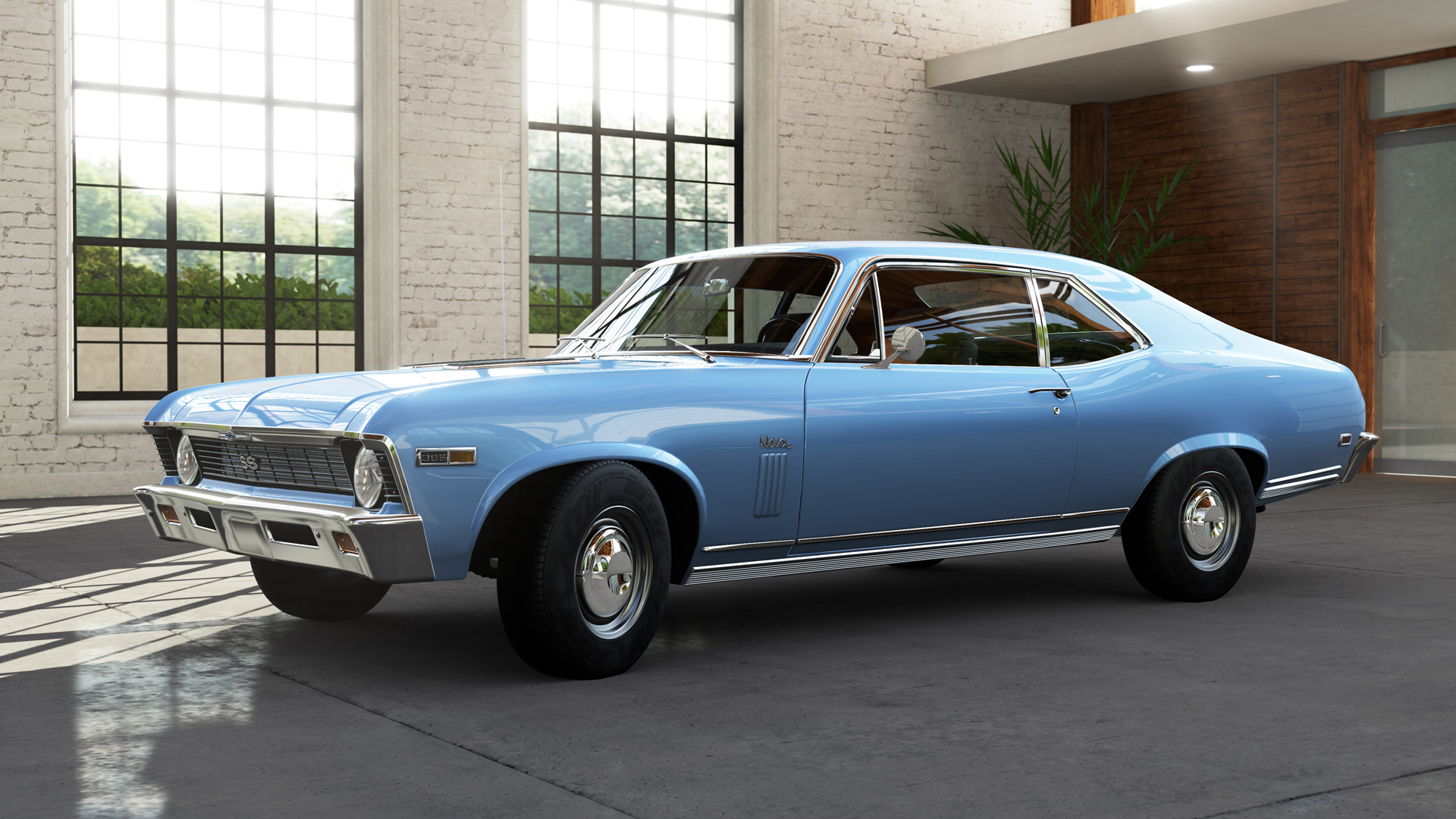
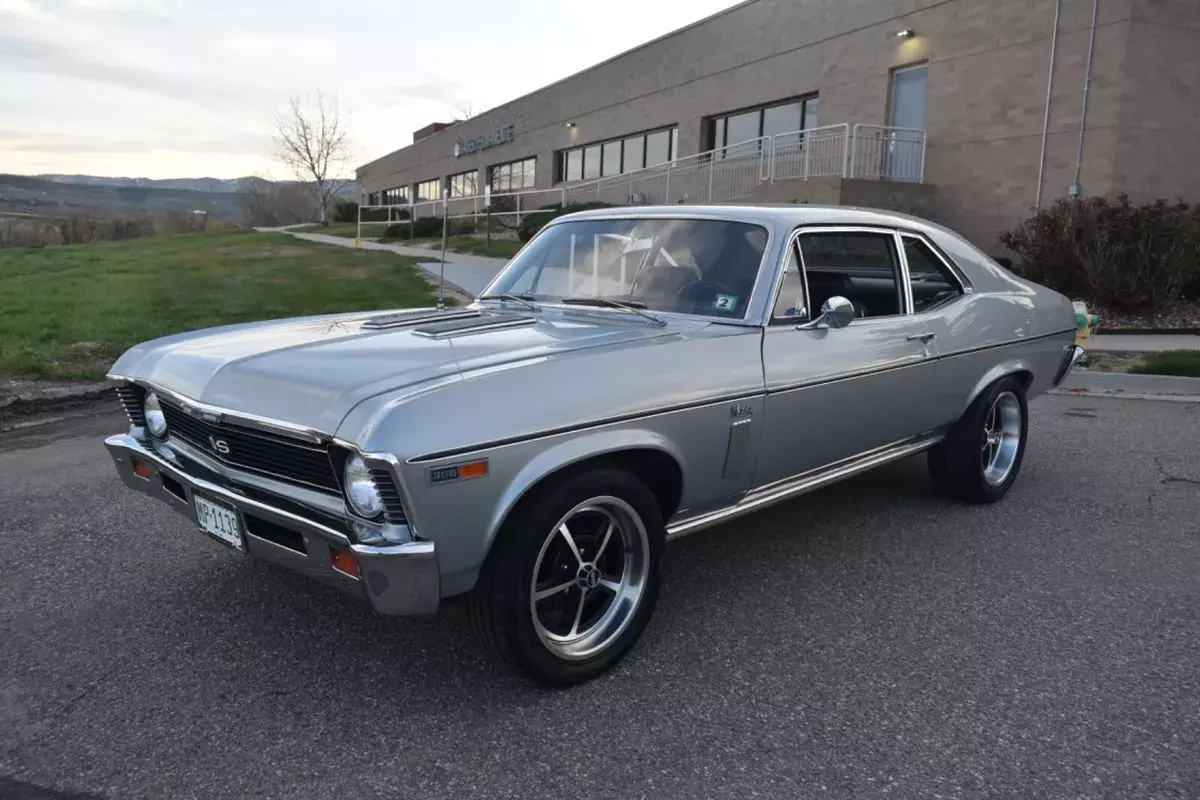
The 1969 Chevrolet Nova SS 396 represents a watershed moment in American muscle car history, capturing the golden era where lightweight compact bodies collided with big-block V8 powerplants. Tracing its roots from the economy-minded Chevy II platform to its final iteration as a factory-backed street brawler, the 1969 model year marks the ultimate evolutionary peak for the second-generation Nova body style, balancing raw straight-line acceleration with aggressive styling cues that continue to captivate automotive historians and collectors.
Introduction to the Nova Legacy: From Chevy II to Super Sport
To understand the evolutionary significance of the 1969 Chevrolet Nova SS 396, one must examine the lineage that preceded it. Introduced for the 1962 model year as the Chevy II, Chevrolet designed the compact car to counter Ford’s Falcon. It was intended as a basic, economical, and unpretentious form of transportation. However, the automotive landscape shifted dramatically mid-decade. As horsepower wars escalated and buyers demanded compact bodies packing large-displacement engines, Chevrolet engineers recognized the potential of dropping big-block power into a lightweight chassis.
By 1968, the platform underwent a complete redesign. The "Chevy II" moniker began to fade, and the car officially became simply the Chevrolet Nova. The wheelbase stretched to 111 inches, and a sleek, semi-fastback roofline replaced the boxy styling of earlier years. This fresh architecture provided the structural foundation for the high-performance Super Sport (SS) packages. While the 1968 models laid the groundwork, the 1969 model year refined the aesthetic, mechanical, and performance characteristics, making the Nova SS 396 an enduring legend of the muscle car era.
Pre-Production and Design Evolution Heading into 1969
The transformation of the Nova into a legitimate muscle car was not accidental; it was driven by shifting consumer demands and grassroots hot-rodding culture. Before official factory big-block Novas rolled off the assembly line, daring backyard mechanics and speed shops were already stuffing 396 cubic-inch engines into early Chevy II bays. Chevrolet management took notice of these modifications and realized they were leaving performance enthusiasts on the table.
For the 1969 model year, Chevrolet implemented several critical updates to differentiate the high-performance SS variants from standard base models. The styling became noticeably sharper. Designers introduced simulated front fender louvers, a heavily textured black-accented grille adorned with the iconic "SS" badge, and a distinct round fuel filler cap on the rear decklid. These visual modifications gave the car an aggressive, purposeful stance that telegraphed its hidden mechanical capabilities to anyone staring at it from a stoplight.
Key Aesthetic and Structural Updates for 1969
- Grille Treatment: A blacked-out grille insert that visually separated the SS from standard models.
- Fender Badging: Distinctive simulated louvers on the front fenders paired with "Nova SS" script.
- Rear Facia: A heavy-gauge rear bumper accented with a black lower valence and a specialized gas cap.
- Interior Accents: A simulated woodgrain steering wheel center and specialized SS instrumentation layout.
Mechanical Specifications of the 396 Big-Block Powerplant
At the heart of the 1969 Chevrolet Nova SS 396 was the legendary Mark IV big-block V8 engine. Displacing 396 cubic inches (though actually boasting a 402 cubic-inch bore in later production runs while retaining the iconic "396" badging), this powerplant was offered in multiple power tiers. Buyers could choose between the L34 engine, rated at 350 horsepower, or the more aggressive L78 engine, which pushed out a factory-rated 375 horsepower thanks to solid lifters, a high-lift camshaft, an aluminum intake manifold, and a massive 800-CFM Holley four-barrel carburetor.
Managing the immense torque generated by the big-block required robust drivetrain reinforcement. Chevrolet equipped the Nova SS 396 with heavy-duty multi-leaf rear springs, specialized shock absorbers, and stronger axle tubes to prevent wheel hop under hard acceleration. Stopping power was equally crucial; while front drum brakes came standard, many buyers opted for the front power disc brake package to arrest the heavy nose-heavy weight bias inherent to big-block installations.
| Engine Option | Horsepower | Torque (lb-ft) | Induction | Compression Ratio |
|---|---|---|---|---|
| L34 | 350 hp @ 5,200 RPM | 415 lb-ft @ 3,200 RPM | Rochester Quadrajet 4V | 10.25:1 |
| L78 | 375 hp @ 5,600 RPM | 415 lb-ft @ 3,600 RPM | Holley 4V (800 CFM) | 11.00:1 |
Transmission and Drivetrain Configuration Choices
Power delivery in the 1969 Nova SS 396 depended heavily on the transmission configuration selected on the order form. Enthusiasts seeking total control over shifting could select the heavy-duty M21 close-ratio or M22 "Rock Crusher" four-speed manual transmissions, operated via a floor-mounted Hurst shifter. Alternatively, buyers could opt for the stout Turbo Hydra-Matic 400 (TH400) three-speed automatic transmission, which proved exceptionally durable when handling the brutal shock loads of drag strip launches.
Power traveled backward through a robust 12-bolt rear axle assembly, widely considered one of the strongest rear ends ever installed in a production passenger car. Available with various ring-and-pinion gear ratios—ranging from highway-friendly 3.07 gears to aggressive 4.10 ratios meant strictly for track work—the 12-bolt differential ensured that the big-block’s output made it securely to the pavement. Posi-traction limited-slip differentials were heavily specified to maintain equal power distribution across both rear tires during aggressive acceleration.
The COPO Phenom: Pushing Beyond the 396
While the 396 cubic-inch engine defined the standard production SS model, the evolution of the 1969 Nova reached its absolute zenith through the Central Office Production Order (COPO) system. Pioneered by innovative dealers like Fred Gibb and championed by enthusiast networks, the COPO program bypassed standard corporate limits to install the legendary 427 cubic-inch L72 big-block engine into the lightweight Nova chassis.
These COPO Novas—specifically models like the COPO 9562—displaced 427 cubic inches and pumped out a conservative, insurance-friendly factory rating of 425 horsepower. In reality, with minor tuning, these cars routinely dominated local street races and track events. Because they were built using standard production bodies with heavy-duty internal components, they represented the purest expression of factory-authorized hot rodding, cementing the Nova’s reputation in drag racing lore.
Driving Dynamics, Performance, and Weight Distribution
Driving a 1969 Chevrolet Nova SS 396 required a careful respect for physics. The installation of the massive iron-block big-block V8 added significant weight over the front wheels compared to the small-block or inline-six variants. This nose-heavy weight bias resulted in distinct handling characteristics: straight-line stability was exceptional, but tight corners demanded deliberate braking and throttle management to avoid understeer.
On the drag strip, however, these traits mattered very little. The combination of a short 111-inch wheelbase, light overall vehicle weight (hovering around 3,300 to 3,400 pounds depending on options), and massive low-end torque made the Nova SS 396 a formidable weapon. Stock L78 models were capable of running quarter-mile times in the low-to-mid 13-second range straight off the showroom floor, a staggering feat for an affordable compact car in 1969.
Cultural Impact and Collector Market Evolution
In contemporary automotive culture, the 1969 Chevy Nova SS 396 occupies a revered space. During its production run, it served as an affordable giant-killer, allowing working-class enthusiasts to compete against expensive European sports cars and larger muscle platforms alike. Insurance surcharges and tightening federal emissions regulations in the early 1970s effectively ended the high-horsepower muscle car era shortly after, turning the 1969 model into a fleeting masterpiece.
Today, the collector market views authentic, numbers-matching 1969 Nova SS 396 models—especially those featuring documented provenance, original build sheets, and high-output L78 engines—as blue-chip investments. Restorations require meticulous attention to detail, as factory assembly lines often featured unique variations based on plant origin (such as Van Nuys, California, or Norwood, Ohio). Enthusiast clubs, registries, and dedicated parts suppliers continue to support the preservation of these vehicles, ensuring their history remains intact for future generations.
Frequently Asked Questions
How can you verify a real 1969 Chevy Nova SS 396?
Verifying an authentic Nova SS 396 requires checking the vehicle identification number (VIN). For 1969 models, the fifth digit of the VIN must be a "Y," which designates a V8 engine built for the Super Sport package. Additionally, verifying matching numbers on the engine block stamp, transmission casing, and 12-bolt rear axle differential tag provides definitive proof of authenticity.
What is the difference between the L34 and L78 396 engines?
The primary differences lie in internal components and output ratings. The L34 produced 350 horsepower using hydraulic lifters and a moderate camshaft profile, making it docile for street driving. The L78 produced 375 horsepower and utilized solid lifters, a high-lift mechanical camshaft, higher compression pistons, and an aluminum intake manifold, designed for higher RPM performance.
Did Chevrolet offer air conditioning with the 396 big-block Nova?
No, factory air conditioning was not available on 1969 Chevrolet Nova models equipped with the 396 big-block engine. The physical dimensions of the massive Mark IV engine block and exhaust manifolds left insufficient clearance in the engine bay to accommodate both the big-block and the factory AC compressor housing.
What tire sizes came standard on the 1969 Nova SS 396?
Factory-issued 1969 Nova SS 396 models typically rolled on E70-14 wide oval bias-ply tires mounted on 14-inch steel wheels accented with chrome hubcaps or optional Super Sport styled wheels. Many contemporary restorations upgrade these to modern radial tires for improved handling while maintaining a period-correct appearance.
Conclusion and Preservation Recommendations
The 1969 Chevrolet Nova SS 396 stands as an enduring monument to an era when displacement ruled the streets and compact styling met unbridled muscle. For modern owners, collectors, and restorers, preserving these vehicles demands a commitment to historical accuracy, proper mechanical maintenance, and secure storage. Whether maintained as a pristine museum piece or driven sparingly on weekend tours, respecting the raw power and historical significance of the Nova SS 396 ensures that this chapter of automotive history remains vibrant for decades to come.