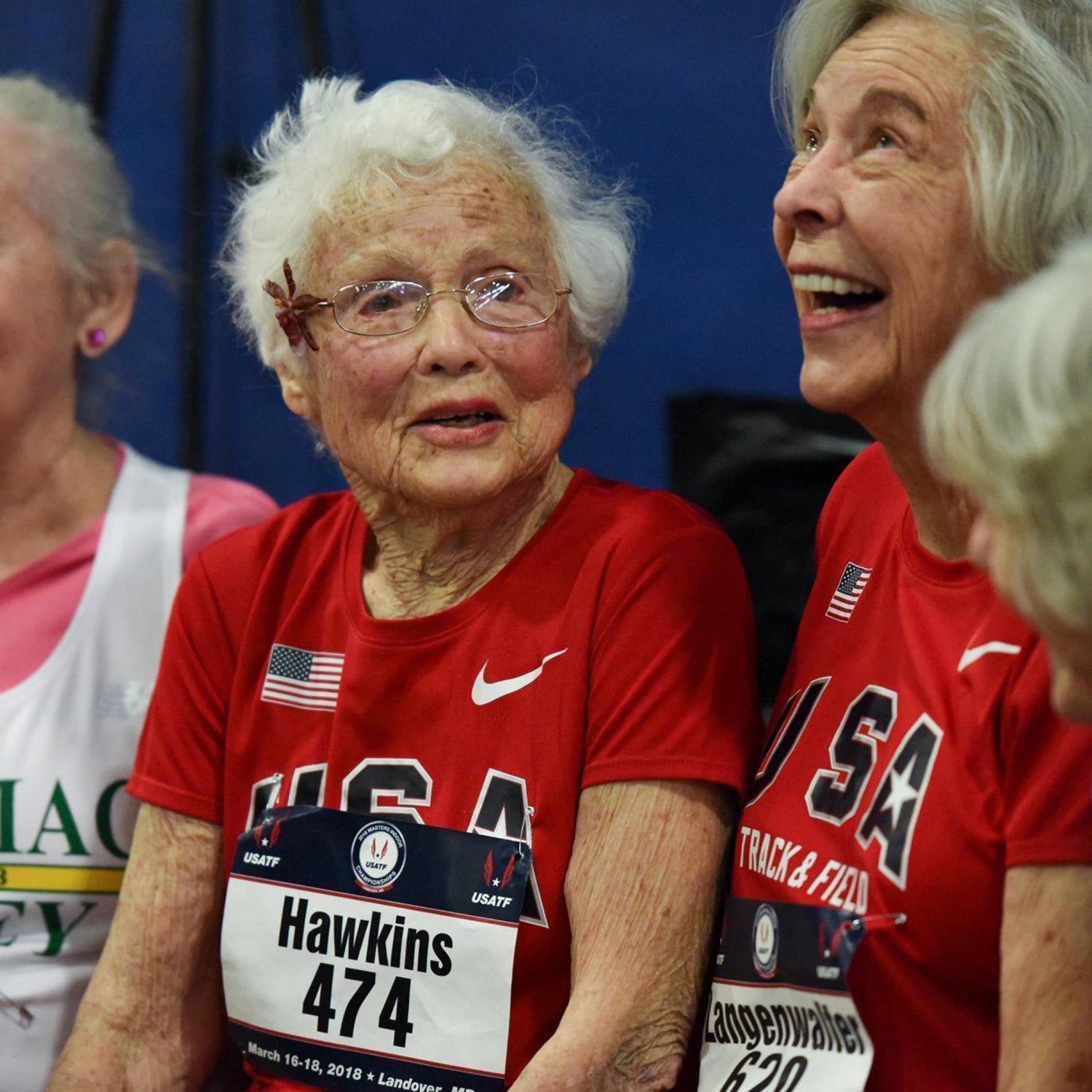
A centenarian runner is an individual who continues to participate in competitive or recreational running at 100 years of age or older. These remarkable athletes challenge conventional expectations of human aging, demonstrating that lifelong endurance training, genetic resilience, and proper physiological maintenance can preserve cardiovascular fitness, joint mobility, and neuromuscular coordination deep into the final century of life.
The human body undergoes profound physiological changes over a century of living, making the presence of centenarian athletes a subject of intense scientific and medical curiosity. Far from being statistical anomalies who merely survive into old age, 100-year-old runners actively train, compete in sanctioned events, and set age-group world records. Analyzing these individuals requires a multifaceted examination of exercise physiology, sports gerontology, historical milestones, and the practical safety boundaries governing high-intensity physical activity in advanced age.
Defining the Centenarian Running Phenomenon
The concept of a 100-year-old runner sits at the intersection of extreme longevity and master's athletics. Master's athletics generally categorizes competitors by five-year age brackets starting at age 35, but as life expectancy has increased globally, governing bodies like World Masters Athletics have expanded or adapted their statistical records to accommodate athletes competing in the 100-and-over division.
Running at age 100 is distinct from casual walking or basic mobility maintenance. It involves a running gait—a phase of motion where both feet leave the ground simultaneously—distinguishing a runner from a walker. While the velocities achieved by centenarian runners are significantly lower than those of younger athletes, the biomechanical forces, cardiovascular demands, and psychological discipline required remain remarkably similar.
The Evolution of Age-Group Records
Historically, competing past the age of 100 was exceedingly rare, and athletic governing bodies rarely tracked performances for centenarians. However, the rise of organized master's track and field competitions in the latter half of the 20th century transformed how older adults engage with sport.
The most prominent historical figure in this domain is Fauja Singh, a British-Indian marathon runner who captured global attention by completing marathons in his late 90s and early 100s. While administrative disputes regarding the exact verification of his birth certificate (dating to 1911) occasionally surface in record-keeping debates, his participation brought unprecedented visibility to centenarian endurance sport. Similarly, athletes like Ida Keeling set American and world records in sprint events for women aged 100 and older, proving that both middle-distance endurance and short-distance power can be sustained at a century mark.
Physiological Profile of the Centenarian Athlete
Understanding how a 100-year-old body can sustain running requires looking at the cardiovascular, respiratory, muscular, and skeletal systems. Aging inevitably brings declines in maximal oxygen uptake ($\text{VO}_2\text{ max}$), muscle mass (sarcopenia), and bone mineral density. However, regular endurance exercise alters the trajectory of these declines.
Cardiovascular and Respiratory Adaptations
As humans age, maximum heart rate decreases, arterial stiffness increases, and stroke volume can decline. In sedentary individuals, $\text{VO}_2\text{ max}$ drops by approximately 10% per decade after the age of 30.
For centenarian runners, longitudinal studies suggest that lifelong aerobic exercise preserves endothelial function, maintains capillary density in skeletal muscle, and blunts the rate of $\text{VO}_2\text{ max}$ deterioration. While a 100-year-old runner's absolute aerobic capacity is a fraction of a young adult's, their relative cardiovascular efficiency compared to sedentary peers of the same age is exceptionally high.
Musculoskeletal and Biomechanical Realities
Sarcopenia—the age-related loss of muscle mass and function—presents a major hurdle for older adults. Centenarian runners combat this through the principle of neuromuscular recruitment. Running demands the coordinated firing of motor units across the lower extremities, core, and upper body.
- Stride Length and Cadence: Centenarian runners typically exhibit a reduced stride length and an increased cadence to maintain stability and minimize ground reaction forces.
- Connective Tissue Resilience: Tendons and ligaments lose elasticity over time. Successful centenarian runners often display a genetic or mechanically efficient gait that minimizes excessive shear stress on the knees and hips.
- Bone Density: Weight-bearing exercise like running stimulates osteoblast activity, helping to mitigate the severe osteoporosis commonly observed in centenarians.
Training and Preparation Strategies at 100 Years Old
Training a centenarian runner diverges drastically from standard athletic programming. The primary objective shifts from peak performance optimization to injury prevention, adequate recovery, and physiological preservation.
Intensity Regulation and Monitoring
High-intensity interval training or sustained maximal effort can place undue stress on fragile cardiovascular systems and joint structures. Consequently, centenarian training regimens rely on:
- Self-Regulated Pacing: Utilizing perceived exertion scales rather than rigid heart rate zones, as medication (such as beta-blockers) frequently alters geriatric heart rates.
- Extended Recovery Windows: Allowing 48 to 72 hours of rest between significant running sessions to accommodate slower cellular repair rates.
- Cross-Training Integration: Supplementing low-mileage running with stationary cycling, swimming, or guided resistance training to maintain muscular balance without pounding joints.
Nutrition and Hydration in Advanced Age
Nutritional requirements for centenarian athletes focus on countering age-related deficiencies:
- Protein Intake: Higher relative protein consumption is required to stimulate muscle protein synthesis and counteract sarcopenia.
- Caloric Sufficiency: Ensuring adequate caloric intake to prevent unintentional weight loss and frailty, which is a major risk factor for older adults.
- Fluid Balance: Age-related blunting of the thirst mechanism necessitates conscious, structured hydration protocols before, during, and after physical exertion.
Comparison of Age-Group Running Categories
To contextualize the achievements of a 100-year-old runner, it is helpful to examine how physiological metrics and competitive frameworks shift across advanced age brackets.
| Age Bracket | Primary Physiological Challenges | Typical Training Focus | Common Distances |
|---|---|---|---|
| 55–64 Years | Onset of noticeable recovery slowdown; menopausal/andropausal shifts. | Maintaining baseline mileage; injury management. | 5K to Marathons |
| 65–79 Years | Accelerated loss of fast-twitch muscle fibers; joint stiffness. | Lower-impact volume; strength training integration. | 5K to Half Marathons |
| 80–99 Years | Substantial drop in $\text{VO}_2\text{ max}$; balance and fall risk management. | Short, controlled runs; walking intervals; mobility work. | Sprints to 5K |
| 100+ Years | Extreme sarcopenia risk; fragile bone density; prolonged recovery times. | Consistency over intensity; short track distances; functional movement. | 60m to 5K |
Medical Considerations, Risks, and Safety Protocols
Engaging in high-impact sports at 100 years of age carries inherent medical risks. Before initiating or continuing a running program, centenarians require rigorous clinical evaluation.
Pre-Participation Screening
A comprehensive medical clearance for a centenarian runner typically involves:
- Electrocardiogram (ECG) and Stress Testing: To screen for asymptomatic coronary artery disease, arrhythmias, or ischemic responses.
- Orthopedic Assessment: Evaluating structural integrity, spinal alignment, and advanced osteoarthritis in weight-bearing joints.
- Cognitive and Balance Evaluation: Ensuring the athlete possesses sufficient spatial awareness and neuromuscular stability to navigate running tracks or outdoor pathways safely without falling.
Fall Prevention and Injury Management
Falls represent a catastrophic health event for individuals aged 100 and older, frequently leading to hip fractures and rapid loss of independence. Centenarian runners must prioritize flat, predictable surfaces (such as rubberized running tracks) and avoid uneven terrain, inclement weather, or high-traffic roadways where tripping hazards are prevalent. Furthermore, any sign of persistent joint pain, stress fractures, or unusual chest discomfort mandates an immediate cessation of running activities.
Note: This information is for educational purposes and does not substitute for professional medical evaluation. Older adults should consult board-certified geriatricians and sports medicine specialists before undertaking vigorous exercise programs.
Frequently Asked Questions
Can anyone become a 100-year-old runner?
While regular running drastically improves healthspan and longevity markers, reaching age 100 while maintaining the physical capacity to run is heavily influenced by a combination of genetics, lifelong habits, luck regarding chronic disease avoidance, and early intervention against injuries. Not all individuals will retain the musculoskeletal and cardiovascular integrity required to run at a century mark, regardless of their training discipline.
How fast do 100-year-old runners typically complete races?
Speeds vary widely based on the specific event and the athlete's physical condition. In short sprint events (such as the 100-meter dash), centenarian runners often finish in times ranging from 40 seconds to over a minute. In longer distance events like a 5K, completion times can range from 45 minutes to well over an hour, with many athletes utilizing a run-walk strategy.
What are the main health benefits of running into old age?
Running stimulates cardiovascular output, enhances bone mineral density, preserves insulin sensitivity, maintains muscle mass, and promotes cognitive health through increased neurogenesis and blood flow to the brain. Psychologically, maintaining an athletic identity provides purpose, social connection, and emotional resilience.
Did centenarian runners start running late in life, or are they lifelong athletes?
Centenarian runners span both categories, though lifelong runners dominate the upper echelons of age-group performance. However, "late-starter" master's athletes who begin running in their 60s, 70s, or 80s still achieve remarkable cardiovascular and functional improvements, proving that cellular adaptation to exercise occurs at any age.
Practical Next Actions for Lifelong Runners
For runners seeking to preserve their longevity and potentially join the ranks of long-lived master's competitors, adopting a sustainable, injury-averse training philosophy is essential.
- Prioritize Consistency Over Mileage: Shift the focus from weekly distance accumulation to consistent, pain-free frequency of movement.
- Inforce Strength Work: Implement targeted resistance training twice weekly to protect joints and maintain the muscular scaffolding required for running mechanics.
- Listen to Biological Feedback: Respect recovery signals meticulously. Overtraining in older age leads to extended setbacks that are exponentially harder to recover from compared to younger years.