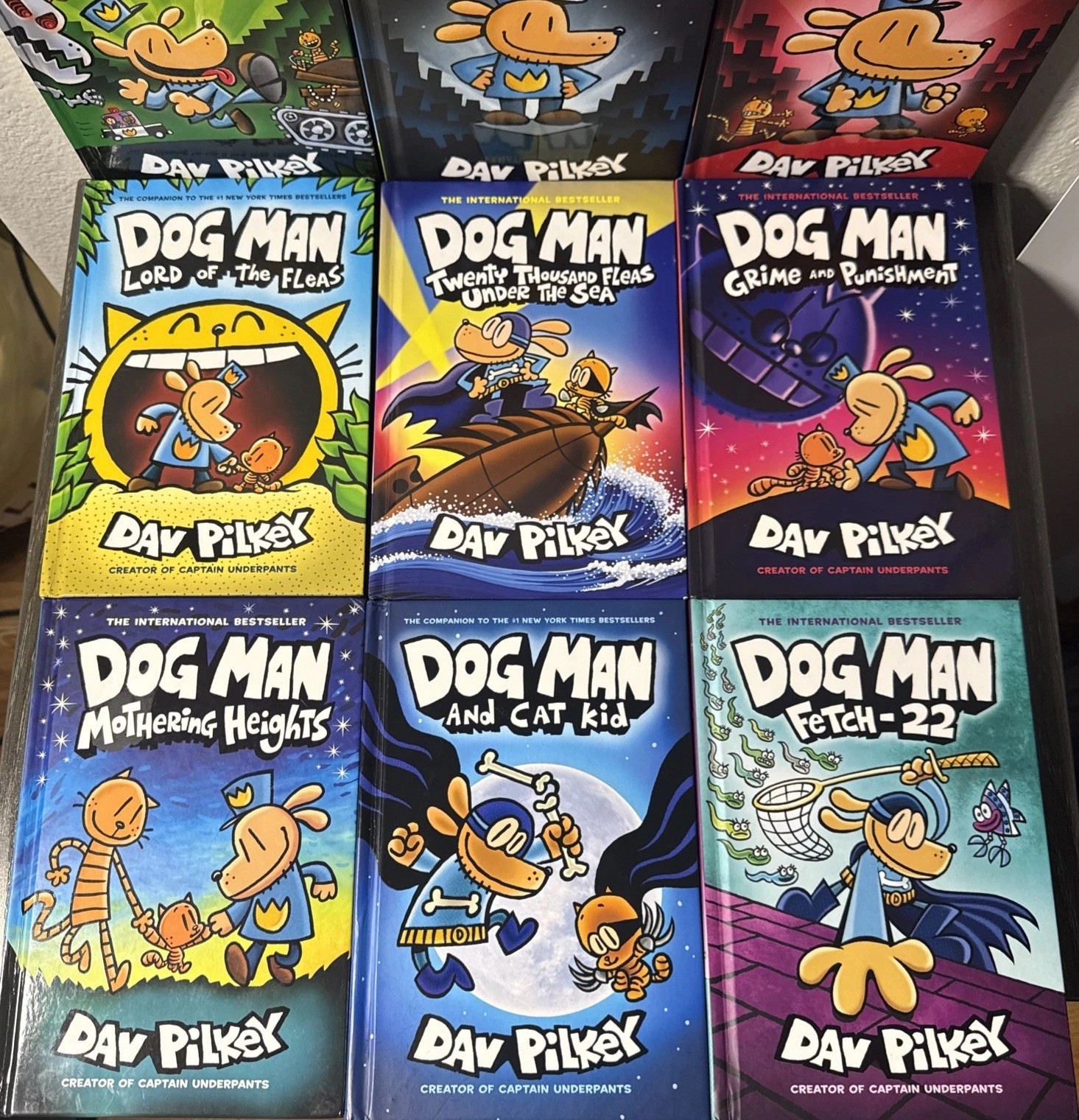
Dav Pilkey is the acclaimed author and illustrator behind some of the most widely read children's graphic novels and chapter books of the modern era, most notably the Captain Underpants series and Dog Man. Beyond his tremendous commercial success and massive global readership, Pilkey’s personal journey features a series of remarkable milestones, unexpected struggles with learning differences, and a deeply creative upbringing that directly shaped his iconic characters and unconventional storytelling style.
1. He Struggled with ADHD and Dyslexia as a Child
Long before he became a multi-platinum-selling children's author, Dav Pilkey faced significant hurdles in traditional classrooms. Growing up in Cleveland, Ohio, during the 1960s and 1970s, he was diagnosed with Attention Deficit Hyperactivity Disorder (ADHD) and severe dyslexia. In those decades, educational awareness and structural support for neurodivergent students were far less developed than they are today.
As a result, Pilkey frequently found himself struggling to keep up with standard reading assignments and demanding writing prompts. Rather than receiving tailored pedagogical encouragement, his restless behavior and difficulties with spelling and decoding text often led to disciplinary action. Teachers frequently viewed his lack of focus and impulsive tendencies as behavioral disruptions rather than symptoms of a unique cognitive wiring. These early educational roadblocks left him feeling alienated, discouraged, and largely disconnected from the traditional academic environment.
2. Captain Underpants Was Born in a Second-Grade Classroom
The iconic superhero Captain Underpants did not originate in a sophisticated publishing boardroom or a professional illustrator's studio. Instead, the character was conceived during one of Pilkey's frequent disciplinary episodes in second grade. Because his classroom behavior often disrupted lessons, his frustrated teacher would routinely banish him to the hallway outside the classroom door.
Relegated to the solitary expanse of the hallway with nothing more than a pencil and a blank sheet of paper, young Pilkey channeled his restless energy into cartooning. During these hallway confinements, he sketched the prototype for a caped crusader wearing nothing more than white underwear. The character's whimsical name and irreverent nature provided a much-needed outlet for a child who felt stifled by rigid school rules. Ironically, the very traits and punishments that made traditional school difficult for Pilkey served as the incubator for a multi-billion-dollar literary franchise.
3. His Teachers Routinely Confiscated and Tore Up His Early Art
The creative spark that fueled Pilkey's early drawing habits was not always welcomed by the adults in charge of his education. In elementary and middle school, his notebooks were packed with comic strips and irreverent illustrations rather than standard class notes. Unfortunately, many of his teachers viewed these drawings as unwelcome distractions that interfered with the standard curriculum.
On multiple occasions, educators confiscated Pilkey's handmade comic books and tore them up right in front of him, telling him that he needed to stop wasting his time on silly cartoons and focus on serious schoolwork. This punitive approach could easily have crushed the creative spirit of a sensitive child. Instead, Pilkey preserved his passion in secret, continuing to draw whenever he could safely do so. These experiences later inspired the mischievous school-age protagonists George Beard and Harold Hutchins in the Captain Underpants series, who famously create their own comic books and face strict opposition from school administrators.
4. He Won a National Writing Contest in 1986 That Launched His Career
Pilkey’s formal entry into the professional publishing world began with a pivotal achievement in 1986. While attending Kent State University, he entered the National Mutual Life’s annual competition for student authors and illustrators, known as the National Written & Illustrated By… Awards Contest for Students.
His submission, an original children's book titled World War Won, offered a whimsical, satirical take on arms races and international conflict through the eyes of quirky animal characters. Pilkey won the contest in the category for entrants aged 18 through 19. The grand prize was not merely a trophy or a cash award; it included a binding publishing contract with the contest's sponsor, Landmark Books. This monumental breakthrough allowed a young, struggling student with learning differences to see his work professionally bound, edited, and distributed to bookstores across the United States, proving that his artistic vision had genuine commercial viability.
5. Dog Man Emerged Directly from the Captain Underpants Universe
The vast literary empire created by Dav Pilkey expanded significantly in 2016 with the launch of the Dog Man series. However, the character is not an entirely new invention; he has deep roots within the existing Captain Underpants lore. Within the narrative framework of the original series, the characters George and Harold are established as aspiring comic book creators who invent a wide variety of satirical heroes, including Dog Man.
In Captain Underpants and the Attack of the Talking Toilets and subsequent installments, readers are occasionally treated to short, crude comic book inserts purportedly written and drawn by the two fourth-grade protagonists. Dog Man was one of those fictional creations. Recognizing the immense appeal of a half-dog, half-cop hero who fights crime while wrestling with his canine instincts, Pilkey spun the concept out into its own dedicated graphic novel series. The spin-off quickly surpassed even the wildest sales expectations, becoming a dominant force in contemporary children's literature.
6. He Routinely Integrates "Flip-O-Ramas" Into His Books
One of the most distinctive interactive features of Dav Pilkey's books is the inclusion of "Flip-O-Rama" sequences. These specialized multi-page sections encourage physical interaction between the young reader and the physical book, transforming a passive reading experience into an active animation exercise.
To execute a Flip-O-Rama, Pilkey instructs the reader to hold the book with one hand and rapidly flip a specific set of pages back and forth with the thumb of the other hand. This mechanical action creates a primitive yet effective animation effect, bringing high-action scenes—such as giant robotic toilets stomping through a city or monsters roaring—to life right on the page. Pilkey invented this technique as a way to engage readers who might find standard text heavy or intimidating, blending traditional storytelling with the kinetic energy of early motion pictures and flip-books.
7. He Moved to the Pacific Northwest to Focus on Deep Creative Work
Despite his upbringing in the American Midwest, Pilkey eventually relocated to the Pacific Northwest, settling in Washington state. This geographical shift was not merely a lifestyle choice; it played a crucial role in his creative output and personal well-being.
The serene, rain-drenched landscapes and quiet isolation of the Pacific Northwest provided Pilkey with the peaceful environment necessary to manage his ADHD and maintain the intense focus required to write and illustrate complex graphic novels. Working from a secluded studio, he spends months at a time drafting storylines, sketching character arcs, and hand-painting each panel with watercolor and ink. This quiet lifestyle allows him to remain deeply prolific, producing multiple books across different series while maintaining a remarkably high standard of artistic detail.
8. His Books Have Faced Frequent Library and School Censorship Challenges
Despite bringing millions of reluctant readers to public libraries and school book fairs, Dav Pilkey's works have frequently landed on lists of banned and challenged books. According to data compiled by the American Library Association (ALA), the Captain Underpants series has repeatedly appeared on annual compilations of the most challenged books in the United States.
The primary objections raised by concerned parents, school boards, and community groups typically center around alleged behavioral issues. Critics argue that the books promote disobedience, encourage disrespect toward authority figures such as principals and teachers, and feature bathroom humor, slapstick violence, and occasionally crude language. Pilkey has consistently defended his work, noting that the books celebrate children's agency, humor, and imagination, while also offering a welcoming gateway for kids who struggle with traditional reading materials.
9. He Is a Passionate Advocate for Literacy and Reluctant Readers
Having experienced firsthand the frustration of struggling with reading difficulties in a rigid educational system, Pilkey has dedicated a substantial portion of his platform and philanthropic efforts to supporting literacy initiatives and reluctant readers.
He frequently collaborates with organizations such as Scholastic to promote reading programs, donate books to underfunded schools, and speak directly to children who feel left behind by standard academic metrics. Pilkey’s core philosophy centers on the idea that reading should be fun, accessible, and free from shame. By validating the reading struggles of children and offering high-interest, visually engaging graphic novels, he has helped transform countless kids who once claimed they "hated reading" into enthusiastic, lifelong library patrons.
10. He Experimented with Digital Tools While Maintaining Traditional Art Styles
Although digital illustration software and computer-generated graphics have become standard across the modern publishing industry, Pilkey maintains a remarkably traditional approach to the physical creation of his art. While he utilizes modern digital tools for layout, lettering adjustments, and final color correction, the foundational artwork for his books is still created using physical mediums.
Pilkey relies heavily on traditional pen, ink, colored pencils, and watercolor paints for his original illustrations. This hands-on method gives his books a distinct, organic texture that distinguishes them from slick, vector-based digital cartoons. The slight imperfections, visible brushstrokes, and tactile warmth of his artwork contribute significantly to the approachable, homemade feel that has endeared his books to generations of young readers.
Comparative Overview of Major Dav Pilkey Series
| Series Title | Publication Debut | Primary Protagonists | Key Format Features | Main Themes |
|---|---|---|---|---|
| Captain Underpants | 1997 | George Beard, Harold Hutchins, and Captain Underpants | Flip-O-Ramas, comic book inserts, chapter book layout | Friendship, imagination, anti-authoritarian humor, school life |
| Dog Man | 2016 | Dog Man, Li'l Petey, 80-HD | Full-color graphic novel format, step-by-step drawing guides | Redemption, empathy, technology vs. nature, found family |
| Cat Kid Comic Club | 2020 | Molly, Flippy, and a cast of baby frogs | Mixed media panels, diverse artistic styles, collaborative storytelling | Creative expression, overcoming failure, artistic experimentation |
Frequently Asked Questions About Dav Pilkey
Why did Dav Pilkey write Captain Underpants?
Dav Pilkey created the character and stories to entertain himself while dealing with disciplinary isolation in second grade, where he was frequently sent into the hallway for disruptive behavior caused by his undiagnosed ADHD. As an adult, he wanted to write books that he would have loved as a child—stories that prioritized humor, action, and accessibility over dry, intimidating text.
Is Dav Pilkey still writing new books?
Yes, Pilkey remains active in the children's literature space. He continues to expand his publishing footprint through ongoing installments in the Dog Man and Cat Kid Comic Club series, working from his studio in the Pacific Northwest.
How did Dav Pilkey overcome his dyslexia?
While dyslexia is a lifelong neurodevelopmental difference rather than a condition that is permanently "cured," Pilkey learned to adapt by leaning into his visual strengths. By combining his love for drawing with storytelling, he bypassed traditional reading barriers and developed reading strategies that worked for his specific cognitive profile.
What was Dav Pilkey's very first published book?
Pilkey's first professionally published book was World War Won, which he wrote and illustrated while attending college. He won the national student author award in 1986, which secured a binding book contract and launched his professional career.
Why are Dav Pilkey's books banned in some schools?
The books have faced challenges from certain parents and school boards due to concerns over bathroom humor, slapstick violence, and perceived encouragement of misbehavior and disrespect toward teachers and school principals. Despite these controversies, the books remain massively popular in public libraries and school book fairs worldwide.
Practical Next Steps for Readers and Educators
If you are an educator, parent, or reader looking to explore Dav Pilkey's work or support a reluctant reader, consider the following practical approaches:
- Embrace Graphic Novels: Recognize that graphic novels are legitimate, high-value literary tools that build vocabulary, visual literacy, and reading confidence.
- Explore the Companion Guides: Utilize the step-by-step drawing tutorials included in the back of Dog Man and Cat Kid Comic Club books to encourage children to combine reading with creative writing and sketching.
- Check Local Library Resources: Visit your public library to access diverse selections of Pilkey's backlist, supporting community literacy programs while exploring titles cost-free.