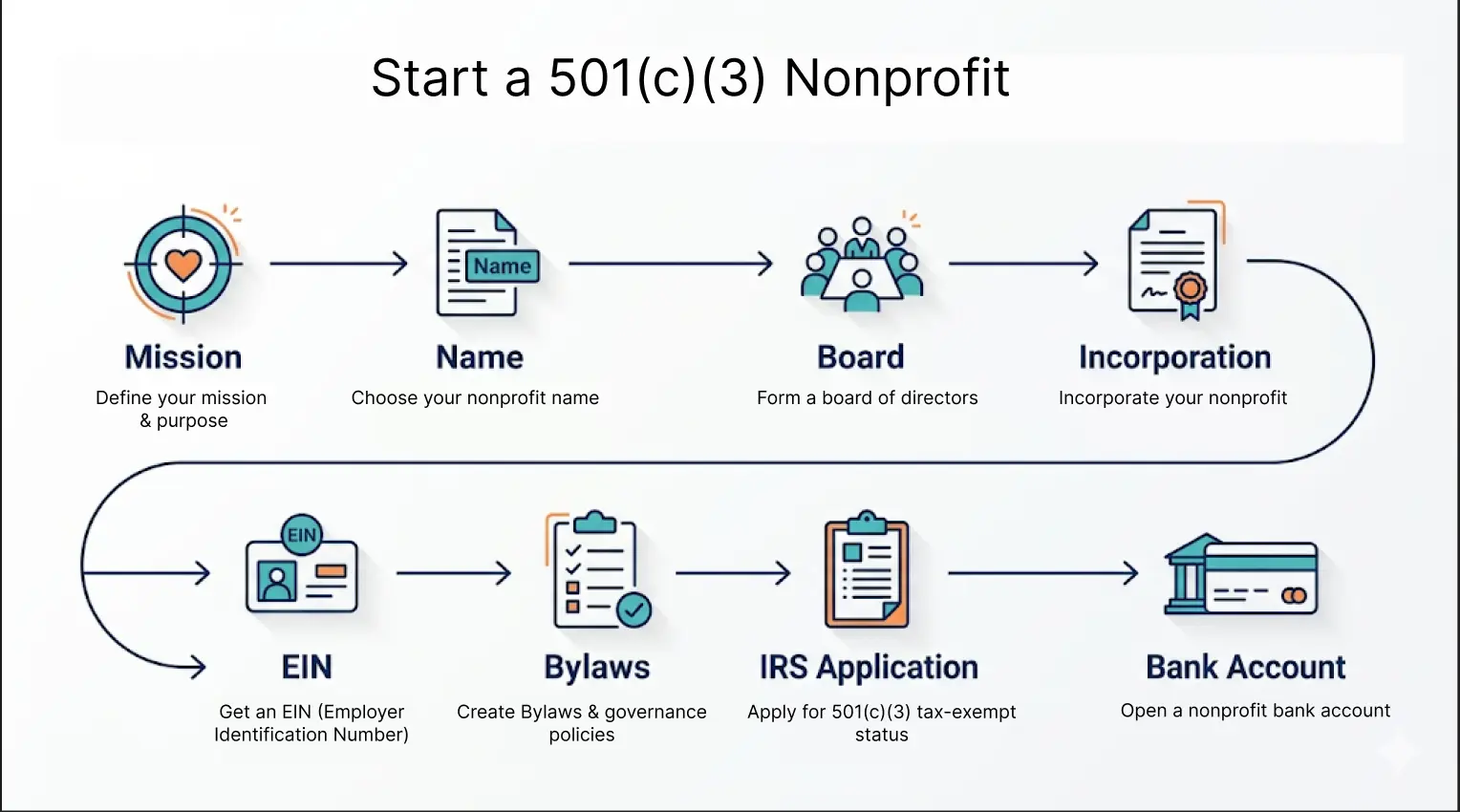
Starting a 501(c)(3) nonprofit organization is a multi-step legal process that requires rigorous adherence to state and federal regulations. By incorporating at the state level, adopting foundational bylaws, and securing tax-exempt status from the Internal Revenue Service (IRS), organizers can establish a formal entity dedicated to charitable, educational, or religious purposes while providing tax benefits to donors.
1. Define Your Mission and Purpose
Before filing any paperwork, you must clearly articulate the "why" behind your organization. A 501(c)(3) must be organized and operated exclusively for exempt purposes, which include charitable, religious, educational, scientific, literary, or public safety testing activities. Draft a mission statement that acts as your organization’s North Star. This statement will be required when you file your Articles of Incorporation and when you apply for tax-exempt status with the IRS. Ensure your purpose is narrow enough to focus your efforts but broad enough to allow for the growth and evolution of your programs over time.
2. Choose a Board of Directors
A nonprofit must have a governing body. The board of directors is responsible for providing oversight, setting organizational policy, and ensuring that the nonprofit remains compliant with state and federal laws. When selecting your board, prioritize individuals with diverse skill sets, such as legal, financial, marketing, and programmatic experience. Avoid choosing board members who have a conflict of interest with the organization’s mission. In many jurisdictions, you will need at least three directors to satisfy incorporation requirements.
3. Select a Unique Name for Your Nonprofit
Your organization’s name must be unique within your state. Before proceeding, perform a name search on the website of your state’s Secretary of State or equivalent business registration office. Check for availability not just in your home state, but also consider whether the name is trademarked nationally. Avoid names that are deceptively similar to existing organizations, as this can lead to legal complications or rejection of your incorporation filing.
4. File Articles of Incorporation
The Articles of Incorporation serve as the legal "birth certificate" for your nonprofit. You must file these with the state agency responsible for business registrations. To qualify for 501(c)(3) status, your articles must include specific language mandated by the IRS, such as a statement of purpose and a dissolution clause that dictates where assets will go if the organization ever ceases operations. Failure to include this "tax-exempt language" at the moment of incorporation will necessitate an amendment later, which often involves additional filing fees.
5. Draft Bylaws and Conflict of Interest Policy
Bylaws are the internal rulebook for your organization. They dictate how the board is elected, how meetings are conducted, how officers are appointed, and how decisions are made. While bylaws are not usually filed with the state, the IRS will request a copy during your tax-exemption application process. Simultaneously, develop a formal Conflict of Interest Policy. This document ensures that board members and staff prioritize the nonprofit’s interests over personal financial gain, protecting the organization’s reputation and maintaining its legal standing.
6. Obtain an Employer Identification Number (EIN)
Your EIN is the federal tax identification number for your organization, functioning much like a Social Security number for an individual. You can obtain an EIN for free through the official IRS website. You will need this number to open a bank account, hire employees, and file your tax-exempt application. Do not use a personal Social Security number for any of your organization’s financial transactions.
7. Hold Your First Board Meeting
Once incorporated, you must hold an initial meeting of the board of directors. During this meeting, you should formally adopt your bylaws, elect officers, approve the conflict of interest policy, and ratify the actions taken by the organizers up to that point. It is critical to record these proceedings in official minutes. These minutes provide the "paper trail" that the IRS and state regulators look for to prove that the nonprofit is being governed according to its stated rules.
8. Apply for 501(c)(3) Tax-Exempt Status
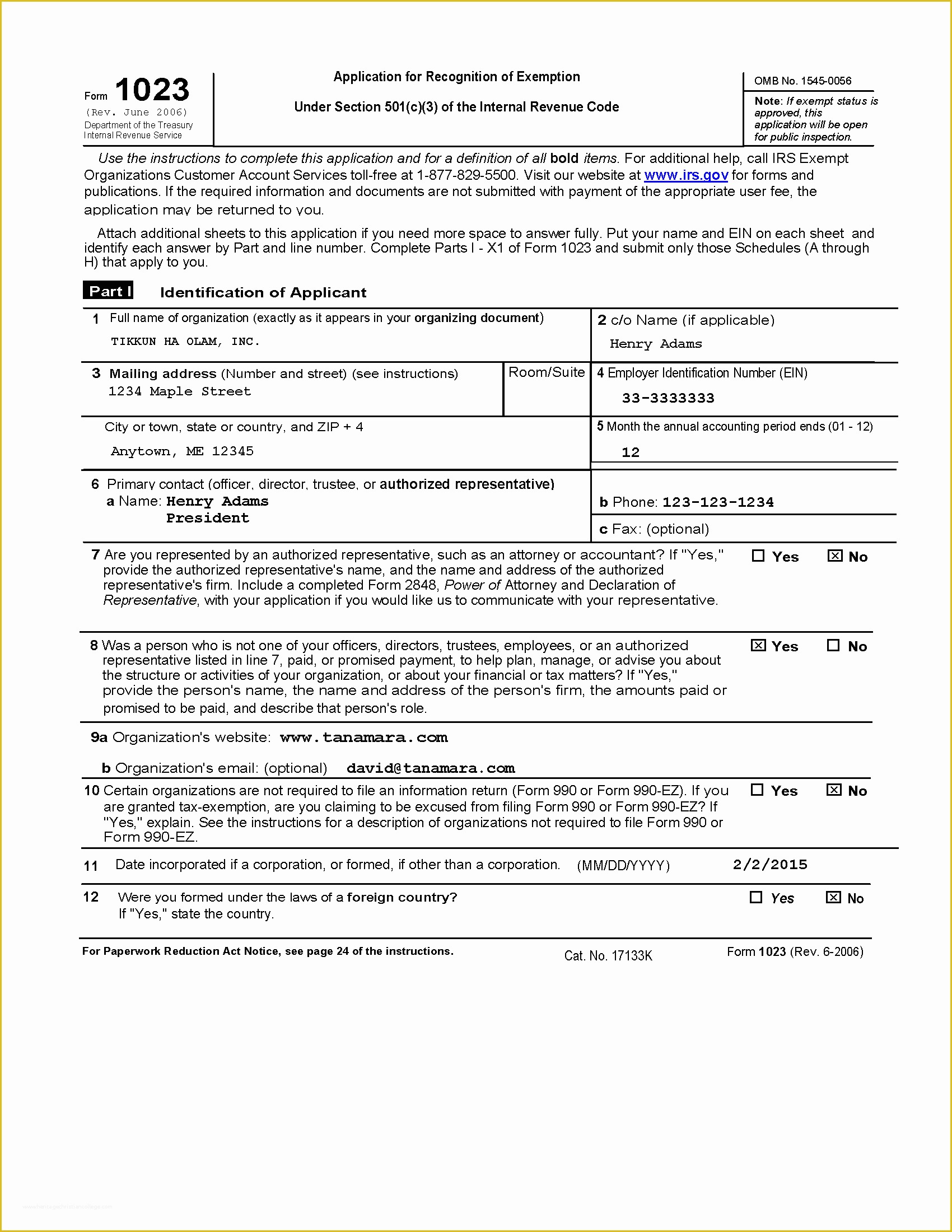
This is the most technical and consequential step. You must file Form 1023 (or the streamlined Form 1023-EZ for smaller organizations) with the IRS to obtain official 501(c)(3) status. This application requires detailed information about your programs, governance structure, and financial projections. In 2026, the IRS continues to process these applications via the Pay.gov portal. Be prepared to provide evidence that you will operate for the public good and not for the benefit of private individuals.
9. Register for State Charitable Solicitation
Most states require nonprofits to register with the Attorney General’s office or the Secretary of State before they begin fundraising. This process is distinct from your initial incorporation. It ensures that the public is protected from fraudulent fundraising practices. Failure to comply with these state-level mandates can result in significant fines or the revocation of your ability to solicit donations within that jurisdiction.
10. Maintain Compliance and Annual Filings
Securing tax-exempt status is not a one-time event. You must maintain compliance through annual filings, including the IRS Form 990 series, which reports your financial activity to the federal government. You may also have state-level annual reports and payroll tax filings if you have employees. Establish a recurring calendar of these deadlines to ensure you do not inadvertently lose your tax-exempt status due to a missed filing.
| Filing Requirement | Primary Purpose | Frequency |
|---|---|---|
| Articles of Incorporation | Legal entity creation | One-time |
| EIN Application | Tax identification | One-time |
| IRS Form 1023/1023-EZ | Seeking tax exemption | One-time |
| IRS Form 990 Series | Annual financial transparency | Annually |
| State Solicitation Permit | Legal fundraising authority | Annually/Biennially |
Frequently Asked Questions
Does a 501(c)(3) mean I don't have to pay any taxes? Not necessarily. While a 501(c)(3) is exempt from federal income tax on activities related to its exempt purpose, it may still be responsible for payroll taxes, sales taxes on goods purchased, and potential "unrelated business income tax" (UBIT) if it engages in significant commercial activity that is not related to its mission.
How long does it take to get 501(c)(3) status? The timeline varies based on the complexity of your application and current IRS backlogs. Using the simplified Form 1023-EZ generally results in faster approval times compared to the full Form 1023, which requires extensive documentation. In 2026, expect a range of several weeks to several months.
Can I pay myself a salary as a founder? Yes. Nonprofits can and often should pay reasonable salaries to staff and executive directors. However, the compensation must be "reasonable" for the services performed and aligned with market rates for similar roles in similar organizations. Excessive compensation can be viewed as private inurement, which is prohibited and can lead to the revocation of tax-exempt status.
What happens if I lose my tax-exempt status? If you fail to file your annual Form 990 for three consecutive years, the IRS will automatically revoke your tax-exempt status. To regain it, you must file for reinstatement, which can be a costly and time-consuming process that often requires back-filing missing returns.
Next Steps and Recommendations
If you are ready to begin, start by drafting your mission statement and confirming that your proposed nonprofit name is available in your state. Consult with an attorney or a tax professional familiar with nonprofit law to review your Articles of Incorporation and Bylaws. These documents form the bedrock of your organization; ensuring they are compliant with both state laws and IRS requirements at the outset will prevent major administrative hurdles in the future. Once filed, treat every board meeting and financial decision with the seriousness of a formal legal proceeding to ensure long-term sustainability.