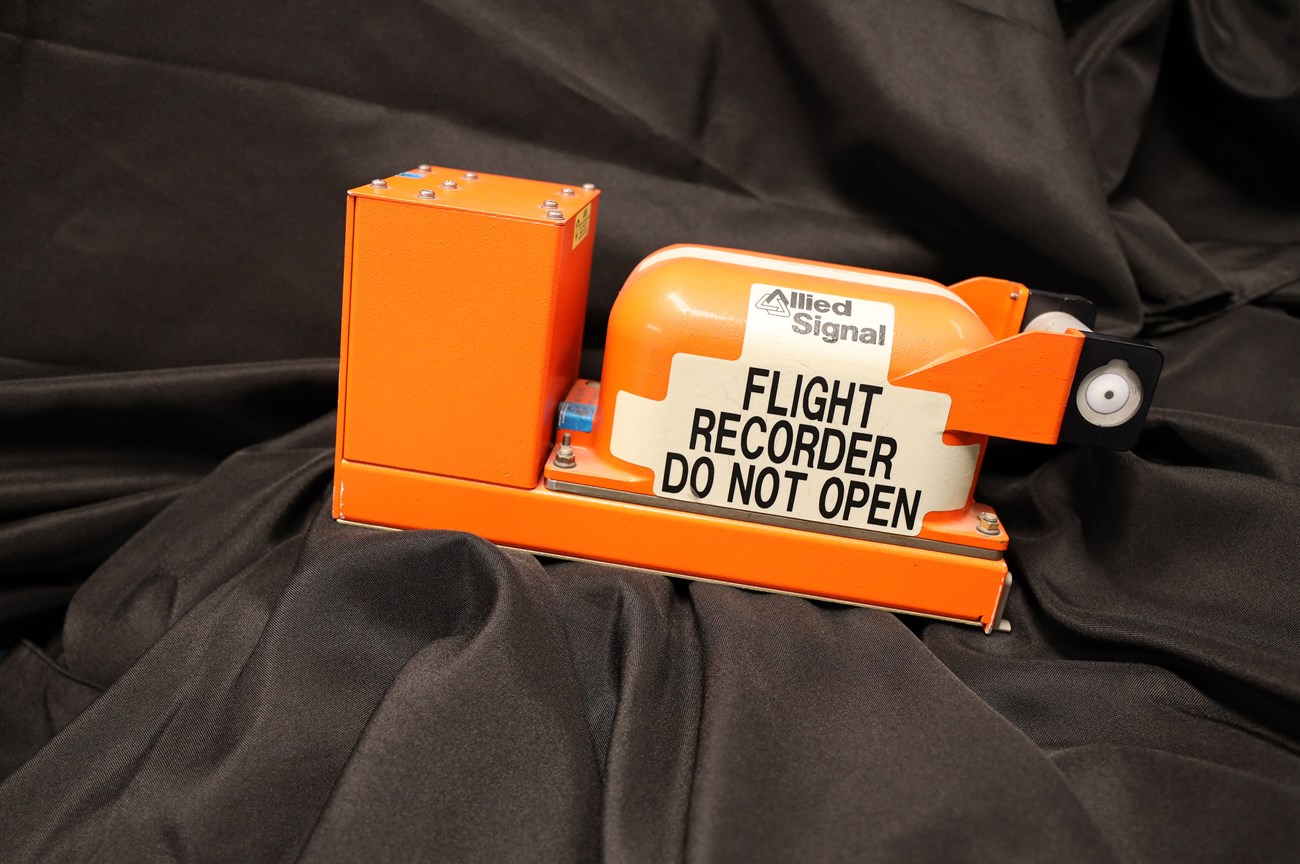
The Cockpit Voice Recorder (CVR) from United Airlines Flight 93 provides a harrowing, definitive record of the final 31 minutes of the flight on September 11, 2001. While the recording confirms the hijacking, the struggle between passengers and hijackers, and the ultimate crash in Shanksville, Pennsylvania, it also contains segments of ambiguous audio, overlapping voices, and technical limitations that have fueled decades of public questions regarding the specific sequence of events leading to the aircraft's impact.
Understanding the Technical Role of the Flight 93 CVR
A Cockpit Voice Recorder is a flight recorder designed to record the audio environment in the flight deck of an aircraft for accident investigation purposes. In the case of United Airlines Flight 93, a Boeing 757-222, the CVR was a magnetic tape-based unit. Unlike modern digital recorders that utilize solid-state memory, the magnetic tape system on the 757 captured audio on a continuous loop, typically retaining the last 30 minutes of operation.
The physical recovery of the CVR from the crash site in Shanksville was a significant technical challenge for the National Transportation Safety Board (NTSB) and the FBI. The high-velocity impact of the aircraft into the reclaimed strip mine created a deep crater, burying much of the fuselage and flight data equipment beneath the surface. When investigators eventually retrieved the device, the magnetic tape had sustained heat and impact damage, requiring specialized forensic techniques at the NTSB’s laboratory to stabilize the medium and extract the audio.
Established Facts Derived from the CVR
The primary value of the Flight 93 CVR lies in the corroboration it provides for the timeline established by Air Traffic Control (ATC) logs and the flight's Flight Data Recorder (FDR). The recovered audio allows for a reconstruction of the cockpit environment from the moment the hijackers breached the flight deck until the final moments of the flight.
Key verified facts include:
- The Hijacking Sequence: The audio confirms the initial breach of the cockpit by four hijackers, including Ziad Jarrah, shortly after the aircraft reached cruising altitude.
- The Struggle: The CVR captures the sounds of a physical confrontation within the cockpit. Listeners can hear both the hijackers' attempts to maintain control of the aircraft and the determined efforts of the passengers, who had learned of the other attacks in New York and Washington, D.C.
- The Language Used: The hijackers are heard speaking in Arabic, reciting prayers, and discussing flight maneuvers, which provided intelligence agencies with critical context regarding their intent to pilot the aircraft toward a high-value target in the nation’s capital.
- The Final Maneuvers: The recording, when synchronized with the FDR, confirms the aircraft’s erratic flight path, including rapid pitch changes and intentional rolling, as the hijackers attempted to prevent the passengers from regaining control of the controls.
The Nature of Uncertainties and Auditory Ambiguity
While the CVR is an invaluable historical document, it is not a perfect transcript of every action. Several factors contribute to the limitations and "uncertainties" often cited by researchers and the public.
Overlapping Audio and Background Noise
The cockpit of a commercial airliner is inherently noisy, filled with the sounds of wind, engines, and mechanical systems. During a high-stress event such as a hijacking, this noise is compounded by shouting, physical impacts, and the manipulation of cockpit instruments. Distinguishing between the voice of a hijacker, a passenger, and the background environment is difficult, even with high-end audio enhancement software. This leads to segments in the official transcript labeled as "unintelligible" or "garbled."
Tape Degradation and Forensic Extraction
The mechanical nature of the magnetic tape recording process introduces a margin of error. In 2001, the analog-to-digital conversion process used to analyze the tape was cutting-edge, but not flawless. The physical state of the tape—subjected to fire and the immense G-forces of the impact—meant that some portions of the audio were susceptible to signal dropout or electromagnetic interference, which can distort speech patterns or obscure key words.
The "Gap" Interpretations
One area of recurring public inquiry involves the perception of temporal gaps or missing segments in the transcript. It is a fundamental operational fact that CVRs, by design, record on a loop. If a device has not been properly maintained or if the power is cut, the recording can stop abruptly. In the case of Flight 93, the CVR continued to operate until the moment of impact. Therefore, there is no "lost time" in the technical sense of the device stopping; rather, the uncertainty stems from human interpretation of the sounds present during the final seconds.
Comparative Analysis: CVR vs. FDR
To understand the full picture, it is essential to view the CVR in conjunction with the Flight Data Recorder. The following table highlights how these two systems complement each other while leaving specific data gaps.
| Feature | Cockpit Voice Recorder (CVR) | Flight Data Recorder (FDR) |
|---|---|---|
| Data Type | Audio (voices, ambient noise) | Digital parameters (altitude, pitch, speed) |
| Primary Value | Captures intent, struggle, and emotion | Captures mechanical inputs and aircraft state |
| Main Uncertainty | Subjective interpretation of audio | Sensor failure or data corruption |
| Reliability | Affected by background noise | Highly precise, machine-generated |
| Legal/Hist. Use | Provides context to the motive | Proves the physics of the crash |
Addressing Misconceptions and Speculative Theories
Because of the high-stakes nature of the 9/11 attacks, the audio from Flight 93 has been subjected to various forms of scrutiny, some of which drift into speculative territory. It is important to distinguish between forensic uncertainty and conspiracy-based conjecture.
Forensic uncertainty arises when audio engineers cannot definitively state what was said due to the technical limitations described above. This is a common occurrence in aviation accident investigation. Speculative theories, conversely, often suggest that the audio was tampered with or that the aircraft did not crash as reported.
Official investigations conducted by the NTSB, the FBI, and the 9/11 Commission established that the audio is authentic and consistent with the physical evidence collected at the crash site. The "uncertainty" in the official records refers strictly to the inability to translate every syllable spoken in the heat of a struggle; it does not denote a lack of certainty regarding the fundamental conclusion that the aircraft was flown into the ground by the hijackers while passengers attempted to intervene.
Technical Limitations of 2001-Era Recording Equipment
When examining the Flight 93 recording, one must consider the technology available at the time. The 757-222 was equipped with a system that utilized magnetic tape rather than digital solid-state memory. The primary limitations of this technology include:
- Limited Frequency Response: Analog tapes often struggle to differentiate between similar speech patterns when there is high background noise, such as a cockpit alarm or an engine whine.
- Tape Wear: If the tape was not recently replaced, the recording quality could degrade, introducing "hiss" or "wow and flutter" (frequency modulation) that obscures clear communication.
- Physical Integrity: Because the CVR was located in the rear of the aircraft, it was subjected to significant deceleration forces upon impact. Any internal mechanical failure caused by this force could cause the tape to snag or misalign with the recording head.
The Role of the 9/11 Commission and Public Access
The 9/11 Commission was tasked with providing a comprehensive account of the attacks. The CVR was a central piece of evidence in their report, specifically regarding the timeline of the passenger revolt. The Commission listened to the recording to confirm the hijackers' plans and the passengers' heroism.
For the families of the victims, the audio was a source of both profound pain and closure. During the 2006 trial of Zacarias Moussaoui, portions of the audio were played in open court, providing the public with a stark, albeit brief, understanding of the struggle. This official disclosure helped dispel many of the alternative theories that had gained traction in the years immediately following the event.
FAQ: Addressing Common Questions
1. Is there a complete, uncensored transcript of the Flight 93 CVR available to the public? The NTSB released a formal transcript of the CVR, which is available through government archives. While it is the most complete version recognized by authorities, it acknowledges many segments as "unintelligible" due to the chaos in the cockpit.
2. Could the "unintelligible" segments contain secret evidence? There is no evidence to suggest that the redacted or unintelligible portions of the audio contain information that contradicts the established narrative. These labels are standard in forensic audio analysis when noise levels prevent clear phonetic identification.
3. Why was the CVR for Flight 93 so difficult to find? The aircraft impacted the ground at a speed exceeding 500 mph, burying the engines and heavy instrumentation, including the CVR, approximately 25 feet below the surface of the crater. Excavation required specialized heavy machinery and forensic archeological techniques.
4. Does the CVR prove who was flying the plane at the end? The CVR, when combined with the FDR data, indicates that the hijackers were maintaining control and intentionally maneuvering the aircraft to prevent the passengers from taking over, confirming that the hijackers successfully prevented a full recovery of the flight deck.
Conclusion and Next Actions
The Flight 93 CVR stands as a sobering record of the final moments of the passengers and crew who fought back against their hijackers. While technical limitations such as magnetic tape degradation and the immense background noise of a struggling flight deck create inherent uncertainties in the specific wording of the recording, the broader narrative of the event is clear and verified by multiple, independent streams of physical and digital data.
For those researching the events of September 11, 2001, the most authoritative sources remain the NTSB laboratory reports and the final documents produced by the 9/11 Commission. Researchers should prioritize these primary source materials over secondary analyses that do not reference specific NTSB docket logs. If you are conducting academic or investigative research, you may access the archived NTSB investigation dockets through the federal government’s public records repository to view the formal transcriptions and the original findings of the audio recovery team.