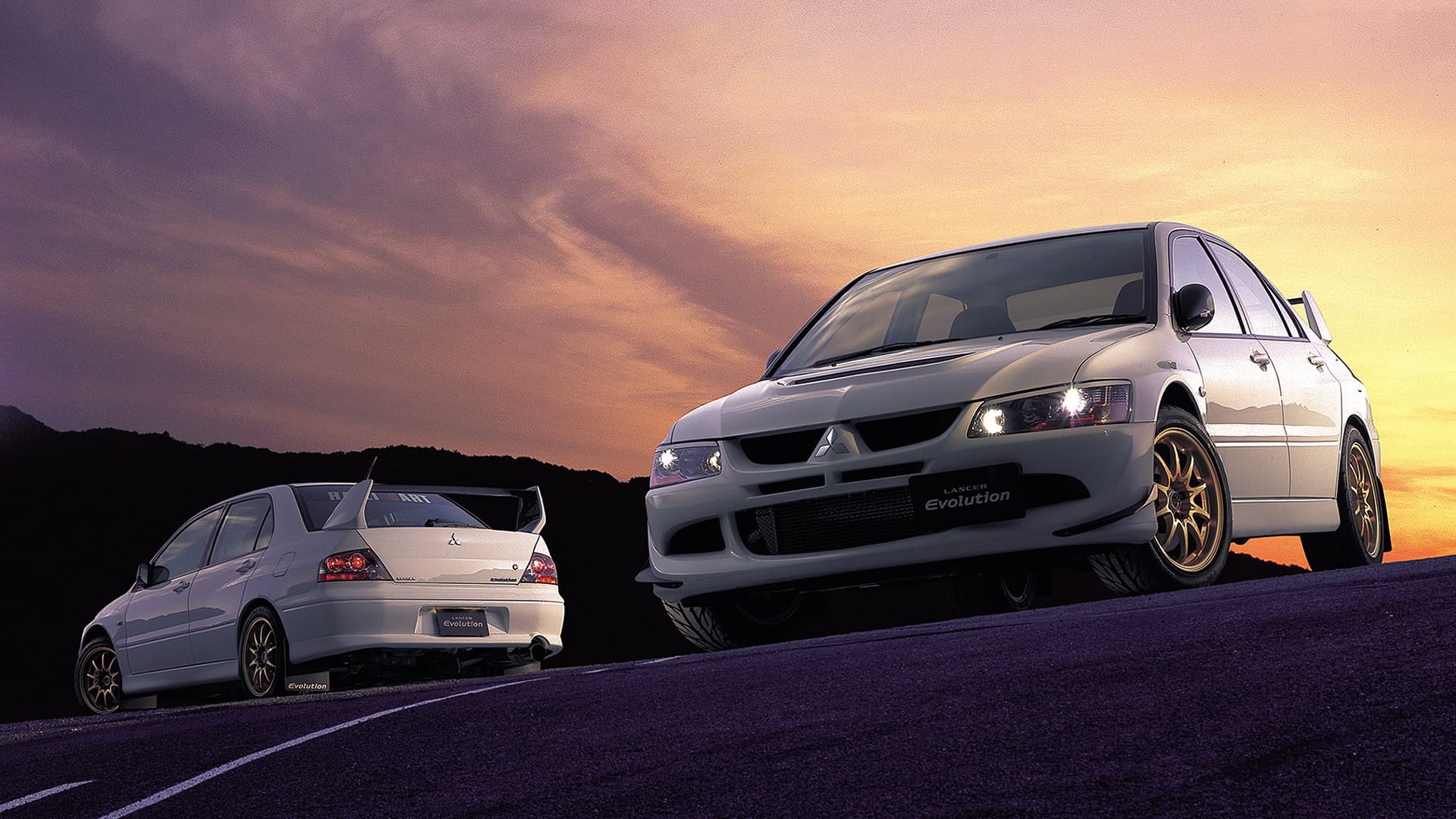
The Mitsubishi Lancer Evolution VIII (Evo 8) represents a high-water mark for Japanese Domestic Market (JDM) engineering, combining rally-bred all-wheel-drive capability with the legendary 4G63 turbocharged engine. Built to dominate both tarmac and dirt stages, the JDM-spec Evo 8 introduced vital drivetrain refinements, aggressive aerodynamics, and distinct trim hierarchy variants that set it apart from its North American and European counterparts.
Introduction to the JDM Mitsubishi Lancer Evolution VIII
The Mitsubishi Lancer Evolution VIII debuted in Japan in January 2003, arriving as a heavily evolved successor to the Evo VII. While the global market received versions constrained by local emissions and safety bumpers, the Japanese Domestic Market variant retained a purist mechanical layout, higher factory power output ratings, and specialized lightweight trims that enthusiast drivers coveted.
At its core, the JDM Evo 8 utilizes the iron-block, dual-overhead-cam 2.0-liter 4G63 inline-four engine equipped with a twin-scroll turbocharger. Unlike export models that faced various restrictions or softer suspension setups, the Japanese market benefited from aggressive camshaft profiles, higher compression ratios, and the groundbreaking Super Active Yaw Control (AYC) paired with an ACD (Active Center Differential). Understanding the Evo 8 requires looking closely at its trim hierarchy, technical dimensions, powertrain output, and how it differs from international versions.
Trims and Hierarchy of the Japanese Market Evo 8
Mitsubishi structured the JDM Evo 8 lineup into distinct tiers tailored for luxury, daily driving, or pure motorsport homologation. The naming conventions and equipment levels differ significantly from export models like the RS, GSR, and MR configurations found elsewhere.
RS (Rally Sport)
The RS trim is stripped of comfort features to serve as a blank canvas for rally teams or track builders. It features roll-up windows, manual air conditioning deletion options, a basic interior, and a steel 5-speed manual transmission setup. Crucially, the JDM RS often utilized a mechanical rear limited-slip differential instead of the electronic AYC to reduce weight and simplify maintenance under harsh competition environments.
GSR
The GSR serves as the high-performance road-going benchmark. It comes standard with Brembo brakes, Recaro bucket seats, automatic climate control, power windows, and the sophisticated Super AYC rear differential system. The suspension is tuned for aggressive street and track usage, utilizing stiffer spring and damper rates than standard Lancer models.
MR (Mitsubishi Racing) Variants
Introduced later in the lifecycle (February 2004), the MR (Mitsubishi Racing) badge denoted a series of significant performance updates. JDM Evo 8 MR models received a revised 6-speed manual transmission, lightweight BBS forged aluminum wheels, Bilstein monotube shock absorbers developed via rigorous testing, aluminum roof panels to lower the center of gravity, and subtle interior aesthetic tweaks.
Detailed Technical Specifications
The engineering blueprint of the JDM Evo 8 defines its legendary status. The table below outlines the core mechanical and dimensional specifications across the primary JDM variants.
| Specification | JDM Evo 8 GSR / MR | JDM Evo 8 RS |
|---|---|---|
| Engine Code | 2.0L 4G63 Inline-4 DOHC MIVEC (Turbocharged) | 2.0L 4G63 Inline-4 DOHC (Turbo/Non-MIVEC depending on sub-trim) |
| Horsepower (Factory Claim) | 280 PS (276 hp) @ 6,500 rpm | 280 PS (276 hp) @ 6,500 rpm |
| Torque | 40.0 kgm (289 lb-ft) @ 3,500 rpm | 40.0 kgm (289 lb-ft) @ 3,500 rpm |
| Transmission | 5-speed manual (GSR) / 6-speed manual (MR) | 5-speed manual |
| Drivetrain | Full-time 4WD (ACD + Super AYC) | Full-time 4WD (ACD + Mechanical Rear LSD) |
| Brakes | Brembo 4-piston front / 2-piston rear discs | Brembo 4-piston front / 2-piston rear discs |
| Suspension | Inverted MacPherson front / Multi-link rear (Bilstein on MR) | Inverted MacPherson front / Multi-link rear |
| Curb Weight | ~1,400 kg (GSR) / ~1,390 kg (MR) | ~1,320 kg (RS) |
Powertrain Dynamics: The 4G63 Engine and Turbocharger
The 4G63 engine powering the JDM Evo 8 is legendary for its robust cast-iron cylinder block, forged internals, and incredible headroom for tuning. Japanese models benefited from the evolution of the MIVEC (Mitsubishi Innovative Valve timing and lift Electronic Control) system on the intake side for GSR variants, improving low-end spool and mid-range throttle response.
The turbocharger setup varies depending on the specific model year and transmission pairing:
- 5-Speed Models: Typically paired with a TD05HR-16G6-9.8T twin-scroll turbocharger featuring a titanium-aluminide turbine wheel for rapid boost threshold response.
- 6-Speed MR Models: Utilized a revised compressor housing and turbine configuration to optimize high-RPM power delivery while maintaining strong mid-range pull.
Factory output in Japan was officially capped at the historic "gentlemen's agreement" limit of 280 PS (276 horsepower), though actual dyno figures frequently exceeded this rating. Boost is controlled electronically via a factory wastegate solenoid, and the ECU is remarkably responsive to minor intake and exhaust modifications.
Drivetrain Engineering: ACD and Super AYC
The true magic of the JDM Evo 8 handling characteristics lies in its electronic differential suite.
- Active Center Differential (ACD): Uses a hydraulic multi-plate clutch to vary front-to-rear torque split dynamically. Drivers can select between three distinct modes via a dashboard switch: Tarmac (dry, paved roads), Gravel (loose surfaces), and Snow (low-traction environments).
- Super Active Yaw Control (AYC): Exclusive to the GSR and higher-tier JDM trims, Super AYC uses a bevel gear differential with hydraulic clutch packs on the rear axle. It actively transfers torque between the left and right rear wheels during cornering to eliminate understeer, rotate the chassis through tight apexes, and maximize exit traction.
Exterior Design and Aerodynamics
The aerodynamic package of the JDM Evo 8 was sculpted to reduce lift and improve high-speed stability. Key exterior traits include:
- A lightweight aluminum front bumper beam and hood, which reduced front-end weight compared to steel equivalents.
- A prominent carbon-fiber rear wing (on specific trims) paired with a vortex generator on the roof edge to smooth airflow over the rear glass and down to the spoiler.
- Aggressive flared fenders designed to accommodate wider 17-inch wheels wrapped in sticky performance rubber (typically 235/45R17 factory fitment).
Interior Comfort and Driver Ergonomics
Inside the cabin, the JDM Evo 8 prioritizes driver engagement. Deeply bolstered Recaro bucket seats upholstered in Alcantara and black cloth hold the driver and front passenger securely during high-lateral-G cornering maneuvers.
The steering wheel is wrapped in leather by Momo, and the instrument cluster features clear, white-faced analog gauges with orange backlighting. Because these vehicles were built for the Japanese market, all models feature right-hand drive (RHD) steering layouts, a critical consideration for buyers importing these vehicles to countries accustomed to left-hand drive configurations.
Maintenance Considerations and Common Issues
Owning and maintaining a JDM Evo 8 requires diligence due to the high-strung nature of a turbocharged performance vehicle. Prospective owners and current enthusiasts should monitor several key mechanical areas:
- Active Yaw Control (AYC) Pump Failure: Located underneath the trunk floor, the AYC hydraulic pump is exposed to moisture, road salt, and debris. Failure leads to an AYC warning light on the dashboard. Preventive relocation to the trunk and regular fluid flushes are common maintenance tasks.
- Transfer Case Wear: The front transfer case utilizes specialized gear oil that must be changed at recommended intervals. Neglecting fluid changes can lead to mechanical binding or catastrophic bearing failure.
- Timing Belt and Balance Shaft Maintenance: The 4G63 is an interference engine. The timing belt, balance shaft belt, and associated tensioners must be replaced strictly on schedule (typically every 60,000 miles or 5 years) to prevent valve-to-piston contact.
- Rust Inspection: JDM cars imported from regions with heavy winter road salting require thorough undercarriage inspection for frame and subframe corrosion.
Frequently Asked Questions
What is the main difference between JDM Evo 8 and USDM Evo 8 models?
The JDM Evo 8 features higher factory horsepower ratings, a more aggressive ECU tune, the inclusion of Super AYC (Active Yaw Control) on GSR trims, an aluminum hood and front bumper crash beam, and right-hand drive configuration. North American models featured slightly detuned engines to meet emissions standards, steel front crash structures to pass local crash tests, and lacked Super AYC until later iterations.
Does the JDM Evo 8 have a 5-speed or 6-speed transmission?
It depends on the specific trim and year. Standard GSR and RS models produced from 2003 to early 2004 utilize a robust 5-speed manual transmission. When the MR variant debuted in early 2004, it introduced a newly developed 6-speed manual transmission designed to improve highway cruising and keep the engine in its optimal power band during technical driving.
What fuel octane does a JDM Evo 8 require?
The high compression ratio and turbo boost levels of the 4G63 engine require high-octane fuel. In export markets or countries where high-octane pump gas (such as 93+ AKI or 98+ RON) is unavailable, professional engine tuning or fuel additives are necessary to prevent engine knock and destructive detonation.
Is the JDM Evo 8 legal to import and drive?
Import legality depends entirely on local destination country laws. In the United States, vehicles must generally reach 25 years of age from their original production month to qualify for federal import under the 25-year rule. Consequently, early 2003 production JDM Evo 8 models become eligible for import starting in 2028. Buyers must verify regional customs, EPA, and DOT requirements before purchasing.
Practical Next Actions for Enthusiasts
If you are looking to purchase, import, or build a JDM Mitsubishi Lancer Evolution VIII, begin by verifying local import regulations and emission compliance laws in your jurisdiction. Connect with reputable JDM importers who provide transparent Japanese export auction sheets, verify chassis numbers against mileage verification records, and conduct comprehensive pre-purchase inspections focusing on the transfer case, AYC pump health, and undercarriage rust. Prioritize vehicles with documented maintenance histories to ensure long-term reliability.