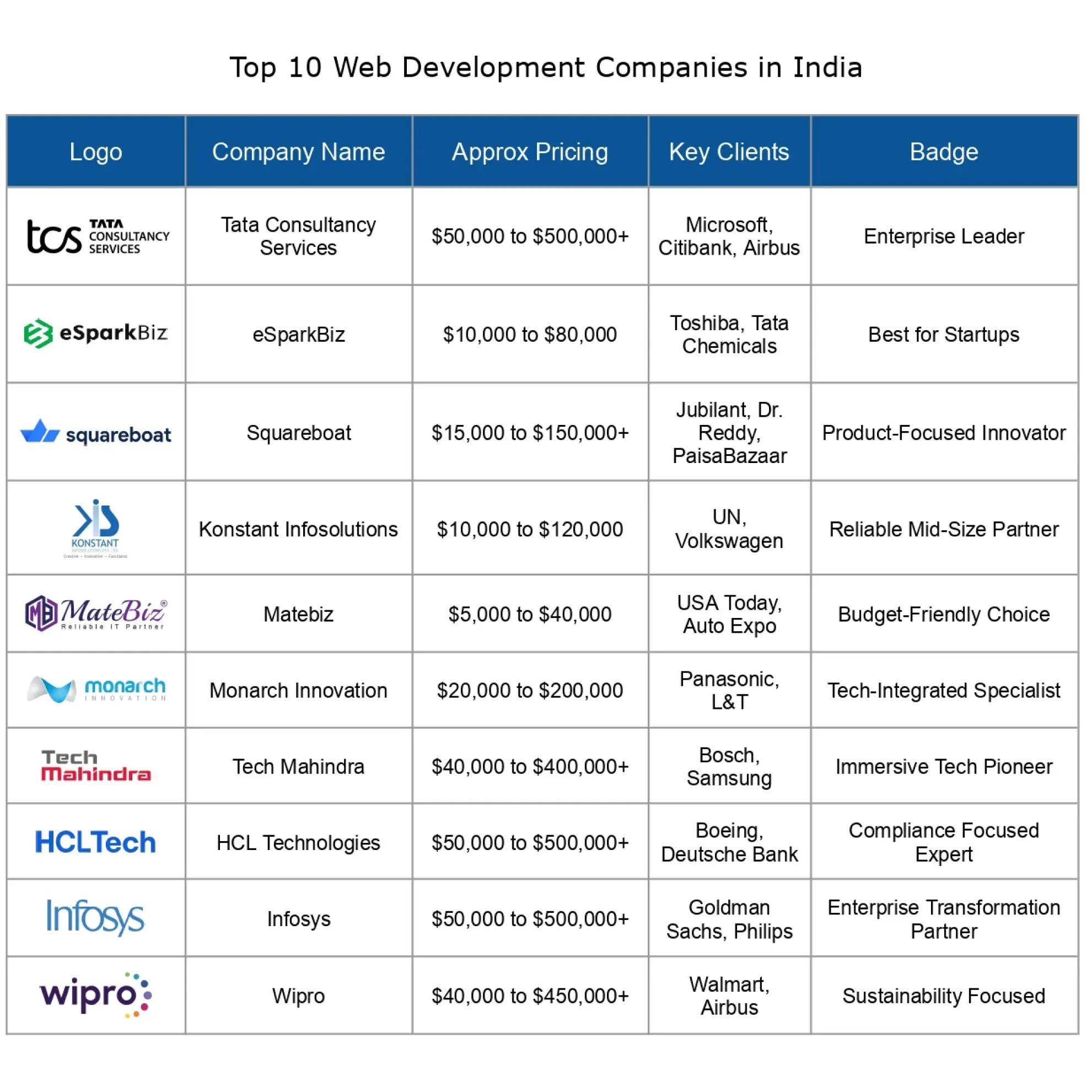
When looking for the single best company for web development, businesses quickly discover that the ideal partner depends entirely on project scope, technical requirements, scalability demands, and long-term digital strategy. Because enterprise portals, high-traffic e-commerce platforms, and lightweight marketing websites require entirely different engineering stacks, no single agency universally dominates every use case.
Navigating the web development landscape requires balancing technical competency, architectural philosophy, budget transparency, and post-launch maintenance capabilities. Selecting the right vendor minimizes technical debt, ensures compliance with modern security protocols, and protects digital investments against rapid technological obsolescence. This guide analyzes how to evaluate web development providers, compares top-tier engineering tiers, and establishes a rigorous framework for identifying the optimal partner for your specific project.
The Core Criteria of Elite Web Development Companies
Before evaluating individual agencies or software houses, stakeholders must establish objective benchmarks for engineering excellence. The market features thousands of providers ranging from freelance developers to multinational digital consultancies, making clear evaluation metrics essential.
Technical Stack Mastery and Modern Architecture
Top-tier web development firms do not rely on a single, one-size-fits-all framework. They demonstrate deep proficiency across diverse architectural paradigms, including:
- Headless and Decoupled CMS: Utilizing platforms like Contentful, Strapi, or WordPress combined with frontend frameworks such as Next.js, Nuxt.js, or Gatsby to maximize speed and flexibility.
- Full-Stack JavaScript and TypeScript: Building robust web applications using Node.js, React, Angular, and Vue.js for seamless component reusability and real-time interaction.
- Enterprise Backends: Architecting scalable server-side systems with Python (Django, FastAPI), Java (Spring Boot), PHP (Laravel), or Go to handle complex data operations and high concurrency.
- Cloud Infrastructure and DevOps: Employing containerization (Docker, Kubernetes) and serverless architectures hosted on Amazon Web Services (AWS), Google Cloud Platform (GCP), or Microsoft Azure.
Engineering Rigor and Quality Assurance
True industry leaders separate themselves through internal engineering processes. Writing code is only a fraction of the lifecycle; maintaining code quality dictates long-term viability. Look for organizations that practice:
- Automated Testing: Implementing unit tests, integration tests, and end-to-end testing (using tools like Cypress or Playwright) within Continuous Integration and Continuous Deployment (CI/CD) pipelines.
- Code Reviews and Version Control: Enforcing strict peer-review policies via GitHub or GitLab to catch architectural flaws before production deployment.
- Security Auditing: Conducting regular dependency vulnerability scans, adhering to OWASP Top 10 guidelines, and implementing robust data encryption both in transit and at rest.
Categorizing Web Development Providers
To find the right development partner, organizations must understand the distinct tiers operating within the digital agency ecosystem. Each tier offers unique advantages and structural trade-offs regarding cost, communication, project management overhead, and technical depth.
| Provider Tier | Typical Cost Structure | Best Suited For | Key Advantages | Primary Limitations |
|---|---|---|---|---|
| Enterprise Consultancies | High ($150,000+) | Fortune 500 transformations, complex legacy migrations | Comprehensive strategic oversight, massive scalability, multi-region compliance | Prohibitive costs for mid-market firms, bureaucratic communication channels |
| Specialized Boutique Agencies | Medium-High ($40,000–$150,000) | Custom web apps, high-end e-commerce, UX-heavy platforms | Deep niche expertise, direct access to senior engineers, agile workflows | Limited bandwidth during peak periods, higher hourly rates than offshore options |
| Staff Augmentation / Offshore Teams | Variable ($30–$90/hr) | Long-term roadmap execution, scaling existing internal engineering teams | Cost-effective scaling, access to rare technical skill sets | Requires rigorous internal management, potential time-zone and communication gaps |
| Freelance Networks / Solo Developers | Low ($5,000–$30,000) | Basic marketing sites, landing pages, simple content updates | Highly affordable, rapid turnaround for small scopes | Single point of failure, limited scalability for complex backend engineering |
Step-by-Step Evaluation and Vetting Framework
When organizations embark on an RFP (Request for Proposal) process to select a web development partner, a structured vetting methodology prevents costly missteps. Relying solely on polished portfolio aesthetics often conceals poor backend architecture and unmaintainable codebases.
1. Define Project Scope and Technical Requirements
Before contacting any vendor, internal stakeholders must document exact requirements. Vague briefs attract generic sales pitches rather than customized engineering proposals. Define:
- User Stories and Functional Requirements: What actions must users perform? What data must the system process?
- Integration Points: Does the web application need to connect with external APIs, Enterprise Resource Planning (ERP) systems, Customer Relationship Management (CRM) tools like Salesforce or HubSpot, or payment gateways like Stripe?
- Performance Benchmarks: Specify target Core Web Vitals scores, expected concurrent user loads, and uptime availability SLAs (Service Level Agreements).
2. Audit Past Case Studies and Client References
Examine real-world examples provided by the prospective agency. Do not just look at screenshots; interact with live deployments.
- Test site speed and mobile responsiveness across various devices.
- Check accessibility compliance against WCAG (Web Content Accessibility Guidelines) standards.
- Contact past clients directly to inquire about budget adherence, post-launch support responsiveness, and scope creep management.
3. Evaluate the Proposed Engineering Team
Request to meet the specific engineers and project managers who will execute the daily workflow, not just the business development executives. Inquire about their individual certifications, years of experience with the specified stack, and communication protocols (e.g., Jira, Slack, daily stand-ups, sprint reviews).
Hidden Costs and Pitfalls in Web Development Procurement
Selecting a web development partner involves financial and operational risks that extend far beyond the initial contract price. Understanding these pitfalls ensures long-term project stability.
The Danger of Proprietary CMS Lock-In
Some agencies build websites on proprietary, closed-source content management systems. While these platforms may seem user-friendly initially, they lock the client into that specific agency forever. If the relationship sours, migrating the site requires a complete rebuild from scratch. Organizations should insist on open-source frameworks or widely adopted headless CMS options that allow freedom of movement between vendors.
Neglect of Post-Launch Maintenance and SLAs
A website is not a static product; it is a dynamic digital asset requiring continuous maintenance. Security patches for plugins, operating systems, and server dependencies must be applied regularly. Ensure the development agreement includes clear SLA terms covering response times for critical security vulnerabilities, bug fixes, and routine performance optimizations.
Frequently Asked Questions
How much does custom web development typically cost?
Costs vary wildly based on complexity, ranging from $10,000 for standard business sites to upwards of $200,000+ for enterprise-grade web applications. Pricing depends on design complexity, custom backend architecture, third-party API integrations, and geographic labor rates of the development team.
What is the difference between web design and web development?
Web design focuses on the visual aesthetics, user experience (UX), user interface (UI), and branding of a site, typically executed in tools like Figma. Web development involves writing the actual code (HTML, CSS, JavaScript, backend logic, database configuration) that brings those visual designs to functional reality.
How long does a professional web development project take?
A standard corporate website typically takes 8 to 12 weeks from discovery to deployment. Complex custom web applications, SaaS platforms, or enterprise e-commerce migrations often require 4 to 9 months depending on feature depth and testing phases.
Should I hire a local agency or an offshore development team?
Local agencies offer real-time collaboration, shared cultural context, and easier face-to-face communication, albeit at higher hourly rates. Offshore teams offer substantial cost savings, but require rigorous asynchronous project management and careful vetting to bridge communication and time-zone gaps.
Conclusion and Next Actions
Identifying the single best company for web development requires looking past marketing claims and evaluating core engineering practices, architectural flexibility, and cultural alignment. Begin by drafting a comprehensive technical brief, establish a shortlist of agencies matching your budget and tier requirements, and conduct deep technical interviews with the engineers who will build your platform. Prioritize maintainable code, open standards, and transparent long-term support agreements to secure a digital foundation that scales alongside your business objectives.