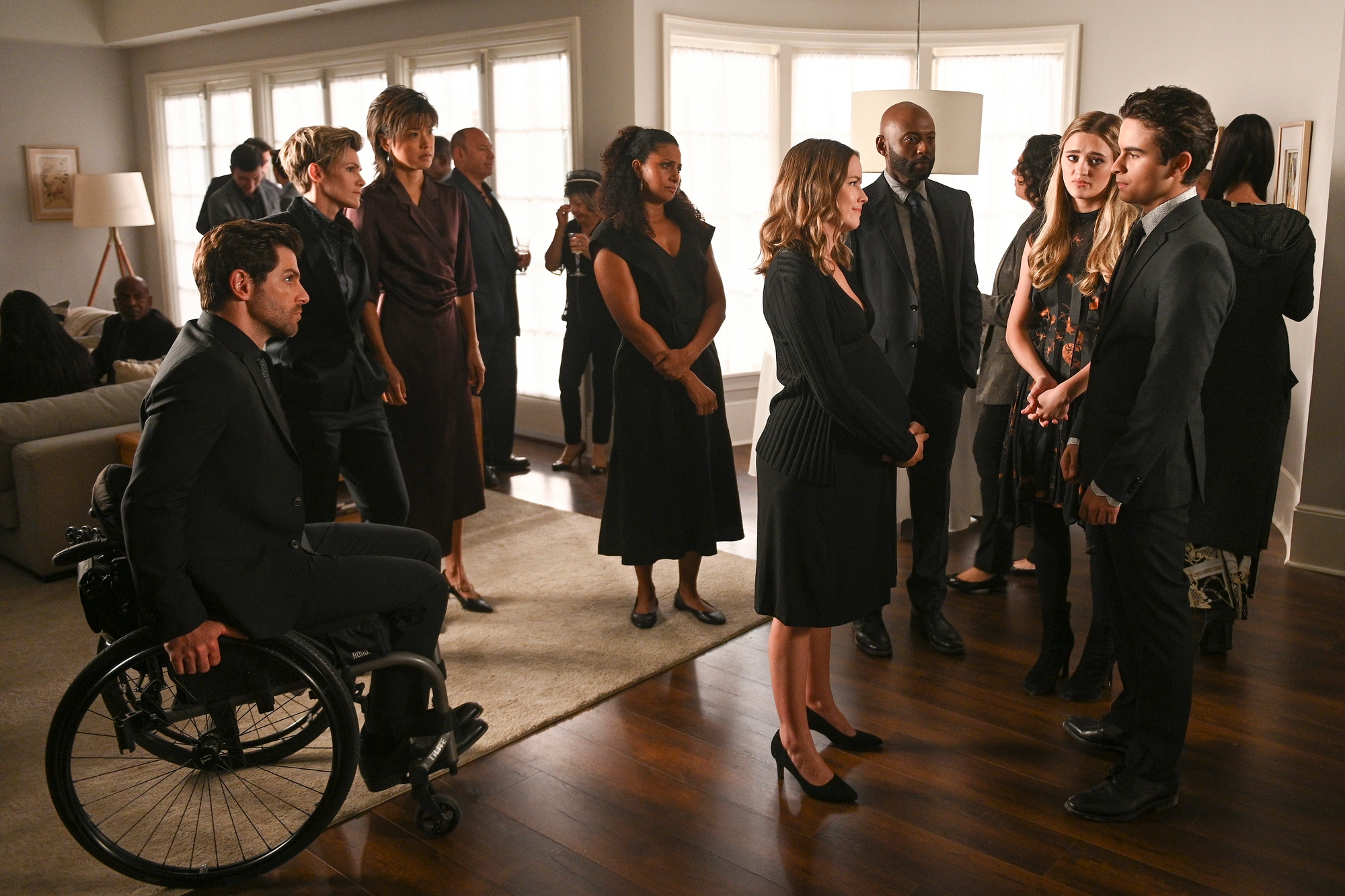
The series finale of A Million Little Things, titled “A Million Little Things,” concludes the five-season journey by focusing on Gary Mendez’s terminal lung cancer and his decision to utilize medical aid in dying. The episode resolves the central themes of friendship and grief, leaping fifteen years into the future to show the lasting legacy of the group’s bond.
The finale of A Million Little Things serves as more than just an ending to a television show; it is a structural bookend to a narrative that began with an unexpected tragedy. When the series premiered in 2018, it was defined by the sudden suicide of Jon Dixon, the glue that held a group of friends together in Boston. By the time the finale aired in May 2023, the narrative had shifted from the trauma of a life taken too soon to the intentional, albeit heartbreaking, conclusion of a life well-lived. As we look back from 2026, the finale remains a touchstone for how modern dramas handle terminal illness, bodily autonomy, and the evolving definition of family.
The Narrative Pivot: Gary Mendez’s Terminal Diagnosis
The final season of the series was meticulously constructed to lead toward Gary’s departure. After seasons of battling breast cancer and supporting others through their darkest moments, Gary (James Roday Rodriguez) was diagnosed with terminal lung cancer. The final episodes did not offer a miraculous recovery; instead, they focused on the reality of a "dying with dignity" narrative.
This choice by creator DJ Nash was intentional. While many fans hoped for a "happily ever after" for Gary and Maggie (Allison Miller), the show’s DNA was always rooted in how people navigate the most difficult aspects of existence. The finale picks up as Gary’s condition has deteriorated to the point where he can no longer speak, communicating instead through a white board. This physical decline emphasized the urgency of his decision. Gary’s primary concern was not just the end of his life, but the quality of the time he had left and the memory he would leave behind for his son, Javi.
The Choice of Medical Aid in Dying (MAID)
The core of the finale revolves around Gary’s request for his best friends, Rome (Romany Malco) and Eddie (David Giuntoli), to help him end his life. This plot point was controversial for some but was presented as the ultimate act of friendship. Gary’s decision to use medical aid in dying—often referred to in clinical settings as MAID—was framed as an act of autonomy.
The Role of Rome and Eddie
Gary’s request to Rome and Eddie was a callback to a pact the men made earlier in the series. The weight of this request cannot be overstated. Rome, who had struggled with depression and his own suicidal ideations since the pilot, was asked to assist in a "good death," which created a profound psychological juxtaposition. Eddie, a recovering alcoholic who had navigated his own physical disabilities, represented the resilience of the group.
The scene where the friends eventually agree to Gary’s request is one of the most emotionally charged moments in the series. It highlights a recurring theme: friendship isn't just about being there for the celebrations; it is about showing up for the hardest, most uncomfortable requirements of love. They eventually secure the necessary medication, and the act is carried out with Maggie’s full knowledge and eventual support, though Gary initially tried to shield her from the burden of the actual event.
The Clinical vs. Emotional Reality
While the show took some creative liberties with the speed and logistics of terminal sedation and assisted dying, the emotional truth resonated with many viewers. The show depicted the "feeding tube" scene and the use of medication in a way that focused on the intimacy of the moment rather than the clinical procedure. By 2026, this episode is still cited in discussions regarding the representation of end-of-life choices in popular media, specifically how it differentiates between the impulsive suicide of Jon in the pilot and the calculated, "dignified" exit of Gary in the finale.
Character Resolutions and Final Arcs
While Gary’s death was the emotional center, the finale also provided closure for the rest of the ensemble. Each character’s ending was designed to show growth and the "million little things" that make up a life.
Maggie Bloom: Widowhood and Motherhood
Maggie’s journey came full circle as she transitioned from a patient to a survivor, and finally to a mother and widow. The finale shows her strength in honoring Gary’s wishes while navigating the terrifying prospect of raising Javi alone. Her final scenes with Gary are a masterclass in "pre-grieving," allowing the characters to say goodbye before the actual moment of death.
Katherine and Greta
Katherine Kim (Grace Park) and Greta Strode (Cameron Esposito) provided the episode’s most joyful notes. Having married just before the very end, their relationship served as a testament to Katherine’s growth from a repressed, work-obsessed lawyer to a woman who finally embraced her true self and found a partner who prioritized her happiness. Their inclusion in the final "friendship" moments underscored that the group had expanded and evolved.
Rome and Regina Howard
Rome and Regina (Christina Moses) ended the series as a solid unit. Regina’s career aspirations and Rome’s journey with his father’s health and his own mental wellness were resolved with a sense of peace. They remained the emotional anchors of the group, proving that while their path to parenthood was unconventional (through adoption and fostering), their family was defined by choice rather than just biology.
The 15-Year Flash-Forward: The Legacy of Friendship
The finale’s final act utilizes a significant time jump, moving 15 years into the future. This narrative device is essential because it validates the sacrifices made in the present day. We see an adult Javi Mendez (played by a teenage actor resembling James Roday Rodriguez) celebrating his 16th birthday.
The Video Tapes
Gary’s legacy is physically represented through a series of videos he recorded for Javi. This was his way of "parenting from the grave." The videos covered everything from "the talk" to how to handle grief. In the 2026 retrospective of the show, these scenes are often highlighted as the show’s most effective emotional "payoff." It allowed the audience to see that Javi turned out alright, surrounded by the same "uncles" and "aunts" who were there for his father.
The New Generation
The flash-forward also shows Tyrell and Sophie, now adults, continuing the traditions of the original group. They are seen at a hockey game, mimicking the same banter and closeness of their parents. This reinforces the show’s central thesis: the family you choose is just as permanent as the one you are born into. The cycle of friendship continues, suggesting that while Gary and Jon are gone, the "million little things" they did for their friends live on in the next generation.
Summary of Character Endings
The following table outlines the status of the main characters at the conclusion of the series and during the 15-year flash-forward.
| Character | Final Season Status | 15-Year Flash-Forward Status | Key Resolution |
|---|---|---|---|
| Gary Mendez | Deceased (MAID) | Legacy through videos | Achieved a "dignified death" on his own terms. |
| Maggie Bloom | Radio host, Mother | Raising Javi with the group’s help | Found the strength to survive loss a second time. |
| Rome Howard | Teacher/Documentarian | Mentoring Tyrell and Javi | Found peace with his mental health and his father's legacy. |
| Regina Howard | Community leader | Successful business owner | Built a family through fostering and community support. |
| Eddie Saville | Counselor/Driver | Close friend to the Kim-Strode family | Fully redeemed from his past mistakes and addiction. |
| Katherine Kim | Happily married to Greta | Leading a balanced professional life | Broke free from societal expectations to find true love. |
| Sophie Dixon | Musician | Adult mentor to Javi | Healed from the trauma of her father’s death. |
The Symbolism of "Friendship"
Throughout the series, the motto "Friendship isn't a big thing—it's a million little things" served as the guiding principle. The finale emphasized this by focusing on small, seemingly insignificant moments that gained weight in retrospect. The way the group sat around Gary’s bed, the way they shared a meal, and the way they teased each other even in the face of death—these were the "little things."
The finale also made a point to include a final "Brussels sprouts" joke and references to the Boston Bruins, grounding the high drama in the specific quirks of the characters. By doing so, the show avoided becoming a generic tragedy. It remained a specific story about these people in this city.
Creative Direction and Audience Reception
DJ Nash, the show's creator, has frequently discussed how he knew the ending from the very beginning. The show was always intended to be a journey of Gary coming to terms with his own mortality after losing Jon. This symmetry—starting with a death and ending with a death—provided a structural integrity that many long-running dramas lack.
Audience reception was predictably emotional. While some viewers found the depiction of assisted suicide difficult to watch, the consensus was that the finale provided a "necessary" ending. It didn't shy away from the pain of cancer, nor did it offer a sanitized version of grief. In the years following the 2023 air date, the show has maintained a dedicated following on streaming platforms, with the finale being cited as one of the most effective series endings in network television history for its commitment to its characters' original arcs.
Frequently Asked Questions
Why did Gary choose to end his life rather than continue treatment?
Gary’s cancer had reached a stage where it was no longer responding to treatment, and his quality of life had severely diminished. He wanted to die while he still felt like "himself" and could say goodbye to his loved ones, rather than enduring a prolonged period of unconsciousness or extreme pain. He viewed it as a way to take control of a situation where he had very little power.
Did Maggie agree with Gary’s decision in the finale?
Initially, Gary tried to keep Maggie out of the plan because he didn't want her to face any legal or emotional repercussions. However, Maggie eventually realized what Gary was doing and gave him her "blessing." She understood that loving him meant respecting his autonomy, even when it was the hardest thing for her to do.
What happened to Delilah and the Dixon children?
Delilah (Stephanie Szostak) returned for the final season to be with the group. In the finale, she is shown as part of the support system for Gary and Maggie. Sophie and Danny are shown in the flash-forward as healthy, successful adults who have remained close to the "Aunties and Uncles," proving that they successfully navigated the trauma of their father Jon’s death.
How did the finale call back to the pilot episode?
The finale was a mirror image of the pilot. The pilot began with Jon’s suicide, which was a "big thing" that left everyone with questions. The finale ended with Gary’s planned death, which was a "million little things" that left everyone with answers and closure. The location of the hockey game in the flash-forward also directly mirrored the group's favorite meeting spot from the first episode.
Is A Million Little Things based on a true story?
The show is not a direct adaptation of one single true story, but creator DJ Nash has stated it was inspired by his own experience losing a friend to suicide and the complicated feelings of "why" that followed. The ending for Gary was a fictional way to explore a different kind of "goodbye" than the one Nash experienced in his own life.
Final Perspective and Next Actions
The A Million Little Things finale is a rare example of a series that stayed true to its somber premise while still managing to leave its audience with a sense of hope. It argued that while we cannot control when or how we die, we can control how we treat the people we love while we are here.
For those who have recently finished the series, the following actions are recommended to fully process the experience:
- Watch the "Behind the Scenes" Specials: ABC released several features where the cast discusses filming the final days, which can provide emotional closure for fans.
- Explore End-of-Life Resources: If the themes of the finale resonated with you or triggered concerns regarding terminal illness, organizations like Compassion & Choices provide factual information on the real-world medical aid in dying laws mentioned in the show.
- Revisit the Pilot: Watching the first episode immediately after the finale reveals the intricate foreshadowing and the massive growth each character underwent over the five-year span.