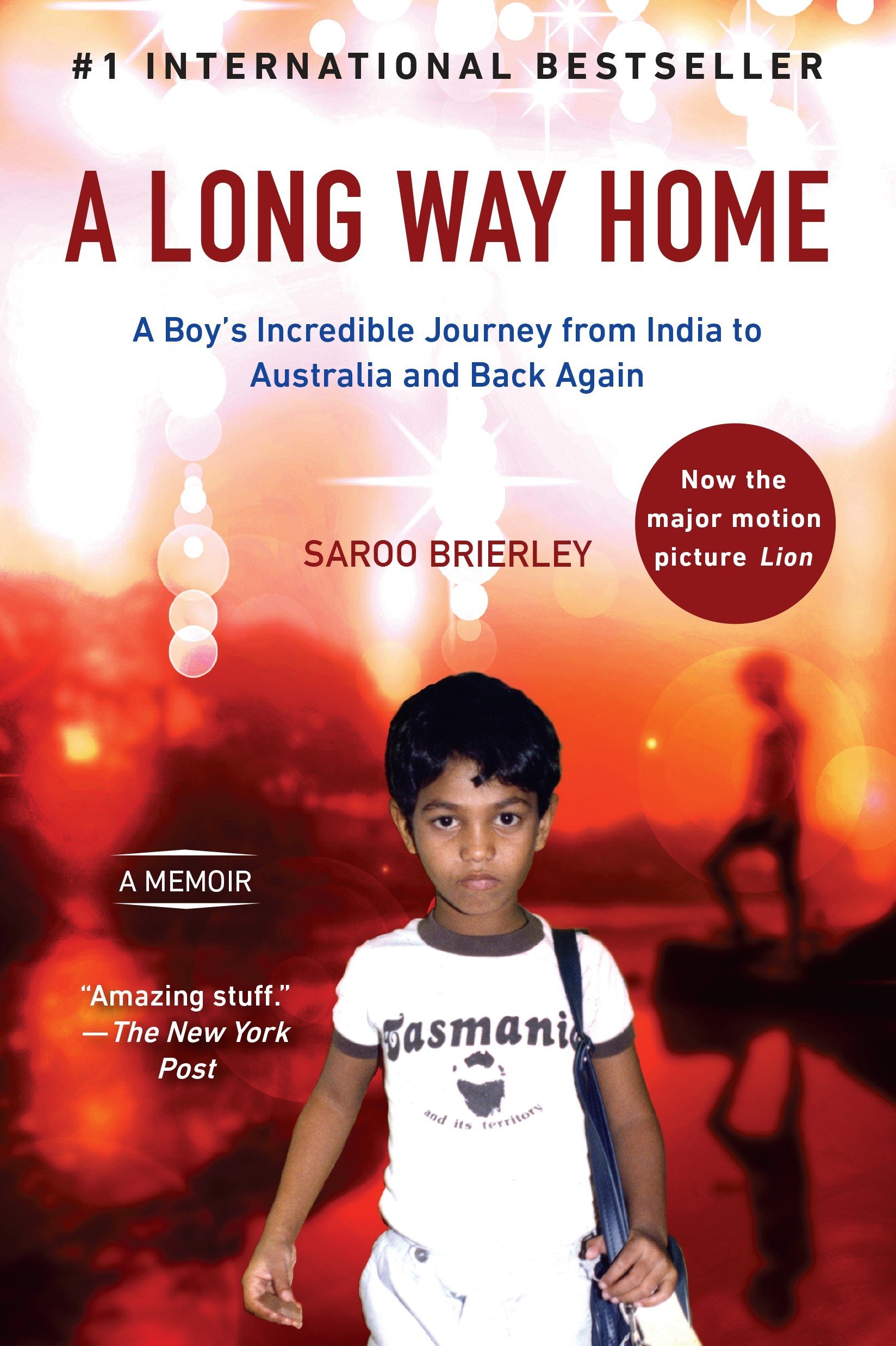
The movie Lion (2016) is the cinematic adaptation of the non-fiction memoir A Long Way Home by Saroo Brierley. It explains the extraordinary 25-year odyssey of a five-year-old boy who became lost in India, was adopted by an Australian family, and eventually used Google Earth to locate his biological mother in 2012.
The narrative of Saroo Brierley remains one of the most compelling human-interest stories of the 21st century. While the film Lion brought the story to global acclaim, the underlying memoir provides the granular details of how a series of tragic accidents and technological miracles converged. Understanding the "explained" elements of this journey requires looking at the geographical challenges, the psychological impact of displacement, and the specific methodology Saroo used to find his way back to a home he couldn't name.
The Origins: From "A Long Way Home" to the Movie "Lion"
To understand the explanation behind the movie, one must first distinguish between the two primary texts. A Long Way Home is the autobiography written by Saroo Brierley, published in 2013. The book serves as the factual foundation for the 2016 film Lion, directed by Garth Davis and starring Dev Patel.
The title change for the film—from the book's literal description of a journey to the single word Lion—is explained in the final moments of the story. Growing up, Saroo believed his name was "Saroo," but upon returning to his village, he discovered his birth name was Sheru, which is the Hindi word for "Lion." This linguistic revelation underscores the theme of lost identity that permeates the entire narrative.
The film serves as a visual bridge for the technical and emotional gaps in the book. It divides the narrative into two distinct halves: the 1986 survival story of a child in the chaotic streets of Kolkata (formerly Calcutta) and the 2010–2012 digital search conducted by an adult man in Hobart, Tasmania.
The 1986 Disappearance: How a Five-Year-Old Got Lost
The inciting incident of Saroo’s story occurred in 1986 in the small neighborhood of Ganesh Talai in Khandwa, Madhya Pradesh. Saroo’s family was impoverished; his father had abandoned them, leaving his mother, Fatima, to work as a laborer carrying stones. Saroo and his older brothers, Guddu and Kallu, often scavenged for food or coins on trains and in stations.
The specific sequence of events that led to Saroo’s displacement began when he followed his older brother Guddu to the Burhanpur railway station, approximately 70 kilometers from their home. Exhausted, the five-year-old Saroo fell asleep on a bench. When he woke up, Guddu was nowhere to be found. Seeing a train parked at the platform, Saroo entered a carriage, assuming his brother was inside, and fell asleep again.
This train was a decommissioned "ghost train" or a redirected service that traveled nearly 1,500 kilometers across the Indian subcontinent. When Saroo finally managed to exit the train, he was at Howrah Station in Kolkata, one of the busiest and most daunting railway hubs in the world. He was a Hindi-speaker in a city where Bengali was the dominant language, effectively rendering him unable to communicate his needs or his origin to the authorities.
Survival in Kolkata and the Transition to Australia
For several weeks, Saroo lived as one of the thousands of "platform children" in Kolkata. He survived by scavenging scraps of food and narrowly escaped several dangerous situations, including attempted abductions by human traffickers. His survival at such a young age is often attributed to a combination of instinct and the harsh lessons of poverty he had already learned in Khandwa.
Eventually, Saroo was taken in by a teenager who brought him to a police station. Because he could not identify his mother’s name (he only knew her as "Amma," a generic term for mother) or the name of his hometown (which he mispronounced as "Ginestlay"), he was declared a lost child. He was moved to the Indian Society for Assistance to Rehabilitation and Adoption (ISARA).
It was through this agency that Saroo was matched with Sue and John Brierley, a couple living in Hobart, Tasmania. The Brierleys’ decision to adopt was not based on infertility but on a philosophical belief that the world already had enough children in need of homes. This nuance, explained deeply in the memoir, highlights the stable and loving environment that allowed Saroo to grow up with a sense of security, even as his repressed memories began to surface in his late twenties.
The Digital Search: Using Google Earth as a Navigational Tool
The "explained" aspect of Saroo’s search is perhaps the most famous part of the story. In the late 2000s, while living in Canberra and later Hobart, Saroo began to use the relatively new technology of Google Earth to search for his home.
His methodology was a feat of mathematical and visual deduction:
- Establishing a Search Radius: Saroo estimated that he had been on the train for roughly 12 to 14 hours. By researching the average speed of Indian trains in the 1980s, he calculated a radius centered around Kolkata.
- Visual Landmarks: He relied on vivid "mental snapshots" from his childhood: a water tower near the station, a bridge, and a specific ravine where he used to play.
- The Breakthrough: In 2011, Saroo followed a railway line north out of Burhanpur and came across a station that matched his memory of the platform where he had initially fallen asleep. Following the tracks, he located the town of Khandwa and eventually the suburb of Ganesh Talai.
The precision of Google Earth allowed Saroo to see the very roof of his childhood home. This sequence in the movie is portrayed with high cinematic tension, but the real-life process took years of painstaking, late-night searching that nearly strained his personal relationships and mental health.
Fact vs. Fiction: Accuracy of the Movie Adaptation
While Lion is remarkably faithful to A Long Way Home, there are minor dramatizations intended to streamline the narrative for film audiences.
| Feature | Movie Version (Lion) | Memoir Fact (A Long Way Home) |
|---|---|---|
| The Jalebi Scene | A central emotional "trigger" for his memories. | Saroo did love jalebis, but his memories were triggered more generally by Indian food and smells. |
| The Character "Lucy" | Rooney Mara plays a single girlfriend who supports his search. | This character is a composite of several girlfriends and friends Saroo had during that period. |
| The Search Process | Depicted as a frantic, obsessive few months. | The search was a slow, methodical process that lasted over three years. |
| The Orphanage | Focuses heavily on the grim conditions. | The memoir provides more detail on the bureaucracy and the specific people who helped him. |
| The Reunion | Happens quickly after he arrives in the village. | In reality, Saroo walked around for some time, showing his childhood photo to locals before being led to his mother. |
The Reconnection and the Fate of Guddu
The climax of the story explains the bittersweet nature of Saroo’s return. In February 2012, Saroo traveled to Khandwa. He walked to Ganesh Talai and found his old house, which was now dilapidated. A neighbor who spoke English helped him communicate with the current residents, who directed him to a nearby house where his mother, Fatima, was living.
The reunion was a global news event, but it came with a tragic revelation. Saroo learned that his brother, Guddu, had died the same night Saroo disappeared. Guddu’s body had been found on the tracks near the station; he had likely been struck by a train shortly after Saroo fell asleep. This explained why Guddu never came back to wake Saroo up and why the family had spent decades mourning one son while searching for the other.
As of 2026, Saroo Brierley continues to maintain a close relationship with both his biological family in India and his adoptive family in Australia. He has used his platform to advocate for adoption agencies and to support organizations like Magic Bus, which helps underprivileged children in India.
Frequently Asked Questions
Why did Saroo wait so long to look for his family?
Saroo did not have the means or the technology to search for much of his youth. Furthermore, as a child, his memories were fragmented and he had suppressed much of the trauma of being lost to integrate into his new life in Australia. It was only when he reached adulthood and gained access to high-speed internet and Google Earth that the search became practically possible.
Did Saroo’s biological mother ever stop looking for him?
No. Fatima stayed in the same general area for over 25 years, hoping that her son would one day return. She consulted local fortune tellers and kept his memory alive, refusing to believe he was dead despite the loss of her other son, Guddu, on the same night.
Is the "ghost train" part of the story true?
Yes. The train Saroo entered was not a regular passenger service at that time; it was a decommissioned carriage or a "dead-end" train being moved across the country. This is why the train did not stop at stations where Saroo could have easily sought help until it reached the end of the line in Kolkata.
What happened to Saroo's other siblings?
Saroo's brother Kallu and his sister Shakila remained in India. Kallu became a factory manager, and Shakila became a teacher. They were both reunited with Saroo in 2012. The family's circumstances improved significantly following Saroo's return and the subsequent success of his book and film.
Does Saroo Brierley still live in Australia?
Yes, as of 2026, Saroo Brierley remains a resident of Hobart, Tasmania. He frequently travels to India to visit his mother and siblings, and he has been instrumental in providing financial support to improve their living conditions in Khandwa.
Practical Recommendations for Readers and Viewers
To fully appreciate the scope of this story, it is recommended to start with the movie Lion for its emotional resonance and visual storytelling. However, for those seeking a deeper technical explanation of the search and the socio-economic context of 1980s India, the memoir A Long Way Home is essential.
If you are interested in the themes of the story, consider exploring the following:
- Google Earth Pro: You can actually trace Saroo’s path by looking at Khandwa and Howrah Station on the platform yourself to see the landmarks described in the book.
- Adoption Advocacy: The Brierley family’s story is a powerful testament to international adoption. Organizations such as ISS (International Social Service) provide resources for those looking to understand the legal and ethical frameworks of such journeys.
- Charitable Support: Saroo often highlights the work of Magic Bus India Foundation, which focuses on education and livelihood for children in India, addressing the root causes of the poverty Saroo experienced.