Apple juice is a staple beverage in households worldwide, often perceived as a healthy and refreshing choice for children and adults alike. However, public concern periodically arises regarding the presence of heavy metals—specifically arsenic—in commercial fruit juices. Understanding how arsenic enters the food supply, the distinction between its chemical forms, and the regulatory limits established by health authorities helps consumers make informed choices without unnecessary alarm.
Understanding Arsenic: Organic vs. Inorganic
To evaluate the safety of apple juice, one must first understand the fundamental differences between the types of arsenic found in the environment. Arsenic is a naturally occurring element that exists in the Earth's crust. It enters the food and water supply through natural geological weathering, volcanic activity, and historical or ongoing anthropogenic activities such as mining, pesticide application, and industrial pollution.
Arsenic broadly categorizes into two main forms:
- Organic Arsenic: This form contains carbon atoms and is commonly found in marine organisms such as fish and shellfish. Organic arsenic compounds, such as arsenobetaine, are generally considered non-toxic because the human body rapidly excretes them unchanged through urine.
- Inorganic Arsenic: This form does not contain carbon and is associated with mineral deposits, industrial contamination, and certain agricultural practices. Inorganic arsenic is highly toxic and classified as a known human carcinogen by the International Agency for Research on Cancer (IARC). Long-term exposure to inorganic arsenic links to various adverse health outcomes, including skin lesions, cardiovascular disease, developmental deficits, and increased cancer risks.
When evaluating apple juice, food safety regulators focus almost exclusively on inorganic arsenic, as this is the harmful fraction that may be absorbed by apple trees from soil and water or transferred via historical agricultural treatments.
How Arsenic Enters Apple Juice
Apples absorb water, minerals, and trace elements from the soil in which they grow. Because arsenic is naturally present in soil and groundwater, trace amounts can be taken up by the root system of the apple tree and transported to the fruit.
Several factors influence the concentration of arsenic in harvested apples:
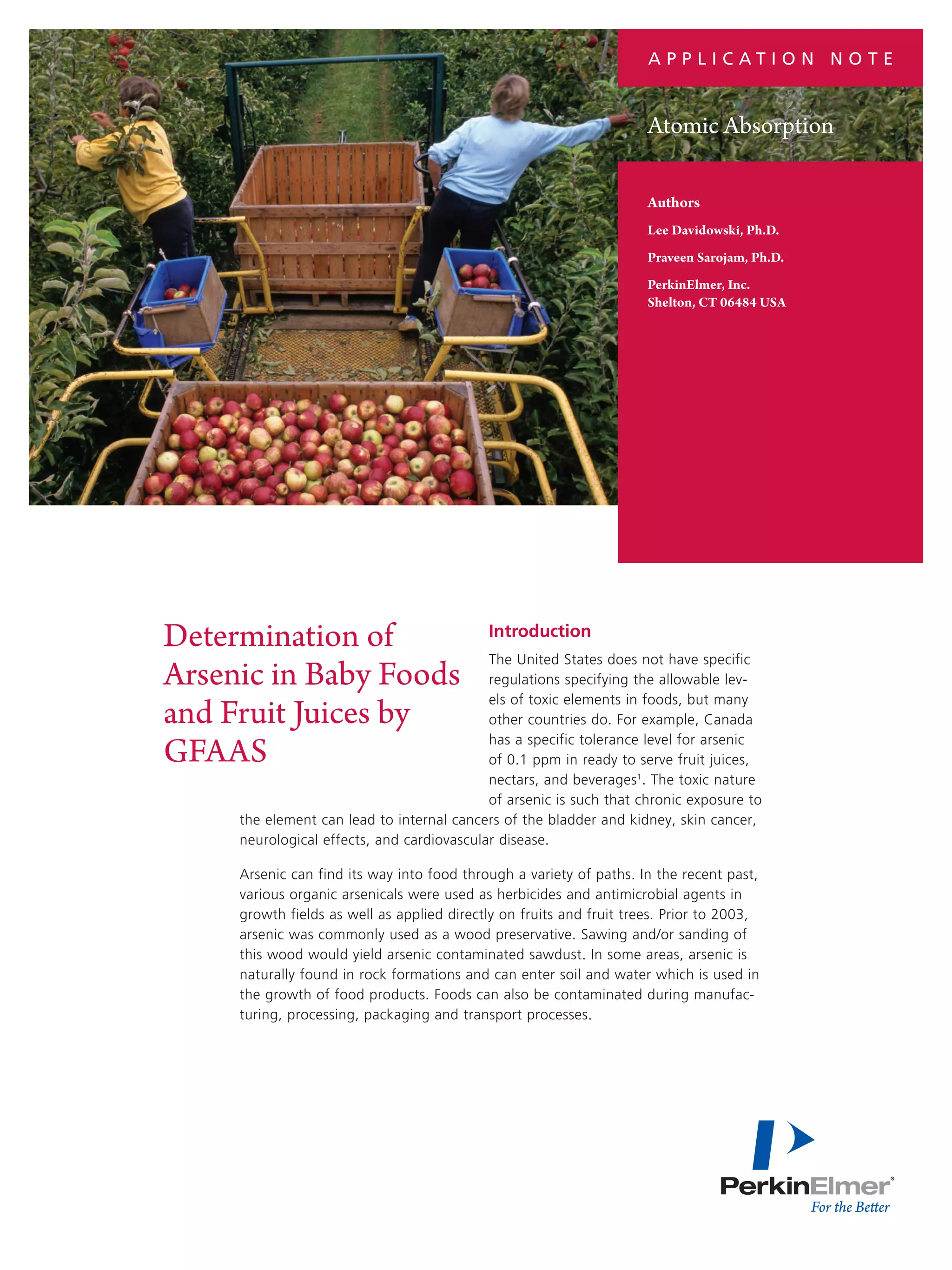
- Soil Composition and History: Regions with naturally high levels of arsenic in the soil or irrigation water yield crops with higher background concentrations. Furthermore, historical agricultural practices—such as the use of lead arsenate pesticides in orchards during the 19th and mid-20th centuries—can leave residual arsenic in orchard soils for decades, long after those pesticides have been banned.
- Water Quality: Groundwater used for irrigation may contain dissolved arsenic. When farmers use this water to irrigate orchards, the soil and the fruit can absorb additional quantities of the element.
- Processing and Concentration: Apple juice manufacturing involves extracting juice from large volumes of apples, filtering, and often concentrating the liquid for storage and reconstitution. If the raw fruit contains trace mineral residues, these elements concentrate alongside the natural sugars and acids during processing, though filtration and clarification steps can remove some suspended particulate matter.
Regulatory Standards and Action Levels
Governments and international health organizations establish strict safety thresholds to protect consumers, particularly vulnerable populations such as infants and young children, who consume higher amounts of food relative to their body weight.
The United States Food and Drug Administration (FDA) and the Environmental Protection Agency (EPA) work in tandem to monitor and regulate contaminants in the food and water supply. For drinking water, the EPA enforces a Maximum Contaminant Level (MCL) of 10 parts per billion (ppb).
For apple juice, the FDA has progressively lowered action levels to minimize dietary exposure:
| Regulatory Body / Agency | Standard / Action Level | Scope and Applicability |
|---|---|---|
| U.S. Food and Drug Administration (FDA) | 10 ppb (final guidance) | Maximum allowable inorganic arsenic level in commercially available apple juice. |
| U.S. Environmental Protection Agency (EPA) | 10 ppb | Maximum Contaminant Level (MCL) for arsenic in public drinking water systems. |
| European Commission (EFSA) | Strict limits varying by product | Harmonized European standards prioritizing infant and toddler food safety. |
These action levels are not dividing lines between safe and unsafe consumption on a single-serving basis; rather, they serve as benchmarks for manufacturers. If a juice manufacturer's product exceeds the action level, the FDA can take regulatory action, including removing the product from shelves.
Health Implications and Vulnerable Populations
The primary concern regarding inorganic arsenic in food products centers on chronic, long-term exposure rather than acute toxicity. Acute arsenic poisoning from commercial beverages is exceedingly rare and generally associated with accidental or intentional contamination.
Instead, toxicologists and public health officials evaluate the cumulative impact of daily dietary exposure over months and years.
- Infants and Young Children: Children are more susceptible to the effects of heavy metals due to their lower body weight, higher metabolic rates, and developing neurological systems. Early-life exposure to inorganic arsenic links to potential cognitive deficits and neurodevelopmental impacts. Consequently, pediatric health guidelines recommend limiting juice intake for toddlers and infants, encouraging whole fruits and water instead.
- General Adult Population: While adults have higher body mass and more mature metabolic defenses, chronic high-level exposure still elevates long-term risks for bladder, lung, and skin cancers, as well as peripheral neuropathy and cardiovascular complications. However, the occasional consumption of commercially compliant apple juice poses a negligible risk within a balanced diet.
Comparing Apple Juice to Other Dietary Sources
Arsenic is ubiquitous in the natural environment, meaning it appears in many common foods beyond apple juice. Understanding relative exposure helps contextualize the risk profile of fruit juice.
| Food or Beverage Category | Primary Source of Arsenic | Relative Inorganic Arsenic Profile |
|---|---|---|
| Rice and Rice Products | Absorption from flooded paddy soils | Moderate to High (varies by grain type and region) |
| Apple and Grape Juice | Soil uptake and historical orchard treatments | Low to Moderate (regulated by strict action levels) |
| Seafood (Fish and Shellfish) | Marine bioaccumulation | High total arsenic, but predominantly harmless organic arsenic |
| Root Vegetables | Soil contact and irrigation water | Low to Moderate |
Comparing these items reveals that rice and certain grain products often contribute more significantly to dietary inorganic arsenic intake than apple juice. Maintaining a varied diet minimizes the concentration of any single contaminant.
Consumer Guidance and Practical Mitigation Steps
Consumers seeking to minimize their family's exposure to heavy metals can adopt several practical strategies without eliminating nutritious foods or beverages entirely.
- Monitor Portion Sizes: Follow pediatric guidelines regarding juice consumption. The American Academy of Pediatrics recommends that children under one year old avoid fruit juice entirely, while toddlers aged one to three should consume no more than four ounces per day.
- Choose a Variety of Beverages: Rotate apple juice with other hydration options, prioritizing plain water and whole milk. Offering whole apples instead of juice provides beneficial dietary fiber and slows digestion, reducing the concentration of sugars and compounds absorbed at one time.
- Review Brand Compliance: Major commercial juice manufacturers routinely test their products to ensure compliance with FDA action levels. Purchasing from reputable brands that implement rigorous quality control and testing protocols minimizes exposure risks.
- Emphasize a Balanced Diet: Eating a diverse diet rich in antioxidants, vitamins, and minerals helps the body naturally process and eliminate trace environmental toxins.
Frequently Asked Questions
Is all arsenic in apple juice dangerous?
No. Arsenic exists in organic and inorganic forms. Organic arsenic, common in marine life, is largely harmless and rapidly excreted. Inorganic arsenic, which may appear in trace amounts in apple juice due to soil absorption, is toxic. Regulatory agencies set strict limits specifically targeting this inorganic fraction.
Why do apples contain arsenic?
Arsenic is a naturally occurring element in the Earth's crust. Apple trees absorb water and minerals from the soil. Additionally, historical use of lead arsenate pesticides in orchards during the 20th century left residual traces in some agricultural soils, which trees continue to take up in very small quantities.
Are organic apple juices free of arsenic?
Not necessarily. Because arsenic is naturally present in soil and groundwater, even organically grown apples can contain trace amounts. Organic certification ensures that synthetic pesticides and fertilizers were not used during farming, but it does not completely eliminate natural geological elements present in the surrounding environment.
How much apple juice is safe for children to drink?
Health organizations recommend limiting fruit juice for children. The American Academy of Pediatrics advises no juice for infants under 12 months and a maximum of four ounces per day for toddlers aged one to three. Encouraging water and whole fruit is the preferred approach for daily hydration and nutrition.
What are manufacturers doing to reduce arsenic levels?
Juice producers test raw fruit supplies, source apples from regions with lower soil contamination, and utilize advanced filtration and clarification technologies during manufacturing to reduce trace mineral levels and ensure compliance with federal safety standards.
Conclusion
The presence of trace arsenic in apple juice is an environmental reality managed through strict government oversight, agricultural monitoring, and manufacturing quality controls. While inorganic arsenic is a recognized toxin, the levels found in commercially regulated apple juice are carefully controlled to prevent adverse health effects. By adhering to recommended portion sizes, offering a diverse and balanced diet, and prioritizing whole fruits and water, consumers can safely enjoy apple juice as part of a healthy lifestyle.