Arizona auto insurance regulations require all motor vehicle owners operating on public roads to maintain continuous financial responsibility, most commonly fulfilled through a certified liability insurance policy. Governed by the Arizona Department of Insurance and Financial Institutions (AZDIFI) and monitored by the Arizona Department of Transportation (ADOT) Motor Vehicle Division (MVD), drivers must meet statutory minimum coverage limits of $25,000 for bodily injury per person, $50,000 for bodily injury per accident, and $15,000 for property damage.
1. Statutory Coverage Minimums in Arizona
The legal framework for vehicle financial responsibility in Arizona is codified under Arizona Revised Statutes Title 28. Every motor vehicle registered in the state must carry proof of financial responsibility. While drivers can technically fulfill this requirement through alternative financial methods—such as depositing cash or securities with the State Treasurer—the vast majority of vehicle owners fulfill their legal obligation by purchasing an auto liability insurance policy issued by an insurer authorized to do business in Arizona.
| BODILY INJURY PER PERSON | BODILY INJURY PER ACCIDENT | PROPERTY DAMAGE PER ACCIDENT |
|---|---|---|
| $25,000 | $50,000 | $15,000 |
The statutory minimum liability thresholds in Arizona, commonly formatted as 25/50/15, establish the baseline financial protection required by law:
- $25,000 Bodily Injury Liability per Person: Covers medical expenses, lost wages, and legal costs arising from bodily injuries inflicted on a single individual in an accident where the covered driver is at fault.
- $50,000 Bodily Injury Liability per Accident: Establishes the maximum total payout for bodily injuries across all individuals injured in a single accident caused by the policyholder. Regardless of how many people are injured, the insurance policy will not pay more than $50,000 total for bodily injury per accident under minimum limits.
- $15,000 Property Damage Liability per Accident: Pays for physical damage caused to another person’s vehicle, property, structures, or public infrastructure resulting from a collision caused by the policyholder.
Historical Context and Statutory Evolution
Arizona updated its baseline mandatory auto liability limits under Senate Bill 1087, which took effect on July 1, 2020. Prior to that enactment, Arizona’s statutory minimums had remained fixed at 15/30/10 for decades ($15,000 bodily injury per person, $30,000 bodily injury per accident, and $10,000 property damage).
The legislative increase was designed to better align policy minimums with modern healthcare costs and modern vehicle repair values. The 25/50/15 requirement remains the active statutory baseline enforced by AZDIFI and the ADOT MVD.
Limitations of Mandatory Minimum Coverage
While carrying 25/50/15 limits satisfies state legal mandates and avoids MVD penalties, insurance professionals and legal experts frequently highlight that statutory minimums offer minimal real-world financial protection.
If an at-fault accident results in multi-vehicle collisions, severe physical trauma requiring intensive hospitalization, or damage to higher-value modern vehicles, damages quickly exceed $25,000 or $50,000. In Arizona, the driver responsible for an accident remains personally liable for any remaining damages that exceed their policy limits. Assets, savings, and future wage garnishments can be targeted to satisfy court judgments resulting from underinsured loss events.
2. Uninsured and Underinsured Motorist (UM/UIM) Laws
Under Arizona Revised Statutes § 20-259.01, auto insurance carriers operating within the state are legally obligated to offer Uninsured Motorist (UM) and Underinsured Motorist (UIM) coverage in writing to all prospective policyholders when issuing a liability policy.
- Statutory Requirement: A.R.S. § 20-259.01
- Must offer UM/UIM Coverage in Writing
- Policyholder ACCEPTS: Coverage added to policy up to Liability Limits
- Policyholder REJECTS: Must sign written waiver (Standardized State Form)
- Must offer UM/UIM Coverage in Writing
Uninsured Motorist (UM) Coverage
Uninsured Motorist coverage protects the driver and passengers if they sustain bodily injuries in an accident caused by a driver who carries no liability insurance, or by a hit-and-run driver who leaves the scene of an accident. Although Arizona mandates insurance for all registered vehicles, a notable percentage of drivers remain uninsured or allow their coverage to lapse.
Underinsured Motorist (UIM) Coverage
Underinsured Motorist coverage applies when the at-fault driver maintains liability insurance, but their policy limits are insufficient to cover the total medical bills, rehabilitation costs, or lost income resulting from the accident. In these scenarios, once the at-fault driver's liability insurance pays out its maximum policy limit, the victim’s UIM policy covers the remaining gap up to the UIM policy limit.
Mandatory Written Selection and Rejection Rules
Although insurance companies must offer UM and UIM coverage at limits equal to the policy’s bodily injury liability limits, policyholders are not legally required to purchase it. However, to decline UM or UIM coverage, the named insured must sign a specific, state-approved written rejection form.
If an insurer fails to produce a properly executed written rejection form signed by the policyholder, Arizona courts routinely rule that UM or UIM coverage applies by operation of law up to the policy’s primary bodily injury liability limits.
3. Arizona’s Legal Standard: Pure Comparative Negligence
Understanding auto insurance coverage in Arizona requires an understanding of the state's legal framework regarding tort liability and fault determination.
Pure Comparative Negligence (A.R.S. § 12-2505)
Arizona operates under a pure comparative negligence doctrine. Unlike states that follow a modified comparative fault rule (where an injured party is barred from recovering damages if they are 50% or 51% at fault), Arizona allows an injured driver to recover damages even if they are primarily responsible for the collision.
Under A.R.S. § 12-2505, a claimant's total monetary recovery is reduced in direct proportion to their percentage of fault.
- Example Scenario: If Driver A incurs $100,000 in total medical damages and property loss following an accident, but courts or claims adjusters determine Driver A was 30% responsible (due to speeding) while Driver B was 70% responsible (due to failing to yield), Driver A can still recover 70% of their total losses ($70,000) from Driver B or Driver B's liability insurer.
- Extreme Cases: Even if a driver is found to be 90% at fault for an accident, they may technically recover 10% of their documented damages from the other party involved, provided the other party shares 10% of the blame.
Statute of Limitations for Auto Claims
In Arizona, personal injury and property damage lawsuits arising from motor vehicle collisions are subject to strict statutory deadlines under A.R.S. § 12-542.
- Bodily Injury Claims: Must be formally filed in a court of competent jurisdiction within two years from the date the cause of action accrues (typically the date of the collision).
- Property Damage Claims: Must also be filed within two years of the incident.
Failing to settle an insurance claim or initiate formal legal proceedings within this two-year period permanently bars the claimant from seeking financial recovery through the judicial system.
4. Digital Verification, Verification Tracking, and MVD Enforcement
Arizona utilizes a real-time, automated Electronic Insurance Verification System administered by the ADOT Motor Vehicle Division. This system directly bridges insurance carriers and state record databases to ensure continuous compliance.
- ADOT MVD Automated Electronic Insurance Verification
- Insurance Carrier System sends continuous updates (Cancellation / New Policy) to ADOT MVD Database System.
- If Uninsured Status is detected, MVD Notice is sent to Vehicle Owner.
- 30-Day Warning / Inquiry is initiated. If no proof is provided, Driver License & Registration Suspension occurs.
Real-Time Insurance Verification System
Whenever a driver purchases, alters, or cancels an auto insurance policy in Arizona, the insurance company is required by law to electronically notify the ADOT MVD database. If a policy lapses, is non-renewed, or is canceled without an immediate replacement policy being registered on the same vehicle identification number (VIN), the MVD system automatically flags the vehicle as non-compliant.
Upon detecting an unverified policy status, the MVD generates an automated inquiry notice to the vehicle owner. The owner must provide valid proof of insurance within 30 days. If the owner fails to verify continuous coverage, the MVD automatically suspends the vehicle’s registration and, in severe cases, the owner’s driver’s license.
Acceptable Forms of Proof of Insurance (A.R.S. § 28-4135)
Drivers must carry evidence of financial responsibility in every motor vehicle operated on public highways. Under A.R.S. § 28-4135, acceptable forms of proof include:
- A standard physical insurance identification card issued by a licensed insurer.
- An official temporary binder or policy declaration page.
- An electronic image of the insurance card displayed on a wireless communication device (such as a smartphone app or digital wallet).
If a driver presents proof of insurance via a mobile device during a traffic stop, Arizona law explicitly states that displaying the device does not authorize law enforcement personnel to search or access any other content on the mobile device.
Penalties for Driving Without Insurance in Arizona
Driving an uninsured vehicle in Arizona carries strict civil penalties. Courts determine fine structures based on previous violations within a 36-month period:
| VIOLATION FREQUENCY | MANDATORY CIVIL FINE | REGISTRATION SUSPENSION | SR-22 REQUIREMENT |
|---|---|---|---|
| First Offense | $500 Minimum | 3 Months | 1 Year |
| Second Offense | $750 Minimum | 6 Months | 1 Year |
| Third+ Offense | $1,000 Minimum | 1 Year | 3 Years |
- First Offense: Mandatory civil penalty of at least $500. The court and MVD suspend the driver's license, vehicle registration, and license plates for three months. To reinstate privileges, the driver must pay MVD reinstatement fees and submit an SR-22 Certificate of Financial Responsibility for one year.
- Second Offense (within 36 months): Mandatory fine of at least $750. License and registration suspensions increase to six months, along with mandatory SR-22 filing requirements.
- Third and Subsequent Offenses (within 36 months): Mandatory fine of at least $1,000. Driver’s license and registration privileges are suspended for a full calendar year. The driver must maintain an active SR-22 filing for three consecutive years.
Note: In certain court jurisdictions, a judge may reduce or waive fines for a first-time offense if the vehicle owner proves that they purchased a qualifying six-month or one-year auto insurance policy prior to their court appearance date.
5. SR-22 Financial Responsibility Certificates
An SR-22 is not an insurance policy; it is an official administrative filing submitted by an insurance company directly to the ADOT MVD. The document certifies that an individual carries auto liability insurance meeting or exceeding Arizona's legal minimum limits.
Triggers for SR-22 Mandates in Arizona
The state mandates an SR-22 filing for drivers involved in specific legal or administrative infractions:
- Driving without mandatory liability insurance or failing to maintain proof of financial responsibility.
- Driving Under the Influence (DUI) or Extreme DUI convictions (A.R.S. § 28-1381 / § 28-1382).
- Reckless driving or aggressive driving convictions.
- Suspension of driving privileges resulting from an accumulation of points on the driver's record.
- Judgments resulting from uninsured motor vehicle accidents.
Continuous Compliance Rules
When an individual is ordered to maintain an SR-22, the filing must remain active and continuous for the entire court- or MVD-mandated period (typically 1 to 3 years).
If the policyholder misses a premium payment, changes insurance carriers without a seamless transfer, or experiences a policy cancellation, the insurance company is legally required to immediately file an SR-26 form with the ADOT MVD. The SR-26 alerts the state that the SR-22 filing has lapsed, prompting the MVD to immediately issue a notice of suspension for the driver's license and vehicle registrations.
6. Rideshare (TNC), Commercial, and Rental Vehicle Rules
Standard personal auto insurance policies contain explicit exclusions for commercial activities, including carrying passengers or property for compensation. To address modern transport models, Arizona regulates commercial transport and rideshare operations through separate statutory frameworks.
Rideshare Operations (Transportation Network Companies)
Under A.R.S. § 28-9551, drivers operating for rideshare services such as Uber or Lyft are subject to distinct insurance coverage requirements that shift across three operational phases:
- PHASE 1: App ON / Waiting for Match
- Mandatory Coverage: $50,000 Bodily Injury / Person, $100,000 / Accident, $25,000 Property
- Driver's personal policy excludes this UNLESS a TNC Rideshare Endorsement is added.
- PHASE 2: Match Accepted / En Route to Pick Up Passenger
- Mandatory Coverage: $1,000,000 Primary Commercial Liability Coverage
- Provided primarily by the TNC platform's commercial policy.
- PHASE 3: Passenger Onboard / Transporting to Destination
- Mandatory Coverage: $1,000,000 Primary Commercial Liability + Comprehensive / Collision
- Active until passenger completely exits the vehicle.
- Phase 1 (App logged in, waiting for a trip request): Arizona law requires primary liability coverage of at least 50/100/25 ($50,000 bodily injury per person, $100,000 bodily injury per accident, and $25,000 property damage). Because standard personal auto insurance policies deny claims occurring while logged into a transport app, drivers must rely on commercial TNC contingent policies or purchase a dedicated Rideshare Endorsement on their personal policy.
- Phase 2 (Trip accepted, en route to pick up passenger): The required primary commercial liability coverage increases to $1,000,000 combined single limit for bodily injury and property damage, provided by the TNC company's insurance policy.
- Phase 3 (Passenger in vehicle until drop-off): $1,000,000 primary commercial liability remains active, along with contingent comprehensive and collision coverage to protect the physical vehicle (subject to applicable commercial deductibles).
Commercial Vehicle Insurance
Commercial motor vehicles operating strictly for business purposes, heavy transport, or freight hauling must maintain higher financial responsibility limits based on vehicle weight and cargo hazard classifications under ADOT Motor Carrier regulations. Standard commercial limits range from $300,000 to over $750,000 in primary liability, rising to $5,000,000 for vehicles transporting hazardous materials.
7. Comprehensive Summary of Requirements and Penalties
The table below outlines Arizona auto insurance requirements, mandatory minimum limits, statutory bases, and enforcement outcomes.
| Coverage Type / Regulatory Feature | Mandatory Minimum Limit | Applicable Statute | Statutory Status | Non-Compliance Consequences |
|---|---|---|---|---|
| Bodily Injury Liability (Per Person) | $25,000 | A.R.S. § 28-4009 | Mandatory | Civil fines ($500–$1,000+), registration suspension, mandatory SR-22 filing. |
| Bodily Injury Liability (Per Accident) | $50,000 | A.R.S. § 28-4009 | Mandatory | Vehicle registration suspended, vehicle plates impounded by MVD. |
| Property Damage Liability | $15,000 | A.R.S. § 28-4009 | Mandatory | Financial exposure for all property damages exceeding $15,000 cap. |
| Uninsured Motorist (UM) | Equal to Liability limits | A.R.S. § 20-259.01 | Mandatory Offer / Optional Purchase | Loss of first-party protection if struck by hit-and-run or uninsured driver. |
| Underinsured Motorist (UIM) | Equal to Liability limits | A.R.S. § 20-259.01 | Mandatory Offer / Optional Purchase | Uncompensated medical costs if hit by an underinsured driver. |
| Proof of Insurance Display | Digital or Physical Card | A.R.S. § 28-4135 | Mandatory in Vehicle | Citation for failure to produce evidence of financial responsibility. |
| SR-22 Filing Verification | 25/50/15 (Certified) | A.R.S. § 28-4143 | Conditional Mandate | Immediate driver's license suspension upon SR-26 cancellation alert. |
| Rideshare Phase 1 Coverage | 50/100/25 | A.R.S. § 28-9551 | Mandatory (TNC Drivers) | Total claim denial by personal auto insurer; personal liability exposure. |
8. Practical Compliance Actions for Arizona Drivers
Navigating Arizona auto insurance regulations requires proactive steps to maintain valid legal status, secure affordable coverage, and avoid administrative penalties.
- REVIEW COVERAGE LIMITS
- Verify current policy meets or exceeds 25/50/15 minimums.
- Evaluate higher limits (100/300/100 recommended).
- CONFIRM DIGITAL & PHYSICAL PROOF
- Store digital insurance card on smartphone app.
- Keep physical backup card in vehicle glove compartment.
- CHECK MVD RECORD AFTER POLICY CHANGES
- Verify carrier updated ADOT electronic system on switch.
- Avoid gaps between cancelling old and starting new policy
- SECURE RIDERS FOR SPECIAL USES
- Add rideshare endorsement if driving for Uber/Lyft.
1. Evaluate Coverage Limits Relative to Personal Risk
While 25/50/15 satisfies legal minimums, medical inflation and average vehicle costs make minimum coverage risky for asset protection. Consider carrying liability limits of 100/300/100 ($100,000 bodily injury per person, $300,000 bodily injury per accident, $100,000 property damage) or purchasing a supplemental umbrella liability policy if you own personal real estate or financial savings.
2. Maintain Dual Proof of Financial Responsibility
To prevent citations during routine traffic stops or accident investigations, keep physical insurance cards inside the vehicle's glove box while also downloading your insurance carrier’s digital policy card onto your mobile device. Ensure that the effective dates on the card are current.
3. Avoid Policy Lapses When Switching Carriers
Because the ADOT MVD system tracks insurance digitally, never cancel an existing auto policy until the new insurance policy is active and verified. Even a 24-hour gap in coverage can trigger an MVD automated inquiry letter, requiring administrative proof of insurance or risking registration suspension.
4. Utilize Approved Methods to Lower Premium Costs
- Complete Defensive Driving Courses: Certain insurance companies in Arizona offer voluntary premium discounts for completing state-approved defensive driving programs.
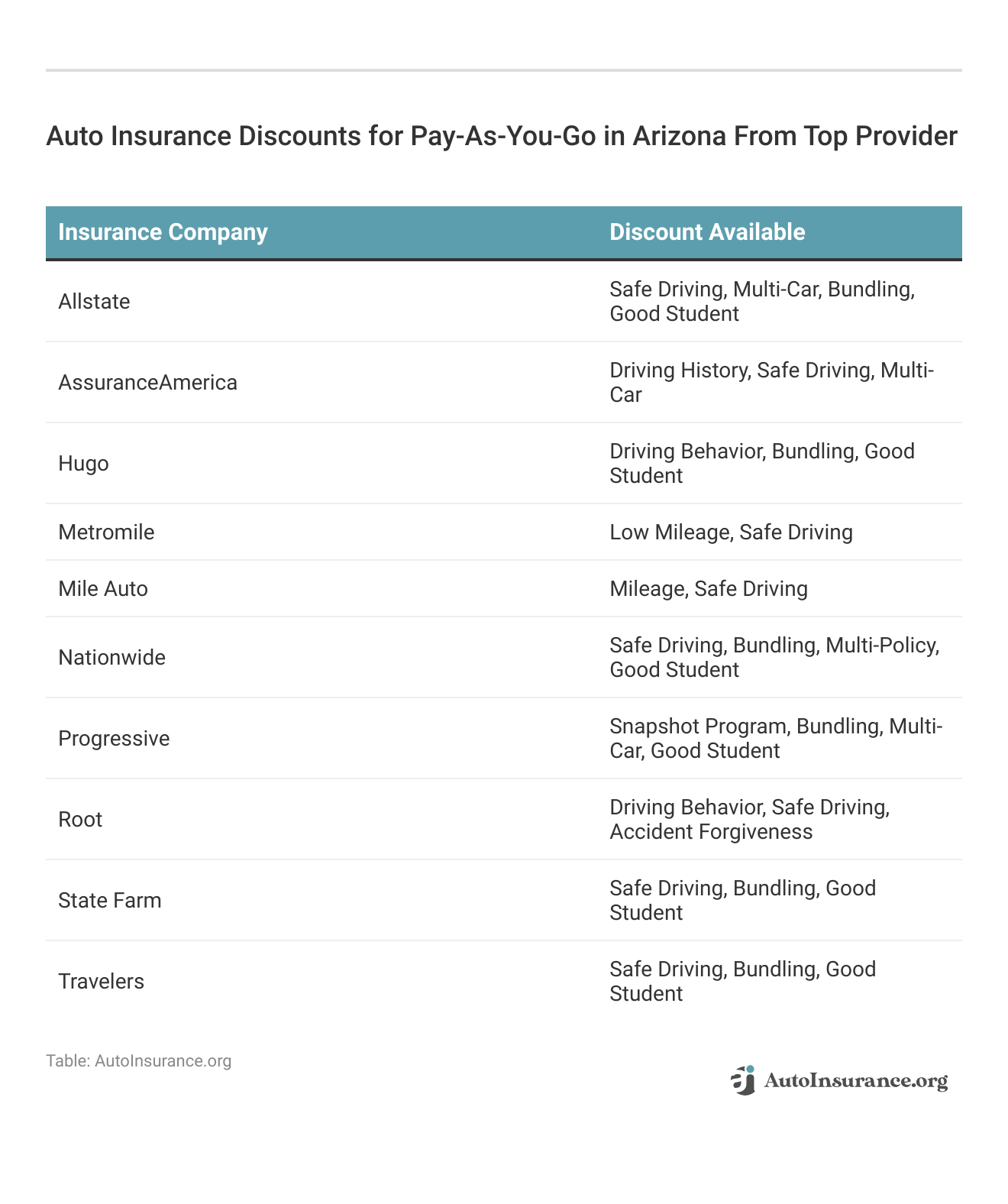
- Telematics Programs: Enrolling in driver-behavior tracking apps can yield discounts for drivers with low mileage and smooth driving habits.
- Policy Bundling: Combining auto insurance policies with home, renters, or condo insurance through the same carrier routinely yields multi-policy discounts.
Frequently Asked Questions
What are the minimum mandatory auto insurance limits in Arizona?
Arizona law mandates minimum liability insurance limits of 25/50/15. This includes $25,000 for bodily injury per person, $50,000 for bodily injury per accident, and $15,000 for property damage per accident (A.R.S. § 28-4009).
Is digital proof of insurance legal during traffic stops in Arizona?
Yes. Under A.R.S. § 28-4135, drivers in Arizona may present proof of insurance using an electronic device, such as a smartphone application or digital image. Officers are restricted by law from viewing any other content on your device when presented with digital proof.
What happens if my auto insurance policy lapses in Arizona?
When a policy lapses, your insurance carrier automatically notifies the ADOT MVD. If replacement insurance is not filed promptly, the MVD will send an inquiry letter. Failure to provide proof of continuous coverage leads to the suspension of your vehicle registration and license plates, requiring reinstatement fees and a mandatory SR-22 filing.
Are Uninsured and Underinsured Motorist coverages required in Arizona?
No, UM and UIM coverages are not legally mandatory for drivers to purchase. However, Arizona law requires insurance companies to offer UM and UIM coverage in writing on every new policy. If you choose not to accept these coverages, you must sign a formal, written state-approved rejection form.
How long must an SR-22 filing be maintained in Arizona?
In most cases, an SR-22 Certificate of Financial Responsibility must be maintained continuously for one to three years, depending on the severity of the violation (such as driving without insurance or a DUI conviction). Any lapse in coverage triggers an SR-26 cancellation notice, resulting in immediate suspension of driving privileges.
Recommended Next Actions
If you are an Arizona vehicle owner, take these steps to ensure full legal compliance:
- Review your current declarations page: Confirm that your liability limits meet or exceed 25/50/15. If you currently carry minimum limits, request quotes from your insurer for 100/300/100 liability limits to assess the cost-to-benefit ratio of higher coverage.
- Verify your UM/UIM selection: Review your policy to confirm whether you have Uninsured/Underinsured Motorist coverage active on your policy, or ensure you have a signed rejection form on file.
- Confirm digital access: Download your insurance carrier's app or save an offline digital copy of your insurance card to your smartphone to prevent citations under A.R.S. § 28-4135.
- Check your MVD registration status: If you recently switched carriers or experienced a temporary billing issue, log into the official AZ MVD Now portal to ensure your vehicle registration is active and unflagged.