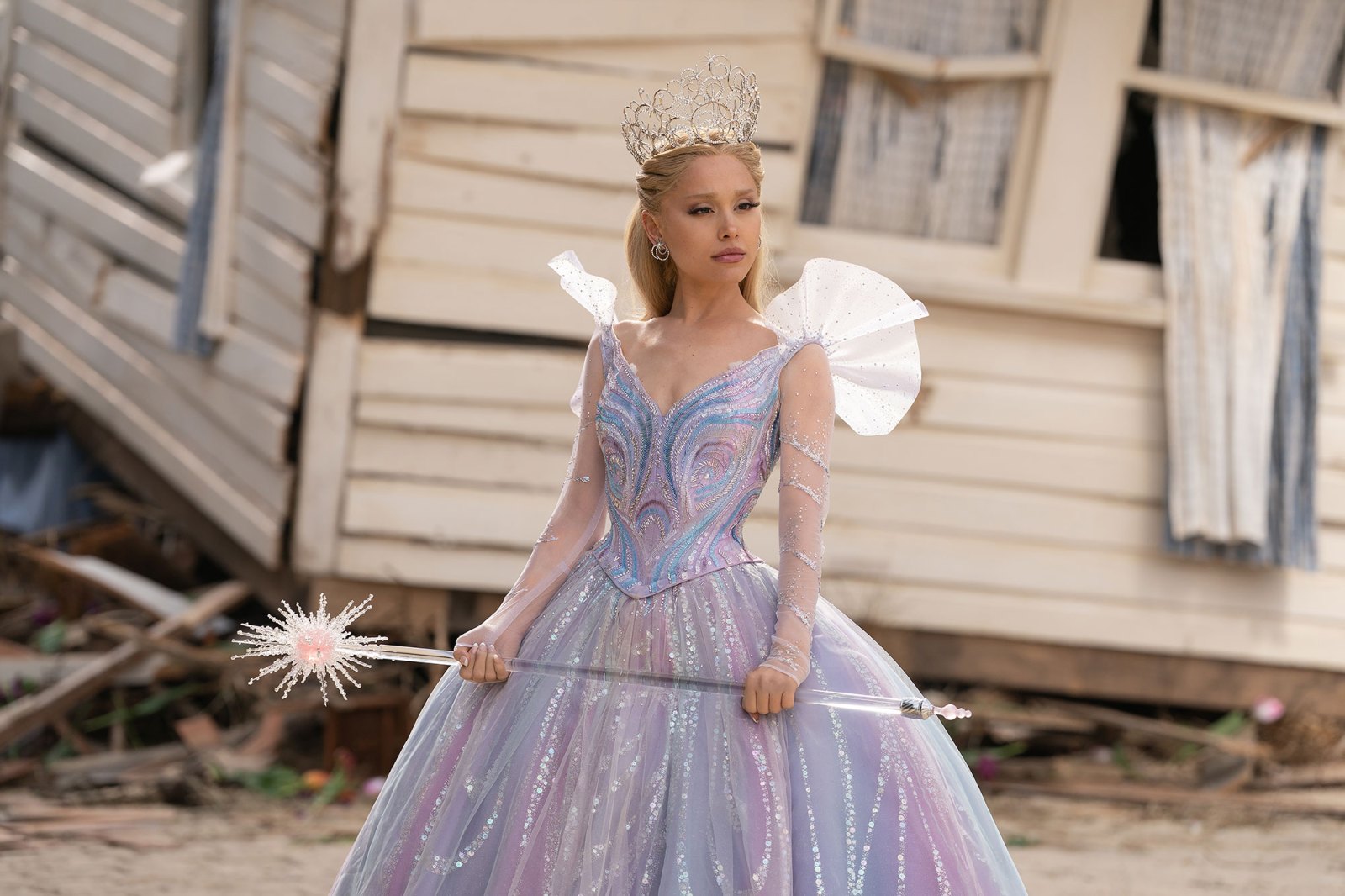
Ariana Grande’s signature Glinda gown in Jon M. Chu’s cinematic adaptation of Wicked is a masterclass in modern costume design, engineered by Tony-winning designer Paul Tazewell. Featuring hundreds of yards of layered pink silk tulle, structured architectural corsetry, iridescent crystal beading, and ombré petal skirts, the dress reimagines Broadway tradition through high-fashion couture.
The Vision Behind Glinda's Cinematic Aesthetic
When costume designer Paul Tazewell set out to translate Glinda Upland from the Broadway stage to the silver screen, he faced a dual challenge: honoring iconic theatre history while crafting a tactile garment that could withstand high-definition film cameras. On Broadway, Susan Hilferty’s original blue "bubble dress" relied on bold, high-contrast theatrical scale to project light to the back of the auditorium. For the film, Tazewell chose a distinct soft-pink palette that evokes both the 1939 The Wizard of Oz MGM classic (designed by Adrian for Billie Burke) and modern French haute couture.
Glinda’s wardrobe serves as a narrative vehicle tracking her emotional and moral trajectory. The iconic "bubble gown"—worn during her arrivals and grand public ceremonies—embodies the tension between genuine vulnerability and political performance. Tazewell designed the costume to function not merely as fairy-tale ornamentation, but as structured armor. The garment elevates Glinda to an untouchable, god-like figure for the citizens of Oz, while physically constraining her movements to telegraph the burdens of high social standing and institutional expectation.
The collaboration between Tazewell and Ariana Grande shaped the silhouette. Grande’s physical background in dance and musical theatre required a balance between dramatic volume and athletic mobility. The dress needed to look buoyant—floating above physical terrain as if suspended by magic—while housing heavy internal engineering capable of supporting mechanical rigs, wire work, and harness equipment during aerial bubble sequences.
Architectural Anatomy: Materials, Corsetry, and Engineering
Glinda’s primary pink bubble dress blends historical underpinnings with cutting-edge textile manipulation. Achieving the silhouette required over ten individual costume iterations and months of physical fittings at London’s Elstree Studios.
- Sculpted Sweetheart Bodice
- Internal steel-boned corset
- Hand-pleated silk organza overlay
- Asymmetrical micro-crystal pavé
- Structural Basque Waistline
- Contoured hip pads & harness slit
- Multi-Tiered Petal Crinoline Skirt
- 400+ yards lightweight nylon tulle
- Laser-cut ombré silk petals
- Concentric tubular crinoline cage
The Internal Corsetry and Foundation
The foundation of the gown begins with a custom-molded, 18-piece steel-boned corset. Cut with an exaggerated basque waistline, the bodice anchors the immense weight of the skirt directly onto the pelvic shelf rather than the ribcage, protecting the actor's breathing and vocal range during live on-set singing.
The inner foundation is faced with breathable cotton coutil, lined with duchess satin to avoid friction marks. To accommodate hidden aerial flying rigs during scenes in Glinda's mechanical arrival bubble, the corset features concealed vertical pass-through ports. These reinforced channels allowed carbon-fiber harness clips to attach directly to Grande’s core without distorting the outer surface of the silk.
The Micro-Pleated Bodice
Over the structural stays, artisans draped featherweight silk organza using an artisanal micro-pleating technique known in French couture as plissé soleil (sunburst pleating).
- The fabric radiates outward from the center of the breastbone across the cups in organic sweeps that mimic the interior gills of a butterfly wing or flower blossom.
- The neckline forms an exaggerated, sculptural sweetheart shape, edged in transparent illusion netting cut precisely to Grande’s collarbones.
- Asymmetrical micro-drapes wrap across the ribs, disguising the back closure mechanism, which integrates an invisible industrial zipper backed by traditional hand-sewn eyelets and silk cord laces.
Skirt Engineering and Petticoat Framework
The skirt’s spherical "bubble" shape is achieved through structural engineering rather than static batting. Beneath the visible layers lies a concentric cage constructed from flexible tubular plastic boning, featherweight horsehair braid (crin), and hoop steel. This cage maintains a round, suspended circumference without collapsing under movement.
Surrounding the cage are more than 400 yards of gossamer nylon and silk tulle, divided into stacked flounces. Each tier features varying degrees of gathering: tight, dense gathering at the crown to kick the fabric outward, tapering to wide, floating sweeps near the hem. The layering produces an acoustic cushion that softens the rustle of synthetic petticoats during audio recording.
Color Gradation, Embellishment, and Surface Design
The surface of Glinda’s gown departs from flat pink satin, instead using a dynamic optical treatment that changes color under different studio lighting environments, from the sunlit landscapes of Munchkinland to the shadowed, metallic art-deco interiors of the Emerald City.
The Ombré Dyeing Process
Tazewell’s textile team used multi-bath ombré dyeing across hundreds of individual fabric panels. The color palette incorporates several distinct shades:
- Pale Alabaster and Blush: Dominates the upper chest, waist, and topmost skirt layers to reflect natural daylight onto the actor’s face.
- Carnation and Rose Quartz: Concentrated in the mid-skirt tiers to create visual density and depth of field.
- Deep Orchid and Violet Undertones: Hidden in the deepest interior layers of the petticoats. As the dress moves, these low-register hues peek through, generating the illusion of organic shadow and dimensional weight.
Surface Embellishment and Stone Application
The surface ornamentation reflects Glinda's affinity for light refraction. Rather than uniform sequin sheeting, the gown features a scattering of Swarovski crystals, micro-beads, and laser-cut metallic pailettes placed by hand.
- Center Bodice: High-density crystal pave (2mm - 4mm chatons)
- Waist Transition: Cascading teardrop crystals and silver bugle beads
- Upper Skirt: Iridescent micro-sequins embedded between tulle layers
- Lower Hemline: Gossamer, unembellished organza petals for natural drift
The crystals are clustered heavily along the structural seams of the bodice, creating a glowing outline that catches rim lights. As the embellishment descends past the hips, the stones disperse organically into a "stardust" gradient, leaving the lower edge of the tulle unencumbered so the skirt retains its floating, dynamic drift on camera.
Technical Comparison: Film Gown vs. Related Iterations
Glinda’s cinematic gown operates within a larger continuum of costume history, drawing inspiration from theatrical precedent while influencing Grande’s off-screen red carpet wardrobe throughout the film’s promotional lifecycle.
| Design Element | Film Adaptation (Paul Tazewell) | Broadway Original (Susan Hilferty) | Red Carpet Homages (Method Dressing) |
|---|---|---|---|
| Primary Color | Blush, carnation pink, and iridescent rose | Cerulean blue, silver, and pale periwinkle | Custom pastel pinks, baby yellows, iridescent whites |
| Primary Silhouette | Architectural basque waist with spherical bubble skirt | Victorian hoop skirt with flared bell profile | High-concept modern couture (column, peplum, cocoon) |
| Structural Frame | Steel boning with tubular flexible crinoline cage | Heavy canvas foundation with steel hoops and crinoline | Light internal boning, soft tulle draping, unboned silk |
| Fabric Yardage | 400+ yards of silk organza and micro-tulle | Approx. 150–200 yards of layered theatrical net | Variable (typically 50–150 yards for couture red carpet) |
| Lighting Response | Built for 4K film capture; multi-tone ombré refraction | Engineered to catch theatrical stage followspots | Optimized for step-and-repeat photography and flashes |
| Wand & Accessories | Slender white-gold wand with faceted crystal finial | Geometric silver starburst wand with crystal star | Minimalist high-jewelry accents (chokers, micro-studs) |
The Accessorization: Crown, Wand, and Silhouette Accents
A costume of this scale requires accessories that balance its volume without competing with the face or the neckline. Tazewell designed Glinda's physical trappings as symbols of authority and courtly station.
The Diadem and Crown
Departing from the towering filigree crown of the stage show, Grande wears a low-profile, geometric diadem that sits securely at the back of her platinum-blonde updo:
- Metalwork: Cast in lightweight, polished white bronze plated with rhodium to prevent studio-light glare.
- Motifs: The open-work patterns echo the architectural lines of the Art Nouveau and Art Deco movements seen throughout the Emerald City’s urban design.
- Comfort and Balance: Because the piece was worn during extended action sequences, the frame contains hidden silicone grips and balance counterweights along the base, distributing weight across the occipital bone to prevent movement or scalp fatigue.
The Wand
Glinda’s wand functions as an extension of the dress's design language. Measuring approximately 32 inches, the shaft is turned from high-tensile carbon fiber wrapped in mother-of-pearl leaf. The finial features a multifaceted, lab-grown quartz crystal held in a four-prong setting reminiscent of early 20th-century jewelry design. The lightweight materials allowed Grande to perform precise wand choreography without wrist strain across dozens of takes.
Shoes and Undergarments
Beneath the voluminous hemline, Grande wore bespoke platform boots custom-crafted by theatrical cordwainers in the United Kingdom. Built on a hidden wedge platform with shock-absorbing orthotics, these shoes granted several inches of height to ensure the hem cleared the ground cleanly during tracking shots, all while providing stability on soundstages equipped with dynamic practical flooring.
Impact on Method Dressing and Contemporary Fashion
The production of Wicked prompted one of the most visible modern examples of "method dressing," in which actors adopt visual signatures of their characters for red carpet press tours. Throughout 2024, 2025, and into 2026, Grande and stylist Mimi Cuttrell collaborated with top fashion houses to create real-world interpretations of Glinda’s costume aesthetic.
- Giambattista Valli Haute Couture: At major premieres, Grande appeared in custom multi-tiered pink tulle confections that directly referenced the bubble skirt’s architectural volume, trading internal hoop cages for cloud-like gathering.
- Loewe and Thom Browne: At select festival screenings and editorial shoots, the aesthetic pivoted to structured, conceptual silhouettes. Thom Browne created custom tailoring featuring hand-embroidered floral motifs, contrasting crisp shirting with hyper-feminine pastel skirts.
- Archival Vintage: Grande occasionally wore archival Vivienne Westwood and Atelier Versace corsetry, paying homage to the historical waist-cinching and corsetry foundations that supported her cinematic wardrobe.
These appearances extended the cultural impact of Tazewell’s costume beyond the screen, cementing the bubble gown's status as a distinct sartorial icon of mid-2020s pop culture.
Practical Analysis: Costume Recreation and Cosplay Guide
For costume designers, students, and cosplayers seeking to recreate the Glinda bubble gown, balancing scale, structural integrity, and wearability requires careful planning.
1. Structural Underpinnings (The Skeleton)
Do not attempt to achieve the dress's volume using tulle alone; doing so adds unmanageable weight and causes the skirt to sag inward.
- The Hoop Cage: Construct or purchase a 4-to-5-tier bridal hoop skirt. Replace the bottom metal boning with flexible 1/2-inch plastic tubing or heavy horsehair braid to allow the dress to compress and bounce naturally during walking.
- The Bodice Base: Use heavy-weight twill or cotton canvas for the inner lining. Insert at least 12 to 16 synthetic baleen or spring steel stays to maintain smooth tension across the front and sides.
2. Fabric Selection and Yardage
- Outer Layer: 10 to 15 yards of silk organza or high-grade polyester crystal organza for the draped bodice and top petal overlays.
- Skirt Body: 80 to 150 yards of medium-soft hexagonal tulle. Avoid stiff craft-grade tulle, which produces a scratchy, irregular shape on small frames.
- Ombré Gradient: Use synthetic-safe fabric dyes (such as disperse dyes for polyester or acid dyes for silk). Apply the dye using a submersion dip technique, dipping bottom edges longer while keeping upper panels clear.
3. Embellishment Execution
- Stone Sourcing: Opt for flatback glass crystals in sizes SS10 through SS20 with AB (Aurore Boreale) coatings to replicate the multi-colored light refraction seen in the film.
- Adhesive: Use flexible, solvent-based fabric adhesives like Gem-Tac or E6000 Fabri-Fuse. Avoid hot glue, which hardens into brittle clumps, breaks under movement, and stains sheer fabrics.
Frequently Asked Questions
Who designed Ariana Grande's Glinda dress in the Wicked film?
The costume was designed by Paul Tazewell, the Tony-winning costume designer celebrated for his work on Broadway's Hamilton and Steven Spielberg's West Side Story (2021). Tazewell oversaw the entire cinematic wardrobe department for Jon M. Chu’s two-part film adaptation.
Why is Glinda's dress pink in the movie instead of blue like Broadway?
While the stage production uses Susan Hilferty’s famous blue bubble dress to pay homage to the original L. Frank Baum books and pop under theatrical spotlights, the film adaptation chose pink as Glinda’s primary color signature. This change aligns the character with Billie Burke’s iconic 1939 portrayal in The Wizard of Oz and provides an immediate, high-contrast visual juxtaposition against Elphaba’s deep black and green tones.
How heavy was the actual Glinda bubble gown worn on set?
The complete gown, including its internal steel-boned corset, petticoat framing, and crystal embellishments, weighed approximately 20 to 25 pounds. Because the weight was distributed across a custom-fitted pelvic basque rather than resting on the shoulders, Grande was able to move, dance, and perform vocal tracks while wearing it.
How did Ariana Grande fly in the bubble dress during filming?
The costume department worked directly with the film’s special effects and stunt teams to build hidden structural ports into the side seams of the gown's corset. Stunt harnesses were worn directly beneath the gown against the actor’s skin, with thin, high-tensile steel wire couplings passing through hidden slits in the fabric to connect to overhead crane rigs.
How many versions of the pink dress were created for production?
Costume departments build multiple duplicates of hero garments for major studio films. Tazewell's team produced roughly 10 variations of the pink bubble dress, including designated hero gowns for static close-ups, flexible versions for stunt and harness work, waterproof duplicates for weather-contingent sets, and lightweight walking doubles.
Practical Next Steps for Designers and Collectors
To study the construction techniques used in Glinda’s gown or pursue your own technical projects, consider these concrete avenues:
- Examine Official Production Design Archives: Consult the costume design coverage published by the Costume Designers Guild (CDG) and theatrical design monographs detailing Paul Tazewell’s construction blueprints, pattern drafts, and fabric swatches.
- Study Historical Patterning: Review historical basque-waist corset drafts from the late Victorian and Edwardian eras (such as 1890s evening wear), which served as the structural foundation for this cinematic silhouette.
- Explore Specialized Millinery and Petticoat Techniques: Practice working with horsehair braid (crinoline trim) along garment hems. Mastering the art of inserting crin into gathered tulle flounces is the most effective way to recreate the weightless, dynamic bounce seen in modern haute couture and film costuming.