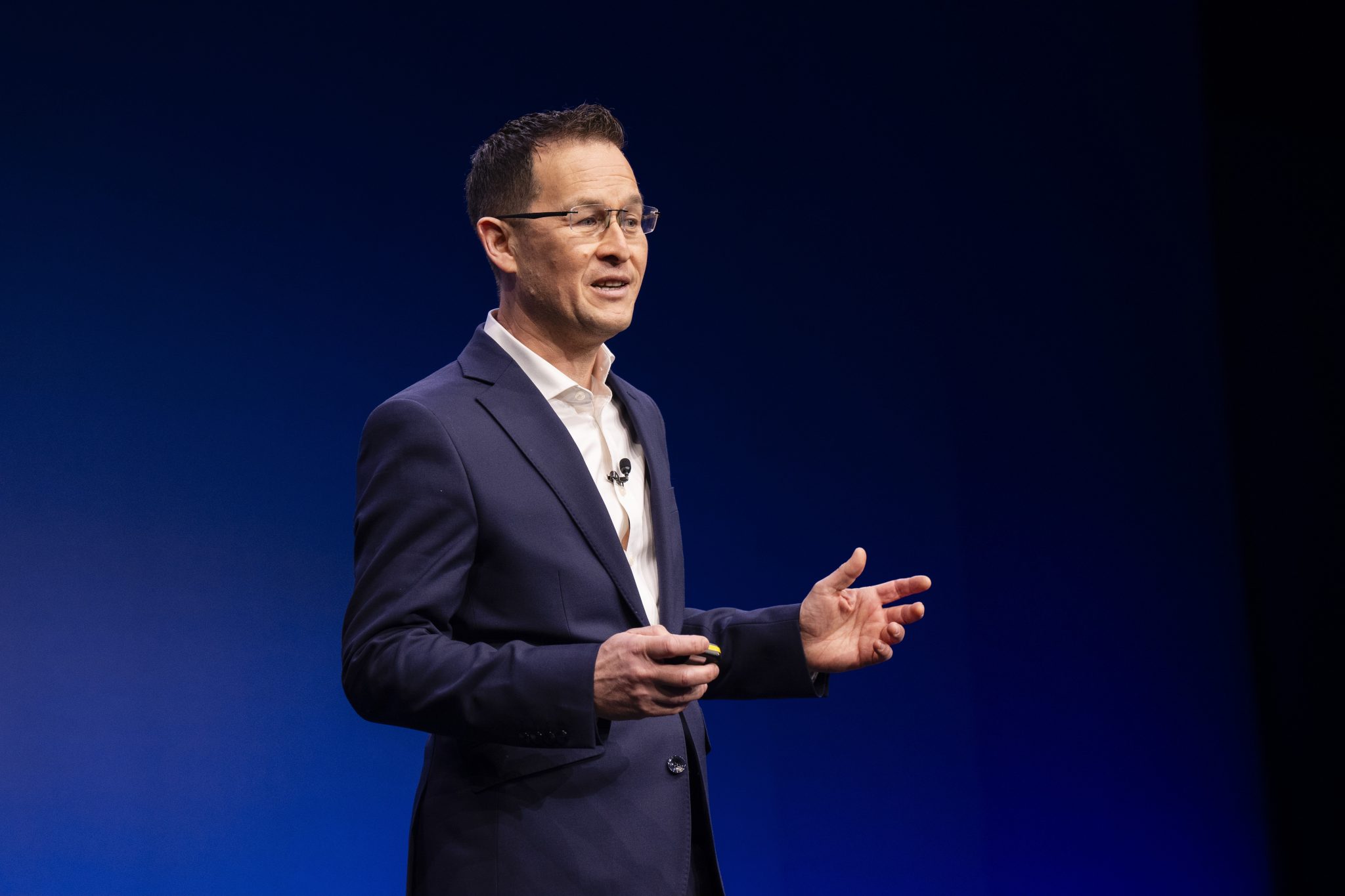
As of 2026, Anthony Battle, the Chief Information Officer (CIO) of Jaguar Land Rover (JLR), has fundamentally reshaped the company’s technological backbone to support the "Reimagine" strategy. By shifting JLR from a traditional hardware-focused automaker to a software-led luxury powerhouse, Battle’s leadership has unified cloud computing, data analytics, and software-defined vehicle architectures into a cohesive digital ecosystem.
The Architect of the Reimagine Strategy’s Digital Core
When Anthony Battle took the helm of JLR’s digital and information technology divisions, the automotive industry was at a crossroads. The transition to electric vehicles (EVs) was no longer a distant goal but an immediate survival requirement. However, for JLR, the challenge was not merely changing engines for batteries; it was about reimagining the entire relationship between the driver, the vehicle, and the manufacturer.
Under Battle’s guidance, digital transformation has moved from a back-office support function to the primary engine of value creation. The "Reimagine" strategy, launched by CEO Adrian Mardell, seeks to achieve net-zero carbon emissions by 2039 and transition Jaguar into a pure-electric modern luxury brand. Battle’s role has been to ensure that the underlying IT infrastructure—often referred to as the "digital nervous system"—is robust enough to support these ambitious goals.
The transformation led by Battle is characterized by a move away from siloed legacy systems toward an integrated, agile, and cloud-native environment. This shift has allowed JLR to accelerate product development cycles, optimize global supply chains, and introduce a direct-to-consumer (D2C) retail model that reflects the expectations of a modern luxury clientele in 2026.
Pivoting to Software-Defined Vehicles (SDVs)
A central pillar of Battle’s digital roadmap is the realization of Software-Defined Vehicles. In the past, a vehicle’s features were largely fixed at the point of manufacture. In the current 2026 landscape, a Jaguar or Land Rover is a living product that evolves over time through software updates.
The Centralized Compute Architecture
One of the most significant technical hurdles Battle addressed was the fragmentation of Electronic Control Units (ECUs). Traditionally, a premium vehicle could have over 100 separate ECUs from different suppliers, each running proprietary code. Battle’s team has worked to consolidate these into a centralized high-performance computing architecture. This transition was bolstered by JLR’s strategic partnership with NVIDIA, which provides the "brain" for automated driving systems and AI-powered interior experiences.
By centralizing the compute power, Battle has enabled:
- Over-the-Air (OTA) Updates: The ability to fix bugs, improve battery efficiency, and unlock new performance features without the customer visiting a retailer.
- Seamless Integration: A unified user interface (UI) and user experience (UX) across the infotainment system and the driver display.
- Reduced Complexity: Lowering the physical weight and wiring complexity of the vehicle, which is critical for extending EV range.
The Role of Artificial Intelligence
Artificial Intelligence (AI) is no longer a buzzword at JLR; it is a foundational tool. Battle has overseen the deployment of AI across the vehicle lifecycle. In the design phase, generative AI helps engineers simulate millions of aerodynamic variables. Within the cabin, AI-driven personal assistants learn driver preferences, adjusting climate, seating, and navigation routes proactively. This level of personalization is a hallmark of the modern luxury experience Battle has championed.
Cloud Migration and Data Democratization
To support a global fleet of connected vehicles, Anthony Battle spearheaded a massive migration to the cloud. JLR’s partnership with Amazon Web Services (AWS) and Google Cloud has been instrumental in this journey. By moving mission-critical workloads to the cloud, Battle has provided JLR with the scalability needed to process petabytes of data generated by connected cars.
Building a Data-Driven Culture
Battle’s philosophy centers on the idea of "Data as a Product." Historically, data in large organizations was trapped in departments—manufacturing data lived in the plant, while sales data lived in the regional offices. Battle broke these silos by implementing a unified data lake.
This democratization of data allows different departments to collaborate with a single version of the truth. For example, if telemetry data from vehicles in the field shows a specific component is wearing out faster than expected in hot climates, the engineering team can access that data in real-time to adjust future designs, while the supply chain team can preemptively stock replacement parts in those regions.
Enhancing Manufacturing with Digital Twins
In JLR’s manufacturing facilities, such as Solihull and Halewood, Battle has implemented "Digital Twin" technology. A Digital Twin is a virtual replica of a physical production line. By using real-time data from IoT (Internet of Things) sensors, plant managers can simulate production changes before they are implemented physically. This reduces downtime and ensures that the complex assembly of electric modular architectures (EMA) remains efficient and cost-effective.
Transitioning to a Direct-to-Consumer (D2C) Model
A significant portion of Anthony Battle’s digital transformation efforts has been focused on the "front-end"—the way customers interact with the Jaguar and Land Rover brands. As JLR shifts toward a "house of brands" approach (Range Rover, Defender, Discovery, and Jaguar), the digital journey must be as premium as the vehicles themselves.
In 2026, the car-buying process at JLR is increasingly digital-first. Battle has overseen the development of an omnichannel retail platform that allows customers to configure, finance, and order a vehicle entirely online, or start the process online and finish it at a physical boutique.
| Feature | Legacy Retail Model | 2026 Digital-First Model (D2C) |
|---|---|---|
| Customer Data | Owned primarily by third-party dealers. | Owned and managed centrally by JLR. |
| Pricing | Variable, often requiring negotiation. | Transparent, consistent "Agency Model" pricing. |
| Vehicle Configuration | Limited real-time visualization. | High-fidelity 3D streaming configurations. |
| Service Relationship | Reactive (customer calls for service). | Proactive (car self-diagnoses and schedules). |
| User Profile | Tied to the physical key/vehicle. | Cloud-based "Digital ID" that follows the user. |
This shift required a massive overhaul of JLR’s legacy ERP (Enterprise Resource Planning) and CRM (Customer Relationship Management) systems. Battle ensured that these systems were integrated so that a customer’s preferences in the digital configurator are immediately visible to the concierge at a physical showroom, providing a seamless, "high-touch" luxury experience.
Cybersecurity and Digital Ethics
With the increase in connectivity comes an increased risk of cyber threats. Anthony Battle has made cybersecurity a board-level priority. As vehicles become more reliant on software, the potential for unauthorized access increases. Battle’s team has implemented a "Security by Design" framework, where security protocols are baked into the software development lifecycle rather than added as an afterthought.
This includes:
- End-to-End Encryption: Protecting data transmission between the vehicle and the cloud.
- Intrusion Detection Systems: Real-time monitoring of vehicle networks to identify and neutralize threats.
- Privacy Governance: Ensuring that customer data is handled in strict accordance with global regulations (such as GDPR), which is vital for maintaining the trust of luxury consumers.
Cultivating Digital Talent and Agile Mindsets
Perhaps the most challenging aspect of Battle’s tenure has been the cultural transformation. Moving a century-old engineering company into the digital age requires more than just new software; it requires new ways of working.
Battle has been a vocal advocate for the "Agile" methodology, moving IT teams away from the slow, sequential "Waterfall" model of project management. By organizing IT into cross-functional "squads" and "tribes," JLR can now deploy software updates and internal tools in weeks rather than months.
To support this, Battle initiated a global upskilling program. The JLR Digital Skills Academy was established to retrain existing engineers in software development, data science, and cloud architecture. This focus on internal talent ensures that JLR retains its deep automotive expertise while gaining the technical agility of a Silicon Valley firm.
Impact on Sustainability Goals
Digital transformation is a key enabler of JLR’s sustainability commitments. Anthony Battle has utilized technology to reduce the company's carbon footprint in several ways:
- Optimized Logistics: AI-powered route optimization for parts delivery reduces transport emissions.
- Energy Management: Cloud-based monitoring of factory energy consumption allows for real-time adjustments to reduce waste.
- Circular Economy: Digital tracking of battery health and chemistry facilitates the recycling and second-life use of EV batteries, a critical component of the "Reimagine" sustainability pillar.
Future Outlook: The Autonomous and Connected Horizon
As we look beyond 2026, the foundation laid by Anthony Battle positions JLR to lead in the era of autonomous driving and the "Metaverse" of mobility. With a robust 5G connectivity framework and a scalable software architecture, JLR is prepared for a future where the vehicle is not just a mode of transport, but a sophisticated mobile living space.
The digital transformation under Battle has successfully bridged the gap between JLR’s storied heritage and its high-tech future. By prioritizing software, data, and a customer-centric digital journey, JLR has secured its place in the competitive landscape of 2026 and beyond.
Frequently Asked Questions
How has Anthony Battle changed the car-buying experience at JLR? Under Battle's leadership, JLR transitioned to an "agency model" and a direct-to-consumer digital platform. This allows customers to have a consistent, transparent experience whether they are browsing online or visiting a physical boutique. It integrates high-fidelity configurators with real-time inventory and financing tools, making the process seamless and personalized.
What is the "Software-Defined Vehicle" and why is it important for JLR? A Software-Defined Vehicle (SDV) is a car where the majority of its functions and features are managed through software rather than hardware. This is crucial for JLR because it allows for Over-the-Air (OTA) updates, enabling the vehicle to improve and gain new features over time, similar to a smartphone. This increases the vehicle's longevity and resale value.
What role does AI play in JLR’s digital transformation? AI is used throughout the company, from generative design in engineering to predictive maintenance in manufacturing. For the consumer, AI powers the in-car personal assistant and driver-assistance systems. Internally, AI helps JLR manage complex global supply chains by predicting potential disruptions and suggesting alternative logistics routes.
How does JLR ensure the cybersecurity of its connected vehicles? Anthony Battle implemented a "Security by Design" approach. This includes multi-layered encryption, real-time intrusion detection, and rigorous testing of all software before it is deployed OTA. By treating the vehicle as a secure mobile device, JLR protects both the vehicle's operational integrity and the owner's personal data.
What cloud technologies are driving JLR's transformation? JLR utilizes a multi-cloud strategy primarily involving AWS and Google Cloud. These platforms provide the scalability needed to handle the massive data flows from millions of connected vehicles, supporting everything from remote diagnostics to high-speed infotainment streaming and automated driving simulations.
Practical Recommendation for Industry Observers
For organizations looking to emulate JLR’s success, the primary takeaway from Anthony Battle’s strategy is the centralization of data and the decentralization of its use. By creating a unified cloud-based data layer, JLR has empowered individual teams to innovate rapidly while maintaining a single, accurate view of the customer and the product. Companies should prioritize breaking down legacy data silos and investing in internal "digital academies" to ensure their workforce has the skills necessary to navigate a software-defined future.