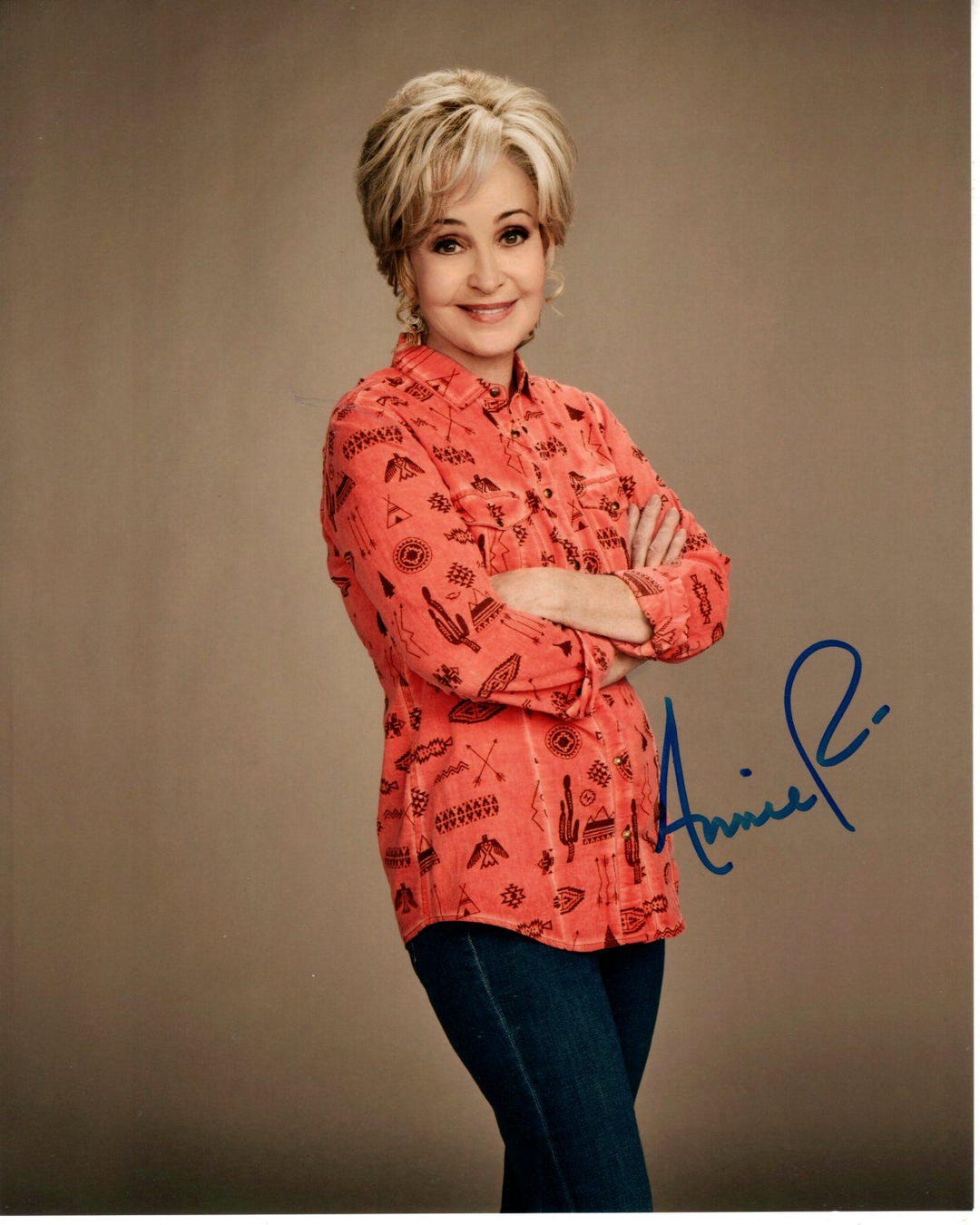
Annie Potts as Meemaw (Constance Tucker) anchors Young Sheldon by serving as the emotional glue, rebellious counterweight, and grounding matriarch who binds the Cooper family together through chaos, religious tension, and coming-of-age milestones.
Introduction to Constance "Meemaw" Tucker and Her Central Role
When viewers tuned into Young Sheldon, the spin-off and prequel to Chuck Lorre and Steven Molaro's mega-hit The Big Bang Theory, they anticipated an expansion of the eccentric genius Sheldon Cooper’s childhood in East Texas. What many did not fully anticipate was how vital the character of Constance "Meemaw" Tucker—brilliantly brought to life by veteran stage and screen actress Annie Potts—would become to the structural integrity of the entire series. In The Big Bang Theory, older Sheldon (voiced by Jim Parsons) occasionally referenced his Meemaw with a mixture of reverence, fear, and deep affection, describing her as his "Moon Pie" loving grandmother who tolerated no nonsense. Transitioning that sparse lore into a fully realized, multi-dimensional living character required an actress of immense comedic timing, dramatic weight, and magnetic screen presence.
Annie Potts filled those shoes effortlessly, transforming Meemaw from a simple trope of the wise-cracking southern grandmother into the narrative heartbeat of the Cooper family dynamic. While Mary Cooper (Zoe Perry) wrestled with rigid, evangelical protectionism and George Cooper Sr. (Lance Barber) navigated the complexities of being an under-appreciated high school football coach and father, Meemaw operated in the spaces between. She was an anchor for Sheldon's hyper-rational, hypersensitive eccentricities, a fierce protector of Missy (Raegan Revord), a weary guide to troubled Georgie (Montana Jordan), and a complex romantic and independent entity in her own right. This article explores how Annie Potts's portrayal of Meemaw fundamentally shaped, challenged, and sustained the Young Sheldon family dynamic across its seven-season run.
The Counterbalance to Mary Cooper's Strict Orthodoxy
To understand how Meemaw shaped the family dynamic, one must first examine her primary ideological foil: her daughter, Mary Cooper. Mary’s worldview is firmly rooted in a conservative, Baptist framework that views the world through the lens of divine providence, moral purity, and strict adherence to church doctrine. While Mary’s intentions are rooted in a mother’s fierce love and protective instinct, her approach often suffocates the developing personalities of her children, particularly Sheldon, whose scientific curiosity frequently clashes with religious dogma.
Meemaw serves as the essential secular and pragmatic counter-balance in this environment. Living just across the yard, she provides the children—and Sheldon in particular—with a safe harbor where they can question authority, explore non-religious viewpoints, and experience a more permissive, worldly perspective without fear of eternal damnation. Potts plays this dynamic with a subtle wink and a protective mama-bear intensity. When Mary attempts to shield Sheldon from the harsh realities of the universe or discourage scientific inquiries that challenge biblical creationism, Meemaw is there to validate his intellect.
However, Meemaw is not aggressively anti-religion; rather, she is deeply pragmatic. She understands her daughter’s anxieties and loves her fiercely, which prevents the relationship from devolving into a toxic cartoon feud. Instead, their generational clash establishes a healthy ideological tension within the household. The children learn that there is more than one way to view right and wrong, and that love can bridge vast chasms of disagreement. Meemaw’s presence prevents Mary’s house from becoming an echo chamber of dogmatic anxiety, keeping the family grounded in a reality where humor and skepticism are valid coping mechanisms.
Relationship Dynamics Between Meemaw and the Cooper Children
Meemaw’s impact on the family dynamic is best observed through her distinct, individualized relationships with each of Mary and George’s three children. Far from being a monolithic grandmother who treats all grandchildren equally, Potts crafts a nuanced dynamic tailored to the specific emotional and developmental needs of Sheldon, Georgie, and Missy.
| Grandchild | Nature of Relationship with Meemaw | Impact on Family Dynamic |
|---|---|---|
| Sheldon Cooper | Intellectual validation, protective ally against neighborhood ridicule. | Shields Sheldon from isolation; grounds his eccentricities with practical wisdom. |
| Georgie Cooper Jr. | Confidant, mentor in business and life, partner in illicit ventures. | Fosters Georgie's transition into adulthood and provides an escape from academic pressure. |
| Missy Cooper | Surrogate mother for emotional needs, champion of her sharp wit. | Counterbalances Mary's focus on Sheldon; gives Missy a voice and female role model. |
Navigating Sheldon’s Genius and Vulnerability
With Sheldon, Meemaw acts as both an intellectual sounding board and an unyielding shield. While the rest of the family—and the broader community of Medford, Texas—often views Sheldon as an alien or a social nuisance, Meemaw recognizes his profound vulnerability. She calls him "Moon Pie" not merely as a term of endearment, but as a way to soften his jagged edges and remind everyone that, underneath the intimidating vocabulary and rigid habits, he is just a little boy who needs reassurance. When Sheldon faces bullying or academic burnout, Meemaw cuts through his intellectual defenses with down-home wisdom. She teaches him that book smarts do not automatically equal emotional resilience, thereby shaping a family culture where Sheldon’s differences are neither ignored nor weaponized, but managed with communal patience.
Fostering Georgie’s Independence and Work Ethic
Georgie’s trajectory in the series undergoes some of the most dramatic shifts, moving from an unmotivated high school athlete to a young father navigating early parenthood. Meemaw plays a critical catalyst in this evolution. Recognizing that Georgie feels perpetually overshadowed by Sheldon’s academic genius and Missy’s effortless social integration, Meemaw brings him into her world. Whether through their illicit laundromat-and-video-store ventures or late-night kitchen conversations, she treats Georgie like an adult long before his parents do. This partnership gives Georgie a sense of self-worth and responsibility, preventing him from falling entirely into resentment and teaching him the gritty realities of entrepreneurship and accountability.
Championing Missy’s Independence
Missy often gets lost in the shuffle of Sheldon’s demanding needs and Georgie’s teenage rebellion. Meemaw recognizes this neglect and intentionally steps in to provide Missy with the attention, validation, and sharp-witted female companionship she craves. Meemaw’s dynamic with Missy is characterized by mutual teasing, loyalty, and emotional rescue missions. By offering Missy a space where she is seen, heard, and celebrated for her own distinct personality—her athletic prowess, her social intuition, and her razor-sharp sarcasm—Meemaw ensures that the Cooper household maintains a vital emotional equilibrium.
The Romantic and Social Independence of an Aging Southern Woman
A lesser television show would have reduced a grandmother character to a purely domestic background fixture—someone who bakes cookies, dispenses advice, and fades into the wallpaper. Young Sheldon, largely through the narrative freedom afforded to Annie Potts, carves out a vibrant, independent identity for Meemaw that defies standard sitcom aging tropes.
Meemaw is a complex romantic and social agent. Her long-term, turbulent relationship with Dr. John Sturgis (Wallace Shawn) and her subsequent romance with Dale Ballard (Craig T. Nelson) inject rich comedic and dramatic storylines into the series. These relationships do not exist in a vacuum; they directly impact the Cooper family dynamic. When Meemaw experiences heartbreak, professional setbacks (such as the loss of her illegal gambling room), or legal troubles, the family is forced to rally around her. This dynamic reversal—where the matriarch, typically the caregiver, requires care and protection—forces George, Mary, and the children to step up, deepening their familial bonds.
Furthermore, Meemaw’s business ventures (the laundromat front for her gambling parlor) establish her as a fierce independent businesswoman. In a patriarchal Texas town during the late 1980s and early 1990s, Meemaw refuses to be economically or emotionally dependent on anyone. This fierce autonomy serves as a powerful behavioral blueprint for her grandchildren, teaching them that resilience is an active, ongoing practice rather than a passive trait.
Friction and Harmony with George Cooper Sr.
The relationship between Meemaw and her son-in-law, George Cooper Sr., is one of the most underrated dynamics in Young Sheldon. In many traditional sitcom setups, the mother-in-law and son-in-law harbor mutual resentment or engage in tired adversarial banter. Potts and Lance Barber deliberately subvert this cliché.
While Meemaw is not shy about pointing out George’s flaws—his occasional apathy, his love for beer and football, or his moments of parental exhaustion—there is a profound underlying respect and affection between them. They are the two pragmatic realists in a house often dominated by Mary’s religious intensity and Sheldon’s hyper-fixations. They share silent glances across the dinner table, unspoken understandings, and a mutual dedication to keeping the family afloat when financial or emotional pressures mount.
When George faces professional stress or marital friction, Meemaw is often his most honest sounding board. She holds him accountable without tearing him down. This alliance stabilizes the household; it prevents George from feeling entirely alienated in a home where he often feels outnumbered by Mary's side of the family and Sheldon's overwhelming demands.
The Emotional Aftermath and Legacy in the Big Bang Theory Universe
As Young Sheldon progressed toward its emotional conclusion, the weight of Meemaw’s influence became even more apparent in light of what viewers already knew about the future. The series finale dealt with the profound grief following the sudden death of George Cooper Sr., a milestone that fundamentally fractured the family dynamic and sent its members scattering in different directions.
In these devastating final episodes, Meemaw’s role shifted from comic instigator and rebellious matriarch to the ultimate emotional rock of the family. While Mary retreated further into her grief and religious coping mechanisms, and the children faced their respective adult transitions, Meemaw remained the steadfast force holding the tattered remnants of the household together. Her ability to absorb grief without shattering entirely provided the structural continuity necessary for the series to close its narrative loop.
This portrayal recontextualized adult Sheldon’s memories of his grandmother in The Big Bang Theory. When older Sheldon spoke of Meemaw, viewers could now appreciate the immense emotional labor, sacrifices, and fierce love underpinning those nostalgic recollections. Annie Potts did not just play a supporting character; she built a matriarchal pillar that justified the emotional resilience of every character who survived the turbulent years of Sheldon's youth.
Frequently Asked Questions
Who plays Meemaw in Young Sheldon?
Meemaw (Constance Tucker) is played by veteran American actress Annie Potts. She appeared in all seven seasons of the series, establishing herself as a foundational pillar of the show's cast alongside Iain Armitage, Zoe Perry, and Lance Barber.
What is Meemaw’s relationship to Sheldon Cooper?
Meemaw is Sheldon Cooper's maternal grandmother (his mother Mary’s mother). Sheldon famously refers to her as "Moon Pie," a nickname that highlights their close, affectionate bond that persists into his adult life as depicted in The Big Bang Theory.
Why is Meemaw such a crucial character in the Cooper family dynamic?
Meemaw serves as the ideological and emotional bridge in the household. She balances Mary’s strict religious orthodoxy with secular pragmatism, provides emotional safety for Sheldon, champions Georgie and Missy, and anchors the family through financial and personal crises.
What illegal business does Meemaw run in Young Sheldon?
To secure her financial independence, Meemaw operates an illegal underground gambling room hidden in the back of a local laundromat that she owns and manages. This storyline introduces significant comedic and dramatic tension throughout the middle seasons of the show.
How does Meemaw's character differ from her brief mentions in The Big Bang Theory?
In The Big Bang Theory, older Sheldon describes Meemaw primarily as a tough, uncompromising southern matriarch who dotes on him. In Young Sheldon, Annie Potts expands this description into a fully fleshed-out, independent woman with her own complex romantic life, business ventures, and emotional vulnerabilities.
Conclusion and Next Actions
Annie Potts’s portrayal of Meemaw in Young Sheldon proved that a supporting character, when executed with nuance and dramatic depth, can elevate an entire television universe. By balancing sharp southern wit, fierce protective instincts, and independent vulnerability, Meemaw successfully bound a chaotic family together. For viewers seeking to appreciate the full scope of her impact, rewatching key family dinner scenes across the series' seven seasons offers a masterclass in ensemble acting and character-driven storytelling.