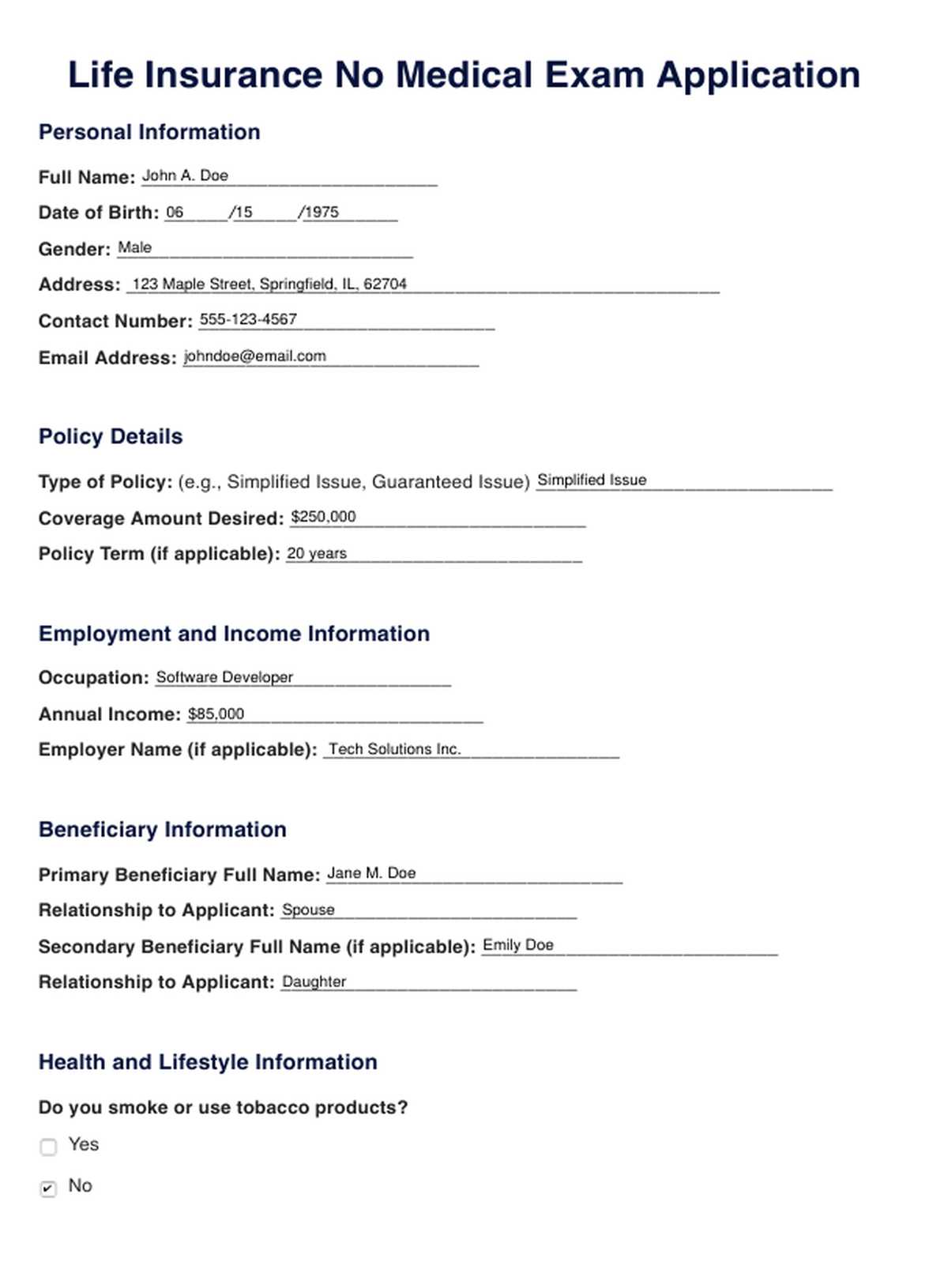
Americo life insurance policies that do not require a medical exam, often categorized under simplified issue or guaranteed issue products, provide a streamlined pathway to coverage by replacing traditional laboratory testing with health questionnaires and electronic background database checks. These products are designed for applicants who prioritize speed, privacy, and the elimination of invasive medical procedures during the underwriting process.
Understanding the No Exam Underwriting Process
Traditional life insurance underwriting is a multi-step process that often includes a paramedical examination—where a professional visits your home or office to collect blood and urine samples—and a review of your attending physician’s statements (APS). Americo no exam life insurance, by contrast, relies on a "simplified issue" or "accelerated" underwriting methodology.
When you apply for a non-medical exam policy through Americo, the company performs a real-time assessment of your risk profile using digital databases. This includes your Medical Information Bureau (MIB) report, prescription history databases, and motor vehicle records. By digitizing this data collection, Americo can often issue a decision within days rather than the weeks or months required for fully underwritten policies. It is important to distinguish this from "guaranteed issue" insurance; while no medical exam is required, you are still required to answer health-related questions. If your health history does not meet the specific criteria for the policy, the insurer may decline the application or offer a modified plan.
Key Features of Americo Non-Medical Products
Americo offers various life insurance products, and their "no exam" variants are typically structured as permanent or term life insurance solutions. These policies are designed to balance the convenience of a quick approval process with the stability of a fixed death benefit.
- Simplified Issue: These policies require you to answer a series of health questions. If you meet the health criteria, the policy can be issued without a medical examination.
- Level Death Benefit: For many of these products, the coverage amount remains consistent throughout the life of the policy, provided that premiums are paid on time.
- Accumulated Cash Value: Many permanent no exam policies from Americo allow for the growth of cash value over time. This component can act as a secondary financial asset, which may be accessible via policy loans or withdrawals under certain conditions.
- Expedited Approval: The primary value proposition is the reduction of friction. By removing the need for a physical visit from a nurse, the applicant removes a major barrier to starting their coverage.
Eligibility and Prerequisites
To qualify for an Americo no exam policy, you must typically meet specific age and residency requirements. In 2026, the standard guidelines generally dictate that applicants must be within a specific age range—often 18 to 85, depending on the specific product line—and be a legal resident of the United States.
Prerequisites often include:
- Health Attestation: You will be required to sign a statement confirming the accuracy of your answers regarding your medical history.
- Database Verification: Your eligibility is contingent upon your digital records. If your MIB report or prescription database shows conditions that conflict with your application, Americo’s underwriting engine may flag the application for further review or denial.
- Financial Suitability: Even with simplified underwriting, the applicant must demonstrate that the requested death benefit is commensurate with their financial standing or needs (e.g., final expenses or income replacement).
Comparing No Exam vs. Traditional Life Insurance
The decision to choose a no exam policy should be based on a clear understanding of the trade-offs involved. While the convenience is significant, there are distinct financial differences between no exam and fully underwritten insurance.
| Feature | No Exam (Simplified Issue) | Traditional (Fully Underwritten) |
|---|---|---|
| Medical Exam | None (Questionnaire only) | Required (Blood/Urine/Exam) |
| Approval Speed | Days | Weeks to Months |
| Premium Cost | Generally higher | Generally lower |
| Max Coverage | Capped at lower amounts | Significantly higher limits |
| Accuracy | Based on databases/attestation | Based on clinical lab data |
The higher premiums on no exam policies are essentially the "cost of convenience" and the risk the insurer takes by not having a comprehensive clinical picture of the applicant's health. For those who are generally healthy, a traditional policy may offer better value. However, for those who dislike needles, have busy schedules, or have minor health conditions that are well-managed, the no exam route is often the most practical solution.
Practical Steps to Apply
If you have decided that an Americo no exam life insurance policy aligns with your financial planning goals, follow this standardized process to ensure a smooth application experience.
- Consult with a Licensed Producer: Because life insurance regulations vary by state, it is advisable to speak with a licensed independent insurance agent who is contracted with Americo. They can verify your eligibility for specific products available in your jurisdiction.
- Gather Necessary Documentation: Even though no medical exam is required, have your primary care physician’s contact information, a list of current prescriptions, and your financial details readily available.
- Complete the Application: You will typically fill this out electronically. Be scrupulously honest regarding your medical history. Discrepancies between your answers and the data found in your prescription records or MIB report are the most common reason for application delays or denials.
- Premium Payment Setup: Most modern policies require automated electronic funds transfer (EFT) to keep the policy active. Ensure you have your routing and account numbers ready to facilitate the immediate start of your coverage.
- Review the Policy: Once issued, carefully read the "Free Look" period document. This provides you with a set number of days (often 10–30, depending on state law) to review the policy terms and cancel it for a full refund if you determine it does not meet your needs.
Common Mistakes to Avoid
Applicants often encounter hurdles due to oversights during the application process. Avoiding these mistakes can significantly increase your chance of a successful, timely approval.
- Inaccurate Prescription Reporting: Many applicants forget to mention maintenance medications for common conditions like high blood pressure or cholesterol. Even if you consider the condition "controlled," failing to disclose these medications will result in a mismatch with the pharmacy database check, leading to an automatic flagging of your application.
- Underestimating Coverage Needs: While no exam policies often have lower maximum death benefits, ensure the amount you choose actually covers your goals, such as funeral expenses or debt clearance. Do not simply select the lowest premium if the coverage amount is insufficient for your family’s needs.
- Ignoring the "Replacement" Question: If you currently have an existing policy that you intend to replace with an Americo policy, you must disclose this. Regulations regarding the replacement of life insurance are strict to protect consumers from predatory sales practices.
Frequently Asked Questions
Are no exam policies more expensive than traditional policies? Generally, yes. Because the insurer has less medical information to base their risk assessment on, they price the policy to account for a broader range of potential health outcomes. However, the difference in cost may be offset by the time and effort saved by skipping the medical exam.
Does Americo offer a "guaranteed" no exam policy? Americo offers various products, some of which are Simplified Issue. It is important to distinguish these from "Guaranteed Issue" policies. Simplified Issue still requires you to be in relatively good health and answer health questions. Guaranteed Issue policies, which do not ask health questions, are rarer and often come with "graded death benefits," meaning the full payout may not be available for the first few years of the policy.
How long does it take for a policy to be issued? While traditional underwriting can take 4–8 weeks, Americo’s simplified issue products are designed to provide decisions much faster. In many cases, if the digital application is clean and no further information is requested, a decision can be reached in just a few days.
Can I increase my coverage later without an exam? Usually, once a policy is issued, the death benefit is fixed. To increase your coverage, you would typically need to apply for a new policy, which may require a new health assessment or medical review. Always check your specific policy contract for "guaranteed insurability" riders, which may allow for increases under specific conditions.
What happens if I am declined? If you are declined for an Americo no exam policy, you will receive a letter detailing the specific reason for the decision. You have the right to request a copy of the report used in that decision—such as your MIB file—to ensure the information is accurate. If there was a factual error, you can dispute it and potentially re-apply.
Professional Guidance and Next Actions
Before committing to a policy, verify that the death benefit is sufficient to meet your long-term financial goals, such as covering final expenses, paying off a mortgage, or providing liquidity for your beneficiaries. Consider your current health status objectively; if you have significant, high-risk health conditions, a no exam policy might be more expensive than exploring a fully underwritten plan, or it may not be available to you at all.
Your next action should be to identify a reputable, state-licensed insurance agent who represents Americo. Provide them with your basic health profile and financial objectives, and ask for an illustration of the specific no exam products they offer. Review the "Outline of Coverage" document provided by the agent before submitting your application to understand the specific exclusions, premium structures, and benefits of the plan. Always keep your policy documents in a secure, accessible location and ensure your beneficiaries are aware of where these records are kept to facilitate the claims process in the future.