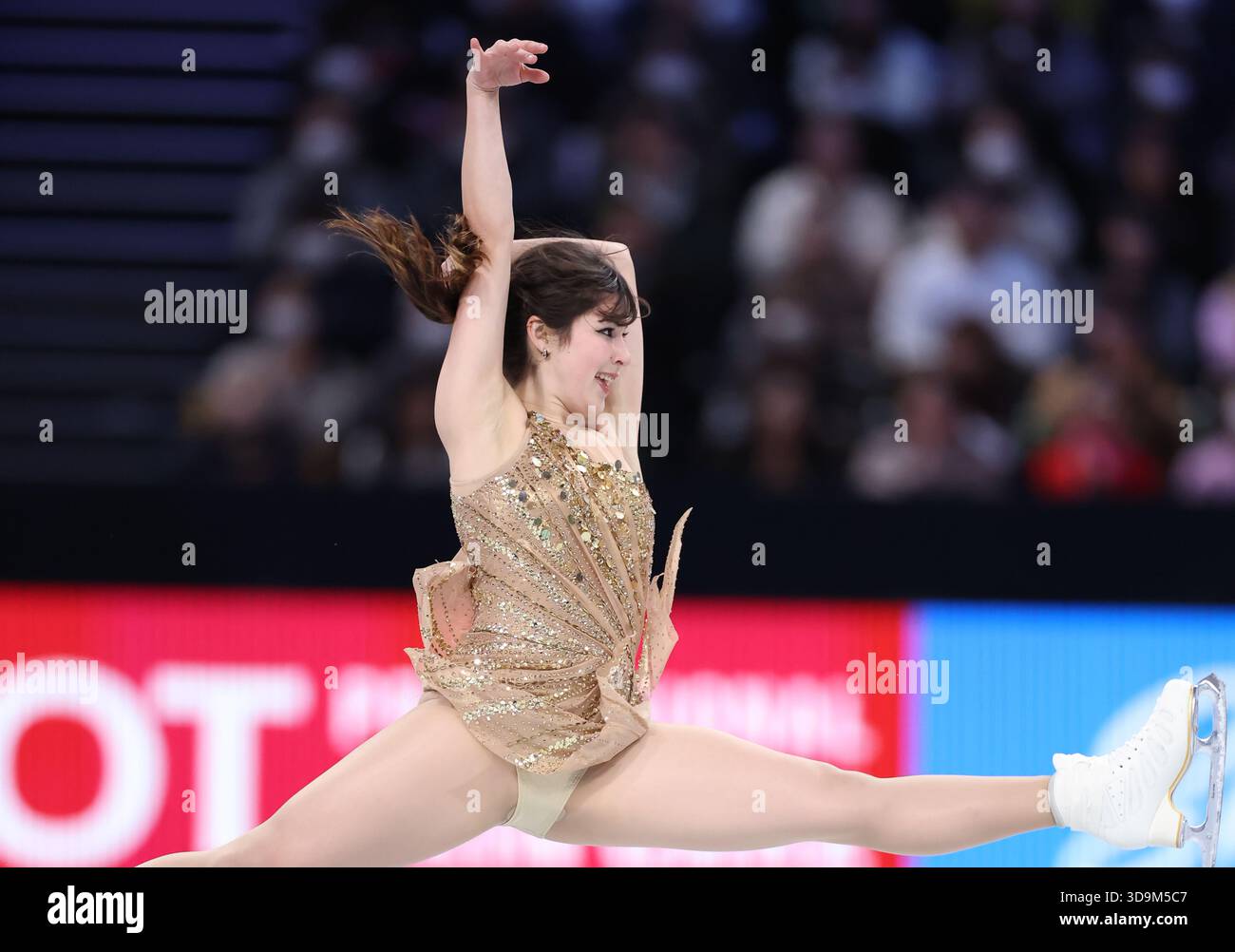
Alysa Liu officially returned to competitive figure skating for the 2024-2025 season after a two-year hiatus. Following her initial retirement at age 16 in April 2022, she announced her comeback in March 2024. As of 2026, she is a central figure in the U.S. Olympic trajectory, focusing on artistic maturity and technical consistency under her training team in California.
The Context of Alysa Liu’s Initial Retirement
To understand the weight of Alysa Liu’s return to skating, one must first analyze the circumstances of her departure. In April 2022, shortly after winning a bronze medal at the World Championships and placing seventh at the Beijing Winter Olympics, Liu stunned the skating world by announcing her retirement. At just 16 years old, she had already achieved what most skaters spend decades chasing: two U.S. National titles (the first at age 13, making her the youngest ever), an Olympic appearance, and a World podium finish.
The retirement was not spurred by injury but by a desire for a life outside the rigorous, often claustrophobic confines of elite figure skating. Having been in the spotlight since she was 12, Liu expressed a need to experience "normal" teenage life. For two years, she stepped away from the ice, attending school and distancing herself from the daily grind of 5:00 AM practices and international travel. This period of "normalcy" is now viewed by analysts as the essential catalyst for her 2024 return; it allowed her to rediscover the sport not as a child prodigy under immense pressure, but as an adult making an autonomous choice.
During her time away, the International Skating Union (ISU) also implemented significant changes, most notably the gradual increase of the minimum age for senior competition to 17. While Liu was grandfathered in due to her prior participation, the landscape she returned to in late 2024 was vastly different from the one she left—one that prioritized longevity and artistic components over the "quad-at-all-costs" mentality that dominated her early teens.
The 2024 Comeback Announcement and Motivation
The "Alysa Liu return to skating" narrative began in earnest on March 1, 2024, when U.S. Figure Skating confirmed she had resumed training. The announcement was met with both excitement and skepticism. Critics questioned whether a skater who had lost two years of triple-axel and quadruple-jump muscle memory could compete with a new generation of powerhouses like Isabeau Levito and Amber Glenn.
Liu’s motivation, however, was explicitly internal. In various interviews throughout late 2024 and 2025, she noted that the time away gave her a "rejuvenated perspective." She missed the feeling of performing and the structured challenge of the sport. Unlike her first stint in the limelight, which was characterized by the technical pursuit of being the first American woman to land a quadruple Lutz in competition, her comeback was framed around "skating for herself."
This shift in mindset was supported by a change in her coaching environment. Upon her return, she began training at the Oakland Ice Center under Phillip DiGuglielmo and Massimo Scali. This move was strategic; staying in California kept her close to her support system while working with coaches known for emphasizing edge work, transition flow, and emotional expression—areas where Liu sought to improve as a mature skater.
Technical Reconstruction and Program Development
The most significant hurdle in the Alysa Liu return to skating was the technical reconstruction of her jumps. In her early career, Liu relied on a high-rotation speed facilitated by a smaller, pre-pubescent frame. Returning to the ice at 18 and 19 required her to re-learn her technical entries to accommodate a different center of gravity and increased height.
Shift from Quads to Quality
In the 2024-2025 season, Liu and her team made a tactical decision to deprioritize the quadruple Lutz. While the quad was her trademark at age 14, the risk-to-reward ratio under the current ISU judging system favored clean triple-triple combinations and high Program Components Scores (PCS). Her return programs focused on:
- Triple Lutz-Triple Toe Loop Combinations: Ensuring these were landed with positive Grades of Execution (GOE).
- Artistic Maturation: Utilizing the expertise of Massimo Scali to create more nuanced choreography that reflected her personality.
- Spin Precision: Maintaining her status as one of the world's best spinners, which provides a reliable "floor" for her total scores.
The 2025-2026 Competitive Strategy
Now in the 2025-2026 season, Liu’s strategy has solidified. She is no longer chasing the technical ceiling of the "Eteri era" but is instead positioning herself as a consistent, reliable performer who can capitalize on the mistakes of others while delivering high-quality, aesthetically pleasing programs. Her return has proven that a hiatus can actually benefit a skater’s longevity by preventing the burnout that often leads to career-ending injuries in late adolescence.
Performance Analysis: Pre-Retirement vs. Post-Return
The following table highlights the evolution of Alysa Liu’s skating profile from her early career (2019-2022) to her established comeback status in the current 2025-2026 timeframe.
| Feature | Pre-Retirement Phase (2019–2022) | Post-Return Phase (2024–2026) |
|---|---|---|
| Primary Technical Goal | Quadruple Lutz and Triple Axel | High GOE on Triple-Triple combos |
| Artistic Style | Fast-paced, youthful, energetic | Mature, emotive, sophisticated |
| Coaching Team | Various (including Laura Lipetsky) | Phillip DiGuglielmo & Massimo Scali |
| Physical Profile | High-rotation, compact frame | Power-based, mature athleticism |
| Mental Approach | Pressure to maintain "Prodigy" status | Self-driven, focus on "joy of skating" |
| Typical PCS Range | 8.50 - 9.00 | 9.25 - 9.75 |
Impact on the U.S. Ladies' Field
Liu’s return significantly altered the internal dynamics of U.S. Figure Skating. Before her comeback, the U.S. women’s field was searching for a consistent leader to challenge the dominant international skaters. With her return, the "Big Three" of American skating—comprising Liu, Isabeau Levito, and Amber Glenn—has created one of the most competitive domestic environments in decades.
Her presence has forced a "leveling up" across the board. Younger skaters can no longer rely solely on technical tricks; they must match Liu’s improved artistry. Conversely, veterans have had to sharpen their technical consistency to keep pace with Liu’s reliable competitive outings. As we head toward the 2026 Winter Olympics in Milano-Cortina, Liu’s role is that of a seasoned veteran who provides stability to the U.S. team.
Challenges and Overcoming Adversity
The return was not without its difficulties. During the 2024 Grand Prix season, Liu faced challenges with "under-rotation" calls, a common issue for skaters returning after a physical growth period. The ISU technical panels were rigorous in their evaluation of her jump rotations.
However, Liu’s response to these setbacks was markedly different from her younger years. Instead of frustration, she showed a methodical approach to corrections. Working with video analysis and specialized harness training, she adjusted her air position. By the time of the 2025 World Championships, her rotation issues were largely resolved, proving that her return was a long-term project rather than a short-term publicity stunt.
Mental Health and the "New Normal" in Figure Skating
Perhaps the most vital contribution of the Alysa Liu return to skating is the conversation it sparked regarding mental health and athlete autonomy. By retiring at the peak of her game and returning when she felt ready, Liu broke the traditional mold of the "disposable" female figure skater.
Historically, female skaters who left the sport in their mid-teens rarely returned to the podium. Liu has demonstrated that taking a break to prioritize mental well-being is not a career death sentence but can be a strategic move for extended success. This has set a precedent for younger skaters in the U.S. and beyond, emphasizing that the "Olympic cycle" is secondary to the "human cycle."
Preparing for the 2026 Winter Olympics
As of early 2026, Alysa Liu is a primary contender for the U.S. Olympic team. Her journey from a 13-year-old national champion to a 20-year-old Olympic hopeful is a testament to her resilience. Her training focus is currently split between maintaining technical health and maximizing the storytelling potential of her programs.
Training Regimen in 2026
Her current schedule is designed to peak for the February 2026 games:
- On-Ice Sessions: Four hours daily, focusing on program run-throughs and edge quality.
- Off-Ice Conditioning: Emphasis on core strength and flexibility to prevent injury.
- Sports Psychology: Regular sessions to manage the pressure of the Olympic spotlight.
- Choreographic Refinement: Monthly sessions with Massimo Scali to ensure the "Olympic-year" programs are polished to a world-class standard.
Frequently Asked Questions
Why did Alysa Liu decide to return to skating in 2024?
Alysa Liu returned because she missed the competitive atmosphere and realized she still had a passion for performing. After a two-year break (2022–2024), she felt physically and mentally refreshed, allowing her to approach the sport on her own terms rather than under the expectations placed on her as a child.
Who is coaching Alysa Liu during her comeback?
She is currently training with Phillip DiGuglielmo and Massimo Scali at the Oakland Ice Center in California. This coaching change was pivotal in her comeback, focusing more on her artistic development and skating skills than just her jump technicality.
Did Alysa Liu regain her Triple Axel and Quadruple jumps?
While Liu has practiced these jumps during her return, her competitive focus in the 2025-2026 season has shifted toward "clean" programs. She prioritizes high-quality triple-triple combinations and maximizing her Program Component Scores (PCS) rather than the high-risk quadruple jumps she performed as a teenager.
What are Alysa Liu’s chances for the 2026 Olympics?
As of 2026, Liu is considered a top-three U.S. woman and a strong candidate for the Olympic team. Her consistency, international experience, and high artistry make her a reliable choice for both the individual and team events in Milano-Cortina.
How has Alysa Liu’s skating style changed since her return?
Her style has evolved from "athletic and fast" to "mature and expressive." She now shows a greater depth of musicality and improved edge work, moving away from the purely technical focus of her early career to become a more well-rounded artist on the ice.
Final Recommendation for Fans and Analysts
For those following the "Alysa Liu return to skating," the focus should remain on her long-term consistency rather than looking for the "prodigy" of 2019. Liu has successfully transitioned into a mature athlete who understands how to navigate the current ISU judging system. To fully appreciate her comeback, watch for the nuances in her step sequences and the complexity of her transitions, which are now her greatest strengths. As she approaches the 2026 Winter Olympics, she represents a new era of American skating—one defined by resilience and personal agency.