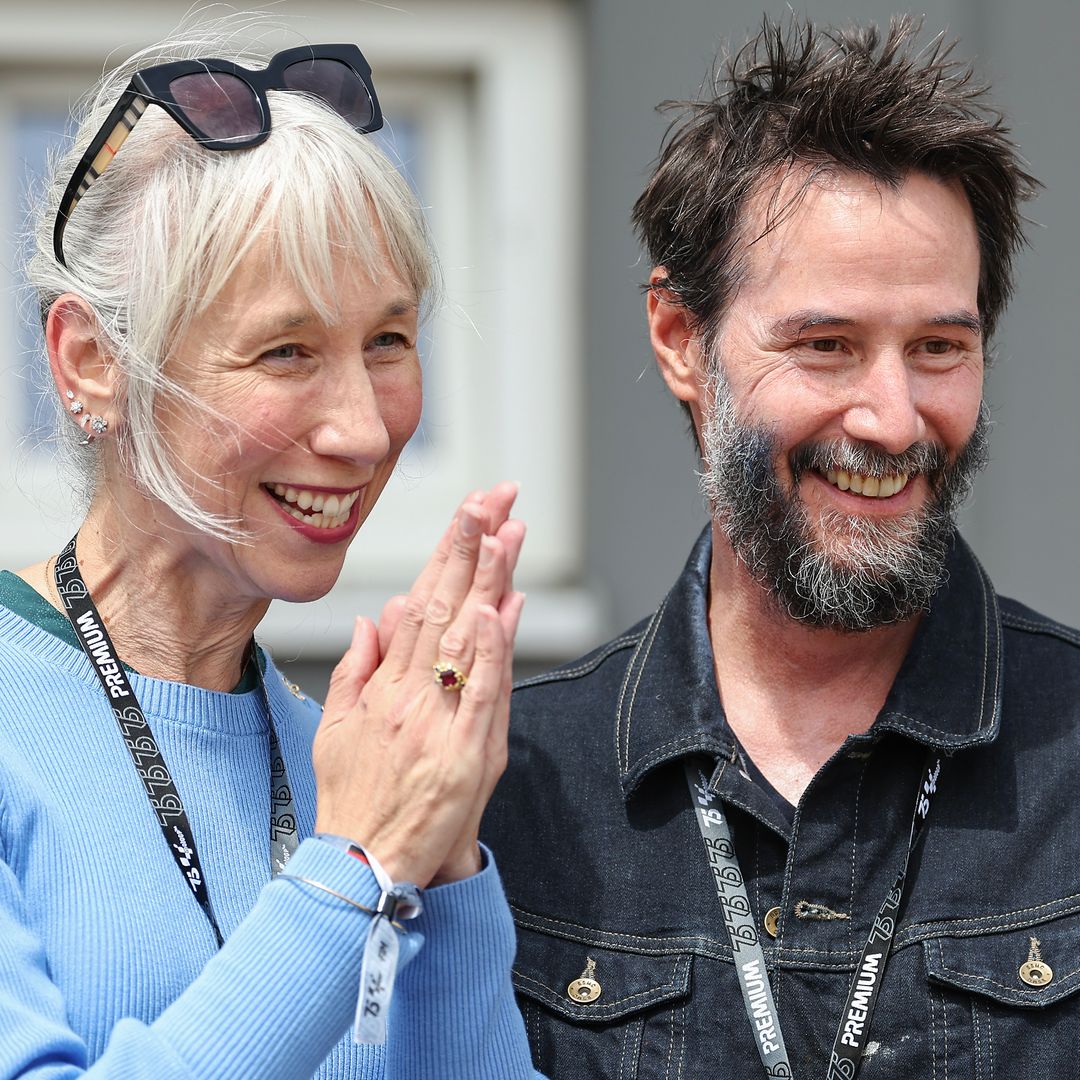
Alexandra Grant is a Los Angeles-based visual artist renowned for her "translation" of text into visual imagery across painting, sculpture, photography, and film. By collaborating with poets and philosophers, she bridges the gap between the written word and abstract form, creating a body of work that challenges how we perceive communication, identity, and the materiality of language.
In the contemporary art world of 2026, Alexandra Grant stands as a significant figure whose work transcends traditional boundaries. While often thrust into the global spotlight due to her high-profile personal associations, her professional legacy is rooted in a rigorous, decades-long investigation into how we read, see, and interpret the world. Grant’s art is not merely an aesthetic exercise; it is a linguistic inquiry that treats text as a physical landscape, a structural blueprint, and a philosophical prompt.
The Concept of Visual Translation in Grant’s Practice
At the heart of Alexandra Grant’s art work is the concept of translation. Unlike literal translation between languages, Grant’s process involves moving a text from its original medium (the written word) into a new sensory dimension (the visual). She often describes her work as a "polyphonic" experience, where multiple voices—her own, the author’s, and the viewer’s—interact within the space of a canvas or a sculpture.
Grant does not simply illustrate a story. Instead, she uses the rhythm, structure, and emotional weight of a text to dictate the composition of her paintings. For instance, in her early collaborations with hyper-fiction author Michael Joyce, the non-linear nature of the writing was mirrored in the web-like, sprawling architecture of her drawings. This approach transforms the act of reading into a spatial experience, allowing the viewer to "walk through" a narrative rather than just observing it on a page.
The Materiality of the Word
Grant’s use of materials is as deliberate as her choice of text. She frequently employs wax (encaustic), oil paint, gold leaf, and neon. These materials add a tactile, almost archaeological layer to her work. By layering wax over text, she creates a sense of history and occlusion, suggesting that meaning is something to be uncovered or excavated. In 2026, her recent works continue to push these boundaries, integrating digital drafting techniques with traditional bronze casting to explore how language survives the transition from the ephemeral screen to the permanent object.
Major Series and Notable Collections
To understand the scope of Alexandra Grant’s art work, one must examine her most influential series. Each project represents a specific phase of her inquiry into the human condition and the power of the word.
The Antigone 3000 Series
Inspired by the Greek tragedy of Sophocles, the Antigone 3000 series is perhaps Grant’s most politically and emotionally resonant work. The series centers on the phrase, "I was born to love not to hate," a line spoken by Antigone as she defies the law of the state to honor her brother.
Grant translates this sentiment into large-scale, vibrant paintings characterized by recursive patterns and a "Rorschach-like" symmetry. The text is often rendered in reverse or fragmented, forcing the viewer to slow down and actively decode the message. This series highlights Grant’s belief in the subversive power of love and its ability to act as a form of civil disobedience. In many of these pieces, the abstraction is so dense that the words become textures, emphasizing that the feeling of the sentiment is as important as the literal meaning.
The Shadows Series
A collaboration with Keanu Reeves, the Shadows project moved Grant’s practice into the realm of photography and silhouette. In this series, Grant photographed Reeves’s shadow, later manipulating the images through color and scale. The resulting works are haunting and ethereal, exploring the concept of the "shadow" as both a psychological state and a physical trace.
The Shadows work demonstrated Grant’s ability to find "language" in non-verbal forms. The shapes become a sort of calligraphic script, suggesting that the body itself can be a text that we read. This project was also instrumental in the founding of X Artists’ Books, a publishing house that emphasizes the collaborative nature of art-making.
The Forest and Mapping Projects
In her "Forest" series, Grant utilizes the complexity of dense, organic structures to represent the overwhelming nature of information. These works are often massive in scale, requiring the viewer to stand back to see the "forest" while moving closer to read the individual "trees" of text embedded within. These pieces often reference the work of Hélène Cixous, a French philosopher known for her exploration of "écriture féminine" (feminine writing). Grant’s engagement with Cixous’s texts involves a deep, intellectual dialogue, turning complex theory into visceral, colored landscapes.
Collaborative Ethos and X Artists’ Books
A defining characteristic of Alexandra Grant’s career is her commitment to collaboration. She rejects the myth of the "solitary genius" artist, preferring instead to work in partnership with writers, actors, and other creators. This philosophy led to the creation of X Artists’ Books (XAB) in 2017.
As of 2026, XAB has become a vital hub for "artist-centric" publishing. The press focuses on books that are artworks in themselves—projects that might not fit the commercial requirements of mainstream publishing. Through XAB, Grant has published works that range from poetry and photography to conceptual art, further cementing her role as a bridge-builder between different creative disciplines.
Philanthropy: The grantLOVE Project
Alexandra Grant’s art work is inextricably linked to her philanthropic efforts, specifically the grantLOVE project. Started in 2008, grantLOVE is a fundraising brand that produces and sells original artworks and editions to benefit various non-profits.
The project uses a signature "LOVE" logo, designed by Grant in her characteristic handwritten style. The proceeds from these sales have supported organizations such as:
- Project Angel Food
- The Union of Concerned Scientists
- Heart of Los Angeles (HOLA)
- Various arts-based mentorship programs
This project illustrates how Grant uses the "brand" of art to create tangible social impact. For Grant, the "work" of an artist includes the responsibility to support the community that fosters that art.
Summary of Key Artistic Series
The following table summarizes the primary characteristics of Grant's most significant bodies of work through 2026:
| Series Name | Primary Medium | Central Theme | Key Source/Collaborator |
|---|---|---|---|
| Antigone 3000 | Mixed Media on Canvas | Love as Civil Disobedience | Sophocles |
| Shadows | Digital Photography | Absence and Identity | Keanu Reeves |
| The Forest | Large-scale Drawing/Painting | Complexity of Communication | Michael Joyce / Hélène Cixous |
| Nimbus | Sculpture/Neon | Atmospheric Language | Site-specific installations |
| Ode to Happiness | Book Illustration | Irony and Self-Help | Keanu Reeves |
| Century of the Self | Painting/Textile | Psychology of Identity | Sigmund Freud / Edward Bernays |
Technical Depth: How to View Alexandra Grant’s Work
When viewing Alexandra Grant’s art work, it is helpful to look for specific technical markers that define her style:
- Palimpsestic Layering: Grant often builds up her canvases with multiple layers of paint and text, then scrapes them back or covers them with translucent wax. This creates a sense of depth and time.
- Recursive Patterns: Notice the repetition of shapes and words. This mirroring effect is designed to mimic the way the brain processes language and memory.
- Color Theory as Emotion: Grant uses color not just for aesthetic appeal but as a tool for translation. A "sad" text might be translated into muted blues and grays, while a "revolutionary" text like Antigone is often rendered in neon pinks and electric yellows.
- Spatial Scale: Many of her works are intended to be immersive. By working on a large scale, she forces the viewer to engage with the text physically, moving their head and body to follow the lines of "writing."
Where to See and Buy Alexandra Grant’s Art Work
Alexandra Grant is represented by several major galleries and her work is held in prestigious public collections. In 2026, interested collectors and enthusiasts can find her work through the following avenues:
- Museum Collections: Her work is in the permanent collections of the Los Angeles County Museum of Art (LACMA), the Museum of Contemporary Art (MOCA), Los Angeles, and the Orange County Museum of Art.
- Gallery Representation: She is primarily represented by Lowell Ryan Projects in Los Angeles. Her work is also frequently featured in international art fairs such as Art Basel and Frieze.
- Public Murals: Grant has completed several large-scale public commissions, including the "Love" mural in Los Angeles, which serves as a landmark for her philanthropic work.
- X Artists’ Books: For those looking for more accessible entries into her work, the books published by XAB offer a deep look into her collaborative process and visual style.
Frequently Asked Questions
What is the primary meaning behind Alexandra Grant's "Antigone 3000" series?
The Antigone 3000 series explores the tension between personal conscience and state law. By repeating the phrase "I was born to love not to hate," Grant emphasizes that choosing love in a world of conflict is a powerful, radical act. The abstract patterns represent the complexity of these moral choices.
How does Keanu Reeves contribute to Alexandra Grant's art?
Keanu Reeves has been a frequent collaborator, primarily providing text for projects like Ode to Happiness and Shadows. In Shadows, he was the subject of the photographic explorations. Their partnership is built on a mutual interest in the intersection of poetry and visual art, which eventually led them to co-found X Artists' Books.
What materials does Grant use to create her textured paintings?
Grant is known for using a diverse range of materials, including oil paint, acrylic, colored pencil, and encaustic (wax). She often incorporates non-traditional elements like neon tubing for light-based sculptures and bronze for her more permanent linguistic structures.
Is Alexandra Grant's work considered "conceptual art"?
Yes, it is often categorized as conceptual because the idea (the "concept" of translation and language) is the primary driver of the work. However, her work is also highly formalist, meaning she pays significant attention to the physical beauty, color, and composition of the final piece.
Where can I buy grantLOVE merchandise?
Authentic grantLOVE items, which include prints, jewelry, and apparel, are available through the official grantLOVE website. These items are designed to raise funds for arts and community-based non-profits, making her art accessible to a wider audience while supporting a good cause.
Practical Recommendation for Art Enthusiasts
If you are new to the work of Alexandra Grant, the best way to begin your exploration is through her publications. Books like Shadows or the Antigone 3000 catalog provide essential context that may not be immediately apparent when viewing a single painting in a gallery.
For those in Los Angeles, visiting her public murals or checking the exhibition schedules at Lowell Ryan Projects offers a firsthand look at the scale and texture of her work. Because her art is so deeply rooted in the physical act of reading and translating, seeing it in person—where you can observe the layers of wax and the brushstrokes—is the only way to fully appreciate the "polyphonic" nature of her linguistic landscapes.